



How is The Capacity of a Fitness Bag Calculated?

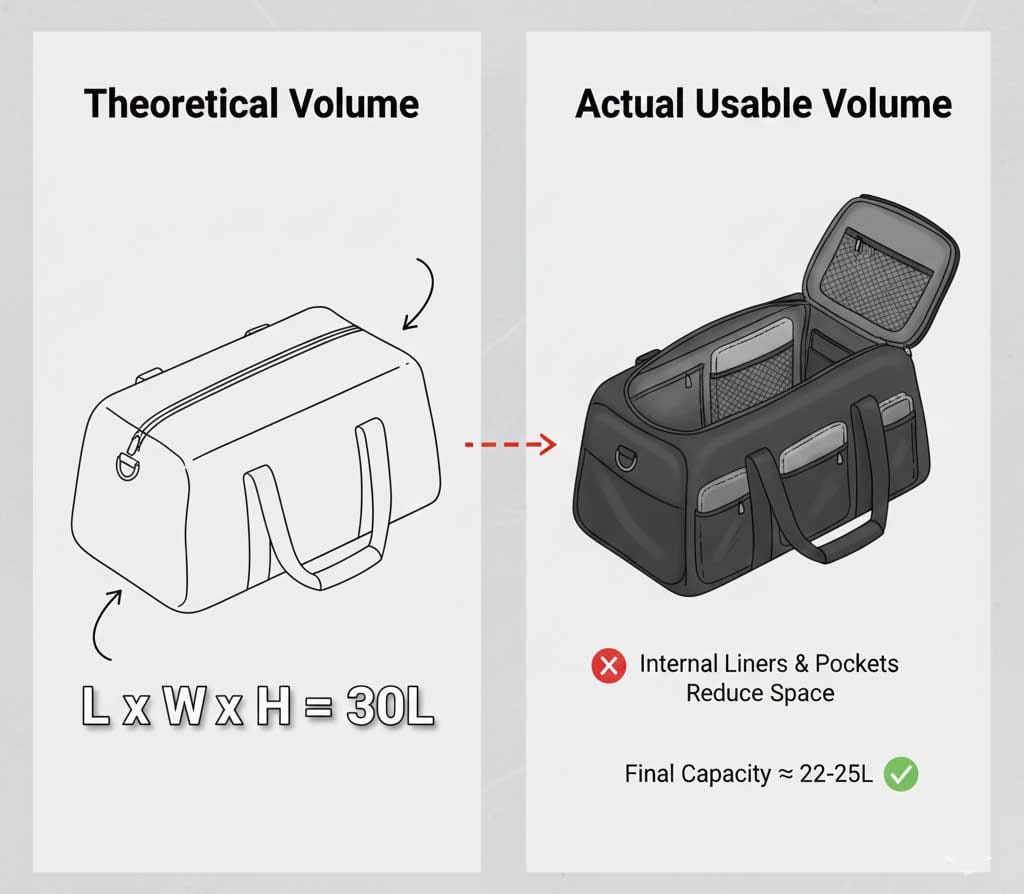
You can determine the capacity of a fitness bag with a simple formula. The standard method is to measure the length, width, and height of the bag.
- Most companies calculate the capacity of a fitness bag by multiplying these three dimensions together.
- For instance, if each side of the bag measures 35 inches, the capacity of the fitness bag is about 29.6 cubic feet.
Understanding the capacity of a fitness bag helps you choose one that fits all your gear. Measuring the bag accurately ensures you get the right size for your needs.
Key Takeaways
- First, measure the length, width, and height of your fitness bag. Multiply these numbers to find the total volume.
- If your bag has an odd shape, use filling methods or water displacement. This helps you guess the capacity more accurately.
- Always measure the inside of the bag. The inside shows the real space you can use.
- Think about your gear before picking a bag size. Make sure the bag fits the things you carry often.
- If you want to travel with your bag, check airline size rules. Most airlines want bags smaller than 40 liters.
Capacity of Fitness Bag: Calculation Methods
Measuring Rectangular Bags
You can measure the capacity of fitness bag easily if it has a rectangular shape. Start by measuring the height, width, and depth of the bag. Use a tape measure for each side. Multiply these three numbers together to get the volume. This method works well for duffle bags, backpacks, and most fitness bags you see in stores.
Tip: Always measure the inside of the bag, not the outside. The lining and padding can make the outside bigger than the space you actually use.
Here is a simple table showing how the calculation works for different bag types:
| Shape Type | Calculation Method | Notes |
|---|---|---|
| Rectangular Bags | width × height × depth | Works best for rigid bags. Soft bags may change shape. |
| Irregular Bags | Use filling or water displacement methods | Volume changes when bag is full or empty. |
Calculating for Irregular Shapes
Some fitness bags do not have straight sides. You might have a round, oval, or oddly shaped bag. For these, you need a different approach. You can use filling methods or water displacement to estimate the capacity of fitness bag.
Here is a step-by-step way to measure an irregular bag:
- Gather small items like rice or beans.
- Use a measuring cup to fill the bag with these items.
- Count the number of cups you use. This gives you the volume.
Note: Water displacement works well for waterproof bags. Fill the bag with water, then pour the water into a measuring container. This shows the true volume. Water displacement is very precise for complex shapes, but you must avoid air bubbles for the best results.
Here is a table comparing different methods for measuring irregular bags:
| Method | Pros | Cons |
|---|---|---|
| Water Displacement | Very reliable for odd shapes | Only works for waterproof bags |
| Mathematical Calculations | Good for simple shapes | Not accurate for complex bags |
| Filling Methods | Easy to use | May not be exact for all shapes |
Units of Measurement
Manufacturers use different units to show the capacity of fitness bag. You will see liters and cubic inches most often. Some companies also use cubic yards or pounds for very large bags.
Here is a quick guide to common bag sizes:
- Small: 5-20 liters
- Medium: 21-35 liters
- Large: 36-50 liters
- Extra-Large: 51-100+ liters
You can also see bag sizes in cubic yards and pounds:
| Bag Type | Capacity (Cubic Yards) | Weight (lbs) |
|---|---|---|
| Small | 1 | 100 |
| Medium | 2 | 200 |
| Large | 3 | 300 |
For air travel, airlines care about the physical size of your bag. Most airlines want bags under 40 liters and within 22x14x9 inches. Always check these limits before you buy a new fitness bag.
Tip: If you want to compare bags, look at both the volume and the dimensions. This helps you pick the right size for your gear and travel needs.
You now know the main ways to measure the capacity of fitness bag. You can use these methods at home or check the numbers from the manufacturer. This helps you choose a bag that fits everything you need.
How to Measure Capacity at Home
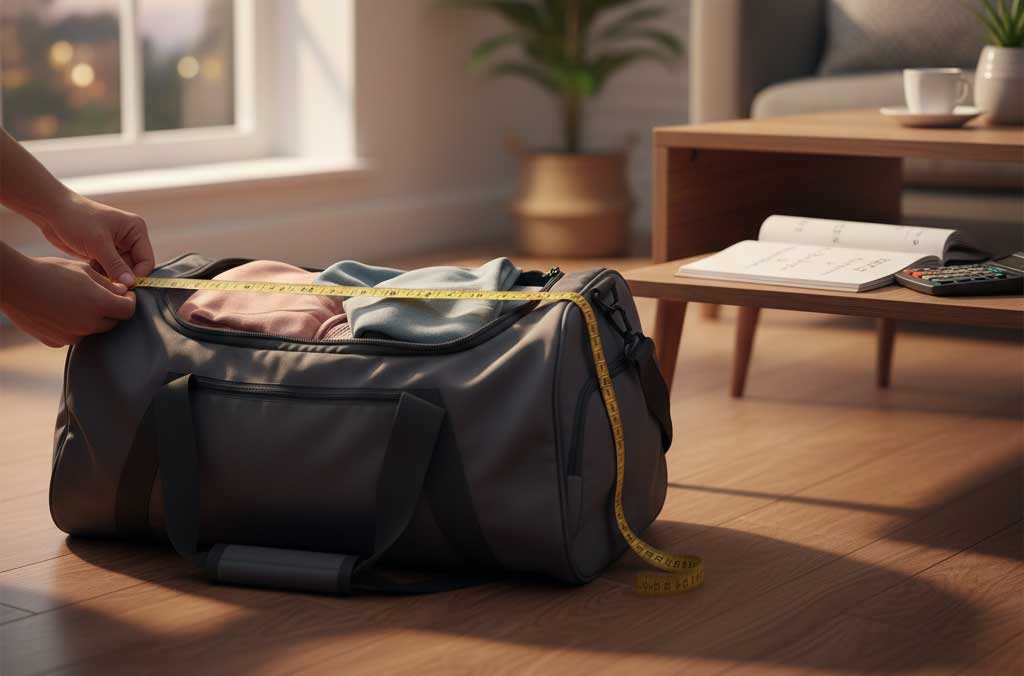
Measuring the capacity of fitness bag at home helps you pick the right size for your needs. You can do this with simple tools and a few easy steps. Follow this guide to get accurate results every time.
Tools Needed
You do not need fancy equipment to measure your bag. Many household items work well. Here is a table of tools that help you get the best results:
| Tool | Description |
|---|---|
| Steel ruler | A rigid, non-flex steel rule with clear markings for precise measurements. |
| Caliper | A digital caliper for measuring small dimensions accurately, such as zipper height and seal widths. |
| Tailor’s tape | A soft tape for measuring circumference and long runs, ideal for larger bags. |
| Square or right-angle ruler | Ensures seals and edges are true, helping to identify any skew in the bag. |
| Flat surface and weight | A clean, flat table with a weight to hold the bag flat for consistent readings. |
| Thickness gauge | Measures the thickness of materials at multiple points for accuracy. |
| Scale | A compact digital scale for checking material weight consistency. |
| Marker and notepad | Used for marking dimensions directly on samples for record-keeping. |
Tip: Use a tailor’s tape for soft or flexible bags. A steel ruler works best for hard-sided bags.
Measuring Steps
You can measure the capacity of your bag with these simple steps:
- Place your bag on a flat surface. Make sure it is empty and spread out.
- Use a steel ruler or tailor’s tape to measure the length, width, and height of the main compartment. Write down each number.
- If your bag has an irregular shape, fill it with foam blocks, plastic balls, or crumpled paper until it is full.
- Transfer the filling material into a container with volume markings, like a measuring bucket. The amount it fills shows the bag’s capacity.
- For waterproof bags, you can use the water displacement method. Place a large, waterproof liner inside the bag, fill it with water, and then pour the water into a measuring container.
- Add up the volumes of all compartments if your bag has more than one.
Note: Always measure the inside of the bag, not the outside. This gives you the true usable space.
Tips for Accuracy
Getting an accurate measurement helps you avoid mistakes. Many people overestimate how much space they need and end up with a bag that is too large. Others forget to measure side pockets or only check the main compartment, which can lead to underestimating the total space.
- Measure each compartment separately and add the numbers together.
- Keep the bag flat and use a weight if needed to hold it in place.
- Pull the tape tight when measuring soft bags to avoid slack.
- Double-check your numbers and write them down.
- Do not rely only on the manufacturer’s numbers. Your own measurements give you a better idea of real-world use.
- Remember that airlines often use strict size limits for carry-on bags. Check both the volume and the dimensions before you travel.
Common mistake: Measuring the bag when it is empty can make you think it holds less than it really does when packed. Always fill the bag or use the filling method for the best results.
By following these steps and tips, you can measure the capacity of fitness bag at home with confidence. This helps you choose a bag that fits your gear and avoids surprises when you travel or go to the gym.
Understanding Manufacturer Capacity
What the Numbers Mean
Manufacturers usually show the capacity in liters or cubic inches. These numbers tell you how much space is inside the bag. Some bags have extra features or special certifications. Manufacturers use certain rules for different bag types. For example, bags for food or chemicals must follow safety or hygiene rules. The table below lists some common standards:
| Bag Type | Minimum Safety Factor | Additional Requirements |
|---|---|---|
| Standard FIBCs | 5:1 | N/A |
| UN Dangerous Goods | 6:1 | Certification for dangerous goods |
| Anti-static/Type C bags | 5:1 | Conductivity testing |
| Food-grade applications | 5:1 | Hygiene requirements |
| Chemical industry | N/A | UN dangerous goods certification |
| Pharmaceutical applications | N/A | GMP standards |
| Construction | N/A | Industrial container verification |
You should check if your bag needs special rules, especially if you use it for more than fitness.
Real-World Use
The space inside your bag may feel different than the number on the label. Sometimes, manufacturers make the capacity seem bigger or smaller. They might use marketing tricks or guess from other bags. When you pack your bag, you might see the space does not match the label. Always look for reviews or check other people’s measurements. If the numbers seem wrong, trust your own measurements.
Tip: Pockets and compartments help you keep your gear neat. Special pockets for shoes, bottles, or laundry make your bag more helpful and save time.
Comparing Bags
When you compare fitness bags, think about your workout and what you carry. The best bag size depends on your needs. Here are some things to think about:
- The kind of workout you do
- How much gear you bring
- If you need pockets or places to organize
A bigger bag is good if you carry clothes, shoes, and extras. A smaller bag is lighter and easier to carry. Try to find a balance between size, comfort, and how you use the bag. Always check the volume and the inside layout before you buy.
Choosing the Right Bag Size
Matching Capacity to Gear
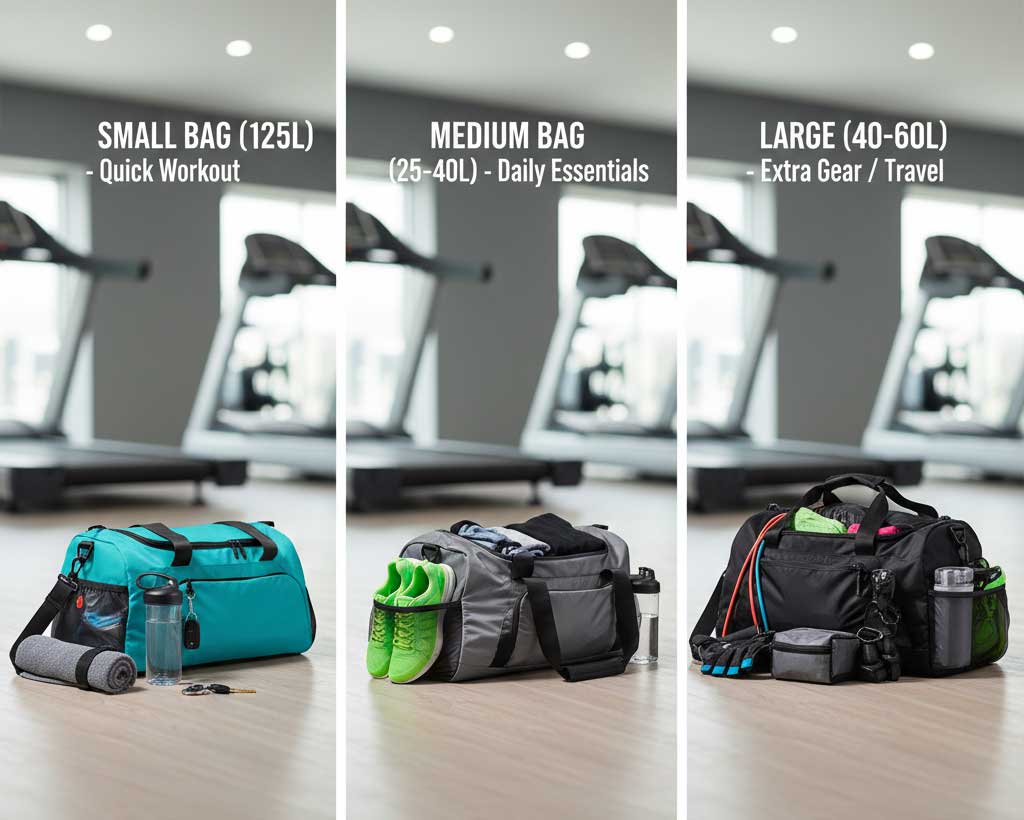
You need to match your bag’s size to the gear you carry. Start by listing what you bring to the gym most often. Many people pack more than they realize. Here are some common items that take up space in a fitness bag:
- Specialized gear, such as weightlifting gloves or resistance bands
- Toiletries, like deodorant and dry shampoo
- Body wipes
- Snacks and drinks, including protein bars and hydration powders
- Laundry bag for dirty clothes
- Shower towel
- Water bottle
- Yoga mat
Think about how much room each item needs. If you carry a yoga mat or a large towel, you will need a bigger bag. If you only bring a water bottle and a few personal items, a small backpack works well.
You can use this table to estimate the right bag size for your needs:
| Backpack Size Category | Capacity Range | Description |
|---|---|---|
| Small | Up to 15 liters | Holds water bottle and personal items. |
| Medium | 15 to 25 liters | Fits clothes, shoes, and basic gear for a day. |
| Tactical | 25 to 35 liters | Carries extra equipment for longer sessions or outdoor use. |
| Large | More than 35 liters | Best for field exercises, team sports, or multiple changes of clothes. |
| Extra Large | 60 liters or more | Ideal for long trips, hiking, or carrying bulky gear. |
Practical Selection Tips
You can make a better choice by thinking about your routine and what you need every day. Here are some tips to help you pick the right size:
- If you carry a change of clothes, shoes, towels, and accessories, choose a larger bag.
- For a minimalist routine, a small bag is enough.
- A small gym backpack works for just a water bottle and personal items.
- A large duffle with many compartments is best if you go to the gym from work or school.
- Consider the size based on your usual items, such as clothes, shoes, water bottles, towels, and toiletries.
- Decide what you need to carry and how often you use the bag.
- If you visit the gym before or after work, look for a bag with a laptop compartment.
- For yoga, a bag with a yoga mat holder is helpful.
Tip: Always check the bag’s compartments and pockets. These features help you organize your gear and make packing easier.
By matching your gear to the right bag size, you make your gym trips smoother and more organized.
You can measure your fitness bag’s capacity with a few simple steps.
- Gather a measuring tape and place your bag on a flat surface.
- Measure the length, width, and height at their widest points.
- Multiply these numbers to find the total volume.
- Check the weight limit from the manufacturer.
- Compare your measurements with airline rules if you travel.
Accurate measurement helps you pick a bag that fits your gear and avoids surprises. Choose a bag that matches your routine and keeps your items organized.
FAQ
How do you convert cubic inches to liters for bag capacity?
To change cubic inches to liters, multiply by 0.0164. For example, 1,000 cubic inches is about 16.4 liters. This makes it easy to compare bags with different units.
Can you measure a fitness bag with just a tape measure?
Yes, you can use a tape measure for this. Measure the length, width, and height inside the bag. Multiply these numbers to find the volume. Measuring the inside gives the best answer.
Why does my bag’s real capacity feel smaller than the label says?
Manufacturers count every pocket and compartment in their numbers. You might only use the main part of the bag. Padding and the bag’s shape can also make the space feel smaller.
What is the best way to measure an oddly shaped bag?
Fill the bag with beans or other small things. If the bag is waterproof, you can use water. Pour what you used into a measuring cup to see the real volume.
Do side pockets count toward total capacity?
Yes, most companies add side pockets to the total space. If you want to know the space for your gear, measure each pocket by itself.
How to Choose the Best Custom Backpack Manufacturer in China
The Ultimate Gym Bag Sourcing Guide for Importers
Top Insulated Lunch Bags for Adults with Features and Buying Tips
How to Choose the Best Carry-On Luggage for Your 2026 Travels
Comments are closed