



Climbing Chalk: The Ultimate Guide to Smart Use
Introduction
Climbing chalk is simple in concept—keep your hands dry so holds feel secure—but using it well is a skill. In this guide, you’ll learn how to choose, apply, and maintain climbing chalk so you get more friction with less mess.
This article is written for beginners and gym-focused climbers (bouldering and top-rope) who want cleaner sessions, respectful etiquette, and healthier skin. You’ll see what to use indoors, how to adapt outdoors, and how to care for your hands and gear.
Key takeaways
- Use the lightest effective layer. Indoors, a liquid base plus chalk ball top-ups keeps grip steady while minimizing dust.
- Match format to rules and context. Follow gym policies; outdoors, use chalk sparingly, brush holds, and erase tick marks.
- Protect your skin. Alcohol in liquid chalk can dry or irritate; moisturize after sessions and consult a clinician if issues persist.
- Keep it tidy. Don’t clap “chalk clouds,” close your bag between attempts, and refill bags/balls carefully to avoid spills.
Chalk Types and Basics
What Is Climbing Chalk
Climbing chalk is primarily magnesium carbonate (MgCO₃), a white mineral that binds surface moisture on your skin. By reducing sweat at the finger–hold interface, a thin layer of chalk can stabilize friction—especially when hands are damp. Recent engineering work suggests chalk offers an immediate friction benefit on moist skin, while thick layers on already-dry skin may do the opposite by making the surface too powdery. See the 2024 analysis on chalk as a friction modifier for fingers in an engineering journal for a current, peer-reviewed perspective: The effectiveness of chalk as a friction modifier for finger contact (2024).
Forms: Loose, Blocks, Balls, Liquid
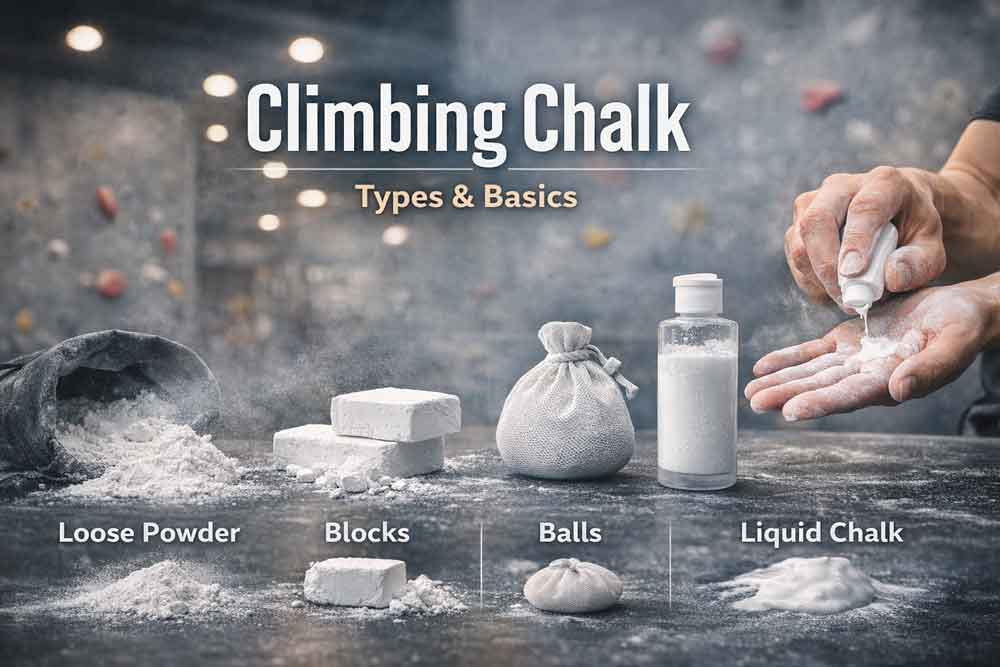
Climbing chalk comes in four common formats. Each one works, but they differ in dust, control, and gym-friendliness.
- Loose powder is grab-and-go but easy to overuse. It creates airborne dust and visible “clouds,” which many gyms try to reduce.
- Blocks are compressed chalk you crush as needed. They travel well and initially generate fewer fine particles than pre-loosened powder—until you break them down.
- Chalk balls (a mesh “sock” filled with chalk) meter small amounts when squeezed. They’re widely preferred indoors to cut mess and waste.
- Liquid chalk suspends MgCO₃ in alcohol. It spreads evenly, dries quickly to a thin base, and often reduces airborne dust compared with loose powder once dry. The trade-off: alcohol can be drying or irritating on compromised skin.
Comparison snapshot
| Chalk form | Dustiness indoors | Grip duration | Skin dryness risk | Portability | Gym-friendliness |
|---|---|---|---|---|---|
| Loose powder | High (easy to overuse) | Short–medium | Low–medium | Medium (spills possible) | Often restricted |
| Blocks | Medium (when crushed) | Medium | Low–medium | High | Mixed (depends on use) |
| Chalk ball/sock | Low (metered release) | Medium | Low | High | Preferred in many gyms |
| Liquid chalk | Low after drying | Medium–long (as a base) | Medium–high (alcohol) | High | Preferred/mandated in some gyms |
For beginner-friendly overviews of formats and bag selection, see REI Expert Advice on chalk and bags.
Additives and Skin Impact
Beyond magnesium carbonate, some products include drying agents, scents, or skin “grip enhancers.” In liquid chalk, alcohol is the main solvent—great for fast-drying layers but tough on already dry or cracked skin. If you’re sensitive, keep liquid chalk off open splits, wash hands after climbing with a mild soap, and moisturize away from sessions. When irritation persists or you have eczema/dermatitis, talk with a dermatologist for personalized guidance.
Choose the Right Climbing Chalk
Match to Environment and Rules
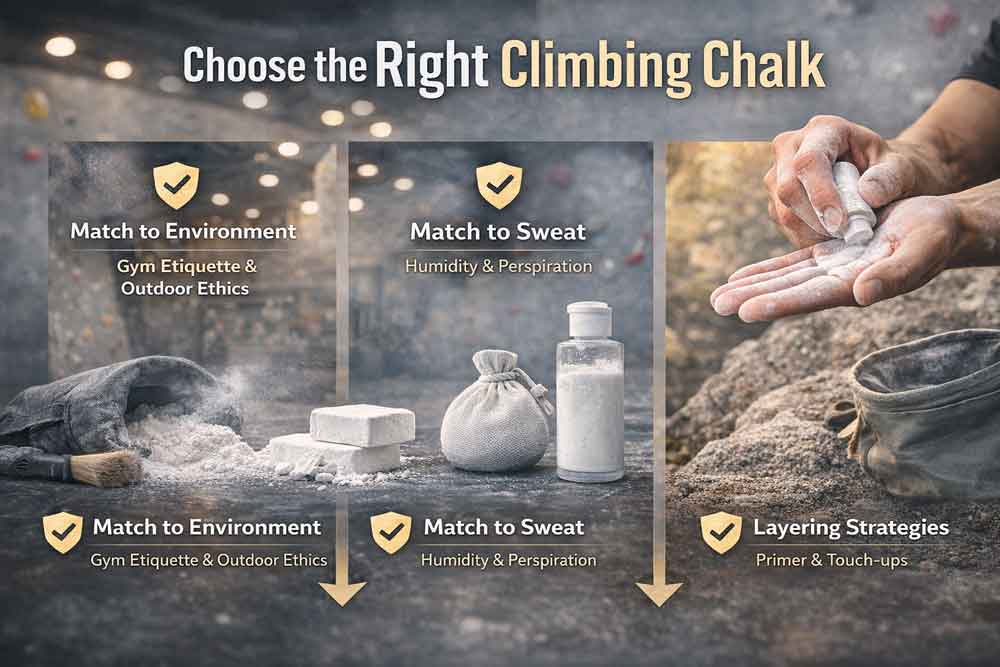
Start with the rules. Many gyms aim to limit airborne dust and clean-up time, so they encourage chalk balls or liquid chalk and may restrict loose powder. That policy approach is echoed by industry guidance; the Climbing Wall Association outlines practical dust mitigation steps like favoring balls or liquid, cleaning floors frequently, and adding filtration where possible. See the Climbing Wall Association’s strategies on chalk dust in gyms (2024).
Match to Sweat, Climate, Discipline
If you sweat a lot or the gym is humid, a thin liquid base layer can steady friction; top up lightly with a chalk ball as needed. In cooler, drier rooms—or if your sweat rate is low—skip the base and use a ball sparingly. For bouldering (short, powerful attempts), prep before each go; for top-rope laps, reapply only when hands actually feel slick. Outdoors, humidity, sun, and rock texture all matter—use less than you think and brush away residue after each try.
Layering Strategies That Work
Think “primer + touch-ups.” Apply a minimal base (often liquid) and let it fully dry. Then, between attempts, squeeze a chalk ball to add just enough to the fingertips and key contact points. Rub in rather than clapping; keep your bag closed when you move. If you see powder on your pants or the mat, you’re using too much.
Chalk Bags and Buckets
Key Features and Fit
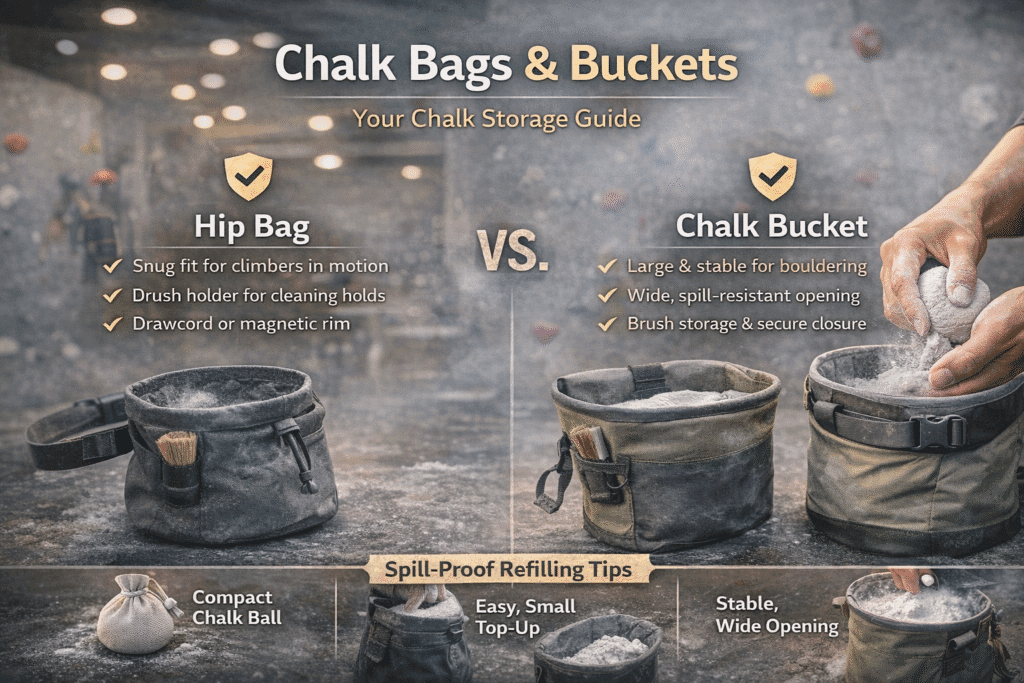
A good hip bag should sit snugly without bouncing, close securely (drawcord or magnetic rim), and offer a soft liner that helps distribute chalk. Look for a brush holder and a stable rim you can access one-handed. Details like a leak-resistant inner collar and a belt that doesn’t twist help you avoid spills.
Hip Bag vs. Chalk Bucket
Hip bags shine for roped climbing and most bouldering—they move with you and keep chalk handy. Buckets are popular in bouldering zones because they stand upright and offer a wide opening for pre-try prep. Buckets spill if kicked, though, so choose a design with a roll-top or secure closure, and park it out of traffic.
Spill-Proof Refilling Tips
- For a chalk ball: place 1–2 compressed chalk discs into the refillable sock, close the drawstring, then gently crush the discs inside the bag. This “disc-first” method avoids pouring loose powder across open air.
- For a hip bag: add only a small amount—just what you’ll use this session—then close the inner collar before cinching the outer rim.
- For a bucket: use a scoop close to the opening, transfer slowly, and seal it when you step away. Wipe rims and wash hands after refilling to prevent secondary dust.
A practical demonstration of a low-mess ball refill (format-agnostic technique) is outlined in this how-to: a no-mess chalk ball refill method.
Etiquette: Gym and Crag
Indoor Etiquette and Air Quality
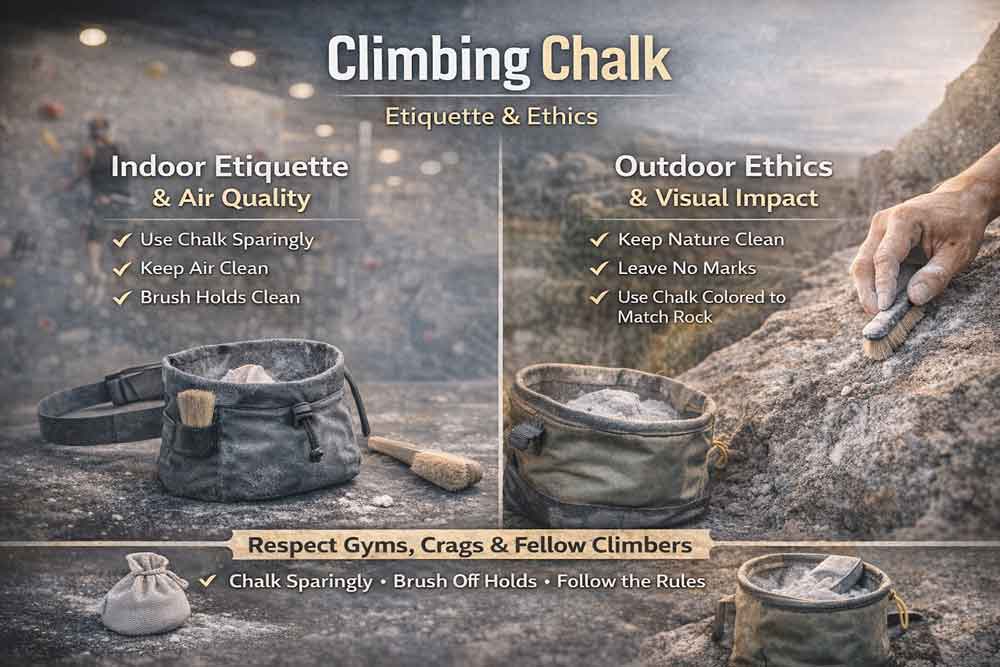
Treat chalk like spice—just enough brings out the best. Apply a thin layer, avoid clapping clouds, keep your bag closed, and brush holds after attempts to remove caked residue. Follow posted rules; some zones mandate liquid chalk or balls only. If staff ask you to adjust your use, switch formats or use less. Ventilation moves air but doesn’t trap particles; that’s why gyms emphasize behavior, cleaning, and filtration as the real tools for keeping air clear, as noted by the Climbing Wall Association’s chalk dust strategies.
Outdoor Ethics and Visual Impact
Chalk can leave bright streaks and build up on popular problems, and research has documented elevated magnesium on climbed boulders along with potential impacts on sensitive plants like mosses and ferns. A 2020 study mapped chalk accumulation patterns and raised ecological concerns on heavily trafficked blocks; see Hepenstrick et al., PLoS ONE (2020). Land managers sometimes regulate chalk color to reduce visual impact; for example, Arches National Park prohibits white chalk and requires color-matched alternatives—see the U.S. National Park Service guidance for Arches. Wherever you climb, use chalk sparingly, erase tick marks, and brush holds gently before you leave.
Health and Safety Notes
If you have asthma or are sensitive to dust, position yourself away from heavy chalk use, favor liquid chalk or a ball, and skip dramatic claps. Avoid alcohol-based products on broken skin; wash with a mild soap after climbing and moisturize later when you’re off the wall. If you notice persistent irritation, cracks that won’t heal, or breathing symptoms during sessions, consider consulting a healthcare professional for tailored advice.
Care and Maintenance
Storage and Handling
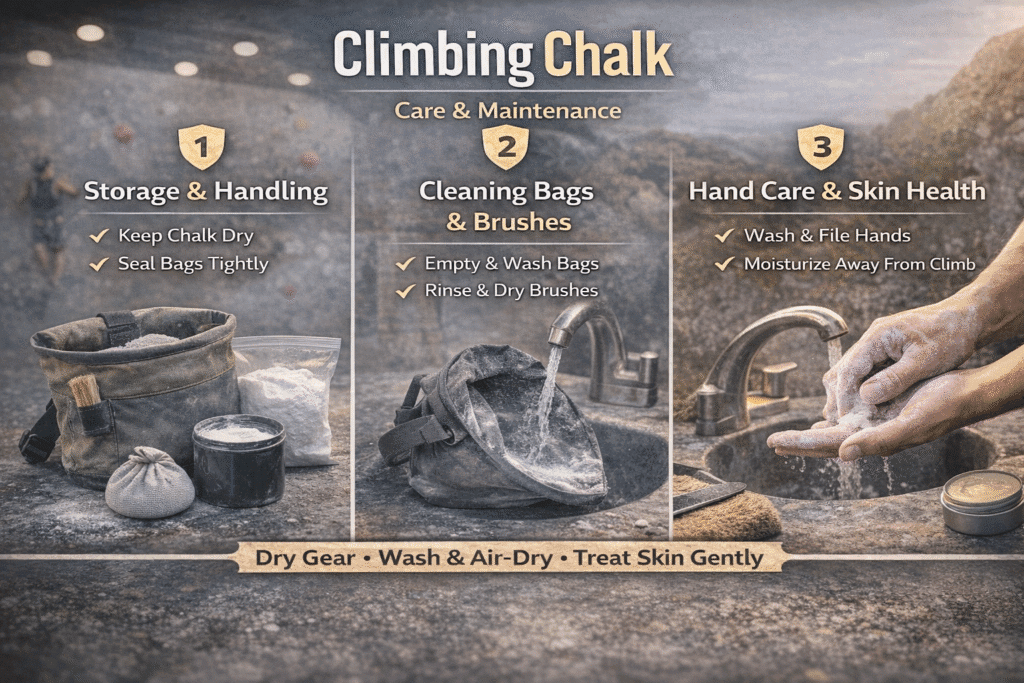
Humidity degrades performance and promotes caking. Keep chalk in a sealed bag or bucket, store gear in a dry place, and carry only what you’ll use. Close containers between climbs and secure lids before tossing bags into your pack.
Cleaning Bags and Brushes
Empty excess chalk outside or over a trash bin, then turn the bag inside out and gently tap to release residue. Hand-wash with lukewarm water and a small amount of mild soap; rinse thoroughly and air-dry fully before refilling. For brushes, rinse bristles to remove caked chalk, let them dry, and avoid harsh solvents that weaken fibers.
Hand Care After Climbing
Rinse hands in lukewarm water and use a mild, moisturizing soap to remove chalk without stripping oils. Lightly file calluses to keep them even. Apply a barrier-supporting moisturizer at night, not right before climbing. For deeper guidance on climber skin routines, see this coach-backed overview from Lattice Training: Skin care for rock climbers.
Conclusion
Using climbing chalk well is about context and control: choose a format that fits your gym’s rules and your sweat rate, apply the thinnest effective layer, and clean up after yourself—indoors and out. Protect your skin with smart product choices and simple aftercare so you can keep climbing longer with reliable grip and good manners on every route and boulder.
Comments are closed