7 Crucial Differences Between IFAKs and First Aid Kits
The difference between an IFAK vs Traditional First Aid Kit comes down to purpose: an IFAK (Individual First Aid Kit) is engineered to stop life-threatening hemorrhage within 3 minutes, while a traditional first aid kit treats minor injuries like cuts, burns, and headaches. CDC 2023 injury surveillance data shows hemorrhage causes 30–approximately 40% of trauma deaths, most occurring before EMS arrives.
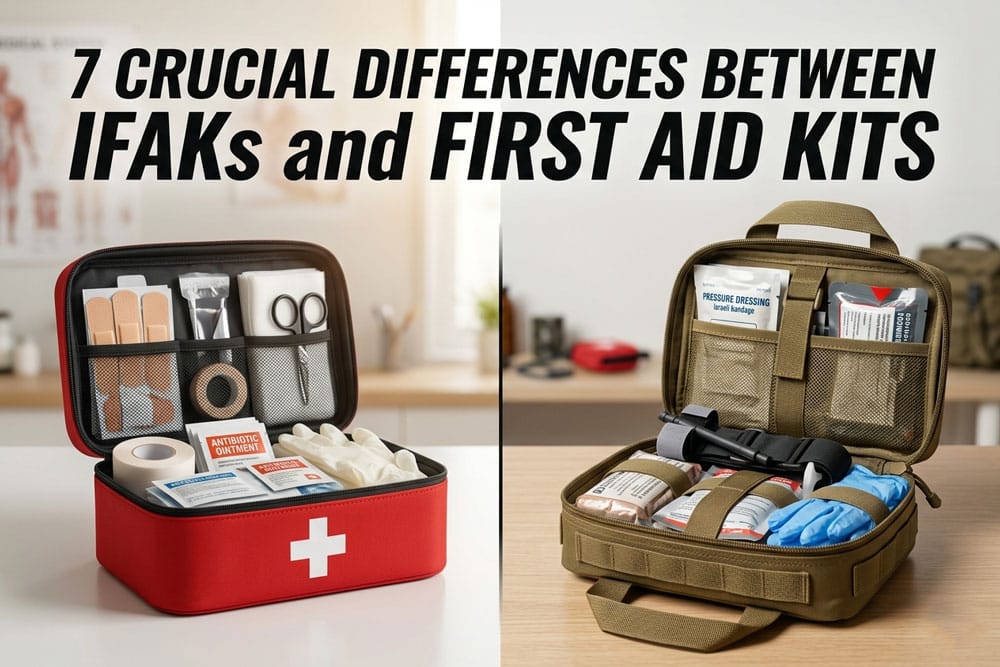
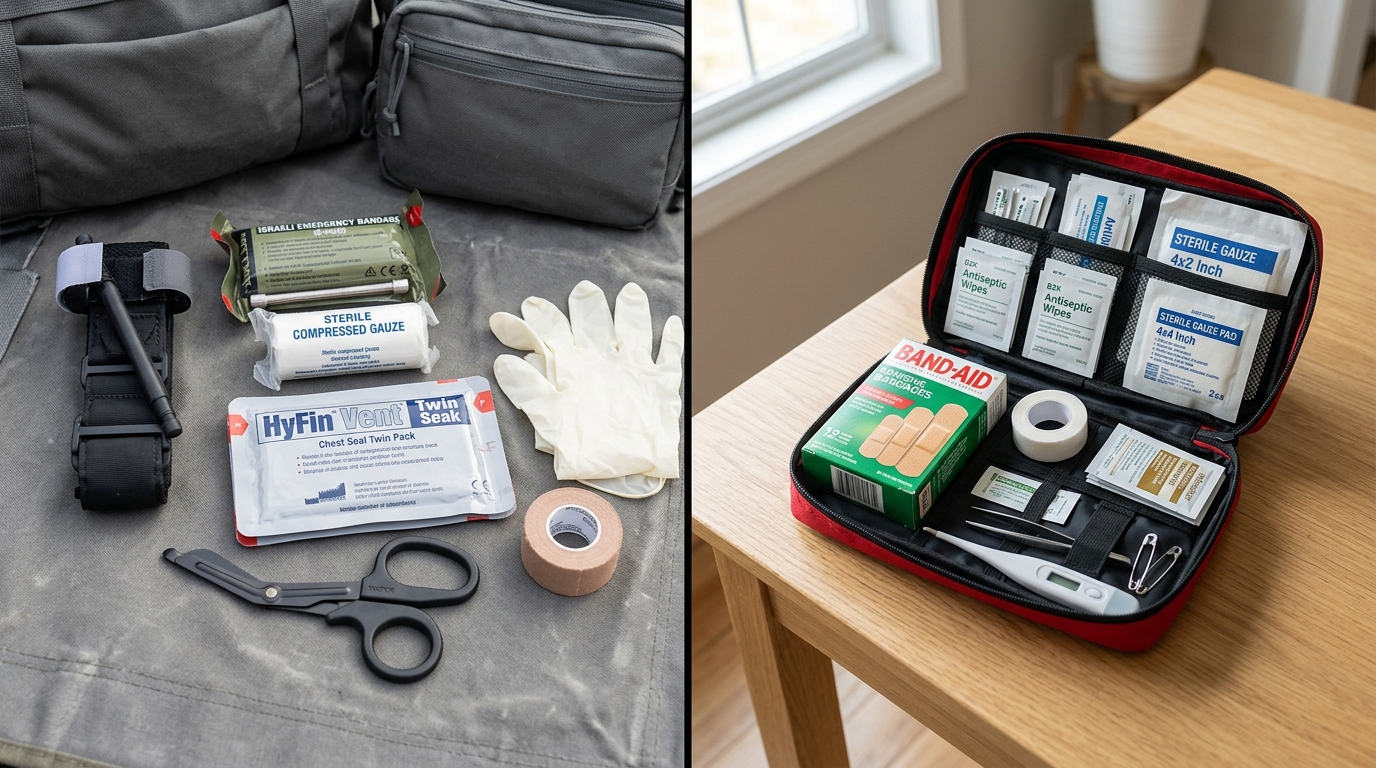
IFAKs contain tourniquets, hemostatic gauze, and chest seals for gunshot wounds or arterial bleeds; traditional kits hold bandages, antiseptic wipes, and pain relievers.
According to the CDC’s 2023 injury surveillance data, hemorrhage causes 30,approximately 40% of trauma deaths, and most happen before EMS arrives.
So when people ask IFAK vs Traditional First Aid Kit: What’s the Difference?, the honest answer is they solve different problems. One handles life-threatening trauma (gunshots, deep lacerations, blast injuries).
The other handles minor cuts, burns, and headaches. Below, we break down the 7 differences that actually matter when you’re choosing which kit to carry, store, or stock.
Carry an IFAK for life-threatening trauma; traditional kits only handle minor cuts and scrapes.
Stock tourniquets, hemostatic gauze, and chest seals to stop hemorrhage within 3 minutes.
Hemorrhage causes 30-approximately 40% of trauma deaths, mostly before EMS arrives on scene.
Use traditional first aid kits for blisters, burns, headaches, and everyday minor injuries.
Choose your kit based on threat level: gunshot risk versus household scrapes.
The Core Distinction Stop-the-Bleed Tools vs Treat-the-Boo-Boo Tools
Short answer: An IFAK (Individual First Aid Kit) is built to keep someone alive during the first 5,10 minutes of a life-threatening trauma, gunshot wounds, arterial bleeds, blast injuries. A traditional first aid kit is built to clean a scrape, cover a blister, or dose an ibuprofen.
They share the word “kit” and almost nothing else.
The dividing line comes down to one number: time-to-death from uncontrolled hemorrhage. A femoral artery bleed can drain a person in under 3 minutes.
That’s why the U.S. military redesigned its IFAK after Afghanistan, where the Committee on Tactical Combat Casualty Care found extremity hemorrhage caused roughly 60% of preventable battlefield deaths.
Tourniquets, chest seals, and hemostatic gauze became the answer.
A drugstore first aid kit solves a different problem entirely. Band-Aids, antiseptic wipes, gauze pads, and aspirin handle the daily injuries most households actually face: kitchen cuts, playground scrapes, sunburns, mild headaches.
So the real IFAK vs Traditional First Aid Kit: What’s the Difference? question is a threat-matching question. Match the kit to the worst injury you can realistically expect, not the most common one.
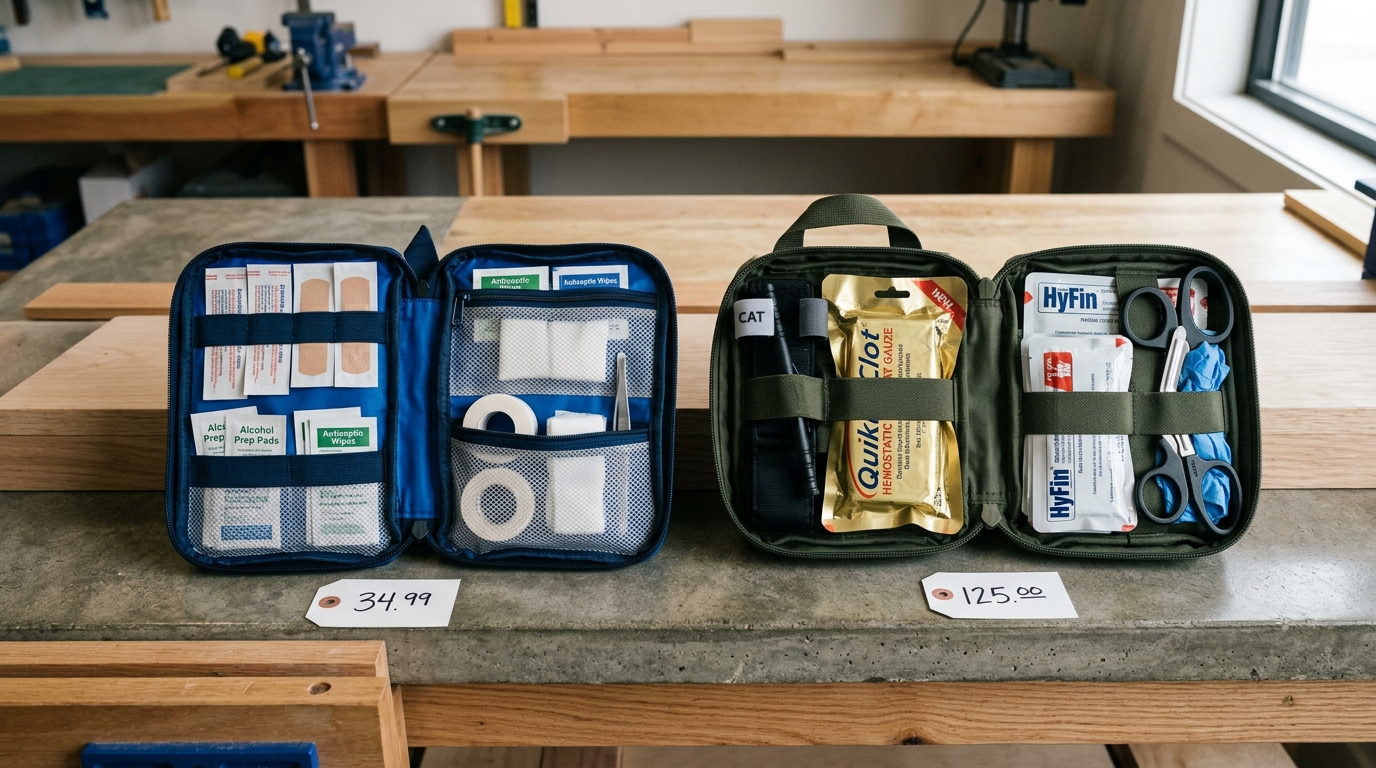
IFAK vs traditional first aid kit contents comparison showing trauma gear versus minor injury supplies
What an IFAK Actually Contains and Why Each Item Exists
Every single item inside an IFAK basically answers one question from the MARCH protocol, which stands for Massive hemorrhage, Airway, Respiration, Circulation, and Hypothermia. The U.S.
Army’s Tactical Combat Casualty Care guidelines, often called TCCC, actually drove this loadout once data from Iraq and Afghanistan showed bleeding from arms and legs caused roughly 60% of preventable battlefield deaths. That one statistic is exactly why a tourniquet sits right on top.
Here’s the standard loadout, and what each piece is really meant to do:
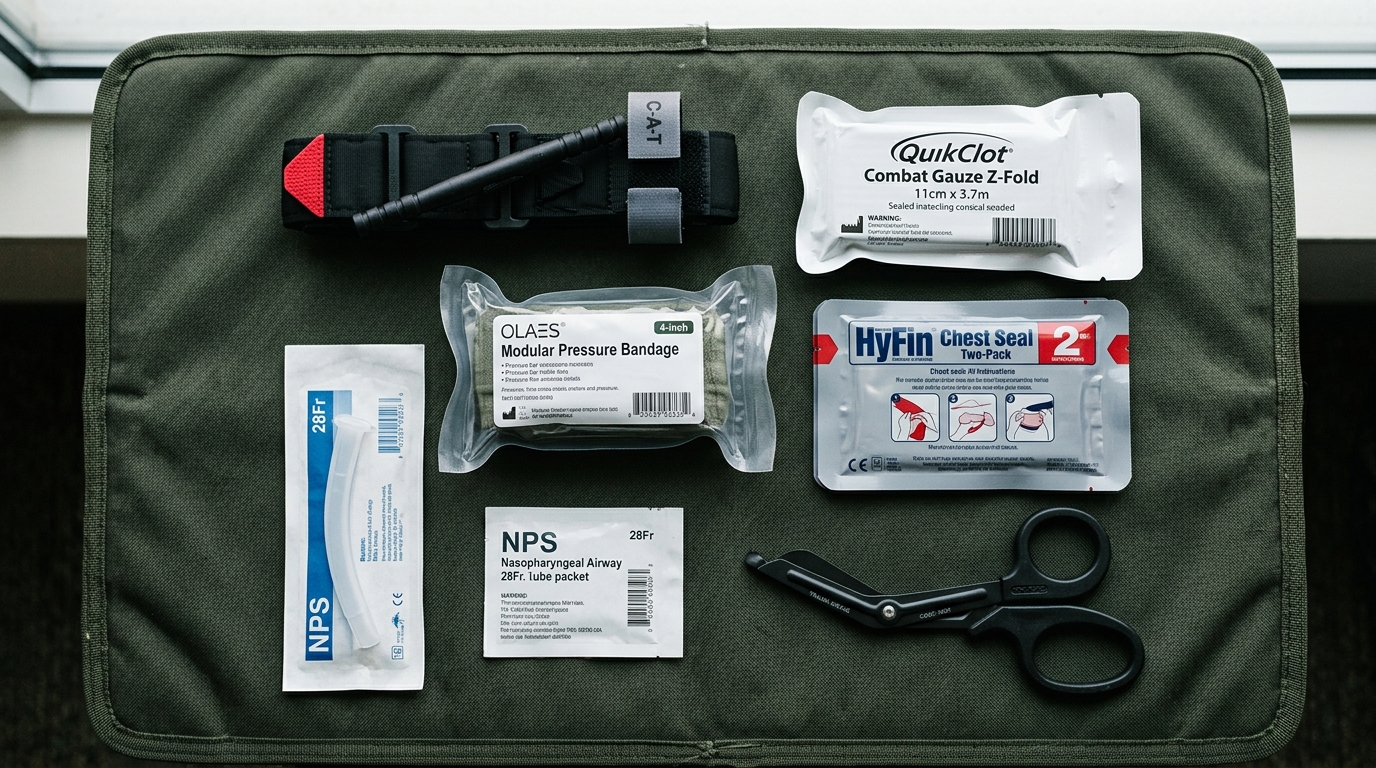
Tourniquet (CAT Gen 7 or SOFTT-W), stops heavy bleeding from an arm or a leg in under 30 seconds. Skip the generic Amazon copies, because they fail when you actually load them up. Only CoTCCC-approved models belong in a real kit.
Hemostatic gauze (QuikClot Combat Gauze or Celox Rapid), gets packed into wounds at the groin, armpit, or neck where a tourniquet just can’t reach. The kaolin or chitosan triggers clotting after about 3 minutes of steady direct pressure.
Pressure bandage (Israeli or OLAES), secures the packed wound and keeps compression going hands-free.
Vented chest seals (HyFin or Halo, pair), covers sucking chest wounds and helps prevent a tension pneumothorax, which is basically air trapped in the chest. Always carry two of them, one for entry and one for exit.
Nasopharyngeal airway (28Fr typical), keeps an unconscious casualty’s airway open when their tongue is blocking it.
Trauma shears, nitrile gloves, and marker, used to cut clothing away fast, protect the responder, and write the tourniquet application time right on the patient’s forehead.
That’s the whole logic behind IFAK vs Traditional First Aid Kit: What’s the Difference?. An IFAK essentially buys you 10 minutes until EMS arrives. Nothing more, and nothing less.
IFAK contents laid out showing tourniquet hemostatic gauze chest seals and airway tools following MARCH protocol
What Sits Inside a Traditional First Aid Kit and Its Real Use Cases
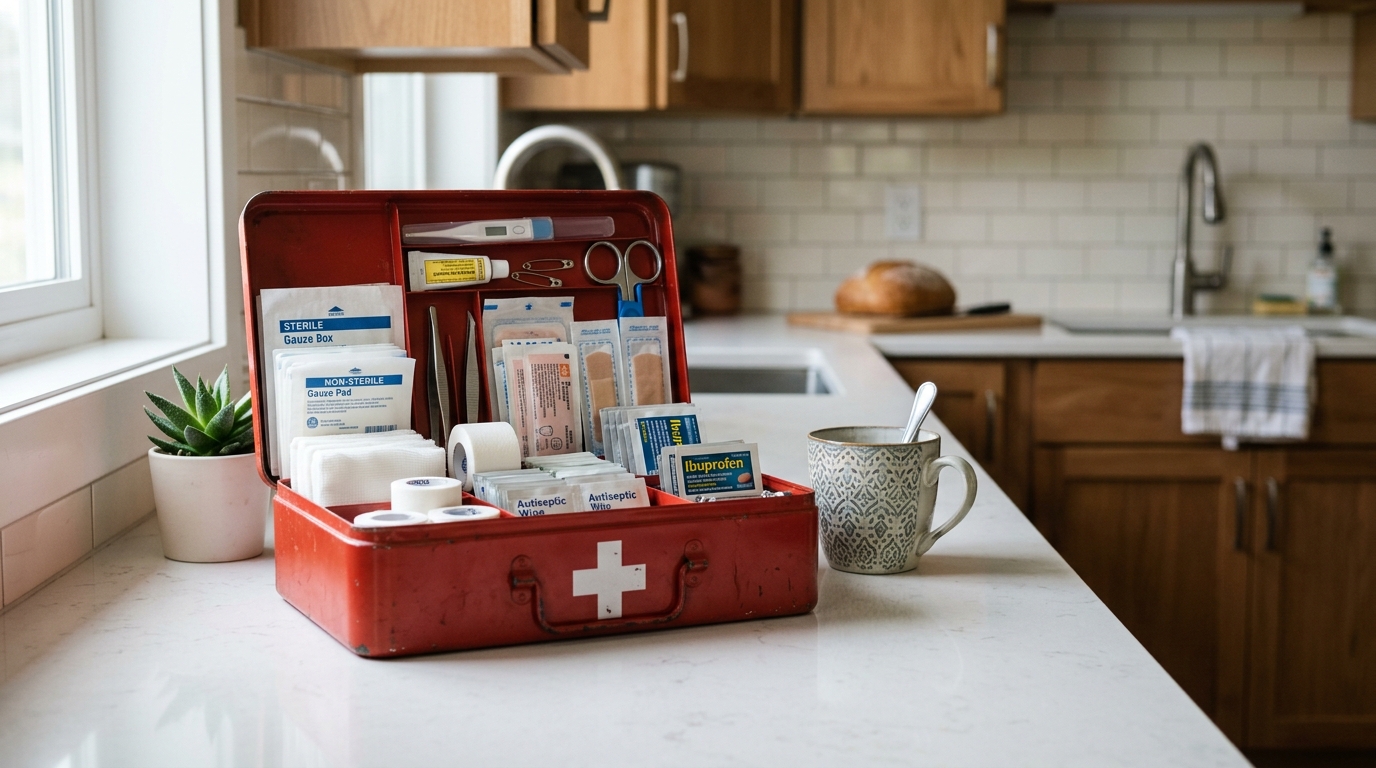
A traditional first aid kit handles minor, non-life-threatening injuries: paper cuts, scraped knees, bee stings, mild burns, headaches. Open one and you’ll find adhesive bandages in three sizes, sterile gauze pads (2×2 and 4×4 inch), antiseptic wipes, triple-antibiotic ointment packets, hydrocortisone cream, tweezers, blunt-tip scissors, a CPR breathing barrier, an instant cold pack.
And OTC meds like ibuprofen and antihistamines.
Workplace kits in the United States must meet ANSI/ISEA Z308.1-2021, which OSHA references for compliance. Class A kits cover common office injuries with 16 mandatory item categories.
Class B kits add higher quantities and items like a tourniquet and splint for industrial settings, construction, manufacturing, warehousing, where mechanism of injury is more severe.
Here’s the catch in the IFAK vs Traditional First Aid Kit question: even a Class B kit includes only one tourniquet and 32 sq in of trauma pad. That’s enough for a single moderate laceration, not a gunshot wound or arterial bleed from a table saw.
Real use cases I see covered well by a traditional kit:
Kitchen burns and knife nicks (roughly 350,000 ER visits yearly per CPSC data)
Playground abrasions and splinters
Blister care on hikes under 5 miles
Allergic reaction itching, minor sprains needing cold therapy
Pro tip: replace the antibiotic ointment packets every 12 months, they dry out faster than the printed expiration suggests, especially in a hot car glovebox.
Traditional first aid kit contents compared to IFAK supplies
Side-by-Side Contents and Cost-Per-Use Comparison Table
Honestly, the quickest way to settle the IFAK vs Traditional First Aid Kit: What’s the Difference? question is to put both kits on a table side by side and add up the numbers.
Here is what each one really costs, what it weighs, and how long the contents stay good.
Attribute
Traditional First Aid Kit
Quality IFAK
Retail price
approximately $25–$60 (for example, the Johnson & Johnson 140-piece kit runs around $30)
approximately $80–$200 (the NAR M-FAK is about $110 and the NAR Tac-Med sits near $185)
Weight
0.5–1.5 lb
1.2–approximately 2.5 lb once fully packed
Size
9″ × 6″ × 3″ soft pack
7″ × 5″ × 3″ MOLLE pouch
CAT tourniquet shelf life
Not included at all
Indefinite, though you should inspect it once a year per the NAEMT TCCC guidance
Hemostatic gauze (QuikClot or Combat Gauze)
Not included
3-year expiration date printed right on the pouch
Sterile bandages and gauze pads
5 or more years if the pouch is still sealed
5 or more years
Adhesive bandages
3–5 years, because the sticky backing eventually breaks down
Usually not included
Now here is the math that almost nobody actually runs. Picture a approximately $40 home kit that you use to clean up maybe 30 small cuts over five years. That works out to roughly $1.33 every time you open it.
Compare that to a approximately $150 IFAK. It might sit there untouched for the full 3-year hemostatic cycle.
If you never deploy it, the cost-per-use is basically approximately $150. If you do deploy it once, that approximately $150 just bought you a life.
That is the asymmetry in a nutshell. Traditional kits are cheap on a per-event basis.
IFAKs are really insurance against one catastrophic moment.
Quick tip from experience. When your Combat Gauze hits its expiration date, do not throw it out.
Rotate it into your training pile instead. The clotting chemicals lose their punch over time, sure, but the Z-fold packing motion you practice with it is exactly the same as the real thing.
IFAK vs traditional first aid kit contents and cost comparison
Threat Profile Matrix Which Kit Matches Which Scenario
Quick rule: If losing blood could kill someone in under 5 minutes, you really need an IFAK. If the worst thing that could happen is a scar or maybe an infection, then a traditional kit will handle it just fine.
⚠️ Common mistake: Relying on a traditional first aid kit for trauma emergencies like gunshot wounds or arterial bleeds. This happens because both kits share the “first aid” label, but a victim can bleed out in 3-5 minutes, long before EMS arrives, and bandages plus antiseptic wipes can’t stop arterial hemorrhage. The fix: Carry an IFAK with a tourniquet, hemostatic gauze, and chest seal alongside your traditional kit.
The Stop the Bleed campaign points out that a femoral artery bleed can actually become fatal in about 3 minutes. That’s faster than any ambulance can show up in approximately 95% of U.S. ZIP codes.
So use this if-then matrix to basically settle the IFAK vs Traditional First Aid Kit: What’s the Difference? question for your actual day-to-day life:
Scenario
Kit Needed
Why
Kitchen burns, kid’s playground scrapes, office paper cuts
Traditional
Low-energy wounds, no real risk of an artery being hit
Gunshot wounds, stabbings, active shooter response
IFAK
Penetrating trauma, plus bleeds in those tricky junctional spots
Highway crashes, motorcycle wrecks
IFAK
Crush injuries combined with the risk of a torn artery
Industrial saw, chainsaw, machine shop accidents
IFAK
Amputation-level bleeds really need a CAT tourniquet on within 60 seconds
Hiking, range days, road trips, home defense
Both
The overlap zone, blisters AND ballistic risk all in one
That overlap zone is actually what matters most. A weekend backpacker is generally 40+ minutes away from real medical care, so a snake bite or a bad fall where someone gets impaled shifts from being “first aid” to being “trauma” the second EMS can’t get to you.
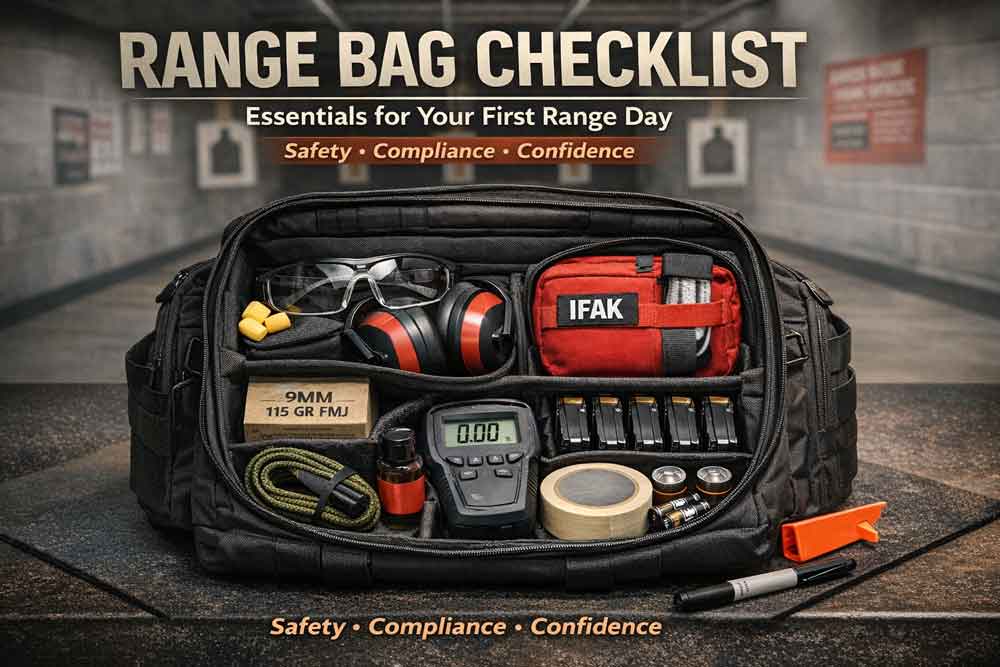
Range days carry an obvious risk of what’s called an ND, basically a negligent discharge. Every certified range I’ve ever audited requires a tourniquet on-site, but most shooters still only carry Band-Aids in their range bag.
The Training Gap That Makes an Untrained IFAK Dangerous
Direct answer: A traditional first aid kit is built to forgive errors. You might misapply a Band-Aid, and it essentially does no harm. An IFAK, though, will punish those same mistakes.
Think about it. A tourniquet placed over a joint won’t actually occlude arterial flow. If you pack a wound without training, you basically waste a approximately $40 hemostatic gauze. Worse, slapping a chest seal over the wrong intercostal space can convert an open pneumothorax into a fatal tension pneumothorax.
The U.S. Army’s Tactical Combat Casualty Care (TCCC) data found that improperly applied tourniquets fail to stop bleeding in roughly 1 in 5 cases when applied by untrained personnel. That’s not a small error. That’s a femoral artery bleed continuing while the rescuer believes the problem is solved.
Three skills separate gear from medicine.
Tourniquet placement. You need to go “high and tight” on the limb, 2–3 inches above the wound, and never on a joint. Tighten until the distal pulse stops. Then mark the application time on the windlass.
Wound packing. You have to drive the gauze directly into the bleeding vessel, not around it. Then apply 3 minutes of direct pressure. Stuffing it loosely basically wastes the QuikClot.
Chest seal placement. Cover the entire wound on a full exhalation. Then you should burp the seal if breathing worsens.
So, what’s the fix? Two courses close the gap. Stop the Bleed runs 60 to 90 minutes and costs approximately $25 to $50. Honestly, that’s sufficient for the hemorrhage portion of any IFAK.
Civilian TCCC, or TECC, runs approximately 16 hours and covers the full MARCH sequence. The IFAK vs Traditional First Aid Kit: What’s the Difference? comparison ultimately collapses into one rule. In my experience, you should buy the training before you buy the kit.
Legal and Liability Considerations of Carrying an IFAK in Public
Direct answer: Good Samaritan laws basically protect bystanders who step in to help when their intentions are good.
But that coverage gets pretty thin the moment you apply a tourniquet, pack a wound, or reach for a hemostatic agent on somebody. Those are interventions courts might actually see as going beyond what a regular person should be doing.
Traditional first aid kits almost never raise these kinds of questions in the first place.
All 50 U.S. states have Good Samaritan statutes on the books. The NIH’s review of Good Samaritan protections points out, though, that immunity usually requires you to act within your actual training level and without being grossly negligent.
Imagine a CAT tourniquet left on for 6+ hours by someone untrained, causing a limb to be lost. That’s exactly the gray zone plaintiffs’ attorneys really love to dig into.
Workplace and venue rules pile on another layer of complications:
OSHA-compliant workplaces: Plenty of corporate safety policies flat-out ban tourniquets and decompression needles from the on-site kit. Only ANSI Z308.1 contents are approved, essentially.
K–12 schools: Trauma shears, chest seals, and even 4-inch hemostatic gauze can get swept up under weapons or medical-device bans. Stop the Bleed cabinets, where they’re allowed at all, are staff-only.
TSA carry-on: QuikClot and Celox powder are allowed in both checked and carry-on bags, though trauma shears need blades under 4 inches. Tourniquets pass through fine. Honestly, I’ve flown with a CAT in my EDC pouch 30+ times without ever getting pulled aside for secondary screening.
Some practical advice here. Document your training carefully (TCCC card, Stop the Bleed certificate), write the date on every single tourniquet, and actually know your state’s specific statute number.
That paper trail is really what makes the difference in the IFAK vs Traditional First Aid Kit: What’s the Difference? liability question.
How to Choose or Build the Right Setup for Your Risk Profile
Short answer: Stop framing this as IFAK vs Traditional First Aid Kit: What’s the Difference? and start asking “where do I need which?” Most prepared adults need three kits in three locations, not one kit doing two jobs poorly.
Run your decision through three variables:
Environment — Urban (EMS response under 8 minutes per CDC EMS data), rural (15–approximately 30 min), or wilderness (60+ min, no signal).
Training — Untrained, Stop the Bleed certified, or TCCC/WFR level.
Likely threat — Paper cuts and kids’ scrapes, power-tool lacerations, MVCs, or penetrating trauma.
The Layered Setup That Actually Works
Home and office: A 100-piece traditional kit (approximately $25–40). Handles the approximately 95% of incidents — burns, splinters, headaches — that fill an average household’s annual injury log.
Vehicle: A compact IFAK with one CAT tourniquet, hemostatic gauze, chest seals, plus a small boo-boo pouch. MVCs cause roughly 38,000 U.S. deaths a year (NHTSA); arterial bleeding is the top preventable cause.
Range, jobsite, or backcountry: A dedicated trauma kit on your belt or pack — accessible one-handed within 3 seconds.
Budget reality check: a full three-tier layered setup runs approximately $180,250 once. That’s less than one ER copay. The honest answer to IFAK vs Traditional First Aid Kit: What’s the Difference? is that they’re complementary tools, pick the right one for the right location, then train on both.
Frequently Asked Questions
Can I combine an IFAK and first aid kit into one?
Yes, but keep them in separate pouches inside the same bag. Trauma gear needs one-handed access in under 10 seconds, digging past Band-Aids costs lives. Use color-coded pouches: red for hemorrhage control, blue or green for boo-boos.
Do I need an IFAK if I’m not military or law enforcement?
The Stop the Bleed campaign, backed by the American College of Surgeons, explicitly targets civilians. Car crashes, kitchen accidents, and industrial injuries kill through the same mechanism as gunshots: uncontrolled bleeding within 3,5 minutes.
How often should I replace hemostatic gauze?
Check the printed expiration date, most QuikClot and Celox products last 3 to 5 years from manufacture. Heat exposure (a hot car trunk above approximately 120°F) degrades the kaolin or chitosan agent faster. Rotate stock annually.
Are IFAKs legal on planes or in schools?
TSA permits tourniquets, gauze, and chest seals in carry-ons. Shears under 4 inches are fine. Schools vary wildly, some K-12 districts ban them under weapons policies, while others stock them in classrooms post-Uvalde. Call ahead.
What’s the minimum training before buying one?
A 2.5-hour Stop the Bleed course. That’s the floor for anyone serious about the IFAK vs traditional first aid kit decision.
Final Verdict and Next Steps
The seven differences boil down to this: purpose (life-saving vs. comfort care), contents (CAT tourniquet and hemostatic gauze vs.
adhesive bandages and antiseptic wipes), MARCH-based design vs. minor-injury triage, cost (approximately $120,$250 vs.
approximately $15,$40), training burden (Stop the Bleed certification vs. common sense), legal exposure under Good Samaritan statutes, and threat-matched deployment.
The answer to IFAK vs Traditional First Aid Kit: What’s the Difference? isn’t “pick one.” It’s “own both, and stage them by threat.”
A traditional kit handles the approximately 95% of incidents you’ll actually face in a lifetime, splinters, scrapes, headaches. An IFAK handles the approximately 5% that can kill in under 5 minutes, where EMS arrival times average 7,14 minutes nationally per JEMS reporting.
Three concrete next steps:
Take a Stop the Bleed class. Free, 90 minutes, find one at stopthebleed.org. Without it, your tourniquet is a placebo.
Audit your current kit against the threat matrix in Section 5. If your “first aid kit” has only bandages but you commute on a highway, you’ve a gap.
Stage by location: traditional kit in the kitchen and bathroom; IFAK in the vehicle trunk, range bag, and trailhead pack. Match the tool to the most likely threat at that location.
Buy the gear. Get the training. Stage it where bleeding actually happens.







Comments are closed