Top-Loading vs Panel-Loading Backpacks: Which Should You Choose?
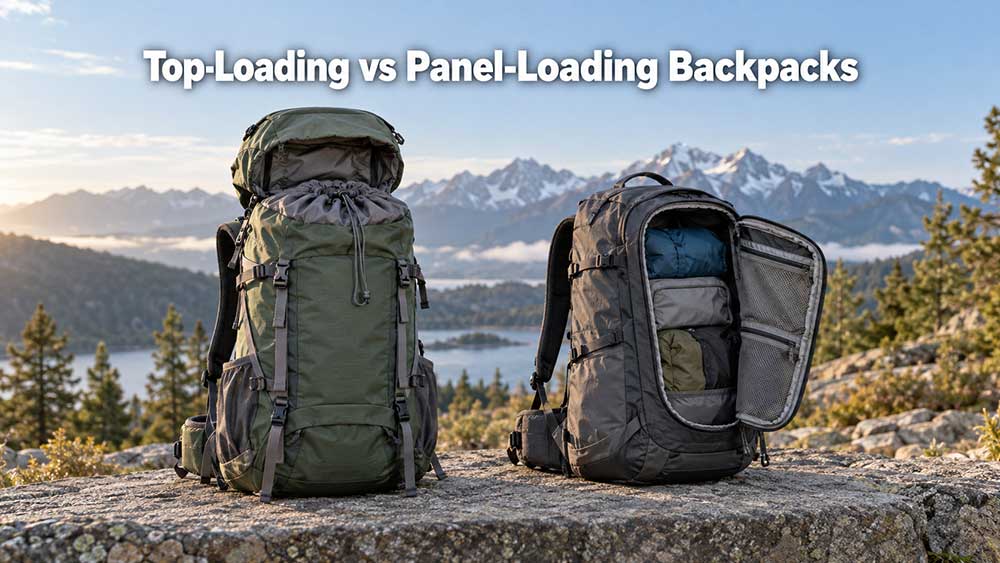
Top-loading and panel-loading backpacks differ mainly in how you reach the main compartment. A top-loader opens from above and usually suits hikers who value simple construction, flexible packing space, and fewer long zippers. A panel-loader opens through a large zippered section, making it easier to see and reach gear throughout the compartment.
Neither design is better for every situation. Top-loading backpacks are often practical for multi-day hiking, trekking, climbing, and alpine use. Panel-loading backpacks generally provide more convenient access for travel, commuting, photography, and equipment-heavy day trips. Hybrid backpacks combine both systems when users need outdoor carrying performance without giving up access to gear packed deeper inside.
Top-Loading vs Panel-Loading Backpacks at a Glance
Feature
Top-Loading Backpack
Panel-Loading Backpack
Main opening
Opens from the top
Opens through a large front, rear, or side panel
Gear access
Best for items near the top
Easier access to most of the compartment
Packing style
Layered or vertical packing
Suitcase-style or compartment-based packing
Capacity flexibility
Some models use an expandable collar or adjustable lid
Usually limited by the body shape and zipper path
Weight
Can be lighter at a similar capacity
May weigh more because of longer zippers and reinforcement
Weather protection
Fewer long zipper paths may reduce water-entry points
Longer zipper paths may require additional protection
Construction
Often mechanically simpler
More dependent on zipper selection and reinforcement
Common uses
Trekking, backpacking, climbing, and alpine packs
Travel, commuting, photography, and day hiking
Best for
Flexible loading and simple construction
Organization and faster access
These are general design tendencies, not fixed rules. Capacity, suspension, materials, zipper quality, reinforcement, and overall construction still determine how a backpack performs.
What Is a Top-Loading Backpack?
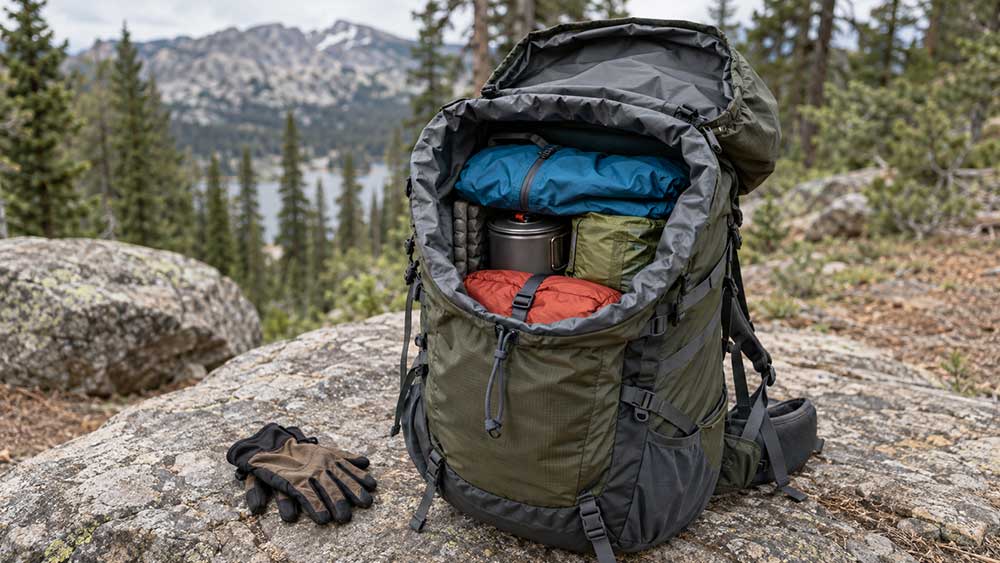
A top-loading backpack has a main compartment accessed from above. The opening may use a drawcord, zipper, roll-top closure, lid, or a combination of these systems. Larger trekking and backpacking packs often place an adjustable lid over a drawcord opening.
Because the main compartment is usually built as one continuous body, a top-loader can provide flexible packing space without requiring a long zipper around the bag. Some designs also include an extension collar or floating lid to accommodate changes in load volume.
This structure is common in:
Multi-day hiking backpacks
Trekking packs
Mountaineering and alpine packs
Ultralight roll-top backpacks
Expedition packs
The main compromise is access. If a rain jacket is packed halfway down the compartment, the items above it may need to be moved before the jacket can be reached.
Harvard’s First-Year Outdoor Program describes top-loaders as packs filled through an upper opening, while panel-loaders use a large zippered section to provide broader access. Its guide to backpack types and fit also explains that some backpacks combine both systems.
What Is a Panel-Loading Backpack?
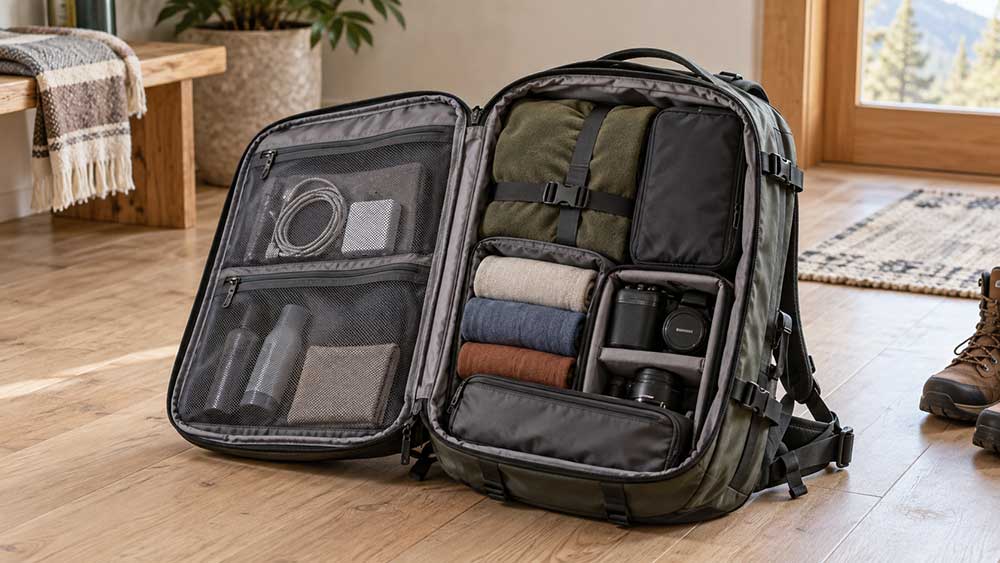
A panel-loading backpack uses a large zippered opening that allows one section of the bag to open like a flap. Depending on the product, the opening may be positioned on the front, back, or side.
The wider opening exposes more of the compartment, making it easier to see and reach items packed near the middle or bottom. Instead of stacking everything vertically, users can arrange clothing, tools, camera equipment, or organizers across the full compartment.
Panel-loading designs are common in:
Travel backpacks
Commuter backpacks
Camera bags
Tactical packs
School backpacks
Medical and equipment bags
Some hiking daypacks
A long zipper adds components and sewing operations to the bag. It must also handle fabric tension when the compartment is full. Panel-loaders can still be durable, but their performance depends more heavily on zipper selection, reinforcement, pattern shape, and how the load is controlled.
Are Panel-Loading, Front-Loading, and Clamshell Backpacks the Same?
These terms are related, but they do not always describe exactly the same structure.
A front-loading backpack normally opens through a zippered panel on the face of the bag. A clamshell backpack opens farther, often allowing the two sides to lie almost flat like a suitcase. Panel-loading is the broader term and can describe either design.
Common variations include:
A partial panel opening with a U-shaped zipper
A full clamshell opening that lies nearly flat
A back-panel opening on the shoulder-strap side
A side-access panel for camera or technical equipment
A hybrid design with both top and panel access
Product names are not always consistent between brands. The actual zipper path and opening angle provide more useful information than the words used in the product title.
Which Design Makes Gear Easier to Reach?
Panel-loading backpacks generally provide faster access to items throughout the main compartment. Opening the panel exposes a larger area, so users do not have to remove everything packed above the item they need.
This is particularly useful for:
Camera equipment
Medical supplies
Travel clothing
Electronic accessories
Tools and work equipment
Gear organized by category
Top access still has practical advantages. A top-loader can remain upright while a small section is opened. On a narrow trail, wet ground, snow, or a crowded train, there may not be enough clean space to lay open a full panel.
Packing order also makes a difference. A well-organized top-loader can provide efficient access when frequently used items are stored in the lid, side pockets, hip-belt pockets, or near the top of the main compartment.
Which Backpack Is Easier to Pack?
Panel-loaders are generally easier for people who prefer suitcase-style organization. The compartment opens widely, making it convenient to arrange folded clothing, packing cubes, camera dividers, rectangular cases, or work equipment.
Top-loaders are better suited to layered packing. A common approach is to place bulky or less frequently used equipment at the bottom, dense items near the middle and close to the back, and frequently used items near the top.
The contents also influence which design feels easier:
Soft outdoor equipment can fill the irregular spaces of a top-loader efficiently.
Folded clothing and packing cubes fit naturally in many panel-loaders.
Bulky camping equipment can often be packed efficiently in a tall top-loading compartment.
Delicate equipment may benefit from the visibility and organized access of a panel-loader.
Carrying comfort depends more on torso fit, suspension, frame structure, padding, and load placement than on the direction in which the compartment opens.
Does Opening Style Affect Backpack Capacity?
Opening style does not determine the stated capacity. A 40-liter top-loader and a 40-liter panel-loader can offer similar measured volume, although their usable space may feel different.
Many top-loaders include an extension collar, adjustable lid, or flexible upper section. These features can provide room for an extra layer or a temporary change in load volume. The pack should still be used within the limits of its seams, closure, suspension, and intended carrying load.
A panel-loader usually has a more defined body shape. Its usable capacity is controlled by the compartment dimensions and the ability to close the zipper without forcing it. This predictable shape works well with packing cubes and structured equipment, but it provides less flexibility when the contents exceed the intended volume.
Capacity should be selected according to trip duration and the actual equipment list. The differences between trekking and mountaineering backpacks also involve load type, pack shape, external attachment systems, and suspension.
Does One Opening Style Weigh Less?
A top-loading design can be lighter when two backpacks use similar fabrics, capacities, and suspension systems. It may require a shorter zipper or no main-compartment zipper at all.
A panel-loading design often requires:
A longer main zipper
One or two zipper sliders
Reinforcement at the zipper ends
Binding or additional seam construction
Structural support around the opening
Internal panels that control the contents when the pack is open
These additions can increase weight, but the difference is not universal. A heavily framed expedition top-loader may weigh much more than a minimalist panel-loading daypack. A useful comparison must involve backpacks with similar capacity, fabric, frame, padding, and intended use.
Which Design Handles Rain Better?
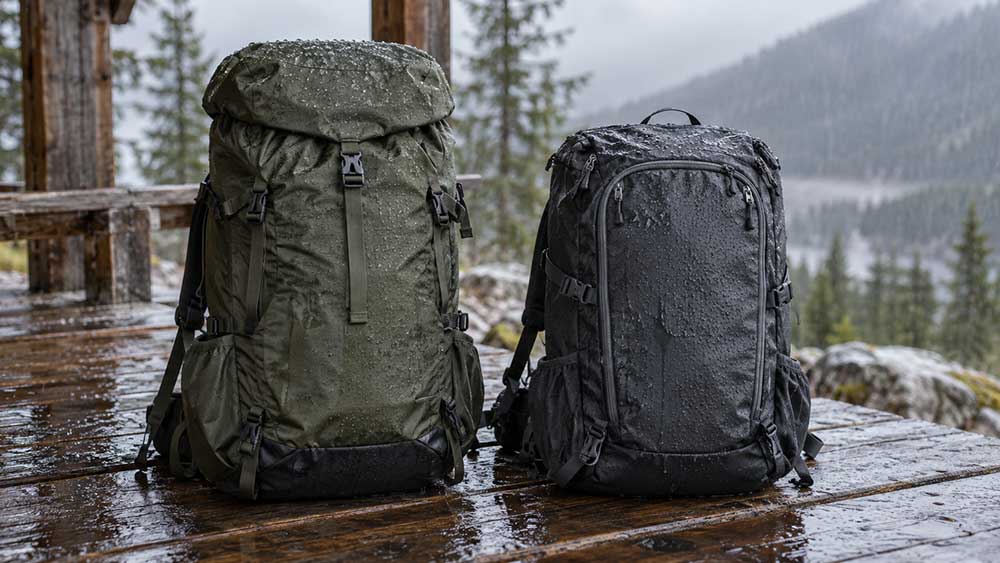
A conventional top-loader may offer an advantage in prolonged wet conditions because it can avoid a long zipper around the main compartment. A roll-top closure or a drawcord opening covered by a lid can also reduce direct exposure to rain.
A panel-loader has a longer zipper path, which creates more potential entry points for water. Protection can be improved through:
Coated or water-resistant zipper tape
Zipper garages
Protective storm flaps
PU- or TPU-coated fabrics
Sealed or carefully constructed seams
A separate rain cover
Neither design should automatically be described as waterproof. Most sewn hiking backpacks are water-resistant rather than fully waterproof because water may still enter through seams, zippers, needle holes, and openings.
When carrying electronics, sleeping equipment, or dry clothing in persistent rain, users should consider internal dry bags or a waterproof pack liner regardless of the opening style.
Is a Top-Loader More Durable Than a Panel-Loader?
A top-loader can be mechanically simpler because it may use fewer long zippers. This reduces the bag’s dependence on one major zipper for access to the compartment.
However, a simple opening does not guarantee durability. A top-loader can still fail at the drawcord channel, lid attachment, buckles, seams, fabric, or compression points.
A panel-loader can also be durable when its zipper and surrounding construction are matched to the intended load. Important details include:
Zipper gauge and chain type
Slider quality and configuration
Reinforcement at both ends of the zipper
Smooth curves along the zipper path
Adequate seam allowance
Fabric tension around the opening
Compression straps positioned to reduce zipper stress
Enough space to close the pack without forcing it
Users should avoid pulling a panel-loader shut when it is overfilled. Compression straps should stabilize an appropriate load, not compensate for a compartment packed beyond its intended volume.
What Is a Hybrid-Access Backpack?
A hybrid backpack combines a top opening with another access point, such as a front panel, side zipper, back panel, or lower compartment.
For example, a trekking pack may have a traditional drawcord top opening plus a front U-shaped zipper. Bulky equipment can be loaded from above, while the second opening provides access to items in the middle without requiring the entire pack to be emptied.
Hybrid access can be convenient, but it may add:
Weight
Zipper length
Sewing operations
Reinforcement requirements
Manufacturing cost
Additional water-entry points
WIRED’s tested day-hiking backpack guide treats pack access as a use-case preference rather than a universally better design. It also highlights packs that combine top access with side or panel openings.
A hybrid system is most useful when each opening has a defined purpose. Adding an extra zipper only to make a backpack appear more technical may increase cost and weight without improving the user experience.
Which Is Better for Hiking and Trekking?
For multi-day hiking and trekking, a top-loader is often a practical choice because it supports flexible packing, a simple main compartment, and the tall, narrow shapes commonly used for outdoor load carrying.
It works particularly well when:
Gear is packed in a consistent order
Most main-compartment items are only needed at camp
The load contains soft or irregular equipment
Weather exposure is a concern
Low weight and simple construction are priorities
A panel-loading hiking pack may be more convenient for day hikes, family outings, guided activities, or equipment-heavy trips where users need to retrieve different items throughout the day.
Hybrid access is useful for hikers who want the profile and capacity of a trekking pack but do not want to unload it every time they need something from the middle.
Our comparison of travel backpacks and hiking backpacks explains how body shape, suspension, organization, and carrying requirements also change with the intended activity.
Which Is Better for Travel and Daily Use?
Panel-loading backpacks are generally more convenient for travel because clothing and packing cubes can be arranged like items in a suitcase. Travelers can reach a particular shirt, cable, or toiletry pouch without unloading the entire compartment.
They also work well for commuting and daily use because a wide opening makes small items easier to see. Laptop sleeves, document sections, and internal organizers can be accessed without reaching through a deep vertical compartment.
A top-loader may still suit:
Minimalist travel
Cycling or walking in wet weather
Carrying bulky or irregular items
Users who prefer a simple interior
Trips that combine city travel with hiking
For air travel, also check external dimensions, airline carry-on limits, laptop access, security-screening requirements, and whether the shoulder straps can be protected.
How Should You Choose Between Them?
Choose a top-loading backpack if you prioritize:
Simple construction
Flexible vertical packing
An expandable upper section
Fewer long zipper paths
Multi-day outdoor use
A tall and narrow pack profile
Choose a panel-loading backpack if you prioritize:
Fast access across the main compartment
Suitcase-style packing
Clear organization
Frequent access during the day
Travel, commuting, photography, or equipment transport
Packing cubes and internal dividers
Consider a hybrid backpack if you want the capacity and outdoor shape of a top-loader but frequently need to reach gear in the middle or bottom.
Before deciding, also evaluate torso fit, suspension, capacity, fabric, total weight, compression, pocket layout, and expected load. Our guide to choosing a hiking backpack examines these factors in more detail.
What Should B2B Buyers Consider When Developing These Backpacks?
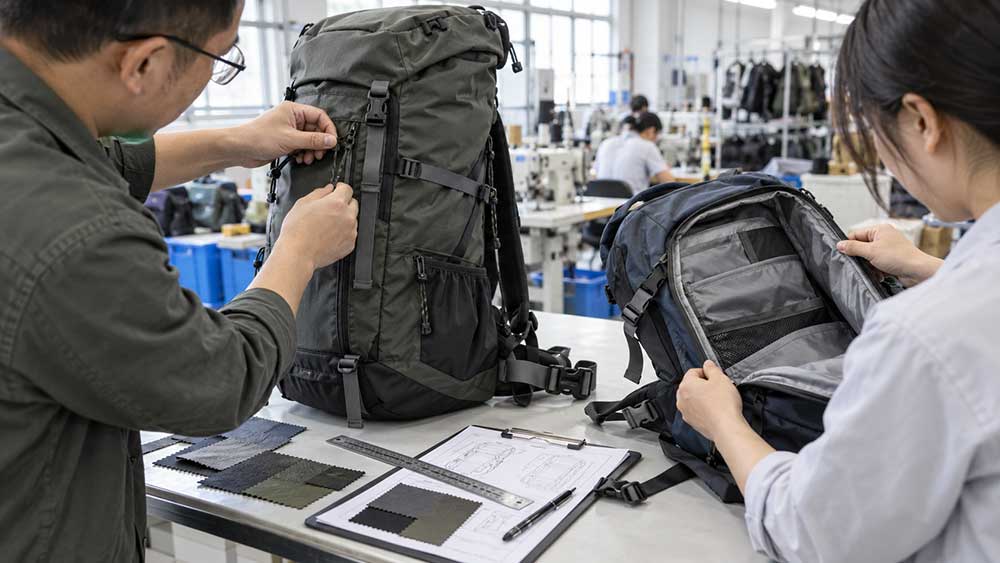
For brands, importers, and product development teams, the opening system affects pattern design, zipper selection, reinforcement, sewing time, cost, packing efficiency, and quality-control procedures.
When developing a top-loading backpack, buyers should confirm:
Whether the closure uses a drawcord, zipper, roll-top, lid, or combined system
How far the extension collar needs to expand
Whether the lid is fixed, floating, or removable
How compression straps control the load below the opening
Whether the closure can be operated while wearing gloves
How loose drawcords or straps will be managed
For a panel-loading backpack, development should cover:
The required opening angle
Zipper gauge and chain type
The number and direction of zipper sliders
Reinforcement at the zipper start and end points
Whether compression straps reduce tension on the zipper
How the open panel retains its shape
Whether internal items can obstruct the zipper
Zipper operation when the sample is fully loaded
Samples should be evaluated with realistic contents, not only while empty. A zipper that moves smoothly on an empty backpack may become difficult to operate when the compartment is full, the internal dividers are loaded, or the surrounding fabric is under tension.
Founded in 1995, Vancharli Outdoor develops OEM and ODM backpacks for outdoor brands, wholesalers, importers, and purchasing teams. Our custom hiking backpack manufacturing capabilities include material selection, opening-system development, suspension design, sampling, testing requirements, and bulk-production quality control.
FAQ
Can a top-loading backpack use a zipper instead of a drawcord?
Yes. Top-loading describes the direction of access rather than one specific closure. The opening can use a zipper, drawcord, roll-top system, lid, or a combination of these features.
Is a side-access zipper considered panel loading?
Not always. A small side zipper that provides limited access is usually described as secondary or side access. If the zipper allows a large section of the backpack to open as a flap, it may be considered a type of panel opening.
Which opening is easier to operate while wearing gloves?
Large buckles, wide roll-top closures, and oversized zipper pulls are generally easier to operate with gloves. The best option depends on the size of the components, the amount of fabric tension, and whether the user can see and reach the closure.
Does a clamshell backpack need internal compression straps?
They are not mandatory, but they can help prevent clothing and loose items from falling out when the pack is opened. Mesh dividers, zippered internal panels, and packing cubes can serve a similar purpose.
Can a damaged panel zipper be repaired?
Sometimes. A damaged slider may be replaceable without removing the entire zipper. Damage to the chain, zipper tape, or surrounding fabric may require more extensive repair. Repairability should be considered when selecting the zipper and designing the seam construction.
Are panel-loading backpacks suitable for long-distance hiking?
Yes, if the backpack provides the correct fit, suspension, capacity, load control, and durability. Panel access can improve convenience, but carrying comfort and stability remain more important on long hikes.
Are top-loading backpacks only suitable for outdoor use?
No. Top-loaders are also used for cycling, commuting, minimalist travel, work, and everyday carry. Their suitability depends on how often the user needs to reach items packed near the bottom.
Can a backpack combine a roll-top with panel access?
Yes. A roll-top can provide flexible upper capacity and weather protection, while a side or front zipper provides access deeper inside the pack. The additional zipper must still be reinforced and protected according to the intended use.







Comments are closed