Internal vs External Frame Backpacks: Which Should You Choose?
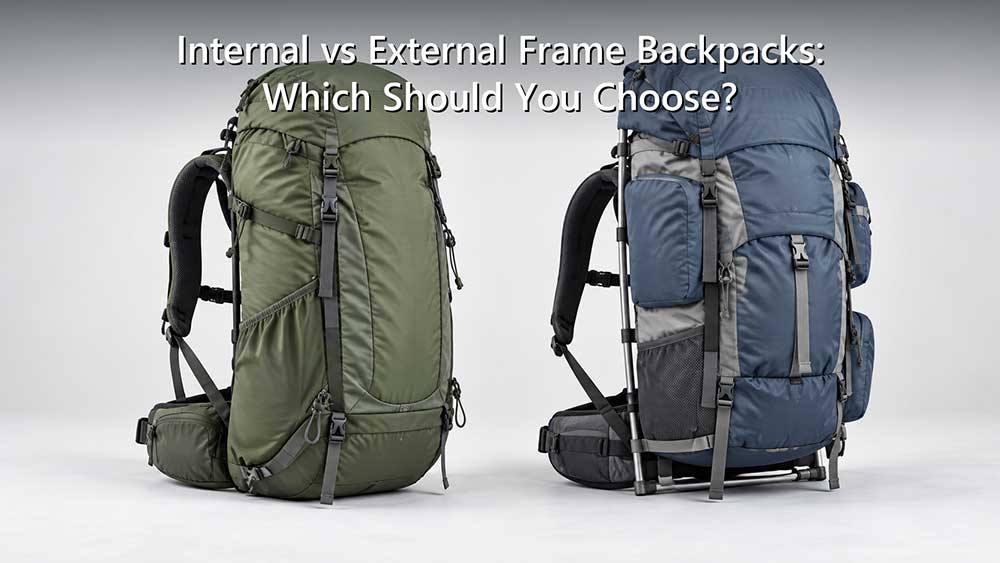
Internal vs external frame backpacks differ in where their supporting structure sits and how they carry a load. An internal frame is built into the pack, giving it a closer, more streamlined fit. An external frame is visible outside the packbag and often provides more room to secure bulky or irregular equipment.
For most hikers carrying ordinary backpacking gear, an internal frame is a practical place to start. An external frame is worth considering when the load is unusually large or awkward to pack. The right choice still depends on how the backpack fits, what you carry, and where you plan to walk.
More rigid, sometimes extending beyond the fabric bag
Movement
Usually easier to manage on uneven or narrow terrain
A protruding frame can be less convenient in tight spaces
Bulky equipment
Carried inside or on dedicated attachment points
Often easier to secure to an extended frame
Back ventilation
Varies; suspended mesh options are available
Often leaves more open space around the back
Good starting point
General backpacking and routes where balance matters
Trips with heavy, oversized, or irregular loads
These are common design tendencies, not promises about every model. REI’s backpack selection guide describes internal frames as close-fitting options for uneven terrain and external frames as an option for heavy, irregular loads.
What Is an Internal Frame Backpack?
An internal frame backpack has its supporting structure within the packbag or back panel. It may use aluminum stays—flat metal strips that help support the load—a framesheet, which is a stiff panel behind the wearer’s back, or both. Most of this structure is hidden.
The frame helps the pack hold its shape and transfer part of the load through the hip belt. Because the pack generally sits closer to the body, it can be easier to control when stepping over rocks, turning on a narrow trail, or moving through dense vegetation.
Internal frames appear in many kinds of outdoor packs, including multi-day trekking backpacks and technical alpine packs. The term tells you where the frame is, not which activity the backpack is made for. For that distinction, see our comparison of trekking and mountaineering backpacks.
What Is an External Frame Backpack?
An external frame backpack has a supporting frame outside the packbag. You can see the structure to which the bag and carrying harness attach. Many traditional designs use metal tubing, although materials and layouts vary.
A frame that extends beyond the fabric bag can provide useful places to secure an awkward item that will not fit neatly inside. Depending on its construction, the pack may also leave more space for air to move around the wearer’s back.
The trade-off is its shape. A protruding frame—or equipment tied to it—can catch on branches or feel cumbersome in narrow spaces. Whether that matters depends on your route and how you load the pack.
How Do the Frames Affect Comfort and Load Carrying?
Both designs can transfer weight to the hips when the frame, suspension, and hip belt work well together. Frame position alone tells you little about carrying capacity or comfort. Check the complete suspension system and how the loaded pack fits you.
If you expect to carry a substantial load, ask:
Does the hip belt sit securely over your hip bones?
Is the torso length right for you?
Does the loaded pack remain stable?
Are the shoulder straps comfortable without carrying most of the weight?
Does the manufacturer provide a recommended load for that model?
A supportive internal frame may carry heavy camping equipment comfortably. An external frame may handle a bulky load well but still fit poorly if the torso length or hip belt is wrong. REI’s backpack fitting guide explains how torso length and hip-belt position affect the fit of a loaded pack.
When possible, compare backpacks using a realistic load, including any equipment you intend to carry on the outside.
Which Frame Feels More Stable on Uneven Terrain?
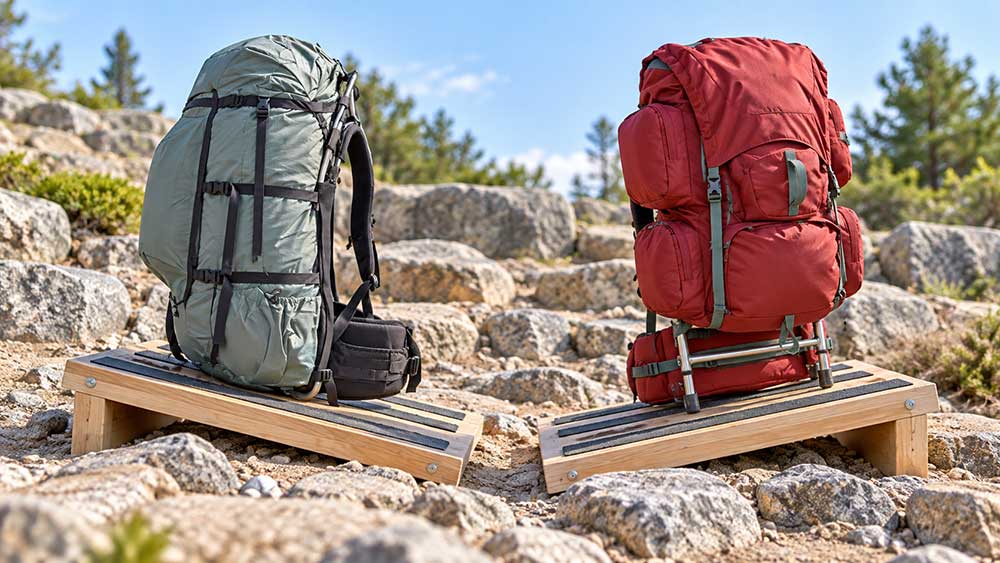
An internal frame pack usually keeps the load closer to the wearer. If it fits and is packed well, the load is less likely to shift noticeably as you step over obstacles or change direction. Its narrower profile can also help on overgrown trails.
With a traditional external frame, bulky items attached outside the bag may sit farther from your body. That can make the load harder to control on steep or uneven ground. Packing still matters: an unsecured load will move regardless of the frame style.
If your route involves scrambling or tight passages, try the fully loaded backpack while bending, stepping up, and turning. A short walk on flat ground may not reveal a balance problem.
Are External Frame Backpacks More Breathable?
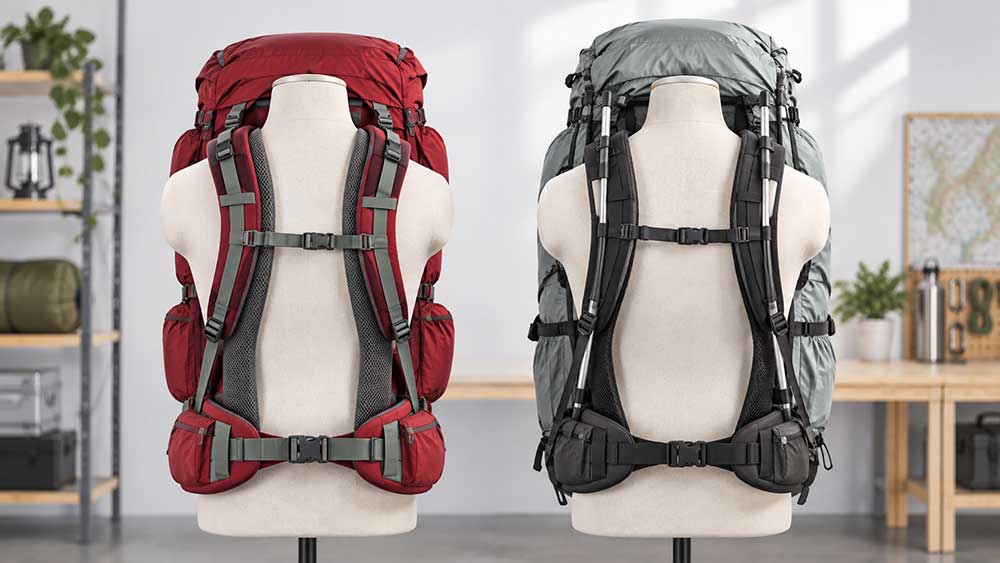
They often provide more open space around the back, but an internal frame pack can also have a well-ventilated back panel.
Some internal frame backpacks use suspended mesh. The mesh rests against the wearer while holding the packbag away from the back, creating an air gap. Other designs use shaped foam channels to allow more airflow.
A suspended mesh panel describes the ventilation design, not whether the pack has an internal or external frame. Seeing a curved metal rod behind the mesh does not, by itself, make the backpack an external frame model. Look at how the supporting structure connects to the packbag.
If you often hike in warm weather, compare the actual back panels of the models you are considering. Check both airflow and whether the pack still feels balanced when loaded.
Which Is Better for Carrying Gear Outside the Pack?
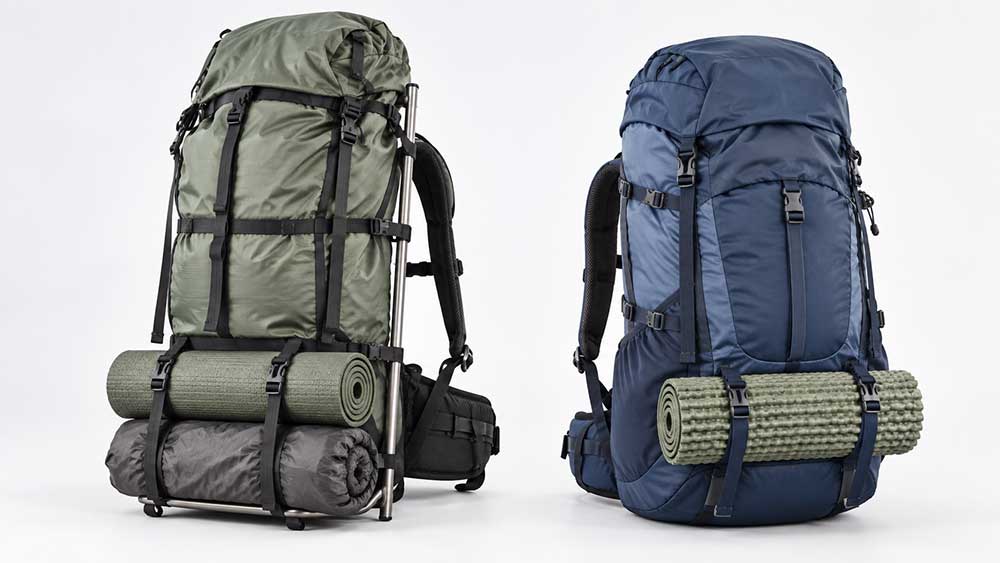
An external frame can be useful when you need to secure a large or awkward object to a rigid structure. For some trips, that is its clearest advantage.
Internal frame backpacks can also carry equipment outside. Depending on the model, they may have compression straps, bottom straps, trekking pole holders, or tool attachments. Our guide to the loops on a hiking backpack explains what common attachment points are designed to do.
With either frame style, check which points are intended for the equipment you are carrying. Secure external items so they cannot swing, slip, or catch on obstacles.
Are External Frame Backpacks Heavier or More Durable?
A metal external frame can add weight, but a heavily padded internal frame pack can also be substantial. Compare packs of similar capacity by their listed empty weight, recommended load, and hip-belt support. A lighter pack is not much help if it cannot carry your equipment comfortably.
Durability also comes down to more than frame position. Look at the frame material, connections, and the points where the packbag attaches to the suspension. On an internal frame pack, check how the stays or framesheet are held in place and whether the surrounding fabric shows excessive stress. On an external frame pack, pay particular attention to the joints and bag-to-frame attachments.
These checks will tell you more about a specific backpack than assuming one frame type always lasts longer.
Which Backpack Should You Choose?
Start with an internal frame if you carry conventional hiking or camping gear, expect uneven terrain, or prefer a pack that stays close to your body. There are many options with different capacities, levels of support, and ventilation systems.
Consider an external frame if you regularly carry equipment that is oversized, rigid, or difficult to fit inside a packbag. It may be useful when a secure place for an irregular load matters more than a narrow profile.
Before deciding, load a candidate pack with roughly the weight you expect to carry and check:
Can you adjust the torso length and hip belt to fit?
Does the load stay stable when you turn or step up?
Can you secure external equipment without excessive swinging?
Is the pack still comfortable after walking for a while?
What Should Brands Specify When Developing a Framed Backpack?
For a brand or purchasing team, “internal frame” or “external frame” is only the start of a product specification. Two packs in the same category can carry very differently.
Before sampling, define the intended load, pack volume, terrain, user torso range, hip-belt construction, frame material, and equipment attachment requirements. Then assess a loaded sample for frame movement, comfort, access, and the security of external gear. If the design uses removable stays or a separate frame and bag, check how those parts connect after repeated loading and adjustment.
Vancharli Outdoor, an OEM and ODM bag manufacturer established in 1995, develops custom hiking backpacks for brands and importers. The frame choice should follow the equipment and routes the finished pack is meant to handle, then be checked on a loaded sample.
FAQ
Is an external frame backpack always better for heavy loads?
No. An external frame can be useful for bulky or irregular loads, but a specific pack’s carrying ability depends on its suspension, fit, construction, and recommended load. Some internal frame packs are also designed for substantial loads.
Can an internal frame backpack carry gear on the outside?
Yes. Many have compression straps or dedicated attachment points for items such as trekking poles and sleeping pads. Use them according to the manufacturer’s instructions.
Is a suspended mesh back panel the same as an external frame?
No. Suspended mesh creates space for ventilation. A backpack can have a suspended mesh panel and still use an internal frame.
Do mountaineering backpacks need an external metal frame?
No. Depending on their intended load, mountaineering packs may use internal stays, a framesheet, removable support, or a minimal frame. An exposed metal frame is not what defines a mountaineering backpack.
Is a frameless backpack a type of internal frame backpack?
No. A frameless backpack has no dedicated supporting frame, although its padding or packed contents may give it some stiffness. How much it carries comfortably depends on the design and the wearer.











Comments are closed