Soccer Backpack vs Soccer Duffel Bag: Which Is Better for Players?
Choosing between a soccer backpack and a soccer duffel bag sounds simple until tournament day arrives. One player only needs cleats, shin guards, socks, and a water bottle. Another needs two uniforms, warm-up gear, snacks, slides, a towel, and recovery items. A goalkeeper may need gloves, backup gloves, padded clothing, and extra space. A coach may need balls, cones, pinnies, documents, and a first aid kit.
That is why there is no single “best” soccer bag for every player. The better choice depends on the player’s age, gear volume, travel distance, tournament schedule, and whether the bag is used for daily training, match day, goalkeeping, coaching, or team equipment.
In general, a soccer backpack is better for younger players, school practice, and players who carry their own gear between fields. A soccer duffel bag is better for older players, goalkeepers, coaches, tournament days, and anyone who needs more open storage space.
A soccer backpack is usually the better everyday player bag. A soccer duffel bag is usually the better high-capacity match day or tournament bag.
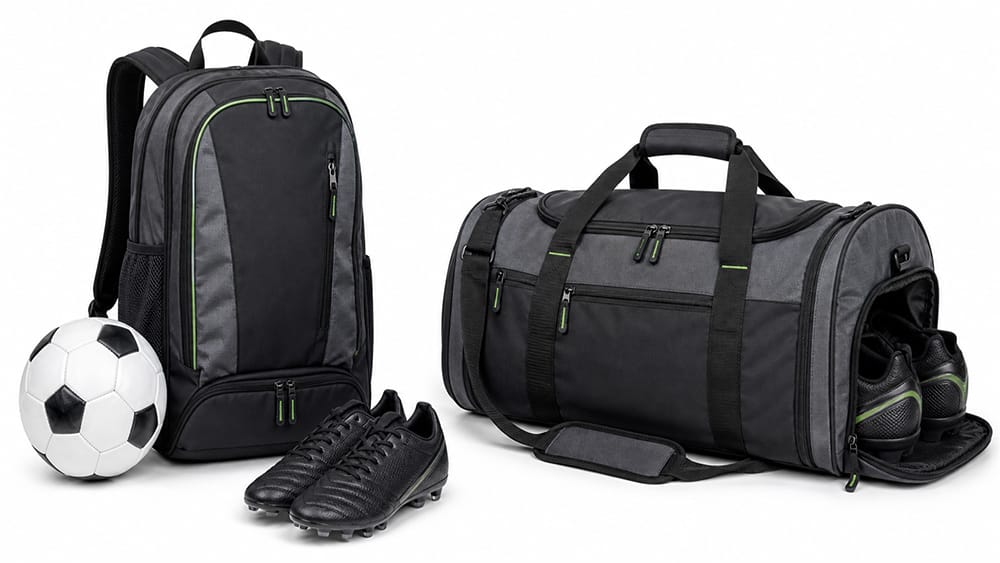
For teams, clubs, and sports brands, the best answer is often not one or the other. A complete soccer bag collection usually includes backpacks for younger players, duffel bags for older players and goalkeepers, shoe bags as add-ons, and larger team equipment bags for coaches.
What Is a Soccer Backpack?
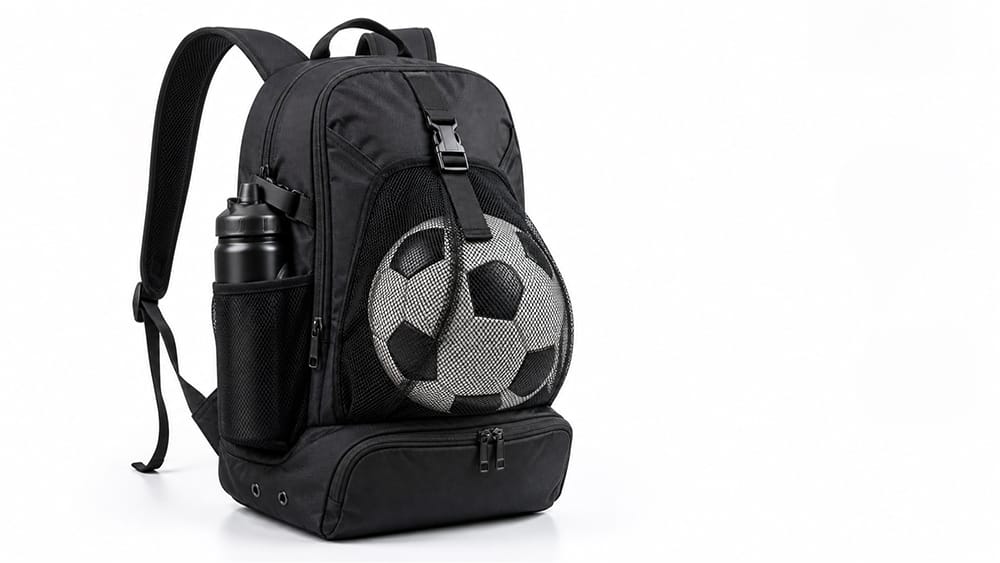
A soccer backpack is a two-strap bag designed to carry personal soccer gear on the back. It usually has a main compartment, smaller pockets, water bottle storage, and sometimes a ball compartment or cleat pocket.
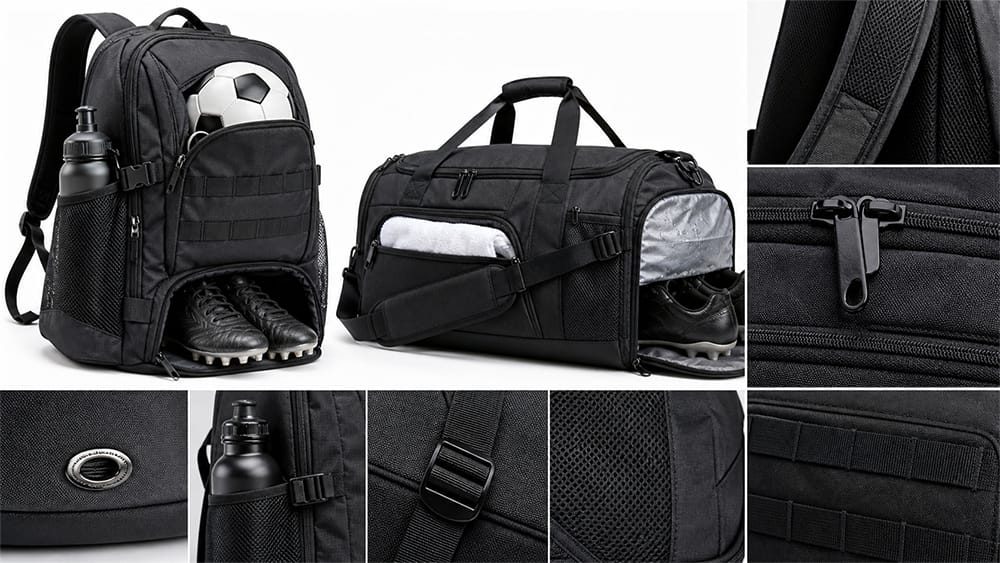
A good soccer backpack may include:
Main compartment for uniform and towel
Separate cleat compartment
Mesh ball holder or ball pocket
Side water bottle pocket
Front pocket for shin guards, tape, or snacks
Small zip pocket for keys, phone, or player ID
Padded shoulder straps
Name label or team logo area
The main advantage of a soccer backpack is comfort and mobility. Players can carry it hands-free, walk between fields, bike to practice, or manage their own gear more easily.
For younger players, this matters. A bag that drags on the ground, swings too much, or becomes too heavy can quickly become a problem. A backpack keeps the load closer to the body and is usually easier for youth players to handle.
What Is a Soccer Duffel Bag?
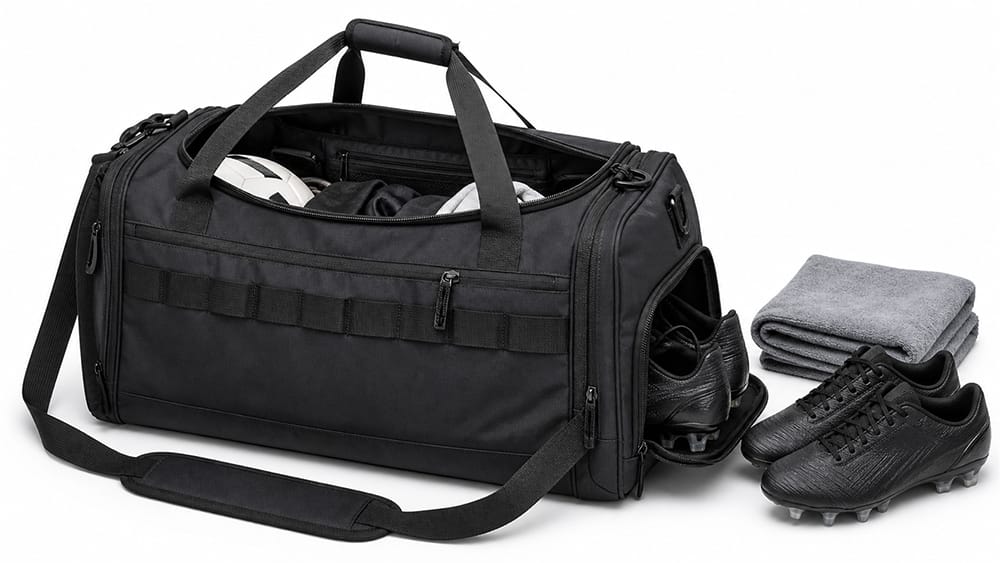
A soccer duffel bag is a larger, horizontal sports bag with a wide main opening. It is usually carried by hand or with a shoulder strap. Compared with a backpack, a duffel bag often gives players more open space for bulky gear.
A soccer duffel bag may include:
Large main compartment
Shoe or cleat compartment
Side pockets
Wet gear pocket
Interior mesh pockets
Shoulder strap
Team logo area
Reinforced bottom panel
Extra space for towels, jackets, gloves, or backup uniforms
The main advantage of a soccer duffel bag is capacity. It is easier to pack larger items, extra clothing, goalkeeper gloves, multiple pairs of socks, towels, warm-up gear, or team supplies.
The tradeoff is carrying comfort. A duffel bag can become heavy on one shoulder, especially for younger players. It is also easier for the main compartment to become messy if the bag does not have enough smaller pockets.
Soccer Backpack vs Duffel Bag: Main Differences
The real difference is not only shape. It is how the bag works during a real soccer day.
Feature
Soccer Backpack
Soccer Duffel Bag
Carry style
Two shoulder straps
Hand carry or shoulder strap
Best for
Youth players, daily practice, light gear
Older players, goalkeepers, coaches, tournaments
Capacity
Small to medium
Medium to large
Organization
Usually better for small personal items
Better for bulky gear
Comfort
Better for walking longer distances
Can feel heavy when fully packed
Ball storage
Often has mesh ball holder
Usually ball goes inside main compartment
Cleat storage
May have bottom or front cleat pocket
Often has side shoe compartment
Locker fit
Usually easier
Depends on size
Tournament use
Works for light tournament gear
Better for multi-game days
Team use
Good for individual players
Better for coaches and shared equipment
Youth players
Usually better
May be too large if overloaded
Goalkeepers
Often too small
Usually better
A backpack helps players stay mobile and organized. A duffel helps players carry more.
When a Soccer Backpack Is Better
A soccer backpack is better when the player needs a compact, comfortable, easy-to-carry bag for regular use.
Youth Players
For younger players, a backpack is usually the safer and easier choice. It keeps both hands free, distributes weight across both shoulders, and is less likely to drag on the ground.
A youth player usually needs:
Jersey
Shorts
Socks
Shin guards
Cleats
Water bottle
Small snack
Light towel
Optional soccer ball
A backpack is usually enough for this gear load. It also helps younger players learn to manage their own equipment.
School Practice
Soccer backpacks work well for school players because they are easier to carry with other school items and often fit better in lockers, cars, and benches.
A duffel can work, but it may feel oversized for everyday practice unless the player carries extra training gear.
Walking Between Fields
At tournaments or sports complexes, players may need to walk from the parking lot to the field, then from one field to another. A backpack makes that easier.
When players carry a water bottle in one hand, cleats in another, and a loose towel somewhere else, things get lost fast. A backpack keeps the essentials together.
Light Training Days
For short training sessions, a backpack is usually more practical. It gives enough room for the basics without encouraging overpacking.
When a Soccer Duffel Bag Is Better
A soccer duffel bag is better when the player needs more space, more flexibility, or more gear capacity.
Tournament days usually require more than a normal practice bag. Players may need backup socks, extra shirts, rain gear, snacks, a towel, slides, recovery items, and a wet bag.
A duffel bag gives more open space for those items. It is also easier to repack quickly between games.
Older Players
Older players often carry more gear than younger players. They may need:
Extra warm-up clothing
Recovery items
Multiple pairs of socks
Slides
Towels
Personal care items
Extra snacks
More water
A duffel bag can handle this better than a small backpack.
Goalkeepers
Goalkeepers usually benefit from a duffel bag because their gear is bulkier. Gloves alone can take up a lot of space, especially if the player carries backup gloves.
A goalkeeper may pack:
Match gloves
Backup gloves
Goalkeeper jersey
Padded shorts or pants
Extra socks
Towel
Tape
Water bottle
Plastic bag for wet gloves
This is usually too much for a standard soccer backpack.
Coaches
Coaches often need a duffel or team equipment bag, not a normal soccer backpack. They may carry cones, pinnies, first aid items, documents, ball pump, whistle, tape, markers, and team supplies.
For coaches, the issue is not just space. It is fast access. A wide-opening duffel or equipment bag makes it easier to grab what is needed during a busy match day.
Which Bag Is Better for Youth Soccer Players?
For most youth soccer players, a soccer backpack is better.
The main reasons are simple:
It is easier to carry.
It keeps both hands free.
It helps kids organize their own gear.
It is less likely to become too heavy.
It works well for practice and regular match days.
It can hold cleats, socks, shin guards, water, and a small snack.
Parents often want a bag that can hold everything, but too much capacity can become a problem. If a young player has a large duffel, it is easy to pack too much. Then the child cannot carry the bag comfortably.
A backpack teaches better habits. The player learns where the cleats go, where the water bottle goes, and where to put dirty socks after the match.
For youth teams, a backpack with a cleat pocket, water bottle pocket, and name label is usually a practical choice.
Which Bag Is Better for Teen and Adult Players?
Teen and adult players can use either bag, depending on their gear load.
A backpack is better if the player carries basic gear and walks a lot. A duffel is better if the player carries extra clothes, gym items, recovery gear, or tournament supplies.
For teen and adult players, the decision usually comes down to three questions:
How much gear do they carry?
How far do they walk with the bag?
Do they need more organization or more open space?
If the player goes from school to practice and needs a compact bag, choose a backpack. If the player travels for tournaments or carries extra clothing, choose a duffel.
Which Bag Is Better for Goalkeepers?
A soccer duffel bag is usually better for goalkeepers.
Goalkeepers need more space because their gear is bulkier and more sensitive. Gloves should not be crushed under cleats. Towels, padded shorts, and wet gloves need their own space. A larger duffel makes this easier.
A goalkeeper bag should have:
Large main compartment
Separate glove pocket or pouch
Wet gear area
Shoe compartment
Towel space
Water bottle pocket
Strong zipper
Durable bottom panel
A backpack can work for a young goalkeeper with light gear, but as the player gets older, a duffel usually becomes more practical.
Which Bag Is Better for Coaches and Teams?
For coaches and teams, a duffel bag or team equipment bag is usually better than a soccer backpack.
A coach may need to carry:
Clipboard
Roster
Player cards
Whistle
Cones
Pinnies
First aid kit
Ball pump
Tape
Spare laces
Extra socks
Phone charger
A team equipment bag may also need to hold balls, extra water, medical supplies, wet gear bags, trash bags, and team documents.
Backpacks are better for individual players. Duffels and equipment bags are better for shared team gear.
What Should Players Carry in Either Bag?
No matter which bag type you choose, the player still needs the right soccer essentials. IFAB’s player equipment rules identify the basic match equipment as shirt, shorts, socks, shin guards, and footwear.
A practical player bag should usually include:
Jersey
Shorts
Soccer socks
Backup socks
Shin guards
Cleats
Water bottle
Small snack
Towel
Slides or sandals
Wet bag
Tape or blister care
Player ID or tournament pass if needed
The bag should make these items easy to find. If a player has to empty the entire bag to locate shin guards, the bag is not doing its job.
What Features Matter More Than Bag Type?
The choice between backpack and duffel is important, but bag features matter just as much. A poorly designed duffel can be worse than a well-designed backpack. A backpack without a cleat pocket may become messy quickly.
Look for these features.
Separate Shoe Compartment
Cleats carry grass, mud, rubber pellets, moisture, and odor. A separate shoe compartment keeps them away from clean clothing and snacks.
Ventilated Cleat Pocket
Ventilation helps reduce trapped odor and moisture. This is useful after wet or sweaty games.
Water Bottle Pocket
Players drink more consistently when water is easy to reach. A side bottle pocket is especially helpful for younger players.
Wet and Dry Separation
A wet pocket or removable laundry bag helps separate sweaty socks, wet shirts, and muddy towels from clean gear.
Ball Storage
Some backpacks include mesh ball holders. Duffel bags usually carry the ball inside the main compartment. Either can work, but the design should match the player’s needs.
Easy-Access Front Pocket
Tape, shin guards, snacks, sunscreen, and hair ties should be easy to find.
Durable Bottom Panel
Soccer bags are often placed on grass, turf, benches, dirt, and wet ground. A reinforced bottom helps the bag last longer.
Comfortable Straps
Backpacks need padded shoulder straps. Duffels need a comfortable shoulder strap and strong handles.
Name Label or Team Logo Area
This is especially useful for clubs and youth teams. Soccer fields are full of similar-looking bags and bottles.
For Clubs and Retailers: Should You Offer Both?
For clubs, schools, retailers, and sports brands developing custom soccer bags, the best product line usually includes both soccer backpacks and soccer duffel bags.
A practical soccer bag collection may include:
Youth soccer backpack
Player soccer backpack with ball holder
Soccer duffel bag with shoe compartment
Goalkeeper duffel bag
Soccer shoe bag
Coach bag
Team equipment bag
Backpacks serve younger players and daily training. Duffels serve older players, goalkeepers, coaches, and tournament use. Shoe bags work well as add-on products. Team equipment bags help clubs and schools manage shared gear.
From an OEM/ODM manufacturing perspective, Vancharli Outdoor helps sports brands and retailers plan soccer backpack, duffel bag, shoe bag, and team equipment bag collections around player age, gear volume, team branding, and retail channel needs.
The strongest soccer bag line is not built around one bag type. It is built around real users.
Common Mistakes When Choosing a Soccer Bag
Choosing Only by Size
A bigger bag is not always better. If a player cannot carry the bag comfortably, it is too large.
Ignoring Shoe Storage
Cleats should not sit next to clean uniforms or snacks. Shoe storage is one of the most important soccer bag features.
Forgetting Water Access
A water bottle buried inside the main compartment is not practical. Exterior bottle pockets are easier.
Buying One Bag Type for the Whole Team
Young players, goalkeepers, coaches, and team managers do not all need the same bag.
Choosing Looks Over Function
A bag can look good but still fail if the pockets are wrong, the straps are uncomfortable, or the bottom panel is weak.
Not Thinking About Cleaning
Soccer bags get dirty. Easy-clean lining, durable fabric, and separate wet storage make a big difference.
Final Recommendation
Choose a soccer backpack if the player is young, carries basic gear, walks between fields, or needs a compact daily training bag.
Choose a soccer duffel bag if the player carries more gear, plays in tournaments, is a goalkeeper, needs extra clothing, or wants more open storage space.
Choose both if you are planning bags for a club, school, team, or retail product line. Soccer backpacks and soccer duffel bags are not competitors in every situation. They solve different problems for different players.
The best soccer bag is the one that helps the player arrive prepared, keep gear organized, and focus on the game instead of searching for missing equipment.
FAQ
Is a backpack better than a duffel bag for soccer?
A backpack is better for younger players, daily practice, and walking between fields. A duffel bag is better for players who carry more gear, goalkeepers, coaches, and tournament days.
What size bag does a youth soccer player need?
Most youth soccer players need a compact backpack that can hold cleats, shin guards, socks, water, a small snack, and possibly a soccer ball. A large duffel may be too heavy for younger players.
Can a soccer backpack hold cleats and a ball?
Many soccer backpacks can hold both cleats and a ball if they have a separate cleat pocket and mesh ball holder. Smaller backpacks may only fit basic gear.
Are duffel bags better for soccer tournaments?
Duffel bags are often better for tournaments because they offer more room for backup socks, extra shirts, towels, snacks, recovery items, and wet gear.
What bag should a goalkeeper use?
Most goalkeepers do better with a soccer duffel bag because goalkeeper gloves, padded clothing, towels, and backup gear need more space than a standard player backpack provides.
Should players use a separate shoe bag?
A shoe bag is useful even if the player already has a backpack or duffel. It keeps cleats away from clean gear and helps control dirt and odor.
What is the best soccer bag for school players?
A soccer backpack is usually best for school players because it is easier to carry, fits better in lockers, and works well for daily practice.
Should teams offer both soccer backpacks and duffel bags?
Yes. Backpacks fit youth players and daily training, while duffels fit older players, goalkeepers, coaches, and tournaments. Offering both helps teams and retailers serve more users.






Comments are closed