What Is the Difference Between Strategy and Tactics?
Strategy and tactics are closely connected, but they are not the same thing. Strategy is the long-term plan or direction. Tactics are the specific actions used to carry out that plan.
A simple way to understand the difference is this: strategy decides where you want to go and why. Tactics decide what you will do next to get there.
For example, a company’s strategy may be to enter a new outdoor gear market. Its tactics may include researching customer needs, developing sample products, testing materials, improving packaging, contacting distributors, and running targeted marketing campaigns.
Both are important. A strategy without tactics stays only as an idea. Tactics without strategy can become a list of random actions with no clear direction.
Strategy is the big-picture plan. Tactics are the practical steps.
Strategy usually focuses on long-term goals, priorities, positioning, and decision-making. Tactics focus on execution, tasks, methods, and short-term actions.
In simple terms:
Strategy answers: What are we trying to achieve, and why?
Tactics answer: How will we achieve it?
A strategy gives direction. Tactics create movement.
What Is Strategy?
Strategy is a plan designed to achieve a larger goal. It helps people, teams, companies, or organizations decide what matters most, where to focus resources, and which direction to follow.
The Cambridge Dictionary defines strategy as a detailed plan for achieving success in situations such as war, politics, business, industry, or sport. That broad definition is useful because strategy is not limited to one field. It can apply to business, military planning, marketing, sports, product development, personal goals, and many other areas.
A good strategy usually includes several things:
A clear goal
A long-term direction
A reason for choosing that direction
Priorities and trade-offs
A way to use resources effectively
A decision about what not to do
For example, a brand may decide that its strategy is to serve professional outdoor users instead of the general fashion market. That decision affects product design, material selection, pricing, marketing channels, and the type of customers the brand wants to reach.
Strategy is not just a goal. “Increase sales” is a goal, not a strategy. A strategy explains how the company plans to compete, where it will focus, and why that path makes sense.
What Are Tactics?
Tactics are the specific actions used to support a strategy. They are more practical, more detailed, and usually shorter-term than strategy.
The Cambridge Dictionary defines a tactic as a planned way of doing something. In other words, tactics are the actual moves people use to make progress toward a larger goal.
Tactics may include:
Running a marketing campaign
Contacting potential buyers
Testing a product sample
Adjusting a design detail
Publishing a blog post
Offering a promotion
Training a sales team
Improving a production process
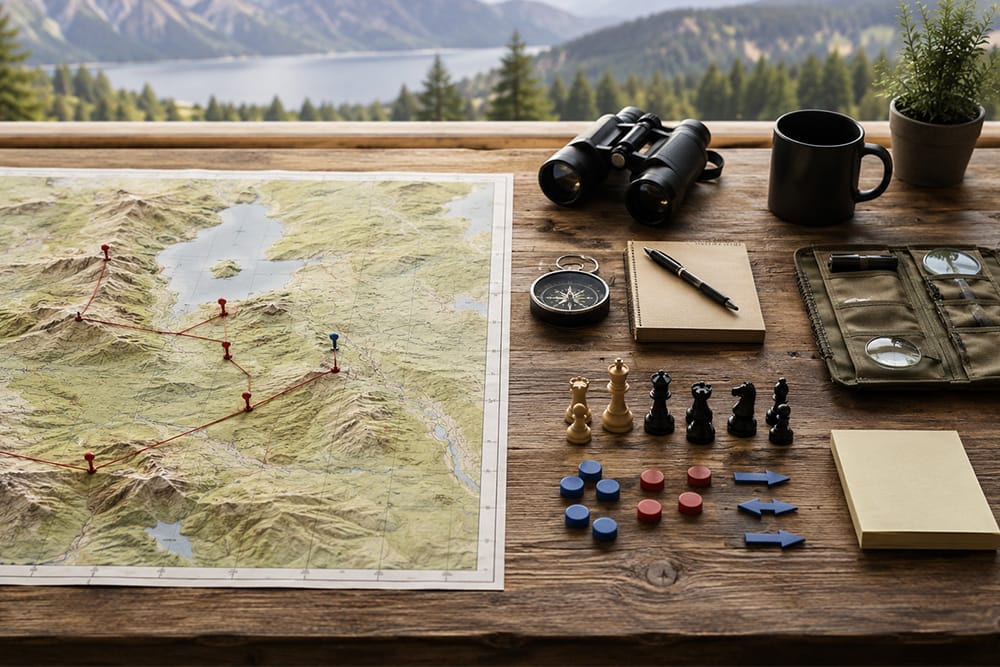
If strategy is the map, tactics are the steps you take along the route.
For example, if a company’s strategy is to become a trusted supplier for professional tactical gear brands, its tactics may include improving product pages, attending trade shows, developing stronger samples, testing durable fabrics, creating technical content, and building relationships with distributors.
Tactics are usually easier to change than strategy. If one tactic does not work, a team can test another. But if the strategy is wrong, even good tactics may not lead to the right result.
Strategy vs. Tactics: Main Differences
The easiest way to compare strategy and tactics is to look at their purpose, scope, and timeframe.
Comparison Point
Strategy
Tactics
Main focus
Long-term direction
Specific action
Main question
What are we trying to achieve and why?
How will we achieve it?
Scope
Broad
Narrow
Timeframe
Long-term
Short-term or immediate
Level of detail
General direction and priorities
Practical steps and tasks
Flexibility
Harder to change
Easier to adjust
Main role
Guides decision-making
Supports execution
Example
Enter a new market
Research buyers, build samples, contact distributors
The key difference is that strategy gives the overall direction, while tactics turn that direction into action.
A strategy should come first. Tactics should follow the strategy. When tactics are chosen before the strategy is clear, teams may stay busy but still move in the wrong direction.
Strategy and Tactics Examples
The difference between strategy and tactics becomes easier to understand when you look at real situations. Below are several examples from business, military planning, marketing, sports, and product development.
Business Example
A company may set a strategy to become a premium brand instead of competing only on low price.
That strategy affects many decisions. The company may choose better materials, improve packaging, build a stronger brand image, and focus on customers who care about quality rather than only cost.
The tactics may include:
Redesigning product packaging
Improving website content
Raising quality control standards
Training the sales team to explain value
Working with selected distributors
Creating comparison guides for customers
The strategy is the decision to compete as a premium brand. The tactics are the specific actions that support that positioning.
Military Example
Strategy and tactics are often discussed in military contexts because both terms have strong historical connections to warfare.
A military strategy may be to control a key region, protect supply routes, or weaken an opponent’s ability to operate.
The tactics may include:
Positioning units in specific locations
Gathering intelligence
Choosing when to move
Securing transport routes
Using certain formations
Coordinating communication between teams
The strategy defines the larger objective. The tactics define the actions used in the field.
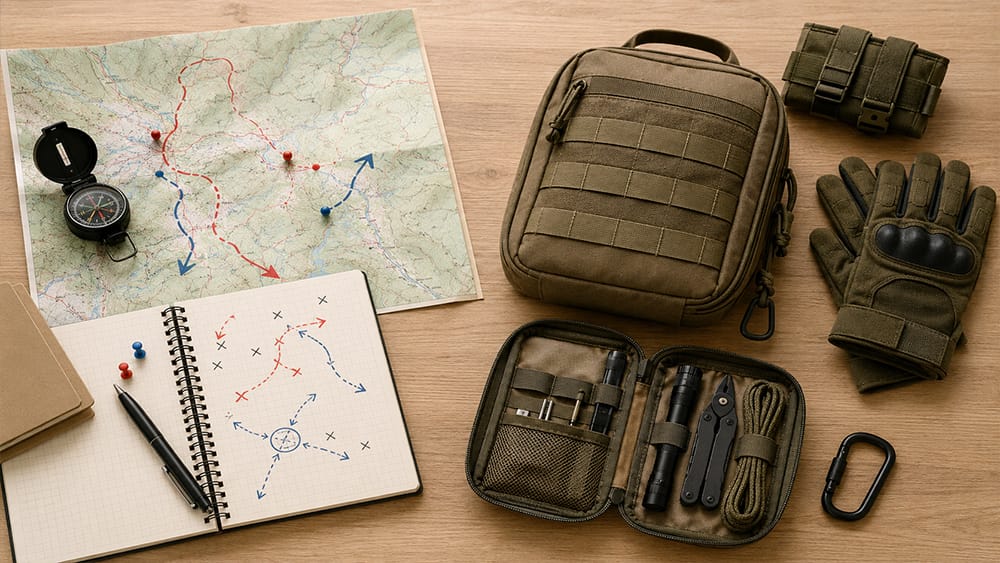
This is also why the word “tactical” is often associated with practical, mission-focused equipment. Tactical equipment is designed to support specific tasks, movement, organization, or field use. However, a tactical product is not the same thing as a tactic. The product supports action; the tactic is the action itself.
Marketing Example
In marketing, strategy and tactics are often confused.
A marketing strategy may be to position a brand as a reliable expert in a specific market.
The tactics may include:
Publishing educational blog posts
Creating product videos
Improving SEO pages
Sending email campaigns
Running paid ads
Posting on social media
Attending trade shows
Building case studies
The strategy explains how the brand wants to be seen and which audience it wants to reach. The tactics are the channels, content, and actions used to build that position.
For example, publishing one blog post is not a strategy. It is a tactic. But building a long-term content system to educate buyers and earn trust can be part of a larger strategy.
Sports Example
In sports, a team’s strategy may be to control the pace of the game, protect the defense, or pressure the opponent early.
The tactics may include:
Changing formation
Pressing aggressively
Rotating players
Targeting a weak defensive area
Slowing the game down
Making substitutions at specific times
The strategy is the overall plan for winning. The tactics are the decisions and actions used during the game.
Good coaches adjust tactics based on what happens in real time. But those adjustments should still support the overall strategy.
Product Development Example
Strategy and tactics also matter in product development.
A brand may set a strategy to develop a more durable tactical backpack line for professional outdoor, range, or field users.
The tactics may include:
Testing fabric abrasion resistance
Reinforcing stress points
Improving zipper quality
Adjusting MOLLE layout
Adding better internal organization
Reviewing sample feedback
Improving shoulder strap comfort
Testing different lining materials
The strategy defines the product direction and target user. The tactics are the development steps that help turn the idea into a real product.
This example is especially useful in outdoor and tactical gear development. A product team may have a strong idea, but without tactical execution — material testing, sample revision, quality inspection, and user-focused layout decisions — the final product may not perform well in real use.
For a broader product example, tactical bag development often follows the same logic. Strategy may define the target market and user requirements, while tactics include fabric selection, sample testing, compartment adjustment, MOLLE layout refinement, and quality inspection before bulk production.
How Strategy and Tactics Work Together
Strategy and tactics should not be treated as opposites. They work together.
A strong strategy helps teams choose better tactics. At the same time, the results of tactical actions can help teams improve or adjust the strategy.
For example, a company may create a strategy to target professional buyers in the outdoor equipment market. After testing several tactics, such as trade show outreach, SEO content, sample development, and distributor contact, the company may learn which channels bring the best leads. Those tactical results can help refine the strategy.
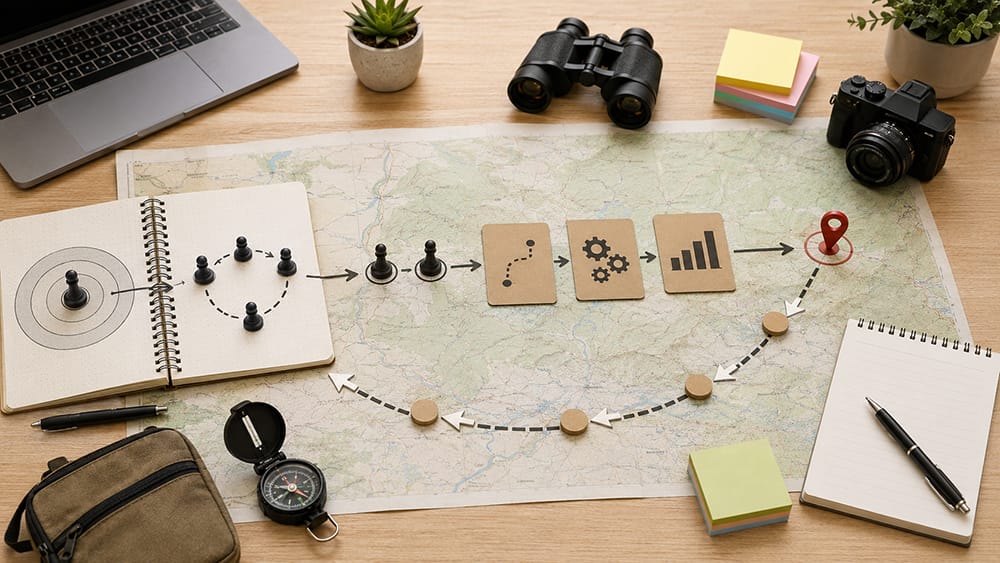
The relationship works like this:
Strategy defines the goal and direction.
Tactics turn that direction into action.
Results from tactics provide feedback.
The strategy can be improved based on real-world results.
A good strategy should not be so vague that no one knows what to do next. Good tactics should not be so disconnected that they do not support the larger goal.
Strategic Thinking vs. Tactical Thinking
Strategic thinking and tactical thinking are related, but they focus on different levels of decision-making.
Strategic thinking looks at the big picture. It asks where to go, why that direction matters, and what trade-offs must be made.
Tactical thinking focuses on execution. It asks what needs to happen now, how to solve practical problems, and which actions will move the plan forward.
Strategic Thinking
Tactical Thinking
Focuses on direction
Focuses on execution
Looks at long-term goals
Looks at immediate actions
Decides priorities
Solves practical problems
Asks “why” and “what”
Asks “how” and “when”
Guides resource allocation
Uses resources effectively
Defines success
Measures progress through action
Both types of thinking are necessary.
A person who only thinks strategically may have good ideas but struggle to execute. A person who only thinks tactically may work hard but miss the bigger direction.
The best teams usually combine both. They understand the long-term goal, then choose practical actions that support it.
Common Mistakes When People Confuse Strategy and Tactics
Because strategy and tactics are closely connected, people often confuse them. Here are some common mistakes.
Mistake 1: Treating a Goal as a Strategy
A goal is not the same as a strategy.
“Grow sales by 30%” is a goal. It describes what the company wants.
A strategy explains how the company plans to reach that goal. For example, the company may decide to focus on higher-value customers, improve product quality, expand into a new region, or build stronger distribution partnerships.
The goal defines the result. The strategy defines the path.
Mistake 2: Calling a Task List a Strategy
A list of tasks is not a strategy.
For example, these are tactics:
Publish five blog posts
Send three email campaigns
Contact 50 buyers
Redesign the product page
These actions may be useful, but they do not automatically create a strategy. They need to connect to a larger direction.
A better strategy may be: build trust with professional buyers by creating educational content, improving product credibility, and showing clear manufacturing capability.
The tasks then become tactics that support the strategy.
Mistake 3: Changing Tactics Too Quickly
Tactics are flexible, but they still need enough time to produce useful results.
Some teams change tactics too quickly. They try one campaign, one product sample, or one sales approach, then immediately abandon it before collecting enough feedback.
A better approach is to test tactics carefully, measure results, and adjust based on evidence.
Not every tactic will work. But changing too quickly can make it difficult to understand what actually caused success or failure.
Mistake 4: Using Tactics That Do Not Support the Strategy
A tactic may look useful on its own but still fail to support the strategy.
For example, if a company’s strategy is to build a premium brand, constant discounting may bring short-term orders but weaken long-term positioning.
If a brand wants to serve professional users, choosing low-quality materials may reduce cost but damage credibility.
Good tactics should always support the larger direction.
Mistake 5: Having a Strategy That Is Too Vague
A vague strategy creates weak execution.
For example, “be better than competitors” is not clear enough. Better in what way? Price? Quality? Design? Delivery speed? Customization? Service?
A useful strategy should help people make decisions. If the strategy does not guide action, it is too vague.
A stronger strategy may be: become the preferred supplier for mid-to-high-end outdoor gear brands by offering durable materials, flexible customization, reliable sampling, and stable production support.
That kind of strategy gives teams a clearer basis for choosing tactics.
Is “Tactical” the Same as “Tactics”?
No. “Tactical” and “tactics” are related, but they are not the same.
Tactics are actions used to achieve a goal.
Tactical is an adjective. It usually describes something practical, mission-focused, field-ready, or designed for specific operational use.
For example, a tactical backpack is not a tactic. It is a product designed to support practical use. It may include organized compartments, durable fabrics, quick-access pockets, reinforced carry points, MOLLE webbing, or modular attachment options.
The tactic is the action. The tactical product is the tool or equipment that may support the action.
This distinction is useful because the word “tactical” is now used in many product categories, especially bags, outdoor gear, field equipment, range gear, and everyday carry products. In these contexts, tactical usually refers to practical design, durability, organization, and mission-ready function.
For a more product-focused explanation, this guide to what tactical gear means explains how tactical design features appear in bags, outdoor gear, and field-use equipment.
Which Comes First: Strategy or Tactics?
Strategy should usually come first.
Before choosing tactics, you need to know the larger goal and direction. Otherwise, you may spend time and resources on actions that do not support the real objective.
For example, before launching ads, a company should know who it wants to reach, what position it wants to own in the market, and what message will make sense to those customers.
Once the strategy is clear, tactics become easier to choose.
However, real-world results can also help refine the strategy. Tactical testing may reveal that a certain audience, product feature, or sales channel works better than expected. In that case, the strategy can be adjusted based on evidence.
So strategy usually comes first, but the relationship is not one-way. Strategy guides tactics, and tactics provide feedback.
Why the Difference Matters
Understanding the difference between strategy and tactics helps people make better decisions.
It helps companies avoid random execution. It helps teams stay focused. It helps managers explain priorities. It also helps individuals understand whether they are working on the right actions or simply staying busy.
When strategy and tactics are aligned, work becomes more effective. People know the goal, understand the direction, and choose actions that support the larger plan.
When they are not aligned, teams may do many things but still fail to make meaningful progress.
The difference matters because effort alone is not enough. Effort needs direction. Strategy provides that direction, and tactics turn it into action.
FAQ
What is the simple difference between strategy and tactics?
Strategy is the long-term plan or direction. Tactics are the specific actions used to carry out that plan. Strategy explains what you want to achieve and why. Tactics explain how you will do it.
Are tactics part of strategy?
Yes, tactics should support the strategy. They are not the same thing, but they are connected. A strategy sets the direction, and tactics help execute it.
Can you have tactics without strategy?
Yes, but it is usually not effective. Without strategy, tactics may become random actions. A team may stay busy but fail to move toward a clear goal.
Can you have strategy without tactics?
Yes, but it will remain only a plan. Without tactics, a strategy does not turn into real action. A good strategy needs practical steps.
What is the difference between strategic planning and tactical planning?
Strategic planning focuses on long-term goals, direction, priorities, and resource allocation. Tactical planning focuses on the specific actions, timelines, responsibilities, and methods used to execute the strategy.
Is marketing strategy different from marketing tactics?
Yes. Marketing strategy defines the target audience, brand position, message, and long-term marketing direction. Marketing tactics are the specific actions, such as SEO, email campaigns, social media posts, paid ads, trade shows, or product videos.
Final Thoughts
Strategy and tactics are different, but they work best together.
Strategy gives the direction. Tactics create the action.
A strong strategy helps people choose the right tactics. Strong tactics help turn the strategy into measurable progress.
Whether you are building a business, planning a campaign, developing a product, coaching a team, or solving a practical problem, the same rule applies: know the direction first, then choose the actions that support it.











Comments are closed