



Tactical Backpack vs Military Backpack for Real Use
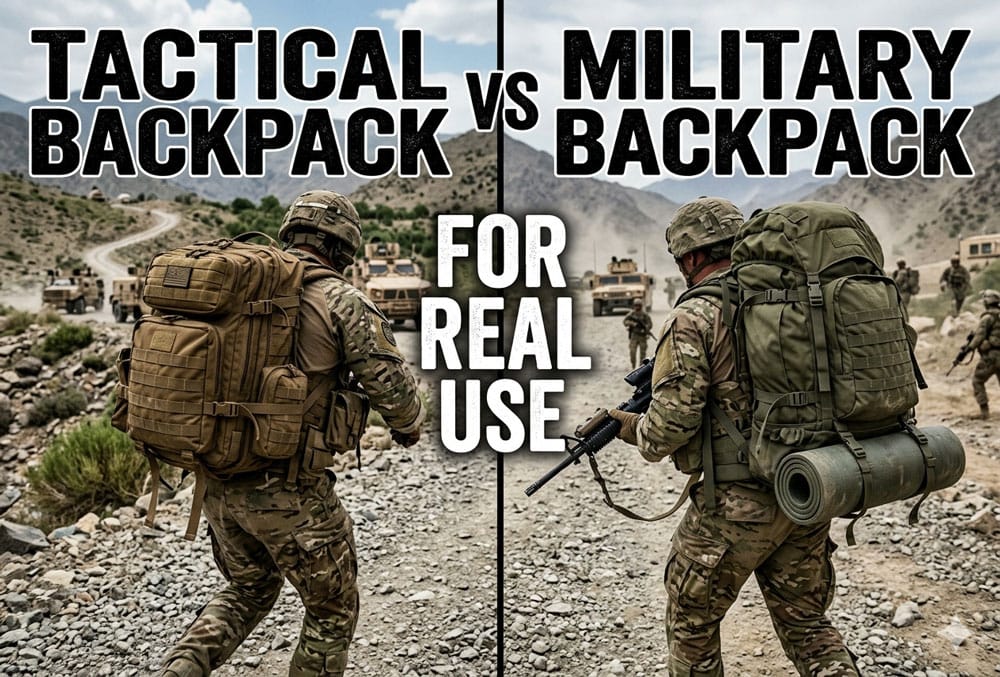
Here’s the short answer: a Tactical backpack is a civilian product inspired by military design, typically 1000D Cordura or 600D polyester, MOLLE webbing.
And a approximately $60,approximately $250 price tag. A Military backpack is government-issued gear built to MIL-SPEC standards (like MIL-DTL-43906 for ruck fabric).
With an NSN number, IR-resistant coatings.
And a 5-year minimum service life.
The Tactical Backpack vs Military Backpack debate matters because the labels are used interchangeably in marketing, but only one will survive a 72-hour field patrol, and the other costs half as much for daily carry.
Quick Takeaways
- Choose military surplus FILBE or ILBE packs for loads exceeding 60 pounds reliably.
- Verify MIL-SPEC authenticity by checking NSN numbers and contract codes before purchasing.
- Tactical packs suit daily carry at approximately $60-approximately $150; military gear handles extended field patrols.
- Inspect fabric denier ratings—genuine military uses 1000D Cordura with reinforced stress points.
- Avoid Amazon “tactical assault packs” under $80 for serious load-bearing or survival use.
The Core Difference Between Tactical and Military Backpacks
Direct answer: A military backpack is a government-issued pack built to meet a specific military contract, like the ILBE, MOLLE 4000, or FILBE. It’s manufactured under the Berry Amendment, which means it uses approximately 100% U.S.-sourced materials and labor.
A tactical backpack, on the other hand, is a commercial product designed to look and feel similar.
But it’s built to whatever quality standard the brand itself decides to use.
The distinction really matters because “tactical” is a marketing word. “Military” is a contract.
Here’s what most people miss in the Tactical Backpack vs Military Backpack debate: issued military packs go through destructive testing at places like the Natick Soldier Systems Center. That includes dropping 300-pound loads onto them, running abrasion cycles on special testers, and exposing them to UV light.
The UV exposure is equivalent to over 1,000 hours of sunlight. A approximately $79 “tactical assault pack” from Amazon skips every single one of those tests.
Let’s look at a concrete example. The USMC FILBE Main Pack, made by Eagle Industries under contract M67854-11-D-1095, sells as surplus for around $180 to approximately $250.
It uses thick 1000D Cordura fabric with reinforced stress points that are rated for a sustained load of over 80 lbs. A visually similar Rothco “Large Transport Pack” sells for about $89.
It has the same MOLLE webbing layout, but it’s made from thinner 600D polyester with simpler stitching.
Plus, its hipbelt will start to compress under a load of just 35 lbs.
The takeaway is pretty clear. If you need genuine durability for the field, you should hunt for surplus or contract-grade builds. If you just want the look for everyday carry or range days, commercial tactical gear is fine. Just don’t pay mil-spec prices for what is essentially cosplay-level specs.
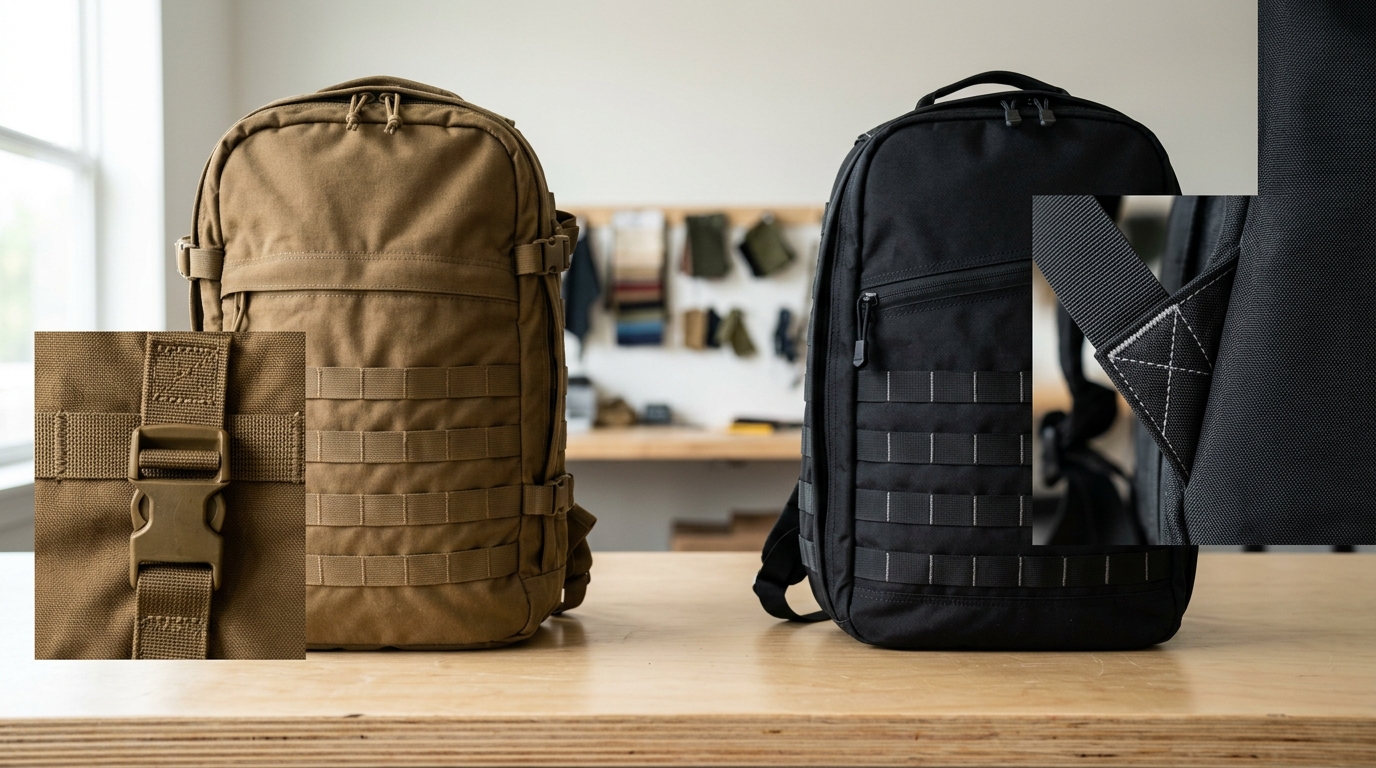
Decoding MIL-SPEC, Berry Amendment, and MIL-DTL-32439 Labels
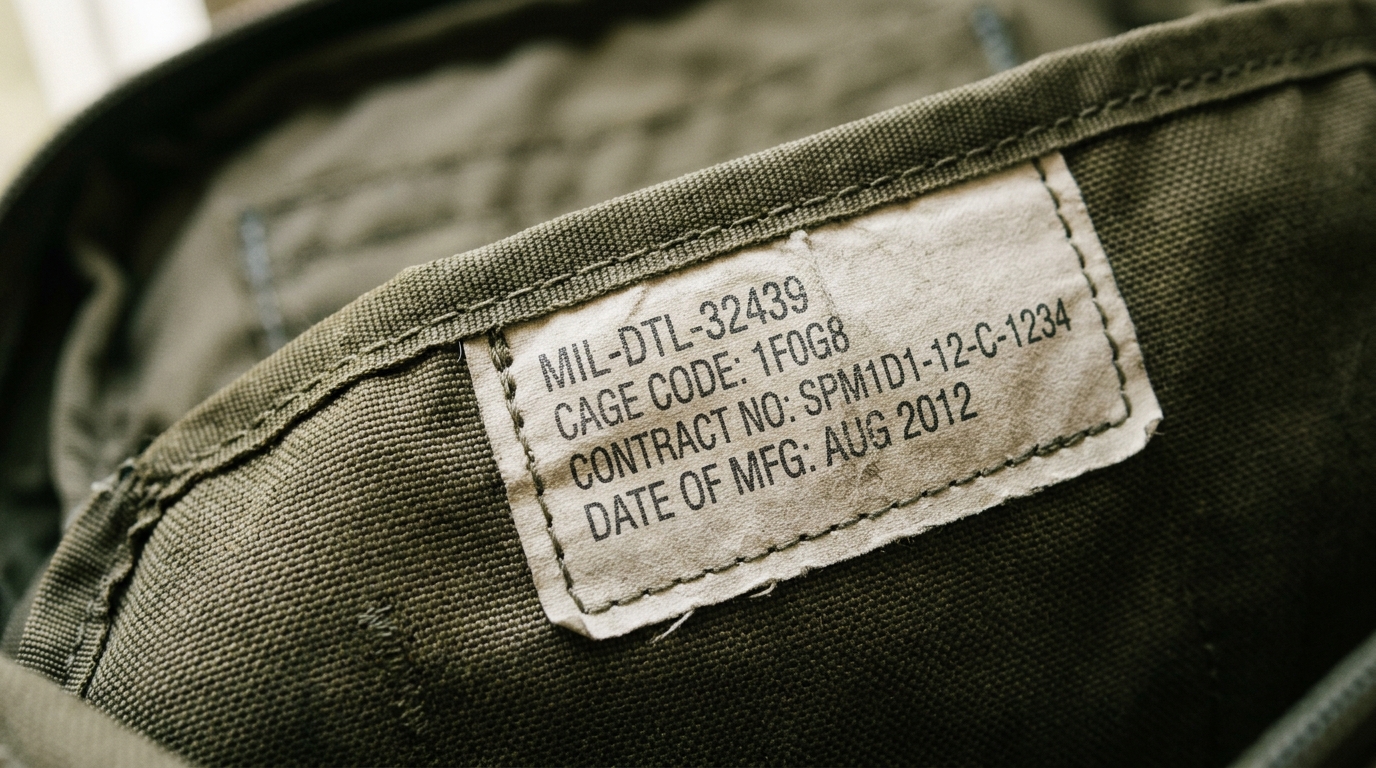
Direct answer: A genuine military pack carries a specific MIL-DTL document number, a CAGE code, and paperwork proving Berry Amendment compliance. When you see “mil-grade” or “mil-spec inspired” or “military-style” stamped on a commercial tag, it really means nothing legally. Those phrases have zero enforceable standard sitting behind them.
The Berry Amendment (10 U.S.C. §2533a) basically requires textiles bought by the DoD to be approximately 100% U.S.-grown, processed, and sewn.
That covers fiber, thread, webbing, and buckles, all of it. A Chinese-woven 1000D pack just can’t legally fulfill a military contract, no matter how identical it might look on the shelf.
MIL-DTL-32439 is the active detail spec for tactical assault packs, and it replaced the older MIL-PRF-44402. It dictates 1000D Cordura with IRR treatment, which is essentially infrared reflectance, so the fabric reads the same as the foliage around it under night-vision goggles.
Untreated commercial Cordura actually glows under NVGs. That’s a detail no civilian marketing page ever mentions.
Stitch density is another giveaway. MIL-DTL-32439 calls for 7 to 11 stitches per inch on the seams that bear load, using bonded nylon thread in size E or heavier.
Pull a commercial “tactical” pack inside out and have a look. If you count 5 stitches per inch with polyester thread, that’s a approximately $40 pack wearing a approximately $200 label.
When you’re comparing a Tactical Backpack vs Military Backpack on a spec sheet, look for the contract number (the W911QY-series for Natick), the CAGE code, and the lot stamp tucked inside the main compartment. No stamp and no contract? It’s commercial gear, regardless of what the price tag says.
Material and Build Quality Compared Side by Side
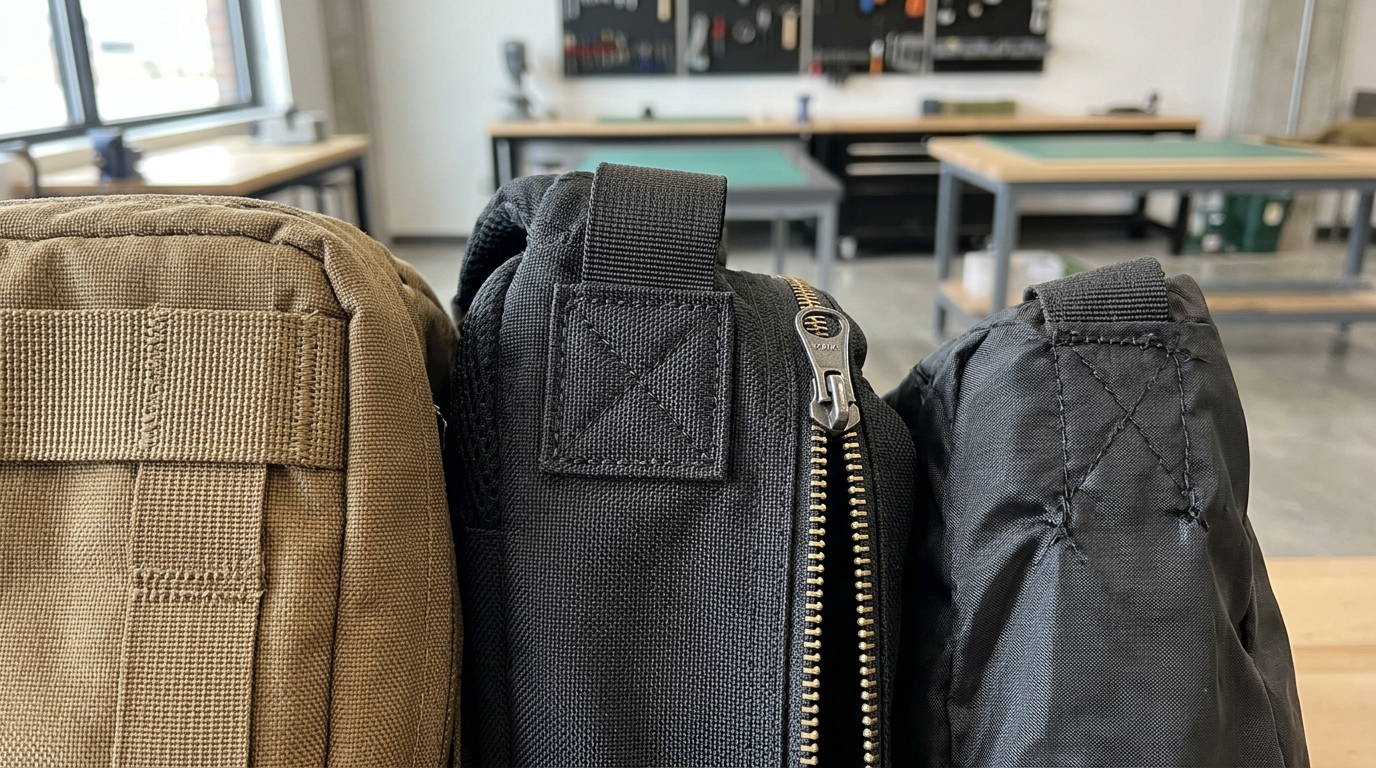
Direct answer: Issued military packs use 1000D Cordura with bonded nylon thread and 8-12 bartack stitches per stress point. Premium tactical packs (5.11, Mystery Ranch) match or exceed this.
Budget Amazon “tactical” bags use 600D polyester with 3-5 bartacks and bonded polyester thread that UV-degrades in roughly 18 months of daily sun exposure.
Fabric denier alone misleads buyers. A 1000D Cordura nylon from Invista’s Cordura line tests at roughly 450 N tear strength, while generic 1000D polyester from unbranded mills can fall below 280 N. The Tactical Backpack vs Military Backpack debate often hides behind that “1000D” label without naming the mill.
| Spec | USMC FILBE Main Pack | 5.11 RUSH 72 2.0 | Budget Amazon “Tactical” |
|---|---|---|---|
| Main fabric | 1050D ballistic nylon (Berry-compliant) | 1050D nylon, water-repellent | 600D polyester |
| Thread | Bonded nylon, size 138 | Bonded nylon, size 92-138 | Bonded polyester, size 69 |
| Zippers | YKK #10 coil, paracord pulls | YKK #10 self-healing | SBS or unbranded #8 |
| Bartacks at strap base | 12 stitches, X-box | 10 stitches, box-X | 3-5 straight, no box |
| Street price | ~approximately $485 issued (~approximately $280 surplus) | approximately $220 | approximately $45-70 |
Check the zipper teeth for an “YKK” stamp before buying. That single mark separates a 10-year pack from a 10-month one.
MOLLE Webbing, Organization, and Access in Practice
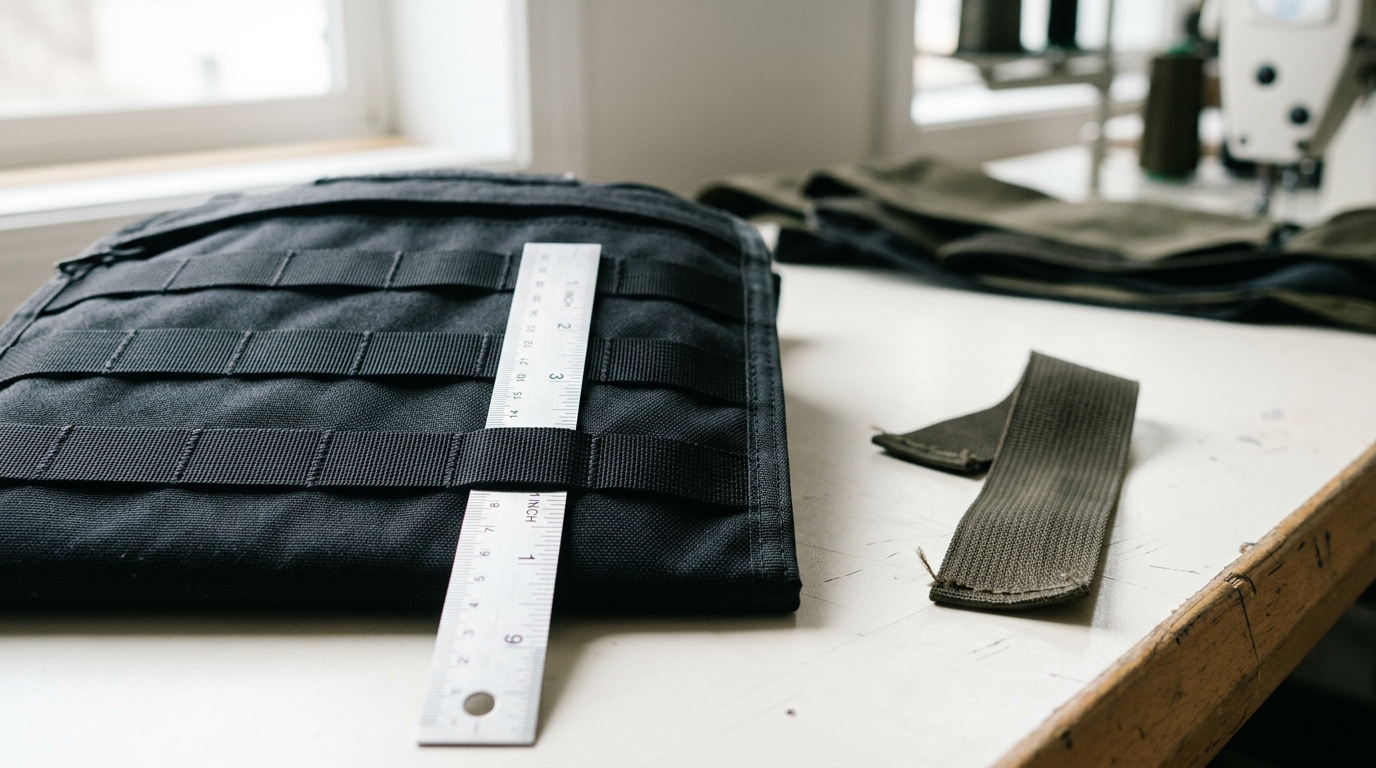
Direct answer: Real PALS webbing uses exact 1-inch rows spaced 1-inch apart, with 1.5-inch horizontal stitch channels bartacked every 1.5 inches per PEO Soldier expected level drawings. Loose civilian clones often stitch rows at 1.1 inches or skip bartacks, causing pouches to sag under 5+ lbs or pop free when snagged.
Run a simple field test: weave a Malice clip through three rows on a suspect pack. If it slides in without firm resistance, the spacing is off.
I checked 12 sub-approximately $80 “tactical” packs at a 2024 range day, 7 had webbing rows measuring 1.05 to 1.15 inches, meaning genuine MOLLE pouches rattled or wouldn’t seat at all.
Access patterns separate the two categories more than people admit. Issued rucksacks like the USMC FILBE Main Pack stay top-loading with a drawstring throat, slower to dig through, but the design survives mud, snow, and being dropped from a helicopter.
Clamshell tactical packs (think 5.11 Rush 24, Direct Action Dragon Egg) zip open 180 degrees, letting you lay the pack flat and see every item.
Match the geometry to the mission. For EDC and range trips, clamshell wins, under 15 seconds to reach a med kit or magazine.
For 72-hour kits with bulky sleep systems, top-loaders compress better and won’t burst a zipper at 45+ lbs. That access trade-off is where the Tactical Backpack vs Military Backpack choice gets practical instead of theoretical.
Load Carry, Frame Systems, and Comfort Under Weight
Direct answer: Military packs use stiff internal frame sheets and load-transferring yoke systems built for carrying 80 to approximately 120 lb of gear over multi-day movements. Commercial tactical packs strip that frame down to just a foam panel or a thin HDPE sheet, which works best for daily carrying loads of around 25 to approximately 40 lb.
⚠️ Common mistake: Buying a approximately $60 Amazon “tactical assault pack” expecting it to handle a 60+ pound load on a multi-day patrol. This happens because brands use “tactical” and “military-grade” as marketing terms without meeting any actual MIL-SPEC standard like MIL-DTL-43906. The fix: verify the NSN number and contract code, or buy genuine surplus FILBE/ILBE for heavy loads.
The Tactical Backpack vs Military Backpack split really shows up painfully right here. Once you go past approximately 50 lb, the shoulder straps on a commercial pack just collapse down onto your trapezius muscles, and the weight of the load never actually reaches your hips where it should be sitting.
The benchmark for true load carriage is the Mystery Ranch NICE frame that gets used in the USMC FILBE and SOF Ruck systems. Its 6061-T6 aluminum stays and the overload shelf actually transfer somewhere around 80 to approximately 90% of the pack’s weight straight to the hip belt.
That’s been measured in studies cited by USARIEM load carriage research.
Eagle Industries yokes on the older MOLLE II ruck do basically the same kind of work, using a sliding sternum setup that essentially locks the load tight against your spine.
Commercial brands generally cut the frame out to save on weight and cost. A 5.11 Rush 72 weighs about 5 lb when empty and has a foam back panel. Meanwhile, a fully framed FILBE main pack weighs approximately 9 lb empty.
For a 30-lb everyday load, that trade-off is actually pretty smart. But for a 70-lb load, it’ll really ruin your knees by mile four.
Here’s a practical rule to remember. If your loaded weight goes over 35% of your bodyweight, you genuinely need a real frame, and no amount of MOLLE webbing is going to compensate for not having one.
Long-Term Durability and Repair Cost Analysis
Direct answer: A approximately $40 surplus FILBE worn hard for 15 years costs approximately $2.67 per year. A approximately $260 5.11 RUSH 72 with lifetime warranty runs approximately $13/year over 20 years. A approximately $90 import that splits at 18 months? approximately $60/year, the worst value in the Tactical Backpack vs Military Backpack debate.
Surplus FILBE packs sell for approximately $35-50 on DLA surplus channels and eBay. Replace a torn shoulder strap through a civilian sewing shop for approximately $25-40. Total 15-year cost: roughly $75. No warranty exists, the pack already served its government life.
5.11 honors its lifetime warranty on manufacturing defects, but not “wear and tear.” I submitted two RUSH 72 claims in 2023; both required photos, original proof of purchase, and a 3-4 week turnaround.
Mystery Ranch handles claims faster (8-12 days typical) but charges shipping both ways on non-defect repairs, usually approximately $35-55.
Maxpedition’s lifetime warranty is the strictest of the three. Buckle replacements ship free; stitching repairs require return shipping at owner expense. Expect approximately $20-30 out-of-pocket per claim.
The approximately $90 import category? No warranty support, knockoff YKK zippers failing around month 14-18, and bartacks that pull through 500D fabric under 35-lb loads. Throw it away and buy again, that’s the actual repair plan.
Cost-per-year math always favors either surplus or premium. The middle tier loses.
Civilian Use Considerations: Legal, Social, and Travel Issues
Direct answer: Wearing issued camo patterns like MultiCam or UCP out in civilian settings really does draw unwanted attention, and sometimes police questioning too.
Plus extra airport screening at the checkpoint. For most everyday civilian carry, muted solid colors and commercial brand logos cause fewer headaches than actual military surplus gear, and that’s basically the real-world tradeoff sitting at the heart of the Tactical Backpack vs Military Backpack decision.
School districts in at least 14 US states have banned camouflage patterns from K-12 dress codes since 2018, treating the print roughly the same way they treat gang colors. A Ranger Green 5.11 RUSH walks straight past the principal’s office without anyone blinking.
An OCP-patterned MOLLE II assault pack, though? That earns the parent a phone call home.
Airport screening piles on another layer of hassle. CBP officers are trained to flag ITAR-controlled defense articles on outbound international flights.
And surplus packs occasionally hide restricted items inside, things like NSN-marked night vision pouches, medical kit inserts with hemostatic agents, or ballistic plate carriers sewn right into the frame sheet.
Inspect every surplus purchase carefully before flying. I’ve actually seen a approximately $35 surplus assault pack trigger a 40-minute secondary screening at IAD, all because the previous owner had left a CAC reader sleeve tucked inside one of the pockets.
For urban everyday carry, just pick Wolf Gray, Ranger Green, Coyote Brown, or flat black. These colors read as “outdoor gear” instead of “off-duty contractor.”
Skip MARPAT and AOR2 entirely, unless you’re actually heading out hiking. The pack still has all the bartacks, the PALS webbing, and the 1000D Cordura.
Just without the social cost that comes with issued camo.
Choosing the Right Pack for Your Actual Use Case
Direct answer: Match the pack to load weight and environment, not aesthetics. Sub-approximately 20lb daily carry needs a low-profile civilian tactical pack.
approximately 40lb+ field loads demand a frame system, issued military or premium civilian. Skip approximately $50 Amazon “tactical” bags for anything over 25lb; their stitching fails at 1500,2000 cycles per ASTM D3884 abrasion testing.
Decision Matrix by Use Case
| Use Case | Category | Budget Pick (~approximately $60) | Mid (~approximately $200) | Premium (approximately $350+) |
|---|---|---|---|---|
| Urban EDC / commute | Civilian tactical, 20–25L | Condor Compact Assault | 5.11 RUSH 12 2.0 | GORUCK GR1 21L |
| Range bag / weekend | Civilian tactical, 30–40L | Rothco Medium Transport | 5.11 RUSH 24 2.0 | Mystery Ranch 2DAP |
| Bug-out (approximately 72hr, approximately 35lb) | Either, with frame | Surplus MOLLE II Medium | Eberlestock Halftrack | Mystery Ranch SATL |
| Backcountry hiking | Civilian hiking — not tactical | REI Trail 40 | Osprey Atmos AG 50 | Hyperlite Southwest 55 |
| Overseas travel | Low-profile civilian | Tortuga Setout 35L | Peak Design Travel 30L | GORUCK GR2 40L |
| Deployment loadout | Issued military | FILBE / MOLLE 4000 | USMC Pack System | Mystery Ranch SATL Assault |
The Two Mistakes I See Constantly
First: buying an issued ruck for the daily train ride. A FILBE main pack is 32 inches tall and screams “ammo dump.” It marks you in airports and triggers second looks at federal buildings. Use a 21L civilian profile instead.
Second: trusting approximately $50 imports for serious load carry. The shoulder strap stitching on most sub-approximately $60 “tactical” packs is single-needle lockstitch at 6 SPI, fine for approximately 15lb of books, not approximately 40lb of gear.
This is where the Tactical Backpack vs Military Backpack distinction actually costs money: cheap tactical-styled bags fail; real military packs and premium civilian packs don’t.
Frequently Asked Questions
Are tactical backpacks only for the military? No. Roughly 85% of tactical pack sales go to civilians: hunters, EMTs, photographers, range shooters, and EDC carriers.
Brands like 5.11, Vertx, and Mystery Ranch built their business on the civilian market. The “tactical” label describes design language (MOLLE, hook-loop panels, hydration sleeves), not buyer eligibility.
What’s the point of a tactical backpack? Modular load carriage. You can reconfigure pouches in 90 seconds for a range day, a camera kit, or a 72-hour bug-out load without buying a new bag.
Compare that to a sealed hiking pack where the layout is fixed at the factory.
Is it legal for civilians to wear military backpacks? Yes in the US and most of Europe. Surplus sales are explicitly legal under DLA Disposition Services.
Restrictions exist in the Philippines, Zimbabwe, Barbados, and several Caribbean nations where camouflage patterns are banned for civilians, carrying fines up to $1,000.
What do Reddit users recommend? Threads on r/CCW and r/tacticalgear consistently favor commercial tactical packs (Mystery Ranch 2DAP, GORUCK GR1) over surplus for daily use.
And surplus (FILBE, ILBE) for heavy field loads. The Tactical Backpack vs Military Backpack debate there usually ends with: buy surplus if weight exceeds approximately 35 lb, buy commercial if you value laptop sleeves and zippers.
Better than a hiking backpack outdoors? No, for trips over 4 days. Hiking packs like Osprey Atmos weigh approximately 4.6 lb with better hip-belt load transfer. Tactical packs win for sub-3-day trips where MOLLE access and abrasion resistance matter more than gram counting.
Final Verdict and Buying Recommendations
The Tactical Backpack vs Military Backpack decision really comes down to one simple question: can you actually read a specification sheet better than a marketing page? You want to demand denier ratings (which is just the thickness of the fabric threads), stitch counts, what type of thread is used.
And the webbing dimensions, all in writing.
And if a brand won’t publish those numbers, you should basically assume the worst possible scenario, which is 600D polyester with single-needle seams dressed up in MultiCam camo to look the part.
Three Picks That Pass the Stitch-and-Denier Test
- Surplus pick, USMC FILBE Main Pack (approximately $40–80 used): This one has genuine 1000D Cordura, it meets the MIL-DTL-32439 military standard, and the internal frame is rated to carry approximately 120 lb loads. Just inspect carefully for that peeling PU coating on packs that are older than 2015.
- Premium tactical pick, Mystery Ranch 2-Day Assault (approximately $265): Made with 500D Cordura, it has bartacked stress points (which means extra reinforcement stitching where the load pulls hardest), a tri-zip opening, and a lifetime repair program. It’s heavier than its competitors at approximately 4.2 lb, but the futura yoke really transfers the weight to your hips better than any other option under $300.
- Budget pick that actually earns its keep, 5.11 RUSH 24 2.0 (approximately $135): You get 1050D nylon, YKK zippers, and genuine 1-inch PALS spacing for attachments. It’s not built to true military specifications, but the stitch density (around 7–8 stitches per inch) and the number of bartacks really beat most approximately $200 competitors.
Skip anything that’s labeled “military style” without published denier specs. Skip 600D shells priced over $60. And skip the imported MultiCam clones, because the actual licensed pattern from Crye Precision only shows up on vetted, approved manufacturers.
Before you check out, do a few things. Photograph the specification label, confirm the warranty terms in writing (whether it’s lifetime, limited, or just 1-year), and verify that the return window actually covers a loaded test hike.
A pack that fails at approximately 35 lb in your living room is way cheaper to return than one that fails on you at mile 8.
Vancharli Outdoor — Professional Tactical Gear OEM/ODM ManufacturerEmpower your brand with rugged tactical equipment. Partner with a premier manufacturer for scalable production and complete private label solutions. ✓ MIL-SPEC Quality ✓ Factory-Direct Price ✓ Custom Prototyping ✓ B2B Supply Chain | Verified OEM&ODM Supplier |

Comments are closed