If you’re commuting or squeezing rides between meetings, you need a routine that shows exactly how to clean a hydration bladder fast—without leaving behind odors or that new‑bladder plastic taste. This guide gives you a proven 10‑minute workflow for daily care, plus safe, brand‑aligned options to remove stubborn flavors, dry quickly, and prevent mold.
Looking for the short version? Here’s the deal: mild soap, warm water, attention to the tube and bite valve, and complete drying beat most problems before they start. When you need more, use manufacturer‑approved soaks and follow safety rules.
The safest, universal method for how to clean a hydration bladder is warm water + a drop of mild dish soap, plus thorough rinsing and complete air‑drying. Authoritative how‑to coverage from mainstream gear outlets backs this approach; for example, see the step‑by‑step guidance in the updated 2026 article from Popular Science: how to clean your hydration bladder.
Don’t ignore the hose and bite valve. Use a tube brush and open the valve during rinses; cycling and outdoor maintenance guides like Bicycling’s 2026 update stress tube cleaning as essential for taste and hygiene: fast routine for cleaning hydration bladders.
Dishwasher and bleach policies vary by brand. HydraPak permits top‑rack dishwasher cleaning only when the reservoir is fully reversed (manufacturer guidance: HydraPak reservoir cleaning guide). Platypus explains a micro‑dose bleach protocol and specific taste‑removal recipes (manufacturer support: disinfect a Platypus hydration system). If your brand doesn’t explicitly allow these methods, skip them.
Never mix cleaning chemicals (for example, bleach with vinegar or ammonia). U.S. public‑health guidance is explicit that mixing can release toxic gases; see the CDC’s overview: cleaning and disinfecting with bleach—safety rules.
How to Clean a Hydration Bladder in 10 Minutes (Commuter Workflow)
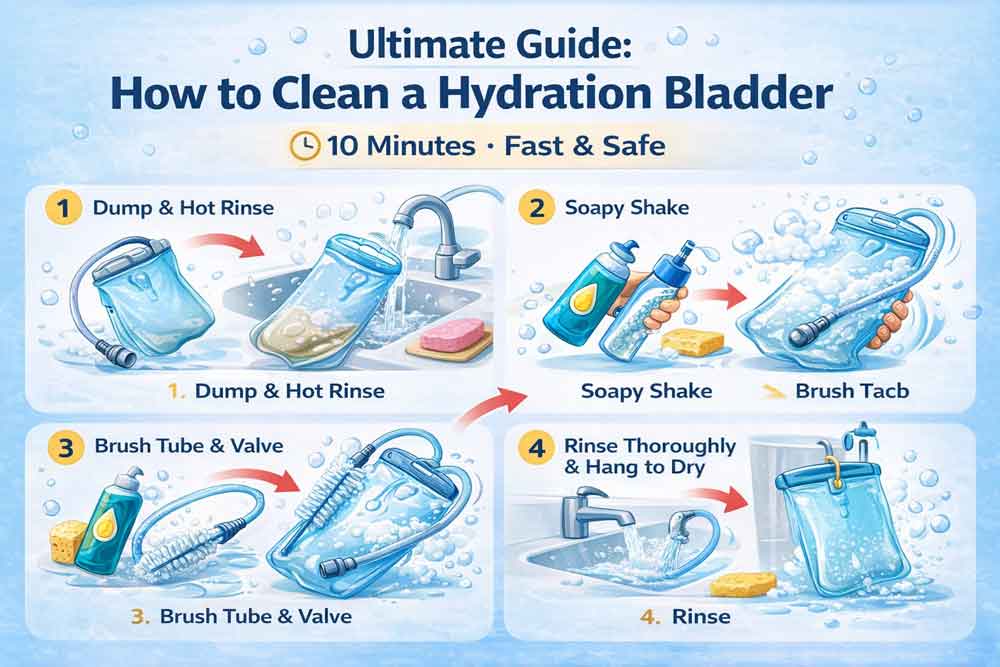
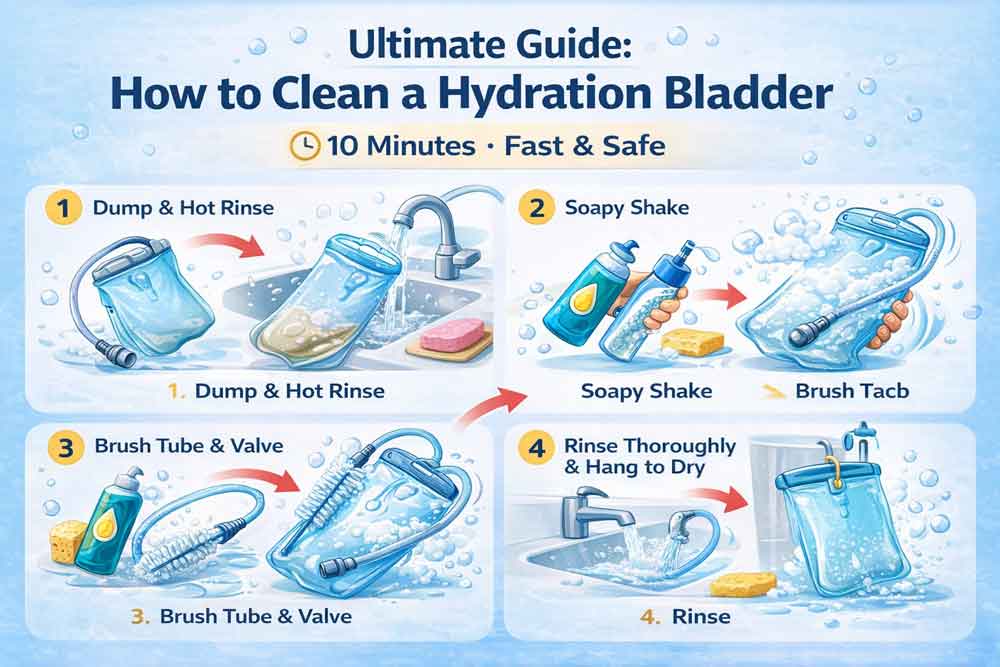
A fast routine you’ll actually keep is the best defense against plastic taste and funk. This is the commuter‑friendly, time‑boxed version of how to clean a hydration bladder on busy days. You’ll need mild dish soap, warm water, a soft sponge, and a tube brush.
Empty and hot‑rinse — 2 minutes Dump remaining liquid. Rinse the reservoir with hot (not boiling) water. Disconnect the hose and run hot water through it, opening the bite valve so water flows freely.
Soapy agitation — 3 minutes Add a drop of mild dish soap and warm water to the reservoir, close it, and shake. Use a soft sponge on the inside panels if the design allows access. Push a little soapy water through the hose and valve.
Tube and valve brush pass — 3 minutes Run a tube brush through the hose end‑to‑end. If your bite valve can be disassembled, pop it apart and gently scrub. A second pass with clean warm water helps clear loosened residue.
Thorough rinse and hang — 2 minutes Rinse until there’s no soapy scent. Flush the hose and bite valve with clean water while the valve is open. Hang the reservoir fully open and inverted so air can circulate. Let the hose dangle with the valve open to drip.
Why this works: Routine soap‑and‑water cleaning aligns with manufacturer defaults and mainstream guidance and keeps biofilm from getting established. For detailed background on why this is the industry‑safe baseline, see Popular Science’s 2026 primer: step‑by‑step hydration bladder cleaning and Bicycling’s commuter‑practical take: three‑step bladder cleaning with tube focus.
Tube and bite‑valve hotspots
Think of the hose and valve like narrow alleyways where residue hides. Always open the bite valve when flushing, and let air reach the interior during drying. If you notice a stubborn aftertaste, an extra tube‑brush pass plus a warm‑water flush usually clears it.
Remove Plastic Taste Without Damaging Your Reservoir
New liners sometimes carry a mild plastic flavor that can transfer to water. That taste usually fades with a few clean‑and‑dry cycles, but safe soaks can speed it up—without harming TPU/PEVA materials.
Brief science: That “plastic” note often comes from trace manufacturing residues and the first rounds of water contact with flexible liners. Neutralizing or absorbing those compounds—and then rinsing thoroughly—usually solves it.
Safe, brand‑aligned options
Baking soda + lemon method (manufacturer recipe): Platypus support describes a simple sequence. Per liter of reservoir volume, shake a slurry of baking soda in water; then add lemon juice, vent pressure (it will fizz), soak ~20 minutes, and triple‑rinse with hot water. The exact ratios and venting cautions are outlined here: Platypus/Cascade Designs taste‑removal and disinfection guidance.
Cleaning tablets: Commercial cleaning tablets designed for hydration systems can break down odor compounds in 15–30 minutes. Follow the label precisely and rinse thoroughly afterward. HydraPak’s official care page lists tablets as a recommended option: HydraPak reservoir cleaning guide.
Brand‑specific bleach caveat Some manufacturers explicitly permit disinfecting with a micro‑dose of unscented household bleach (for example, Platypus recommends 2–5 drops per liter, followed by an overnight contact time and a triple hot‑water rinse). Others do not endorse bleach at all. To protect your reservoir and warranty, only use bleach if your brand’s instructions allow it—otherwise, stick to soap, tablets, or the baking‑soda/lemon method. See Platypus’s ratio and protocol here: official Platypus disinfection instructions.
Drying Fast and Preventing Mold
Complete drying is as important as washing. Moist, enclosed spaces are perfect for biofilm and mold.
Apartment and office‑friendly tactics
Hang the reservoir fully open and upside down so panels don’t touch. Prop the opening with a clean utensil or drying aid to keep airflow moving. Keep the hose attached and valve open so water can drain and air can circulate.
If you’re rushing out the door, let it drip‑dry while you shower/change, then leave it open on a rack. You’ll be amazed how much this alone cuts down on odors.
Freezer storage: useful, with limits Storing a clean, damp reservoir in the freezer can slow microbial growth between rides, but it does not replace washing. Outdoor and gear outlets make this nuance clear—use cold storage as a short‑term tactic, not a hygiene strategy. See Backpacker’s practical care perspective: cold storage tips that prolong gear life, and Popular Science’s reminder that freezing isn’t a stand‑in for cleaning: hydration bladder cleaning fundamentals.
How long should drying take? With good airflow, most reservoirs drip‑dry in a couple of hours. Thicker hoses may hold droplets longer; a final shake and an extra hour with the valve open usually does it. Before storage, run a fingertip along interior seams—if they feel cool or tacky, give it more time.
What NOT to Do (Safety First)
Never mix chemicals. Bleach plus vinegar or ammonia can release toxic gases. Public‑health agencies warn to use bleach only on its own and with ventilation; see the CDC’s guidance: bleach safety for cleaning and disinfecting.
Don’t use boiling water, abrasives, or alcohol. These can deform liners and seals or degrade materials.
Don’t assume the dishwasher is safe. HydraPak allows top‑rack washing when the reservoir is fully reversed; other brands may not. If your brand doesn’t explicitly permit it, hand‑wash.
Don’t use bleach unless your brand provides a precise dilution and rinse protocol (for example, Platypus’s 2–5 drops per liter with triple hot‑water rinse) and you follow it exactly.
Which Cleaning Agents Work Best?
Below is a practical comparison you can use to choose the right method for the job.
Method/Agent
Best for
Typical time
Material safety
Brand notes
Mild dish soap + warm water
Daily cleaning, general odor control
5–10 min
Very high
Universal default endorsed by mainstream guides such as Popular Science (2026)
Baking soda (alone)
Neutralizing mild odors
~30 min soak
High
Rinse thoroughly to avoid aftertaste
Baking soda + lemon (per manufacturer recipe)
New‑bladder plastic taste
~20 min soak + triple rinse
High
Recipe and cautions documented by Platypus/Cascade Designs
Cleaning tablets (hydration‑safe)
Odor and biofilm breakdown
15–30 min
High (when used as directed)
Listed by HydraPak as a recommended option
Dilute bleach (2–5 drops/L)
Disinfection after contamination
Overnight + triple rinse
Medium (brand‑restricted)
Use only if your brand explicitly permits and follow its exact protocol
Dishwasher (top rack, reversed)
Convenience cleaning for select models
Cycle time varies
Medium (brand‑dependent)
HydraPak‑permitted only when fully reversed; others may not allow
Quick Answers to Common Questions
How often should I clean if I only drink water? Rinse hot after every ride and do the 10‑minute clean every few uses. If you add sugary or electrolyte drinks, clean immediately afterward—sugars feed biofilm. This cadence reflects mainstream guidance in sources like Popular Science’s 2026 update and aligns with manufacturer care pages.
Is bleach safe for hydration bladders? Only if your brand’s instructions explicitly allow it at a micro‑dose and detail a thorough multi‑rinse protocol. Platypus documents 2–5 drops of unscented household bleach per liter, an overnight contact time, and a triple hot‑water rinse. If your brand doesn’t publish bleach guidance, skip it and use soap, tablets, or the baking‑soda/lemon method instead.
Can I put my bladder in the dishwasher? HydraPak says yes—top rack only, and only when the reservoir is fully reversed to expose the interior. Many other brands don’t endorse dishwashers. When in doubt, hand‑wash.
Does freezing prevent mold? Freezing slows growth between uses but doesn’t clean or disinfect. Always wash first, then consider cold storage as a temporary helper when full drying isn’t possible.
Water still tastes plasticky after cleaning. What now? Run the baking‑soda + lemon sequence once more, paying extra attention to the hose and bite valve (open during soaks and rinses). If flavor persists, use a hydration‑safe cleaning tablet per label and rinse until completely neutral.
Wrap‑up
Adopt the 10‑minute routine after rides, keep airflow moving while you dry, and use a manufacturer‑aligned soak when you need to remove plastic taste. Do that, and your water will taste clean, your gear will last longer, and you’ll spend more time riding than scrubbing.






Comments are closed