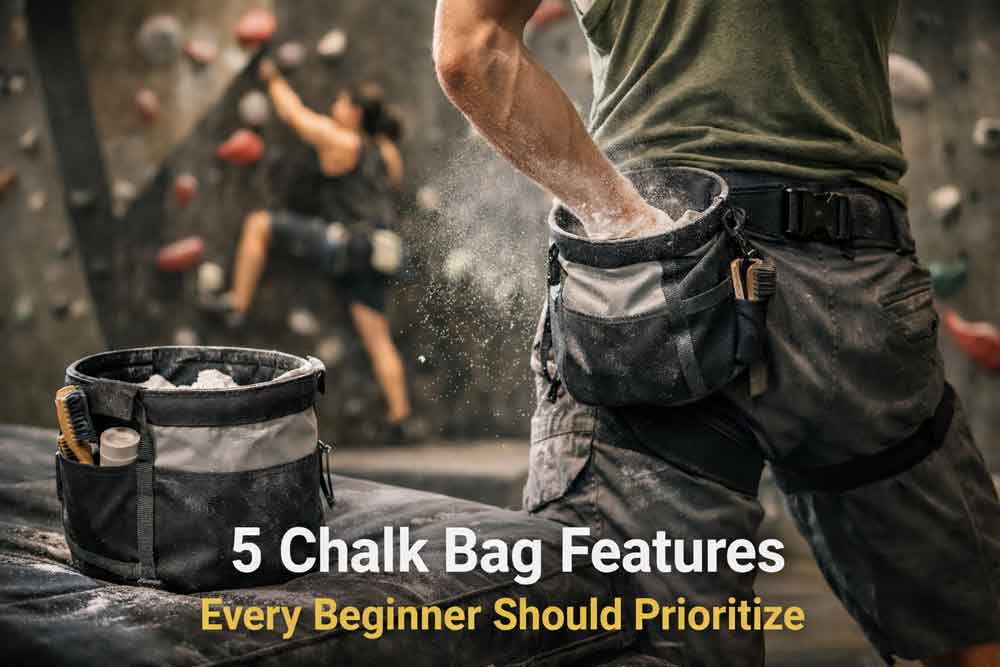
If you’re new to climbing—especially indoor bouldering or gym sessions—the right chalk bag can quietly improve every attempt. This guide breaks down the essential chalk bag features that influence speed, cleanliness, and confidence, then shows you how to evaluate each one in minutes.
First, decide on form factor. A hip bag rides on your waist for on‑route use (great for sport or trad and still popular in the gym). A bouldering bucket sits on the ground, offers big capacity, and favors bouldering sessions. You’ll learn which to pick for your discipline, then how to judge five core features: stay‑open rim, leak‑proof closure, dust‑managing lining, effective brush holders, and secure attachment/stability.
Key takeaways
A structured, stay‑open rim gives fast, one‑hand access; it’s a high‑value upgrade for beginners who fumble mid‑move.
Leak control comes from closure type and execution; buckets often use roll‑top or magnetic assists for spill resistance.
Fleece/pile linings help manage dust and spread chalk evenly; avoid overfilling, which defeats both benefits.
Dual‑diameter brush holders fit common brush sizes and keep tools reachable without wobble.
Stable attachment (for hip bags) and a steady base (for buckets) prevent distraction and spills during hard moves. If you remember nothing else, these are the chalk bag features to check first in-store.
Stay-Open Rim (Fast Access)
Why it matters
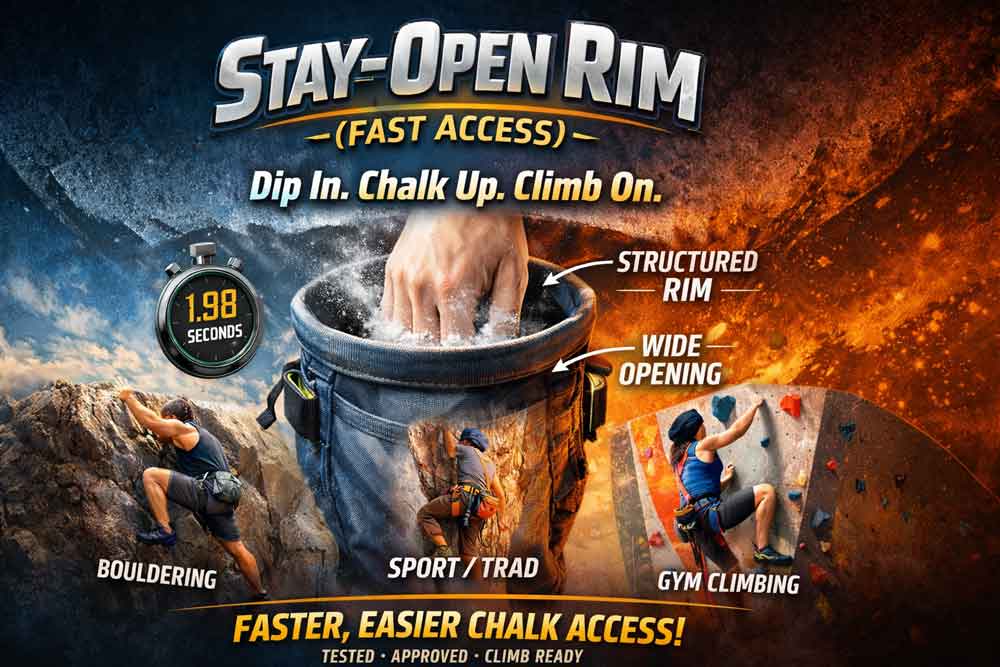
A stay‑open rim is a structured mouth that resists collapsing, so your hand finds chalk without hunting. For beginners, that means fewer missed dips, faster resets, and less attention pulled away from footwork or clipping.
What to look for
Scan product copy for terms like “structured opening,” “stiff/stiffened rim,” and note opening diameter (around 12–13 cm is common for hip bags). Many roundups and product pages call out how a supported rim speeds chalking; for example, a field‑tested roundup highlights structured rims aiding access during movement in real conditions according to the team’s independent testing in 2026 (see the reviewers’ methods in the Treeline Review’s field‑tested roundup). Retail listings also describe stiffer rims and wide mouths that make dipping easier, as seen in REI’s beginner‑friendly product copy on popular hip bags (e.g., examples cited in their catalog pages).
Quick test: Put on the hip bag and time five dips. If you can dip and withdraw consistently under two seconds without snagging the rim, the shape works for your hand size.
Fit notes: bouldering vs sport/trad vs gym
Bouldering sessions benefit less from stay‑open rims on buckets because the mouth is already wide; prioritize overall stability first. Sport/trad climbers should emphasize a structured rim because it keeps one‑hand chalking smooth while moving or clipping. In the gym, a supported rim remains handy for quick circuits and repeat attempts.
Leak-Proof Closure (Clean Transport)
Why it matters
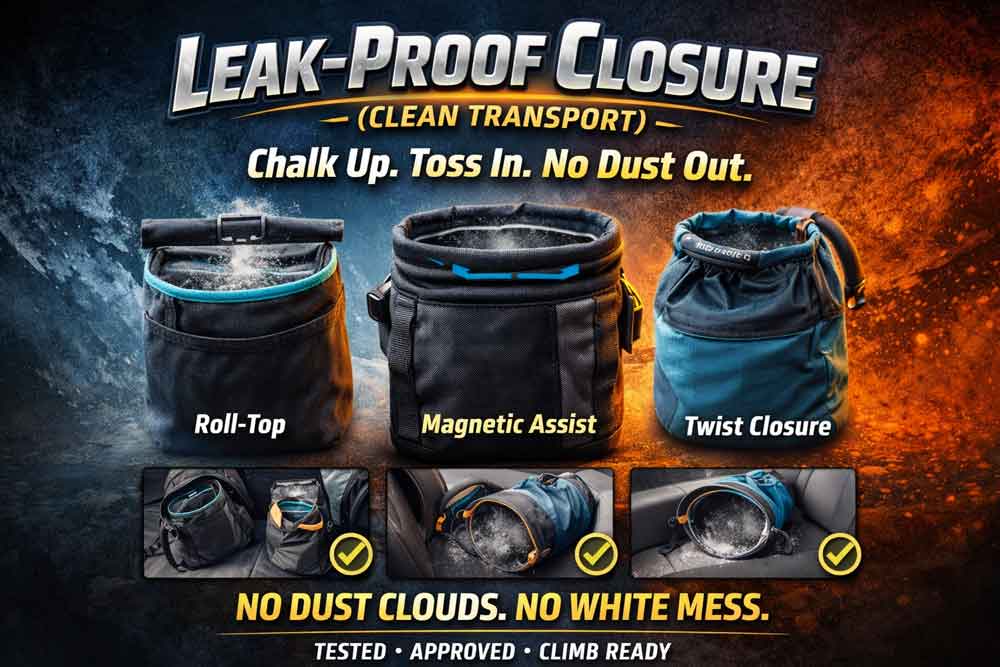
Leaky bags dust your gear, car, and gym floor. A well‑executed closure lets you toss your bag in a backpack without a chalk cloud and reduces spills when the bucket tips.
What to look for
You’ll see several closure families:
Drawcord/cinch: Ubiquitous on hip bags; performance varies with the collar shape and any internal gasket. Independent reviewers note that some designs seal more reliably than others in motion (see the Treeline Review’s 2026 field‑tested roundup).
Roll‑top: Common on bouldering buckets; when folded correctly, it’s very spill‑resistant and packs compactly. A manufacturer example pairs a roll‑top with a magnet‑lined brim to snap shut if knocked over—described on the Mountain Hardwear Camp 4 bucket.
Magnetic‑assist: Speeds closing between burns; best as a helper, not the only seal.
Twist/other designs: Some brands reference dust‑tight or twist closures on certain models (see Edelrid’s site references to a dust‑tight/twist closure concept); evaluate in person if possible because mechanisms differ.
Quick test: Add a tablespoon of chalk, close the bag per instructions, invert, and shake gently for 10 seconds over a sink. If visible dust escapes at the seam, expect mess in real use.
Fit notes: bouldering vs sport/trad vs gym
Bouldering buckets benefit most from roll‑top or roll‑top‑plus‑magnet systems to curb spills when pads shift. For sport/trad, a reliable drawcord with a well‑shaped collar is light and fast. Gym climbers value quick closure between problems—magnetic assists can be convenient, but make sure a full seal is possible for transport.
Lining That Manages Dust
Why it matters
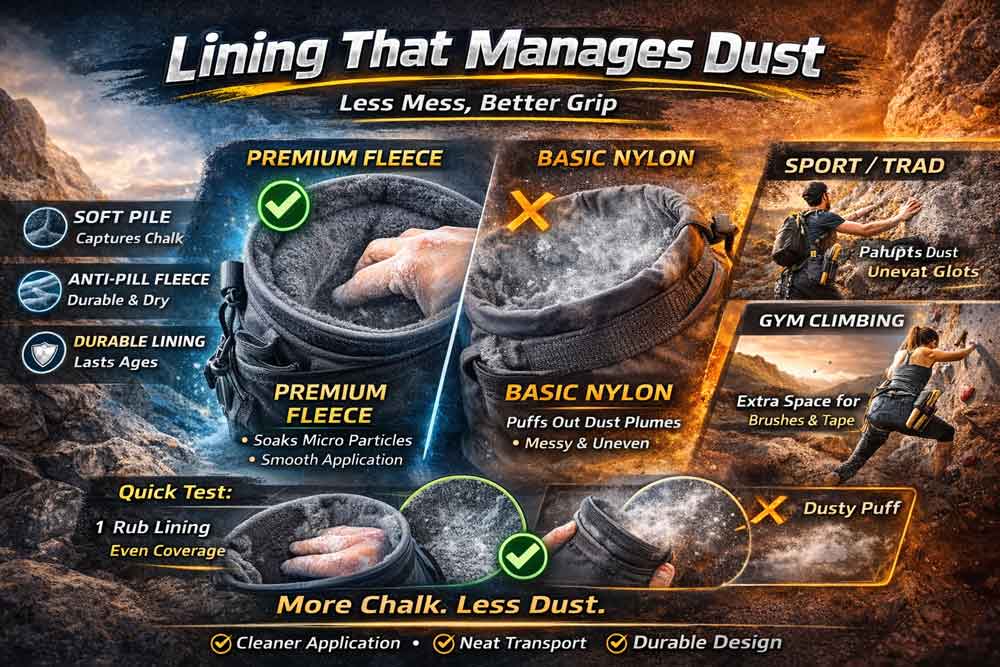
Lining influences how chalk spreads on your hand and how much dust escapes. Softer pile/fleece linings can capture micro‑particles and smooth out application, which feels more controlled for new climbers.
What to look for
Look for mentions of fleece, pile, or soft polyester lining in product descriptions. Retailer copy often explains that these materials help distribute chalk evenly and minimize dust plumes—claims echoed in multiple product pages carrying fleece‑lined hip bags in recent years (e.g., REI’s descriptions of fleece or anti‑pill fleece across several models). You’ll also see durability notes like anti‑pill fabrics, which stand up to frequent sessions.
Quick test: Rub the lining with clean fingers. If it sheds heavily or feels slick and patchy, expect uneven coverage or faster wear. After a week of use, empty and lightly shake the bag; if fine dust pours out, consider using less chalk or a bag with a plusher lining.
Fit notes: bouldering vs sport/trad vs gym
Bouldering and gym climbers typically appreciate plush linings for frequent dips during short rests. For sport/trad, a smoother lining can feel quick for single dips before clips, but comfort still matters with cold hands—test with your typical chalk.
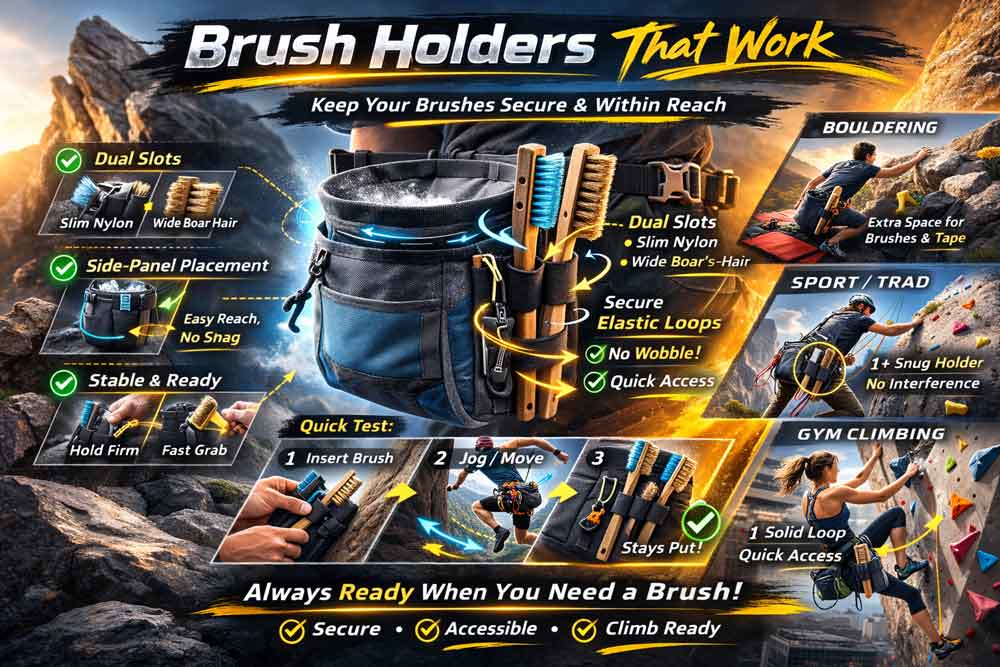
Brush Holders That Work
Why it matters
When holds glaze or your beta requires precise friction, a brush is your best friend. A brush holder that actually retains both a slim nylon brush and a wider boar’s‑hair brush keeps tools stable and within reach.
What to look for
Dual‑diameter or multiple slots are practical, and side‑panel placement often prevents snagging. Manufacturer pages commonly list “two brush holders” or show dedicated brush loops and adjacent pockets on larger bags and buckets; for example, Red Chili’s chalk bag line highlights models with integrated brush holders and accessory pockets across sizes, as seen on their product listings for brush holders and pockets.
Quick test: Insert your widest brush; it should slide in without deforming the loop and stay put when you jog or hop in place. If it wobbles out, look for tighter elastic or a second, narrower slot.
Fit notes: bouldering vs sport/trad vs gym
Bouldering buckets often allocate extra real estate for brushes and tape, which helps between attempts. Sport/trad climbers should ensure at least one snug holder that doesn’t interfere with a harness or quickdraws. In the gym, prioritize retention over quantity—one solid loop that holds your go‑to brush beats two loose ones.
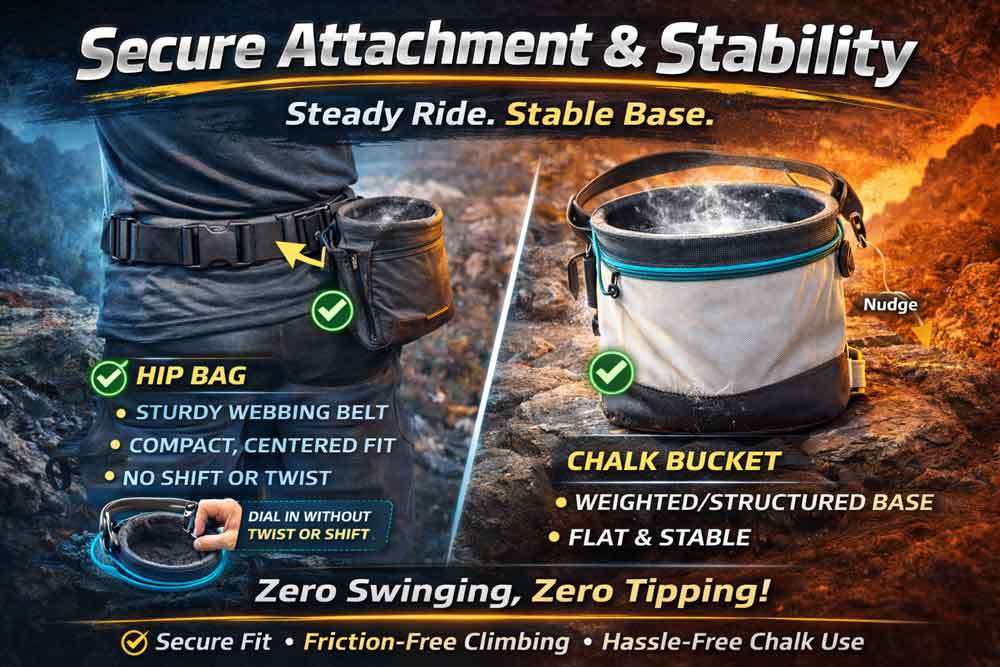
Secure Attachment & Stability
Why it matters
A hip bag that swings or rotates mid‑move is distracting and can spill chalk at the worst moment. A bucket that tips easily will dust your crash pad and shoes.
What to look for
For hip bags, look for a sturdy webbing belt, low‑profile shape, and centered ride at the small of your back. Retail product bullets frequently include a belt and describe stable geometry; try on to confirm the bag doesn’t twist during high steps. For buckets, check for a flat, weighted, or structured base that stays upright when bumped—some designs pair stability features with closures that self‑assist if tipped (see the magnet‑lined brim reference on the Camp 4 bucket’s product page).
Quick test: With the hip bag belted, simulate a few high steps and drop‑knees. If the bag rotates more than a quarter‑turn, adjust tension; if it still swings, try a slimmer profile. For buckets, nudge the rim—if it skates or topples immediately, look for a wider base.
Fit notes: bouldering vs sport/trad vs gym
Bouldering rewards a bucket with a broad, steady base and easy grab‑and‑go handles. Sport/trad favors a compact, centered hip bag that won’t snag a harness or draws. In the gym, choose what matches your routine—hip bag for constant movement, bucket for station‑style projecting—so long as stability checks out.
Conclusion
The five must‑have chalk bag features—stay‑open rim, leak‑proof closure, dust‑managing lining, reliable brush holders, and secure attachment/stability—work together to make chalking fast, clean, and predictable. Prioritize them based on your discipline and how you like to session.
Action steps: Match form factor to use (hip bag for sport/trad and mobile gym sessions; bucket for bouldering). Check rim access with a timed dip drill; verify closure with a 10‑second shake test; feel the lining and avoid overfilling; confirm brush holder fit with your widest brush; and test belt/base stability with movement and bump tests.
Next move: Bring your usual chalk and brush to the shop, test hand fit and seal integrity on the spot, and make sure the bag plays nicely with your harness or pad. A few two‑minute tests now can prevent months of annoyance later.
References for deeper reading and examples of these chalk bag features in the wild: independent reviewers’ 2026 field‑tested roundup, retailer product descriptions that explain structured rims and fleece linings (REI product pages across multiple models), manufacturer notes on roll‑top plus magnet closures on the Camp 4 bucket’s page, integrated brush holders and pockets, and an overview of dust‑tight/twist‑style closures mentioned on Edelrid’s site.







Comments are closed