



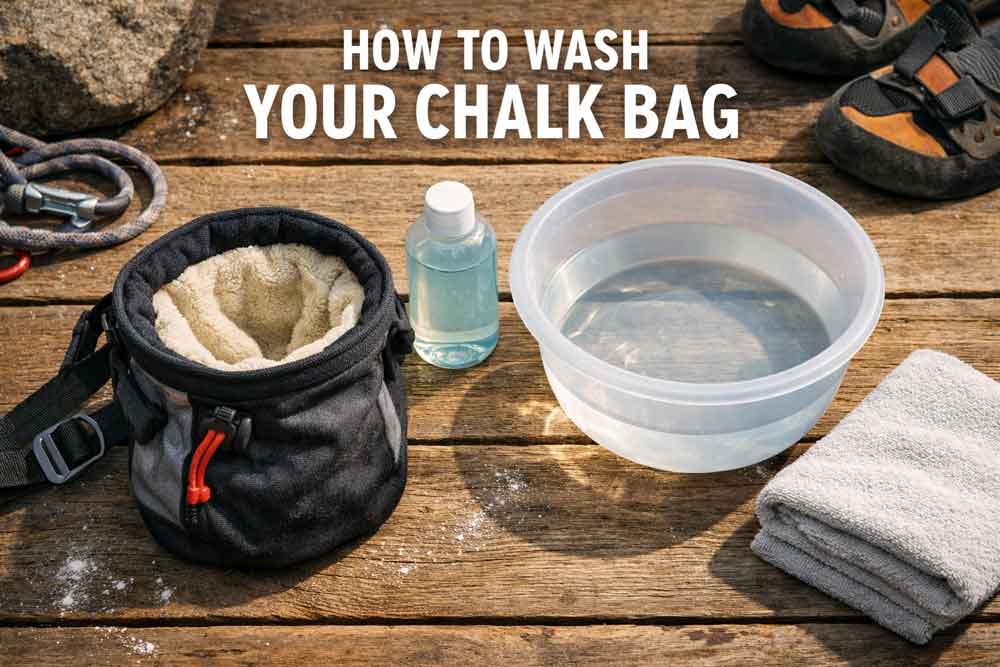
How to Clean a Chalk Bag Without Damaging the Fleece Lining
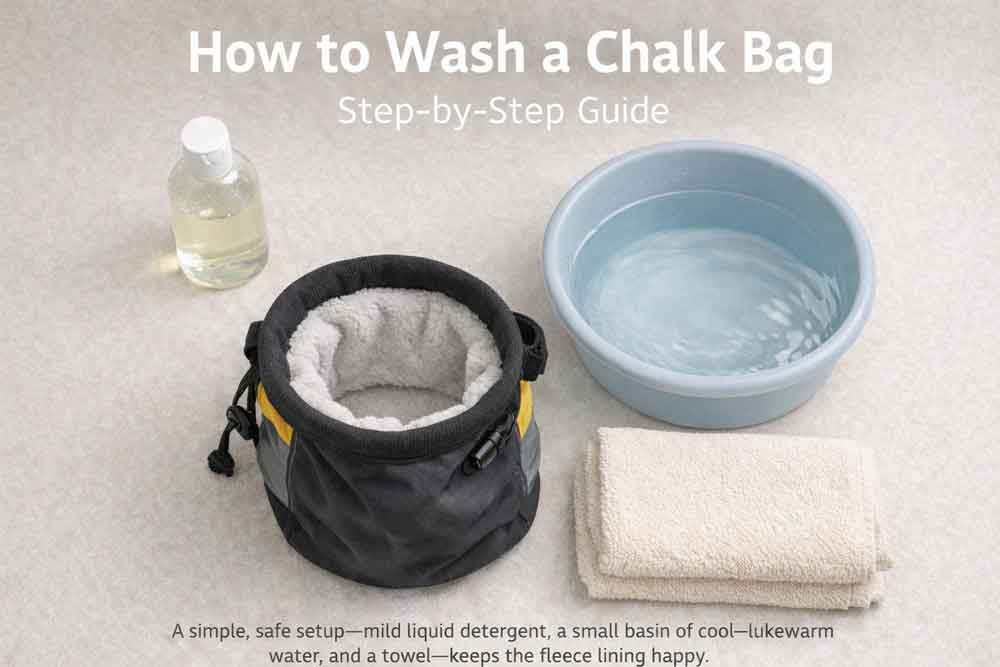
Caption: A simple, safe setup—mild liquid detergent, a small basin of cool–lukewarm water, and a towel—keeps the fleece lining happy.
AI-image prompt suggestion: Create a realistic, top-down photograph of a climber’s chalk bag on a clean table. The fleece lining inside the bag is clearly visible. Arrange next to it: a small bottle of mild liquid detergent (unbranded), a plastic wash basin half-filled with clear water, and a folded cotton towel. Soft, natural light, neutral background, minimal shadows. No logos or text.
Introduction
If you’re wondering how to wash a chalk bag without wrecking the fleece lining, here’s the quick answer: hand-wash with mild liquid detergent in cool–lukewarm water, rinse until clear, press with a towel, and air-dry fully. Keep it low-risk and quick. Have on hand a small basin, a teaspoon of mild liquid detergent, a mesh bag (for machine-wash only when the label allows), a soft cloth, and a towel. Wash when you notice lingering odors, chalk paste spills, or a greasy lining; between deep cleans, a good shake-out after sessions is enough.
Quick Answer: How to Clean a Chalk Bag
The safest way to clean a chalk bag is to hand-wash it with mild liquid detergent in cool to lukewarm water. Empty the loose chalk first, gently clean the fleece lining, rinse until the water runs clear, press out moisture with a towel, and air-dry the bag fully before adding chalk again.
Avoid bleach, fabric softener, high heat, long soaking, aggressive scrubbing, and machine washing unless the care label clearly allows it.
Chalk Bag Cleaning: Quick Dos and Don’ts
| Do | Don’t |
|---|---|
| Empty loose chalk before washing | Do not wash the bag while it is full of chalk |
| Use mild liquid detergent | Do not use bleach or fabric softener |
| Wash with cool to lukewarm water | Do not use hot water |
| Gently massage the fleece lining | Do not scrub the lining aggressively |
| Rinse until the water runs clear | Do not leave soap residue inside |
| Press with a towel to remove water | Do not wring or twist the bag |
| Air-dry in shade with airflow | Do not use a dryer, heater, or direct strong sun |
| Follow the care label first | Do not machine wash unless the label allows it |
Prep your chalk bag
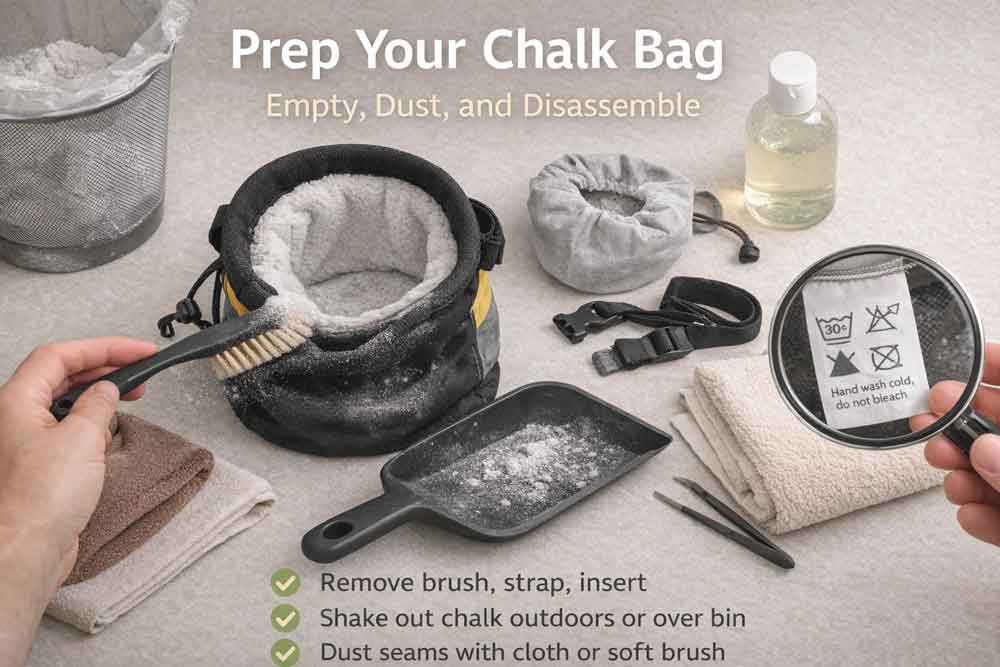
Empty, dust, and disassemble
Open the bag and remove any brush, belt/strap, or removable insert. Turn the fleece lining gently toward the opening so you can access it without stressing the seam. Shake the bag outside or over a bin to get rid of loose chalk, then use a soft cloth or a soft-bristle brush to lift stubborn dust from seams and corners. The goal is to start wet cleaning with as little free chalk as possible.
Inspect materials and labels
Find the care tag first—its directions outrank any general guide. If a label conflicts with something below, follow the label. If the shell is brightly colored or you’re unsure about dyes, spot-test an inconspicuous area with your diluted soap solution, dab with a white cloth, and check for color transfer before you proceed.
Mix a mild cleaning solution
Fill a small basin with cool–lukewarm water (up to about 85–104°F / 30–40°C, if the label allows). Add about one teaspoon of mild liquid detergent per 1–2 liters of water. Unscented liquid dish soap or a gentle laundry detergent both work; avoid fabric softeners and bleach. Stir to disperse the soap evenly.
Hand-wash method (safest)
Gently clean the fleece lining
Submerge the bag and give it a short, calm soak—about 5 minutes is plenty. Using your fingertips, lightly massage the fleece lining in small circles to lift chalk and skin oils. Keep pressure light; you’re loosening residue, not scrubbing. If the water clouds heavily with chalk, swap in fresh solution so you’re not re-depositing particles.
Rinse until water runs clear
Dump the soapy water and refill the basin with clean, cool water. Rinse the bag inside and out, gently squeezing (never wringing) to push soapy water out of the fleece. Refresh the water and repeat until it runs fully clear and you don’t feel any slickness on the fibers. This may take two or three cycles depending on buildup. Many makers recommend this gentle approach and thorough rinsing to protect softgoods; see the stepwise advice in the Kinetik guide in 2025’s archive as an example of this practice in action: Kinetik Climbing—How to Clean Your Chalk Bag.
Press and pre-dry with a towel
Lay a clean towel flat, place the damp bag on it, and fold the towel over the bag. Press down for 15–30 seconds per section to blot water without twisting seams or matting fleece. Reshape the rim while it’s damp so it dries to its intended form. Avoid any wringing motion.
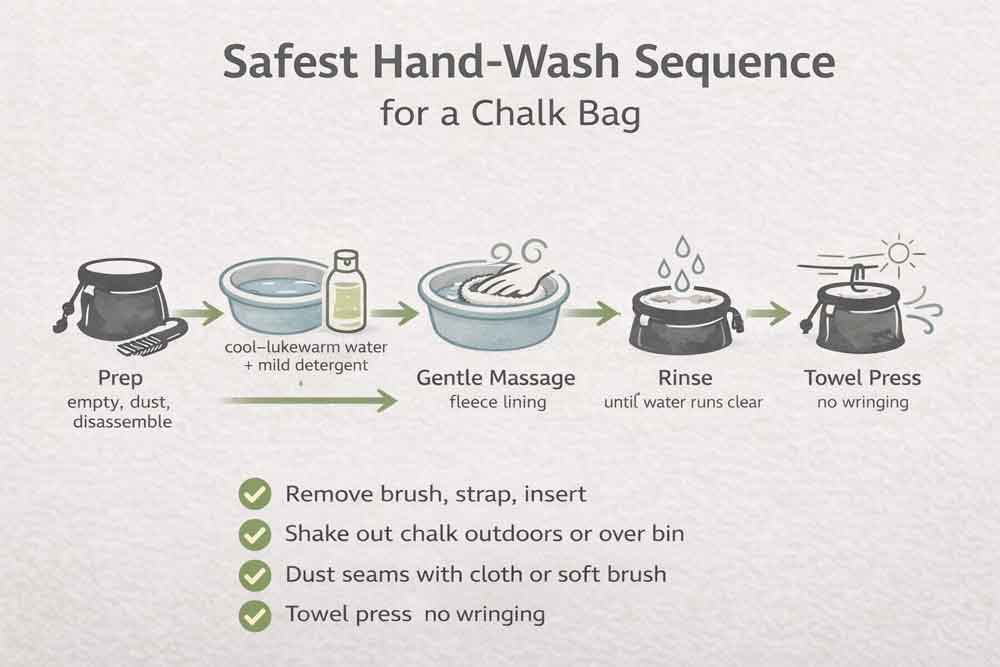
Caption: Follow this low-risk hand-wash sequence to protect the fleece lining and adhesives.
AI-image prompt suggestion: Design a clean, minimal infographic flowchart that shows the safest hand-wash sequence for a chalk bag. Steps, in order: 1) Prep (empty, dust, disassemble), 2) Soak (cool–lukewarm water + mild detergent), 3) Gentle massage of fleece lining, 4) Rinse until water runs clear, 5) Towel press (no wringing), 6) Air dry (shade/airflow). Use simple icons: chalk bag silhouette, water basin, hand with soft swirl arrows, rinse droplets, towel with press arrows, a breeze/air-dry icon. Include short labels under each icon. No brand logos or text beyond the labels. White or light background with dark gray line art and a single accent color.
Machine wash (if label allows)
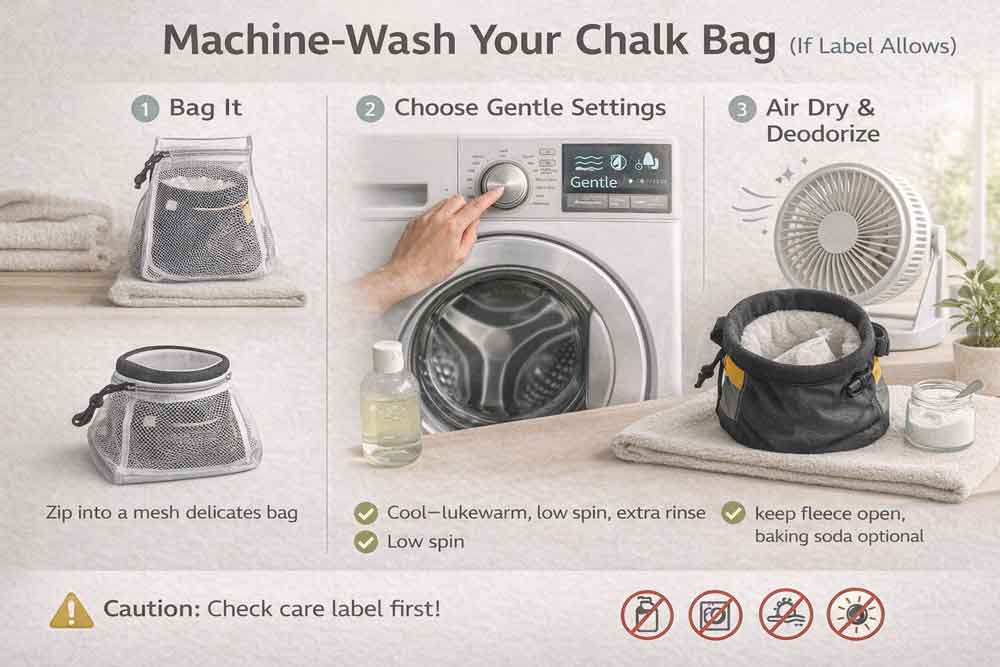
Bag it and choose gentle settings
Only consider machine washing if your care label explicitly permits it—several manufacturers advise hand-wash only to preserve shape and materials, for example the note on YY Vertical’s popular designs: “No, we do not recommend machine washing…”. If yours does allow it, zip the bag into a mesh delicates bag to reduce abrasion and keep small parts contained. Choose a gentle/delicate cycle on a front-loader if possible.
Detergent, water temp, and spin
Use the same mild liquid detergent as above, in a small dose. Stick with cool–lukewarm water per your label, select a low spin, and add an extra rinse if your washer offers it to minimize residue.
Remove promptly and reshape
When the cycle ends, remove the bag immediately. Reshape the rim and open the mouth fully, then move straight to air-drying. Don’t use a dryer.
Drying and deodorizing
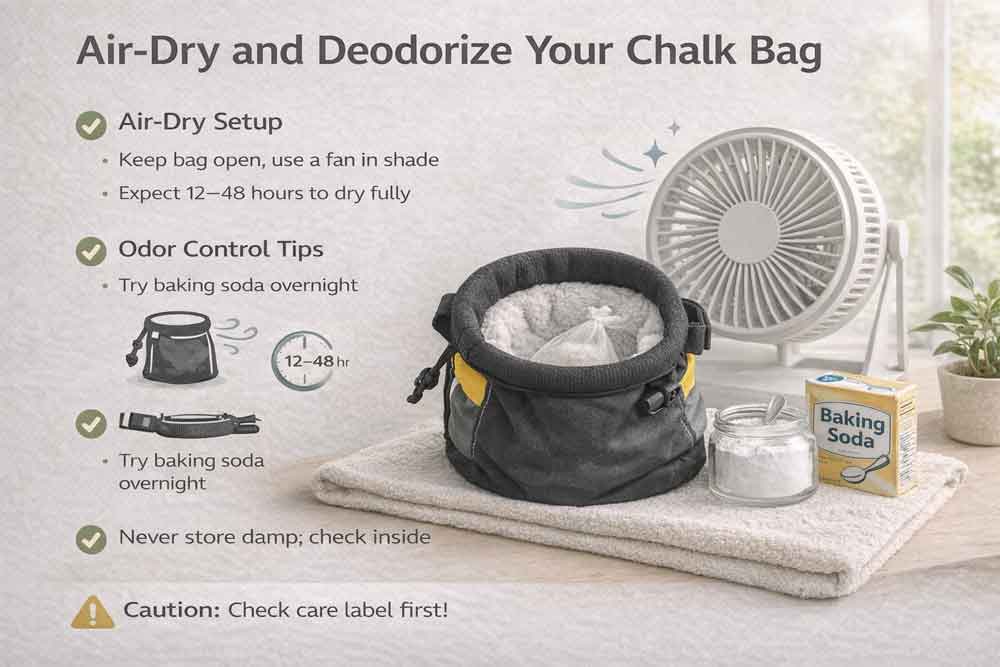
Air-dry setup and timing
Open the bag so air can move through the lining, and set it to dry in the shade with gentle airflow. A small fan across the opening helps. Depending on humidity, expect 12–48 hours. Ensure the interior feels fully dry—no cool-damp patches—before refilling with chalk.
Baking soda or vinegar options
For stubborn odors, sprinkle a thin layer of baking soda inside the fully dry bag and let it sit overnight, then shake it out and rinse lightly with clear water; dry again before use. Alternatively, after your main wash, do a very brief white-vinegar rinse at roughly 1:4 vinegar to water to neutralize smells, followed by thorough clear-water rinsing. Retailer how-tos for softgoods commonly suggest gentle baking soda or diluted vinegar as odor aids; for instance, see the hydration-gear cleaning notes at Public Lands (2024): odor control with baking soda or vinegar, then rinse thoroughly.
Odor prevention between washes
Expert Tip — Safe air-drying and odor control: After every session, leave the bag open to breathe in a cool, shaded spot. Avoid radiators, heaters, or car dashboards. If you sweat heavily, do a short rinse-and-dry midweek rather than waiting for odors to build. For prevention, a pinch of baking soda in a breathable sachet (never loose powder) stored near—but not inside—the fleece can help absorb humidity. Always ensure the chalk bag is completely dry before refilling; trapped moisture is the fastest route to musty smells.
Materials and construction notes
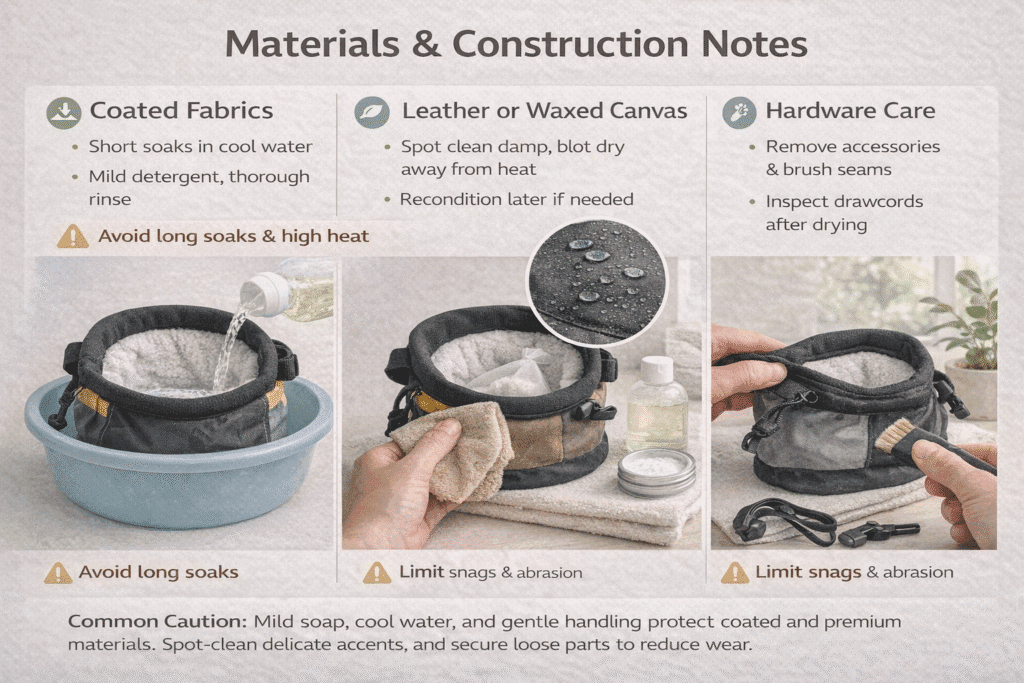
Coated fabrics and adhesives
If the shell has a water-repellent or polyurethane coating, keep soaks brief, use mild detergent, and rinse thoroughly. Long soaks and heat can stress coatings and adhesives over time. General technical-fabric care principles from outdoor brands back this conservative approach; for example, REI’s outerwear care pages emphasize mild detergent, thorough rinsing, and avoiding harsh chemicals in 2025: REI—washing technical outerwear.
Leather or waxed canvas accents
Don’t soak leather or waxed canvas. Spot-clean with a damp cloth and mild soap, blot dry, and let air-dry away from heat. Recondition leather or re-wax canvas later if needed, following the maker’s product care.
Hardware, drawcords, and seams
Secure or remove accessories before washing to reduce snags. Use gentle handling and, for machine cycles that are label-approved, a mesh bag and low spin to limit abrasion. After drying, inspect the drawcord channel and seams for any wear.
Frequency and mistakes to avoid
How often to deep clean
There’s no fixed calendar—clean when odors linger, chalk paste or spills build up, or the fleece feels greasy. Otherwise, empty and shake the bag after sessions and give the lining a light brush weekly.
Common errors that damage fleece
- Bleach or fabric softeners (they coat or degrade fibers and can strip coatings).
- High heat from dryers, radiators, or direct sun (risks deformation and adhesive stress). Guidance from Polartec and major outdoor brands consistently favors cold/cool water and air-drying for fleece-like materials; see Polartec’s fabric care principles (2025): Polartec fleece care overview.
- Aggressive scrubbing, wringing, or long soaks (matting fibers, stressing seams, and loosening adhesives over time).
Storage to keep smells away
Let the bag air out between sessions, store it open or loosely closed in a breathable spot, and avoid sealed containers while any moisture remains. If you carry it inside a duffel, tuck a small, breathable odor-absorber nearby and remove it before climbing.
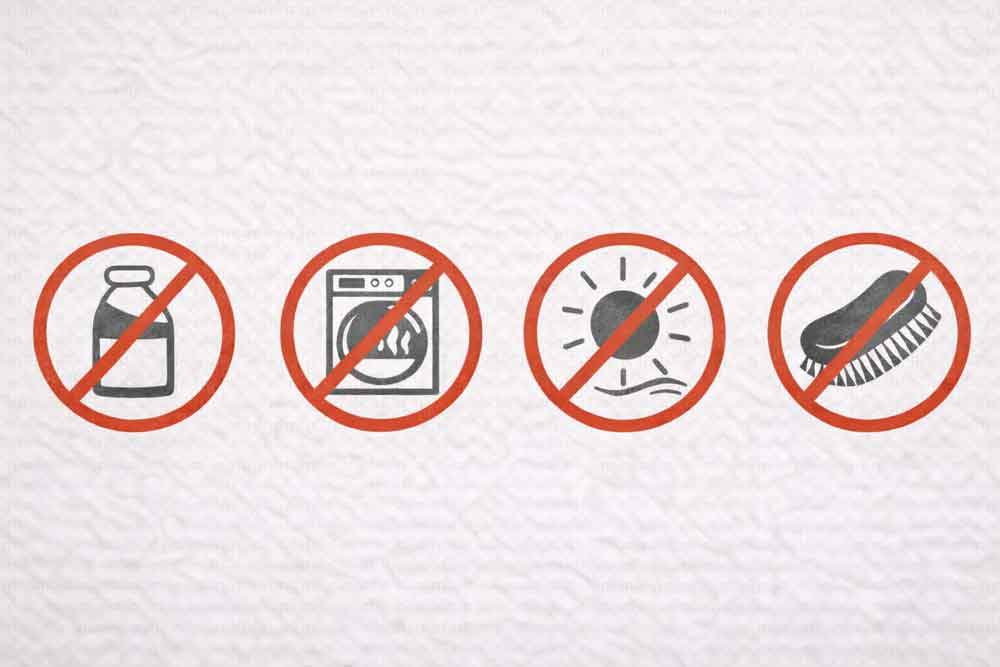
Caption: The big four don’ts—no bleach, no dryers or high heat, no direct sun baking, and no harsh scrubbing—keep your fleece lining intact.
AI-image prompt suggestion: Create a compact warning-icons graphic with four clear do-not symbols related to chalk bag care: 1) Bleach bottle crossed out, 2) Tumble dryer with high heat waves crossed out, 3) Sun/heat icon crossed out, 4) Stiff brush or harsh scrubbing pad crossed out. Use universal red prohibition circles with diagonal slashes. No text or logos. White or light-neutral background.
Conclusion
That’s how to wash a chalk bag the safe way: prep it well, hand-wash with mild soap in cool–lukewarm water, rinse until the water runs clear, press with a towel, and air-dry fully before refilling—use machine washing only when the label allows. Do use mild liquid detergent and patience; don’t use bleach, high heat, or long soaks. When in doubt, your care tag and the maker’s site take precedence over any general guide.


Comments are closed