Understanding Dry Bags and Their Role in Outdoor Adventures
You use dry bags to protect your gear from water. These bags are made from waterproof materials like nylon or PVC. Good dry bags help lower the chance of water damage. You must seal them right and pick the best ones. How well they are made and how you use them is important. Real-life weather can test how well they work. Always check the seal before you leave.
Dry bags keep your gear safe from water. They help during outdoor trips. Pick dry bags made with tough materials like PVC or TPU. These last a long time. Always look at the seal before you use your dry bag. Make sure it does not let water in. Choose a dry bag size that fits your trip and gear. Roll-top closures make the seal tight. Roll the top down three times or more. Some dry bags work better for kayaking or hiking. Pick the right one for your activity. Clean your dry bag and store it well. This helps it last longer. Buying a good dry bag saves money. It stops your gear from getting ruined.
Dry Bags Overview
Definition And Purpose
Dry bags help keep your gear safe from water. They use strong materials like TPU, PVC, or ripstop nylon. These bags protect your stuff if you drop them in a river or get caught in rain. Dry bags have roll-top closures or waterproof zippers. These seals stop air and water from getting in. You can use dry bags for kayaking, hiking, or camping. They are good for any trip where water might be a problem.
Here is a table that shows what dry bags do:
Feature/Functionality
Description
Waterproof Capabilities
Keeps things dry even underwater, great for water sports.
Materials and Construction
Made with tough fabrics like TPU, PVC, or ripstop nylon.
Sealing Mechanisms
Roll-top closures or waterproof zippers keep water out.
Versatility
Good for kayaking, hiking, camping, and other adventures.
Comparison with Other Bags
Gives full waterproof protection, made for tough conditions.
Importance For Outdoor Use
Being outside can be hard. Water can ruin clothes, electronics, and food. Dry bags help you keep your gear dry. You can pack your things and know they will not get wet. Many outdoor experts say dry bags are best for trips near water or in rain. You feel safe and can enjoy your adventure.
Tip: Always check the seal before you leave. A tight seal keeps your gear dry.
Dry Bags vs Other Options
Some bags say they protect against water. Not all bags work as well as dry bags. Dry bags give the best protection. You can use them in tough weather. Other bags may only keep water out for a short time.
Dry Bag vs Waterproof Bag
Here is a table that shows how dry bags and waterproof bags are different:
Feature/Use Case
Dry Bags
Waterproof Bags
Protection Level
Full waterproof, good for underwater use
Water resistant, not for underwater use
Best Use Cases
Kayaking, rafting, climbing
Commuting, travel, gym
Typical Features
Roll-top closures, welded seams
Coated fabrics, zippers, storm flaps
IP Ratings
IPX6–IPX7
IPX4–IPX6
Capacity Options
5L to 60L+
Small items, daily use
Dry Bag vs Wet Bag
Wet bags are for wet things like swimsuits or towels. They do not keep things dry. Wet bags help you separate wet gear from dry gear. Dry bags stop your items from getting wet.
Note: Pick dry bags to keep things dry. Use wet bags for carrying wet stuff.
Waterproofing And Construction
Waterproofing Technology
Strong waterproofing keeps your gear safe from water. Dry bags use special technology to block water. Most dry bags are made from PVC or TPU. These materials make a tight seal. You can trust dry bags for water sports like kayaking. Other waterproof bags only resist water for a short time. They do not work well underwater. The table below shows how these technologies compare:
Technology
Material
Effectiveness
Intended Use
Dry Bags
PVC, TPU
Complete submersion, watertight seal
Ideal for water sports like kayaking
Waterproof Bags
Various
Resists water but not for prolonged submersion
Great for light water exposure
Sealing Mechanisms
You must close your bag the right way. Most dry bags use roll-top closures. You roll the top down and clip it shut. This keeps water out. Some bags use waterproof zippers or gasket seals. These seals give extra protection. Always check the closure before you leave.
Air Removal
Taking out air helps you pack your bag tight. You squeeze out extra air before sealing it. This makes the bag easier to carry. It also helps the bag float if it falls in water. Removing air gives better protection.
Dry Bags Materials
Dry bags use different materials. Each one has its own strengths. The table below explains the most common types:
Material
Characteristics
Applications
PVC Tarpaulin
Waterproof, durable, tear-resistant, easy to clean
TPU means thermoplastic polyurethane. It makes bags flexible and tough. TPU resists scratches and stays waterproof. You can use TPU bags for many outdoor trips.
PVC
PVC tarpaulin gives strong protection. It does not tear easily and is simple to clean. You often see PVC in bags for kayaking and boating.
Ripstop Nylon
Ripstop nylon is light and bends easily. These bags are easy to carry. The water-repellent finish keeps your gear dry. You can use ripstop nylon for hiking and camping.
Quality And Testing
You want a bag that works in real life. Manufacturers test dry bags to make sure they keep water out. Common tests include:
Hydrostatic Head Test: Measures how much water pressure the material can handle.
IP Rating Assessment: Shows how well the bag resists water jets or submersion.
Leak Test: Checks for leaks by filling the bag with water or submerging it.
Seam and Material Inspection: Looks for defects that could let water in.
Submersion And UV Tests
Some tests put bags underwater. These tests show if the bag stays dry. UV tests check if sunlight hurts the material. Bags last longer when they pass these tests.
Lifespan Metrics
You want your bag to last a long time. Manufacturers check how many trips or years a bag can handle. Bags with strong seams and tough materials last longer. You save money when you pick a durable bag.
Types And Sizes Of Dry Bags
Size Options
Dry bags come in many sizes. You can pick the right size for your adventure. Small bags work well for short trips or when you only need to carry a few things. Medium bags fit more gear and suit longer outings. Large bags hold bulky items and help on multi-day trips.
Here is a table to help you choose the right size:
Size
Best Suited Activities
10L
Swimming, paddleboarding, beach trips
30L
Day-long adventures, family trips
60L
Bulky kit, multi-day adventures
Tip: Choose a size that fits your gear but does not leave too much empty space. This helps you pack efficiently and keeps your bag easy to carry.
Small
Small dry bags, like 10-liter models, fit your phone, wallet, and snacks. You can use them for swimming or paddleboarding. They slip into a backpack or clip to your kayak.
Medium
Medium bags, around 30 liters, carry clothes, food, and extra shoes. You might use them for a day hike or a family outing. They balance space and weight.
Large
Large dry bags, such as 60-liter sizes, hold sleeping bags, tents, and bulky gear. You need these for camping or long river trips. They keep everything dry, even in heavy rain.
Lightweight, secure seal, not meant for submersion
Effective for creating a watertight seal
Zipper
More secure, heavier, pricier
Offers watertight seal but can be less effective than roll-top
Fold-down
Lightweight, secure seal, not intended for submersion
Provides a secure seal but not as effective as roll-top for submersion
Roll-Top
Roll-top closures create a tight seal. You roll the top down several times and clip it shut. This method keeps water out and air in. Most outdoor experts trust roll-top bags for kayaking and hiking.
Zipper
Zipper closures use heavy-duty, waterproof zippers. They give you quick access to your gear. Zipper bags can be heavier and cost more. They work well when you need to open and close your bag often.
Gasket Seal
Some bags use a gasket seal. This system presses two surfaces together to block water. Gasket seals add extra protection, especially for electronics or cameras.
Kayak dry bags use tough PVC or TPU. They have roll-top closures and attachment points. You can secure them to your boat. These bags float and keep your gear safe if you capsize.
Backpack
Backpack dry bags use lightweight nylon. They come with padded straps and extra pockets. You can carry them on long hikes. These bags keep your clothes and food dry in the rain.
Wheeled
Wheeled dry bags help you move heavy gear. They have wheels and handles. You can use them for travel or when you need to carry lots of equipment over flat ground.
Note: Pick a design that matches your activity. The right bag makes your trip safer and easier.
Choosing Dry Bags For Outdoor Activities
Selecting the right dry bag can make your outdoor adventure safer and more enjoyable. You need to think about your activity, the amount of gear you carry, and the features that matter most to you. Here is how you can make the best choice.
Key Selection Factors
Activity Type
Start by thinking about what you plan to do. Each activity has different needs. For water sports like kayaking or paddle-boarding, you want a bag that floats and keeps your phone safe. If you go hiking or camping, you need a lightweight and compressible bag. For travel or city use, you want to protect electronics and papers from rain.
Tip: Match your dry bag to your main activity. A bag that works for rafting may not suit a long hike.
Capacity
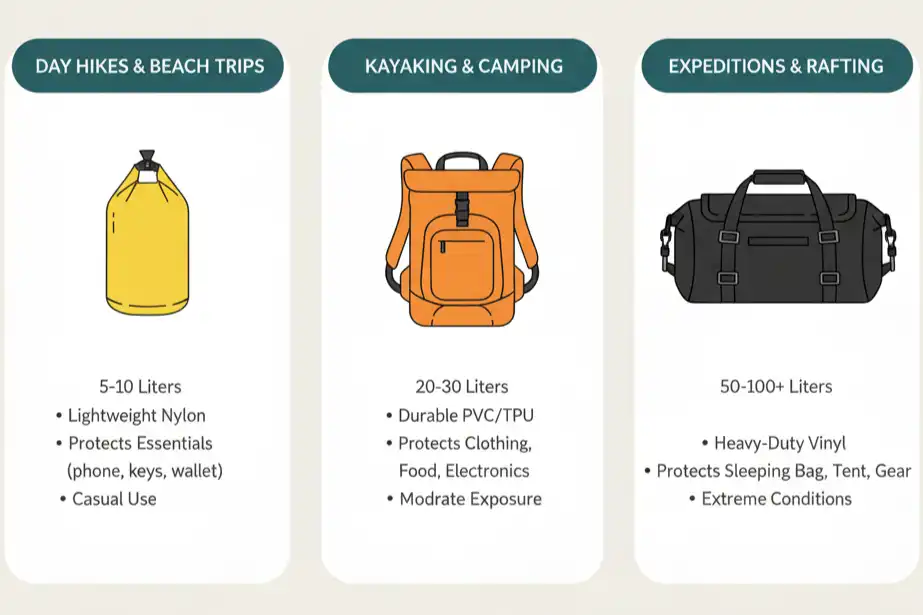
You should estimate how much gear you need to carry. Use packing cubes or containers to help you figure out the volume. If you plan a short trip, a small bag may be enough. For longer trips, you might need a larger bag or several smaller ones. Always add a little extra space for the roll-top closure.
Trip Type
Suggested Size (Liters)
Example Gear
Short Outing
5-10
Phone, wallet, snacks
Day Adventure
20-30
Clothes, lunch, camera
Multi-Day Trip
40-60+
Sleeping bag, tent, extra clothes
Note: Sizing up by 5-10 liters helps you fit everything, especially when you need to roll the top down.
Material Durability
The material of your dry bag affects how long it lasts and how well it protects your gear. Here is a quick guide:
Material
Durability
Waterproofing
Environmental Impact
RPET
Moderate
Good
Eco-friendly
PVC
High
Excellent
Less eco-friendly
TPU
High
Excellent
Sustainable
Polyester
Moderate
Good
Less eco-friendly
Nylon
High
Moderate
Less eco-friendly
RPET bags are light and eco-friendly, but not as tough as PVC or TPU.
PVC bags are strong and affordable, but not good for the environment.
TPU bags offer top waterproofing and last a long time, but cost more.
Polyester bags resist water and wear, but do not breathe well.
Nylon bags are strong, but need a coating to keep water out.
Closure Preference
You need to pick a closure that fits your needs. Roll-top closures give a tight seal and work well for most outdoor activities. Zip-lock closures are quick to open and close, which helps when you need fast access. Gasket seals add extra protection for electronics.
Tip: Always roll the top of your bag at least three times to keep water out.
Special Features
Look for features that make your trip easier and safer. Some dry bags have padded shoulder straps or handles for easy carrying. Others have internal pockets to organize small items. Bright colors and reflective strips help you find your bag in low light. Some bags even have clear windows so you can see what is inside.
Roll-Top and Zip-Lock styles suit different needs.
High waterproof ratings and taped seams keep your gear dry.
Comfortable straps and handles help you carry your bag longer.
Internal pockets keep small items from getting lost.
Bright colors and reflective accents make you more visible.
Selection Tips
You can use these tips to choose the best dry bag for your adventure:
Add extra space for the closure—size up by 5-10 liters.
Pack small items at the bottom and large items on top for balance.
Use compression sacks for clothes or sleeping bags to save space.
Roll the top down at least three times for a watertight seal.
Label your bags if you use more than one, so you can find things quickly.
Example: If you go kayaking, pick a 20-liter PVC dry bag with a roll-top closure and bright color. It will float, keep your gear dry, and be easy to spot if it falls in the water.
Example: For a weekend hike, choose a 30-liter TPU bag with padded straps and internal pockets. You can carry it comfortably and keep your gear organized.
Think about how far you will carry your bag. If you walk a long way, padded straps help a lot. If you need to grab things quickly, look for external pockets. For short trips, a small bag works best. For longer trips, use a bigger bag or several smaller ones for better organization.
Remember: The right dry bag keeps your gear safe and makes your trip easier. Take time to match your bag to your activity, gear, and comfort needs.
Durability And Value
Lifespan And Care
Dry bags can last for years if you take care of them. The material, how often you use the bag, and your care routine all affect its lifespan. Most well-maintained dry bags serve you well for several years. You can make your dry bag last longer by following some simple steps:
Check the seams and closures before and after each trip.
Clean your bag with fresh water after use, especially if you use it in saltwater.
Dry the bag completely before storing it.
Store your dry bag in a cool, dry place away from sunlight.
Avoid overstuffing or dragging the bag on rough surfaces.
Regular inspection of waterproof features helps you spot problems early. Proper care keeps the waterproofing strong and extends the life of your dry bag.
Maintenance Tips
Wipe off dirt and sand after each use.
Let the bag air out to prevent mold or odors.
Use mild soap if needed, but avoid harsh chemicals.
Roll or fold the bag gently to prevent creases that can weaken the material.
Cost-Effectiveness
Premium vs Standard
When you choose a dry bag, you face a choice between premium and standard models. Premium dry bags use higher-quality materials. These bags last longer and keep water out better. Standard bags cost less at first, but they may not hold up to heavy use. You might need to replace them more often.
Premium bags often include extra features, like padded straps or clear windows.
Standard bags work for light use, but may not survive tough trips.
Serious outdoor users often prefer premium options for better value over time.
Savings And ROI
You save money in the long run when you invest in a high-quality dry bag. The table below shows how the costs add up over time:
Item
Cost
Lifespan
Replacement Frequency
Total Cost Over Lifespan
Premium Dry Bag
$70
7-10 years
1
$70
Generic Waterproof Bag
$30
2 years
3-5
$90-$150
A premium dry bag costs more at first, but you buy fewer replacements.
You can prevent water damage to your gear, which could save you up to $200 per trip.
Durable bags mean fewer replacement expenses and more savings over time.
Performance Feedback
Many outdoor users trust dry bags to protect their gear. For example, people who use the Sea to Summit EVAC Compression Dry Bag say it keeps items dry in rain and wet conditions. The carry strap stays strong after months of use. Most users find these bags work well for hiking, camping, and paddling. While dry bags may not stay waterproof if fully submerged for a long time, they perform well for most outdoor adventures.
Choose a dry bag that matches your needs. With good care, you get years of reliable protection and save money in the long run.
Top Dry Bags Models
vancharli waterproof bag
You want a dry bag that does more than just keep your gear dry. The vancharli stands out for its smart design and comfort. This bag gives you a secure fit, so it stays in place even when you move a lot. You get great arm mobility, which helps when you paddle or hike. The pockets fold down into workstations, making it easy to organize your gear on the go. Some users say the shoulder straps feel scratchy, but the overall comfort and fit score high.
Here is a table that shows how the vancharli performs in expert reviews:
Feature
Score
Fit
7.2
Comfort and Mobility
7.5
Quality of Construction
8.0
Features and Versatility
9.0
Flotation
8.0
Pros
– Pockets fold down into workstations – Great arm mobility – Secure fit
Cons
– Scratchy shoulder straps
Tip: If you need a bag that helps you stay organized and move freely, the vancharli is a strong choice.
SealLine Dry Sack
You can trust the SealLine Dry Sack to keep your gear dry, even in tough conditions. This bag uses a heavy-duty clear polyurethane shell, so you can see what is inside. The DrySeal roll-top closure adds extra waterproof protection. In waterproofing tests, the SealLine Dry Sack allowed almost no water inside. Testers found that the interior paper stayed less than 10% wet, which means your gear stays safe. The thick material makes the bag sturdy, but it also reduces how much you can pack.
The SealLine Dry Sack excels in waterproofing tests, letting in very little water.
The clear shell helps you find your items quickly.
The roll-top closure keeps water out, even in heavy rain.
The thick material makes the bag strong but limits usable space.
Note: Choose the SealLine Dry Sack if you want top waterproof protection and do not mind a bit less space.
Earth Pak
You see many outdoor fans pick the Earth Pak dry bag for its strength and features. This bag uses heavy-duty PVC material, so it stands up to rough trips. The roll-top closure gives you a tight, waterproof seal. You can pick from many sizes, from 10 to 55 liters, so you always have the right fit for your adventure. Earth Pak includes a waterproof phone case, which helps you protect your electronics. Welded seams add to the bag’s durability and keep water out.
Feature
Description
Material
Made from durable, heavy-duty PVC material.
Closure
Features a roll-top closure for maximum waterproof protection.
Size Options
Available in various sizes (10 to 55 liters) for versatile storage needs.
Additional Accessory
Comes with a waterproof phone case for protecting electronic devices.
Durability
Designed to withstand harsh conditions with welded seams for watertight seal.
Tip: If you want a tough, versatile dry bag with extra features, Earth Pak gives you great value and peace of mind.
Osprey Ultralight
You want a dry bag that feels light and packs small. The Osprey Ultralight stands out for backpackers and travelers. This bag uses 40 Dernier Nylon, which gives you a strong but lightweight feel. You can pack it down to the size of an apple. This makes it easy to fit in your backpack or suitcase.
The Osprey Ultralight offers a 20-liter capacity. You can carry clothes, snacks, and even a small jacket. The bag weighs very little, so you do not feel weighed down on your trip. Mesh shoulder straps help your back stay cool. Compression straps let you tighten the bag, so your gear does not move around. You also get several pockets to organize your things.
The waterproof rating is IPX5. This means the bag keeps your gear dry in rain or splashes. It does not protect against full submersion. You can trust it for hiking, biking, or city trips.
Here is a table that shows the main advantages of the Osprey Ultralight:
Advantage
Description
Waterproofing
IPX5 rating protects against rain and splashes.
Packability
Packs down to the size of an apple for easy storage.
Capacity to Weight
20-liter size with very low weight, perfect for day trips.
Features
Mesh straps, compression straps, and multiple pockets for comfort and organization.
Quality
Made from tough 40 Dernier Nylon for long-lasting use.
Tip: If you want a dry bag that is easy to carry and packs small, the Osprey Ultralight is a smart choice for your next adventure.
Osprey Ultralight
You may want a dry bag that gives you good value and strong performance. Piscifun dry bags use 500D PVC, which makes them tough and waterproof. The bag weighs only 13 ounces, so you can carry it without effort. Its size, 13.5 by 8 inches, fits most day trip needs.
Piscifun stands out for its price. It sits in the mid-range, so you do not pay too much. You get a lot for your money. The bag comes with an IPX8 phone case and an elastic cord. These extras help you keep your phone safe and your gear secure.
Many fishing fans like Piscifun bags. They give high ratings for keeping gear dry and safe. You also get warranty coverage, which adds peace of mind.
Here is a table that compares Piscifun to other leading brands:
Feature
Piscifun Dry Bag
Other Leading Brands
Price
Mid-range
Varies
Material
500D PVC
Varies
Weight
13 ounces
Varies
Dimensions
13.5 x 8 inches
Varies
Included Accessories
IPX8 phone case, elastic cord
Varies
Customer Ratings
High, especially among fishing enthusiasts
Varies
Warranty Coverage
Yes
Varies
Note: Piscifun gives you a strong, affordable dry bag with useful extras. It works well for fishing, boating, and day trips.
Outdoor Research UltraDry
You need a dry bag that handles tough weather and rough use. The Outdoor Research UltraDry gives you both. This bag uses high-quality materials that resist tears and punctures. You can trust it for hiking, camping, or paddling.
The UltraDry features a roll-top closure. This design keeps water out and makes the bag easy to open and close. The seams are fully taped, so no water leaks in. You get different size options, so you can pick the right one for your trip.
Outdoor Research adds small touches that help you. The bag has a clear window, so you see your gear without opening it. The bright color makes it easy to spot in your tent or boat. Many outdoor fans say the UltraDry keeps their gear dry, even in heavy rain.
Tip: Choose the Outdoor Research UltraDry if you want a reliable, tough dry bag for all kinds of outdoor adventures.
DryGuy 3-Way
You want a dry bag that gives you options. The DryGuy 3-Way stands out because you can carry it three different ways. You can use it as a backpack, a duffel, or a shoulder bag. This flexibility helps you pack for many types of trips. The bag uses tough waterproof fabric. You get a roll-top closure that keeps water out. The seams are welded, so leaks do not happen easily.
You find the DryGuy 3-Way in several sizes. The straps adjust to fit your body. You can carry heavy gear without hurting your shoulders. The bag has extra pockets for small items. You can organize your phone, keys, and snacks. Many outdoor fans like the DryGuy 3-Way for camping and boating. You get a bag that works for short hikes or long journeys.
Tip: Try the backpack straps when you need to walk far. Use the duffel handles for quick trips.
Aqua Quest Defender
You need a dry bag that works in tough places. The Aqua Quest Defender uses heavy-duty fabric and an ultra-thick TPU coating. This design helps the bag perform well in submersion tests. You can drop the bag in water, and your gear stays dry. The Defender also passes abrasion tests. You can drag it over rocks or sand, and the material does not tear.
The Aqua Quest Defender suits harsh conditions. You get strong water resistance and protection from scratches. The seams are reinforced for extra strength. You can use this bag for kayaking, fishing, or hiking in rough terrain. The roll-top closure seals tightly. You can trust your gear to stay safe.
Ultra-thick TPU coating resists water and abrasion.
Heavy-duty construction stands up to rough use.
Reinforced seams add durability.
Note: Choose the Aqua Quest Defender if you need a bag for wet and rocky places.
Yeti Panga 2.0
You want the best waterproof protection. The Yeti Panga 2.0 gives you a 100% airtight seal. You can submerge this bag in water, and nothing gets wet inside. The heavy-duty zipper closes tightly. You do not need to worry about leaks. The bag works well in bathtub tests. No water gets in, even after long exposure.
The Panga 2.0 uses rugged materials. You can take it on tough trips. The bag resists cuts and scrapes. You get strong handles and straps for easy carrying. Many outdoor experts say the Panga 2.0 outperforms other brands in durability and waterproofing.
You get a bag that protects your valuables from moisture. The Panga 2.0 works for rafting, fishing, and travel in wet places.
Tip: Use the Yeti Panga 2.0 when you need top-level waterproofing and strength.
Sea to Summit
You want a dry bag that balances quality, comfort, and price. Sea to Summit dry bags give you many options for outdoor adventures. You can choose from a wide range of sizes, so you always find the right fit for your gear. The bag uses a 70D nylon body, which feels light and strong. You carry it easily, even when the weather gets humid.
The roll-top closure helps you seal the bag quickly. You roll the top down and clip it shut. This design keeps out splashes and rain. You must seal the bag properly to keep your gear dry. The bag does not protect against full submersion, so you should avoid dropping it in deep water.
Inside the bag, you see a high-visibility white lining. This feature makes it easy to find your gear, even in low light. You do not waste time searching for small items. Many users say this interior helps them stay organized during trips.
Sea to Summit dry bags include a field repair buckle. If your buckle breaks, you fix it quickly without special tools. This repair feature saves you time and keeps your bag useful on long journeys. You do not need to worry about small accidents ruining your trip.
You pay an affordable price for Sea to Summit dry bags. You get good quality without spending too much. Many outdoor fans choose this brand for day hikes, paddling, and camping. You enjoy comfort and reliability every time you use the bag.
Tip: Always check the roll-top closure before you head out. A tight seal keeps your gear safe from rain and splashes.
Model Comparison Table
You want to compare vancharlit dry bags with other top models. The table below helps you see the differences in material, closure type, waterproofing, and price.
Brand/Model
Material
Closure Type
Waterproofing Level
Interior Visibility
Repair Feature
Price Range
vancharli
70D Nylon
Roll Top
Splash/rain resistant
High (white lining)
Field repair buckle
Affordable
Earth Pak
PVC
Roll Top
Fully waterproof
Low
None
Moderate
Osprey Ultralight
40D Nylon
Roll Top
Rain/splash resistant
Moderate
None
Moderate
Yeti Panga 2.0
High-Density Nylon
Zipper
Fully submersible
Low
None
Premium
Aqua Quest Defender
TPU
Roll Top
Submersion resistant
Low
None
Moderate
You see that vancharli stands out for its comfort, visibility, and repair features. You get a bag that works well for most outdoor activities. If you want full waterproofing, you may pick a heavier model. If you want a light, easy-to-carry bag with smart features, vancharli is a strong choice.
Note: Pick a dry bag that matches your adventure and gear needs. vancharli gives you flexibility and value.
Dry bags give you lots of benefits for outdoor trips. They keep your things dry when it rains or gets wet. You can seal them fast and easily. The strong materials do not rip and last a long time. You can pick from many sizes for any activity. Dry bags help you save money by keeping your gear safe. Choose the right one for your trip so you feel calm and ready.
Roll the top down at least three times, then clip the buckles together. This creates a watertight seal. Always check for gaps or twists before you pack your bag for your trip.
Can you submerge a dry bag underwater?
Most dry bags protect against splashes and rain. Some premium models allow full submersion for short periods. Always check the manufacturer’s rating before you use your bag in deep water.
What size dry bag should you choose?
Pick a size based on your gear. Use a 5–10L bag for small items, 20–30L for day trips, and 40L or more for camping. Leave space for the closure.
How do you clean and store your dry bag?
Rinse your bag with fresh water after each use. Let it air dry completely. Store it in a cool, dry place away from sunlight. Avoid folding it sharply to prevent damage.
Are dry bags safe for electronics?
Yes, dry bags protect electronics from water. For extra safety, use a double-seal system or place electronics in a smaller waterproof pouch inside your dry bag.
Can you repair a dry bag if it leaks?
You can patch small holes with repair tape or a patch kit. Clean and dry the area first. For damaged seams or large tears, replace the bag for best protection.
Do dry bags float?
Most dry bags float if you remove excess air before sealing. This helps keep your gear above water if your bag falls in. Test your bag’s buoyancy before your trip.
What is the difference between a dry bag and a wet bag?
A dry bag keeps your gear dry. A wet bag holds wet items, like swimsuits or towels, and keeps moisture contained. Use each bag for its intended purpose.






Comments are closed