What Is High Frequency Welding? Radio Frequency Welding Explained for Waterproof Bags
High frequency welding sounds like a complicated industrial process, but the reason bag brands care about it is simple: it can create sealed seams without stitching.
For waterproof bags, dry bags, inflatable products, medical pouches, tarpaulins, and soft outdoor gear, the seam is often the weakest point. A fabric panel may be waterproof, but if the seam has needle holes, poor tape adhesion, or uneven bonding, water can still get in. High frequency welding solves this problem by bonding compatible thermoplastic materials together instead of sewing them with thread.
This process is also called radio frequency welding, RF welding, HF welding, or dielectric welding. In bag manufacturing, these terms usually describe the same general technology: high-frequency electromagnetic energy and pressure are used to fuse compatible materials into a strong, sealed joint.
For brands developing waterproof bags, the question is not only “What is RF welding?” The more practical question is: Is this the right construction method for my material, product design, waterproof requirement, and cost target?
What Buyers Should Know Before Choosing RF Welding
Before going into the technical details, it helps to understand a few practical points.
High frequency welding and radio frequency welding usually refer to the same process. The method works best with compatible thermoplastic materials such as PVC, TPU, PU, EVA, and certain coated fabrics. It is especially useful for waterproof bags because it can create sealed seams without needle holes.
But RF welding is not suitable for every bag or every fabric. Ordinary woven nylon, polyester, canvas, PP, and PE may not weld well unless they have a compatible coating or film layer. For many products, the best construction may still be sewing, hot air welding, ultrasonic welding, or a hybrid structure.
For bag buyers, the key question is not simply whether a factory has RF welding machines. The real question is whether the selected material, seam design, tooling, waterproof target, and quality testing all support the product you want to make.
Why This Welding Method Matters for Waterproof Bags
A waterproof bag is only as reliable as its seams.
Traditional stitching joins fabric layers with thread. That works well for backpacks, duffel bags, tactical bags, laptop bags, and many outdoor products. But stitching also creates needle holes. For a fully waterproof product, those needle holes must be sealed with seam tape, coating, lining, or another waterproofing method.
High frequency welding takes a different approach. Instead of piercing the material, it bonds thermoplastic layers together. When the right materials, pressure, time, and tooling are used, the result is a continuous fused seam.
That is why RF welded seams are common in products such as:
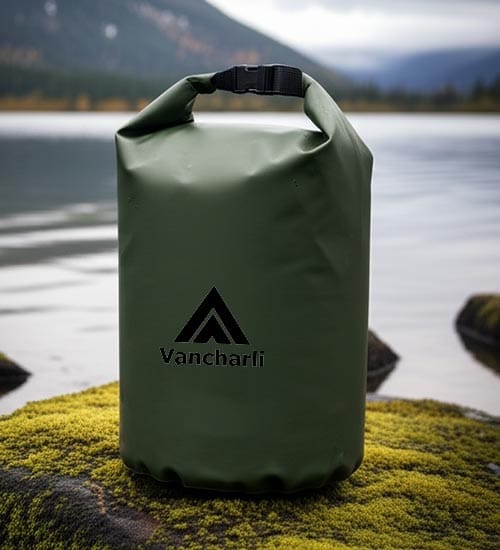
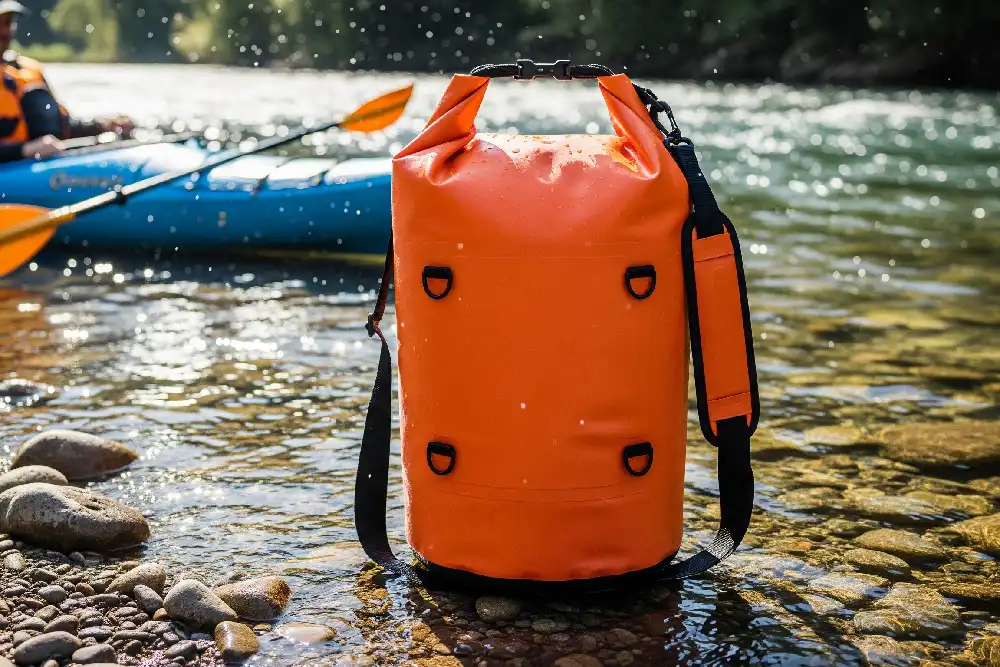
Waterproof dry bags
Roll-top waterproof bags
Waterproof backpacks
Waterproof pouches
Inflatable products
Medical fluid bags
Tarpaulins
Truck covers
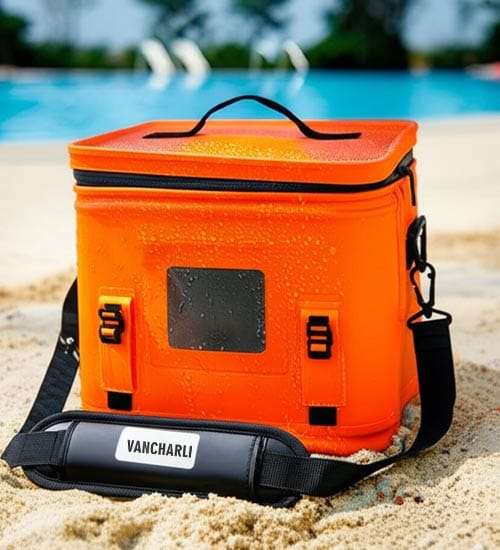
Soft coolers
Outdoor waterproof gear
Tactical waterproof accessories
For buyers comparing waterproof bags with welded seams, the welding method can be just as important as the fabric itself.
High Frequency Welding and Radio Frequency Welding Mean the Same Process
High frequency welding and radio frequency welding are two names for the same type of joining process in most manufacturing contexts.
You may see different terms used by factories, machine suppliers, or material suppliers:
High frequency welding
HF welding
Radio frequency welding
RF welding
Dielectric welding
High frequency heat sealing
The wording may change, but the basic idea is similar: electromagnetic energy is used to heat compatible thermoplastic materials from within, while pressure holds the layers together. Forsstrom explains that high frequency welding and RF welding use radio waves and pressure to join thermoplastic materials, commonly operating at 27.12 MHz.
For a brand buyer, the exact term is less important than the result. The product needs a clean, strong, consistent seam that matches the material and performance requirement.
How RF Welding Works
RF welding does not heat the material in the same way as a hot iron, heat gun, or hot air nozzle.
In simple terms, the material is placed between a welding tool and a welding bed. The machine applies high-frequency electromagnetic energy. In compatible materials, the molecules respond to the electromagnetic field and generate heat inside the material. At the same time, pressure is applied to press the layers together.
The process usually includes four steps:
Material positioning The fabric or film layers are placed in the correct position.
Pressure application The welding tool presses the layers together.
RF energy activation High-frequency energy heats compatible thermoplastic material internally.
Cooling under pressure The material cools while compressed, forming a fused seam.
This is different from surface-only heating. Because the right material responds to the electromagnetic field, RF welding can create a strong bond through the material layers, not just on the surface.
Why RF Welding Creates Waterproof and Airtight Seams
The main reason RF welding is used for waterproof products is seam integrity.
A sewn seam depends on thread, needle holes, seam allowance, and sometimes seam tape. A welded seam depends on material compatibility, heat generation, pressure, tooling, and cooling. When done correctly, the welded area becomes a continuous fused joint.
For waterproof bags, this can provide several advantages:
No needle holes
Clean seam appearance
Strong bonding between compatible layers
Good water resistance
Good air sealing for certain products
Repeatable seam width
Smooth finish for retail products
Useful for roll-top and pouch structures
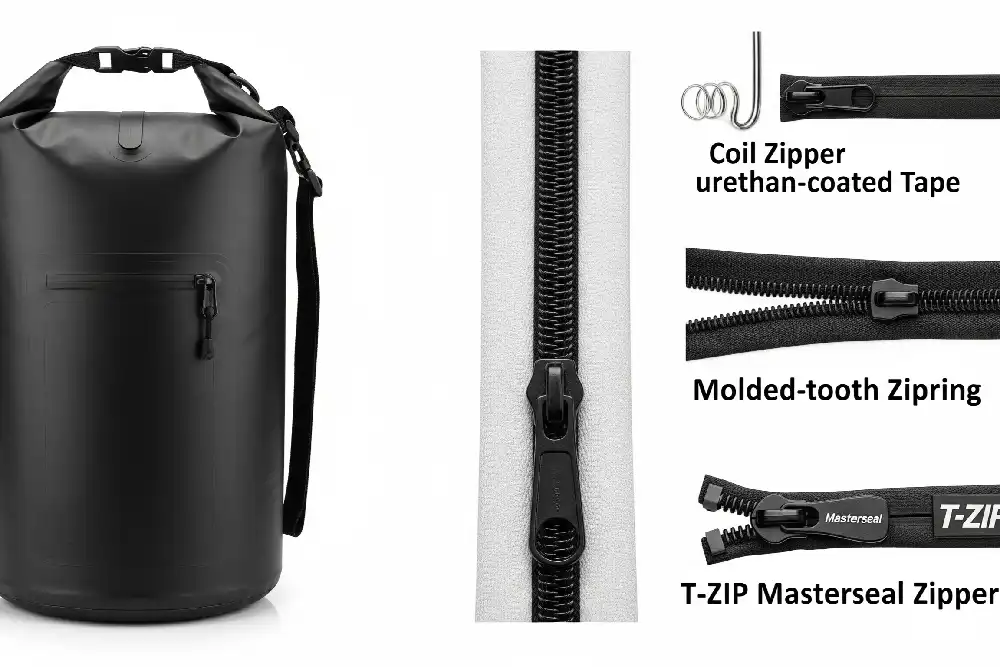
This does not mean every welded bag is automatically waterproof in every condition. The final performance still depends on material, seam design, closure system, waterproof testing, and quality control. A welded body seam is important, but a weak zipper, poor roll-top closure, or bad corner design can still cause leakage.
That is why waterproof bag development should consider the entire structure, not only the welding technology.
Which Materials Can Be High Frequency Welded?
Not every material can be RF welded.
RF welding works best with materials that respond well to high-frequency electromagnetic energy. These are usually thermoplastic materials with suitable molecular properties.
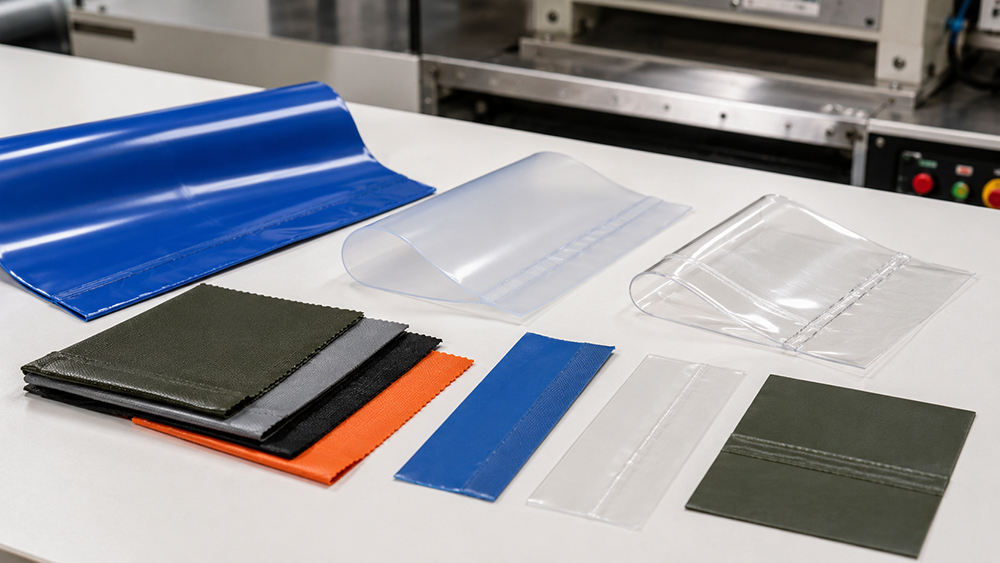
Common materials include:
PVC
TPU
PU
EVA
Certain PET-coated materials
Some coated fabrics
Some flexible thermoplastic films
Weldmaster’s guide to radio frequency welding technology lists materials such as PVC, PU, TPU, EVA, and some coated PET variants as compatible with RF welding. In waterproof bag manufacturing, PVC and TPU are especially common because they can create flexible, waterproof, weldable structures.
However, the base fabric and coating must be considered together. A polyester fabric itself may not RF weld well, but a polyester fabric coated with PVC or TPU may be weldable through the coating layer.
This is a common misunderstanding among buyers. “Waterproof fabric” does not automatically mean “RF weldable fabric.”
Why PVC, TPU, and PU-Coated Materials Are Commonly Used
PVC, TPU, and PU-coated materials are common in waterproof products because they can combine flexibility, water resistance, and weldability.
PVC
PVC is widely used for dry bags, tarpaulins, outdoor covers, inflatable products, and heavy-duty waterproof gear. It is often easy to weld and can provide strong sealed seams.
Advantages:
Good weldability
Strong waterproof performance
Cost-effective for many products
Suitable for heavy-duty applications
Available in many thicknesses and finishes
Limitations:
Can feel heavier
May be less premium than TPU for some markets
Environmental and compliance concerns may matter in some regions
TPU
TPU is often used for higher-end waterproof bags, lightweight dry bags, soft water-resistant components, outdoor products, and technical applications.
Advantages:
Flexible
Strong
Often lighter than heavy PVC options
Good cold resistance in many grades
Good premium feel
Suitable for technical waterproof products
Limitations:
Usually more expensive than PVC
Requires careful material and process control
Not every TPU-coated textile welds the same way
Covestro also notes that TPU films and high frequency welding can be used together with other welding methods such as heat sealing and ultrasonic welding, which is why TPU is often considered for technical waterproof applications.
PU-Coated Materials
PU-coated materials can be used in some welded products, but performance depends heavily on coating type, thickness, and construction.
Advantages:
Softer hand feel
Useful for flexible products
Can support lighter product designs
Limitations:
Not all PU coatings are equally weldable
Seam performance must be tested carefully
May require different welding settings than PVC or TPU
For buyers, the best material is not always the strongest material on paper. It is the material that matches the product use, welding process, waterproof target, hand feel, cost, and compliance requirements.
Materials That Usually Do Not Work Well With RF Welding
Some materials are not naturally suitable for RF welding.
These may include:
Ordinary woven polyester fabric without coating
Ordinary nylon fabric without coating
Cotton canvas
Uncoated canvas
PP
PE
Some non-polar plastics
Some laminated materials with incompatible layers
This does not mean these materials are bad. They may be excellent for sewn backpacks, tactical bags, travel bags, laptop bags, or outdoor packs. But they are usually not the first choice when the product needs RF welded waterproof seams.
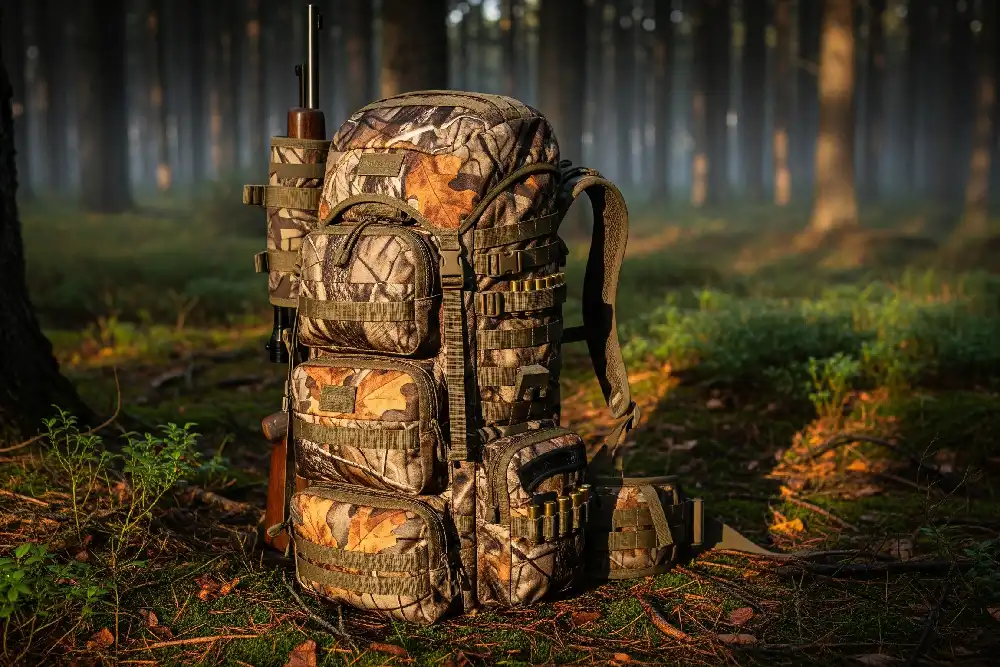
For example, a tactical backpack made from Cordura-style nylon is usually sewn. It may include waterproof coating, seam tape, or water-resistant zippers, but it is not usually constructed like a fully welded dry bag.
The key point is simple: RF welding is a material-dependent process.
High Frequency Welding vs Sewing
Sewing and RF welding are not competitors in every situation. They solve different problems.
Strong with correct thread, stitch, and reinforcement
Design flexibility
Great for sealed panels and simple structures
Better for complex shapes, padding, and multi-part construction
Cost factors
Tooling, machine settings, material compatibility
Labor, sewing complexity, thread, reinforcement
For waterproof products, welding has a clear advantage because it avoids needle holes. But for padded backpacks, tactical packs, laptop bags, and complex multi-pocket designs, sewing is often more flexible.
Many products use both. A waterproof bag may have welded main seams but sewn webbing, straps, handles, or external accessories.
This hybrid approach is common because not every part of a bag needs the same construction method. Buyers comparing welding and stitching for waterproof bags should evaluate the whole product structure, not only one seam.
RF Welding vs Hot Air Welding
Hot air welding uses heated air to soften a thermoplastic surface, then pressure joins the layers. RF welding uses electromagnetic energy to generate heat inside compatible materials.
Both methods can be used for waterproof products, but they work differently.
Factor
RF Welding
Hot Air Welding
Heat source
Electromagnetic energy
Directed hot air
Heating style
Internal heating in compatible material
Surface heating
Common use
PVC, TPU, PU products, sealed seams, technical products
Hot air welding can be very useful for waterproof bags and outdoor structures, especially when long seams or curved seam paths are needed. RF welding can be especially useful for clean, repeatable seams, shaped welds, patches, and products where tooling can control the weld area.
A good manufacturer should choose based on product design, material, seam type, and production volume.
RF Welding vs Ultrasonic Welding
Ultrasonic welding uses high-frequency mechanical vibration to create localized heat and join materials. RF welding uses electromagnetic energy.
Both are used in industrial joining, but they are not interchangeable.
Small parts, rigid plastics, nonwoven items, localized welds
Seam style
Can create wider sealed seams
Often creates narrow localized welds
Bag use
Waterproof pouches, dry bags, welded panels
Small components, labels, nonwoven bags, some accessories
Ultrasonic welding can be useful for certain components, but RF welding is often better suited for flexible waterproof seams in PVC or TPU bag products.
RF welding is used when a bag needs sealed seams, smooth bonding, or a waterproof structure.
Common examples include:
Dry bags
Waterproof backpacks
Waterproof waist bags
Waterproof phone pouches
Waterproof document pouches
Soft coolers
Inflatable waterproof products
Roll-top waterproof bags
Medical bags
Tactical waterproof pouches
Outdoor storage bags
PVC tarpaulin bags
TPU waterproof bags
A fully welded dry bag may use RF welded side seams and a roll-top closure. A waterproof backpack may combine welded panels with sewn straps or padded back systems. A tactical waterproof pouch may use welded body construction but still require hardware, webbing, or attachment points.
For brands developing custom waterproof bags, the right construction is usually not “all welded” or “all sewn.” It is the structure that gives the required performance at the right cost.
Machine Size and Tooling Also Affect What Can Be Welded
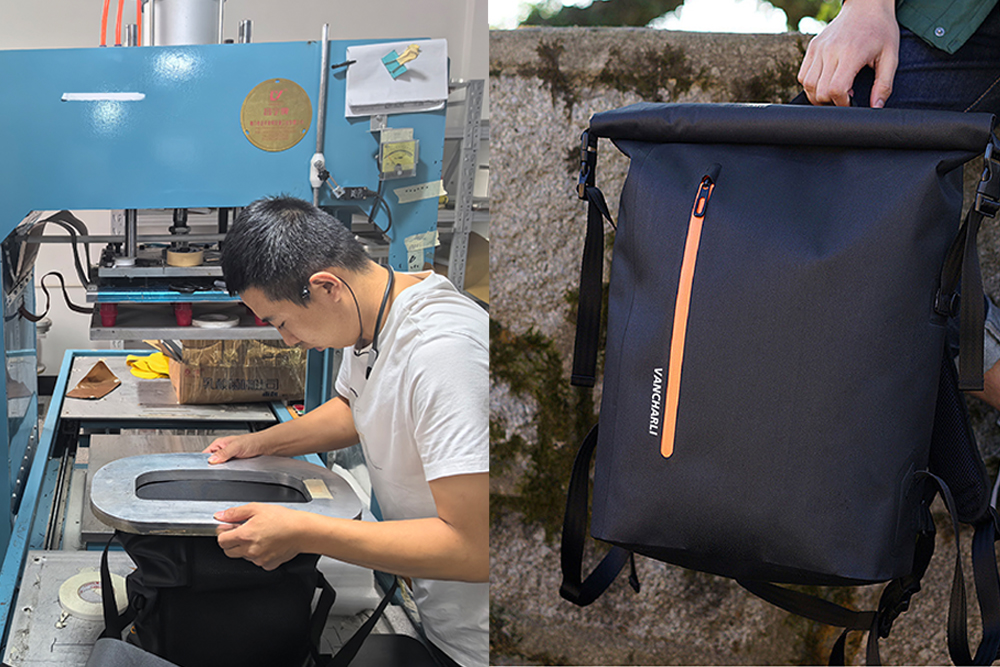
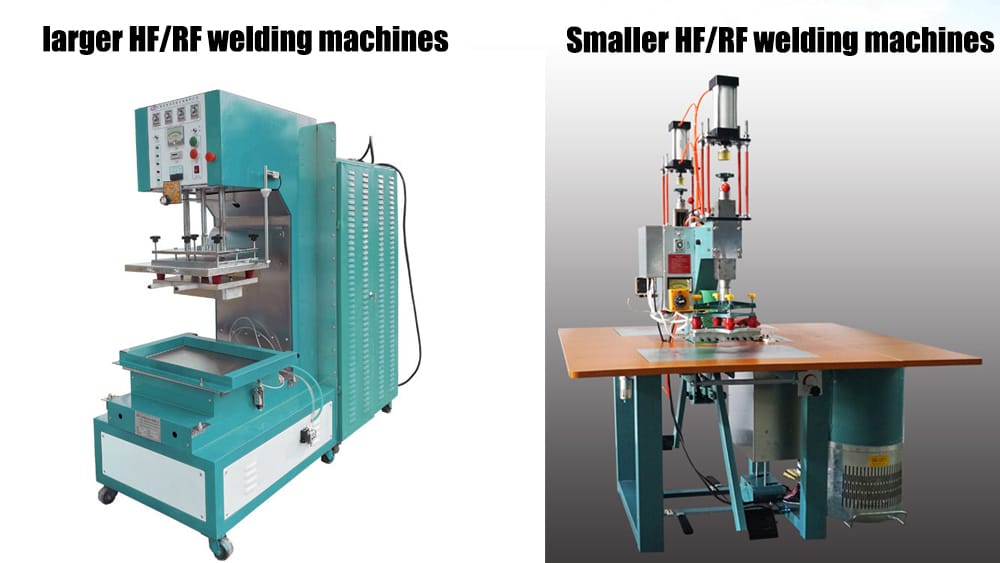
In real bag production, RF welding capability is not only about whether a factory has a high frequency welding machine. The machine size, power, platen area, throat depth, tooling size, and fixture design all affect what type of product can be made.
Factories often use larger HF/RF welding machines for bigger panels, larger molds, formed waterproof structures, soft coolers, waterproof backpacks, large dry bags, inflatable products, and tarpaulin-style items. These products may require more working space, stronger pressure, larger welding dies, and better control over material positioning.
Smaller HF/RF welding machines are usually used for small-area welding, patches, small pouches, logo marks, waterproof phone bags, small dry bags, shoulder bags, document pouches, and small PVC or TPU accessories. They are useful when the weld area is smaller, the product is easier to position, or the production requires frequent tooling changes.
This is why buyers should not only ask, “Do you have RF welding machines?” A better question is: “Can your machine size, tooling, and production setup support this product structure and seam size?”
For example, a small waterproof pouch and a large waterproof backpack may both use RF welding, but they do not require the same tooling, machine setup, or production control. A reliable manufacturer should evaluate the product size, seam shape, material thickness, welding area, and waterproof target before confirming the best welding method.
What Buyers Should Check Before Choosing RF Welded Bags
Before choosing RF welded construction, buyers should confirm several points.
Material Compatibility
Ask whether the selected fabric, film, or coating can be RF welded. Do not assume all waterproof materials are compatible.
Seam Strength
Ask how seam strength is tested. A welded seam should not peel easily, crack, or separate under normal use.
Waterproof Requirement
Clarify the waterproof target. A splash-resistant pouch, dry bag, and submersible product may require different construction and testing.
Welding Width
The seam width affects strength, appearance, and flexibility. Narrow welds may look clean but may not be suitable for every structure.
Tooling and Mold Cost
RF welding often uses specific welding dies or tools. For custom shapes, logos, windows, or special seams, tooling cost may matter.
Product Shape
Simple panels are easier to weld. Complex 3D bag structures, padded systems, multiple pockets, or heavy hardware may require sewing, welding, or hybrid construction.
Logo and Branding
Some logos can be printed, embossed, welded as patches, or added as labels. The branding method should match the material and waterproof target.
Quality Testing
Ask about air testing, water testing, seam peel testing, and visual inspection. For waterproof bags, testing is part of the product, not an optional extra.
For buyers also checking waterproof performance standards, IPX waterproof bag testing can help clarify the difference between splash resistance, water resistance, and stronger waterproof claims.
Common Quality Problems in RF Welded Seams
RF welding can produce excellent seams, but only when the process is controlled correctly.
Common problems include:
Weak Welds
This can happen when energy, pressure, time, or material compatibility is not correct.
Overheated Seams
Too much energy or pressure may burn, thin, discolor, or deform the material.
Uneven Weld Lines
Poor material positioning, worn tooling, or inconsistent pressure can create uneven seams.
Peeling
If the layers do not fuse properly, the seam may peel apart under stress.
Wrinkling
Flexible materials can shift during welding if not positioned correctly.
Poor Corner Sealing
Corners are often harder to seal than straight seams. Bag design should reduce stress points.
Inconsistent Appearance
For retail products, seam appearance matters. Visible burn marks, uneven edges, or messy welds can reduce perceived quality.
A good RF welded product is not only waterproof. It should also look clean, feel strong, and stay consistent across production batches.
Is High Frequency Welding Right for Every Bag?
No. HF/RF welding is not the right choice for every bag.
It is a strong option when the product uses compatible thermoplastic materials and needs sealed seams. It is not ideal when the product uses ordinary woven fabrics, complex padded structures, many sewn pockets, or materials that do not respond well to RF energy.
RF welding is usually a good fit for:
Waterproof bags
Dry bags
TPU or PVC pouches
Inflatable products
Soft coolers
Sealed medical bags
Technical waterproof accessories
Sewing is often better for:
Lifestyle backpacks
Tactical backpacks
Laptop bags
Soft travel bags
Multi-pocket organizer bags
Padded carry products
Woven fabric bags without weldable coating
Hybrid construction is often best for:
Waterproof backpacks with padded straps
Welded dry bags with sewn webbing
Soft coolers with handles and accessories
Tactical waterproof pouches with attachment systems
The best manufacturing method depends on the product, not on the trend.
Final Recommendation
High frequency welding, also known as radio frequency welding or RF welding, is one of the most important processes for waterproof and sealed bag construction. It can create clean, strong, watertight seams when used with the right materials and controlled process settings.
For bag brands, the most important decision is not whether RF welding sounds advanced. The real decision is whether the material, seam design, product structure, waterproof requirement, and cost target make RF welding the right choice.
For brands developing waterproof bags, dry bags, cooler bags, or welded outdoor products, Vancharli Outdoor can help evaluate whether HF/RF welding is suitable for the selected PVC, TPU, or coated fabric structure, and whether a sewn, welded, or hybrid construction is better for the target product.
The strongest waterproof bag is not built from one technology alone. It is built from the right combination of material, seam construction, closure design, testing, and manufacturing control.
FAQ
Is high frequency welding the same as radio frequency welding?
Yes. In most manufacturing contexts, high frequency welding, radio frequency welding, RF welding, HF welding, and dielectric welding refer to the same general process.
Why is RF welding used for waterproof bags?
RF welding is used because it can fuse compatible thermoplastic materials without needle holes. This helps create sealed seams for waterproof bags, dry bags, pouches, and other products that need watertight or airtight construction.
What materials can be RF welded?
Common RF weldable materials include PVC, TPU, PU, EVA, and some coated fabrics or coated films. Material compatibility should always be tested before production.
Can nylon or polyester be high frequency welded?
Ordinary uncoated nylon or polyester usually does not RF weld well. However, nylon or polyester fabric with a compatible PVC, TPU, or PU coating may be weldable through the coating layer.
Is RF welding better than sewing?
RF welding is better for waterproof sealed seams when the material is compatible. Sewing is better for many fabric bags, padded structures, complex pockets, and products that do not need fully sealed seams.
What is the difference between RF welding and hot air welding?
RF welding uses electromagnetic energy to heat compatible materials internally. Hot air welding uses heated air to soften the material surface before pressure bonds the layers.
What is the difference between RF welding and ultrasonic welding?
RF welding uses electromagnetic energy, while ultrasonic welding uses mechanical vibration. RF welding is often used for flexible waterproof seams, while ultrasonic welding is commonly used for smaller parts, nonwovens, and certain thermoplastic components.
Does RF welding make a bag fully waterproof?
RF welding can create waterproof seams, but the whole bag is only waterproof if the material, seams, closure, corners, zipper, and overall design are also waterproof and properly tested.





Comments are closed