



Waterproof Bags for Boat Crews: What Professionals Use
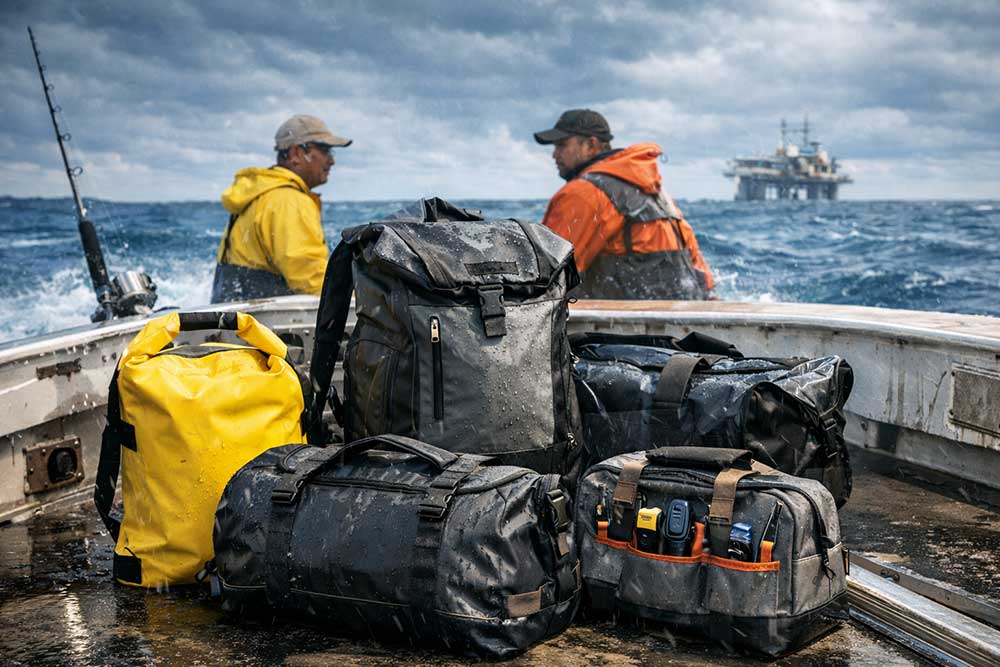
Life on the water is unforgiving. Salt spray, constant motion, sudden weather changes, and limited storage space mean that ordinary bags fail quickly on boats. For professional boat crews—whether working on fishing vessels, yachts, research boats, or offshore platforms—waterproof bags are not accessories, but essential working equipment. According to NOAA, waterproof bags are critical to ensure the safety and protection of both crew members and sensitive equipment on board.
This guide explains what waterproof bags professional boat crews actually use, why they choose specific designs, and which construction features matter most in real marine environments.
Why Boat Crews Need Professional-Grade Waterproof Bags
Boat crews face challenges that recreational users rarely encounter:
- Continuous exposure to saltwater and UV
- Wet decks and limited dry storage
- Frequent loading, unloading, and movement
- Sensitive equipment that must stay dry at all times
Standard backpacks or travel bags are not designed for these conditions. Professional crews rely on marine-grade waterproof bags built specifically to handle moisture, abrasion, and long-term use at sea. For example, The American Boating Association emphasizes that waterproof bags used on boats must meet specific durability standards to survive the harsh saltwater environment.
Common Types of Waterproof Bags Used by Boat Crews
Different onboard tasks require different bag formats. Professionals typically use multiple waterproof bag types, each serving a specific purpose.
Waterproof Bag Types Overview
| Bag Type | Typical Use | Key Advantage | Common Contents |
| Roll-Top Dry Bag | General onboard storage | Simple, reliable waterproof sealing | Clothing, food, emergency items |
| Waterproof Backpack | Crew movement & commuting | Hands-free carrying | Electronics, documents, personal gear |
| Waterproof Duffel Bag | Medium to long assignments | Large capacity, flexible shape | Clothing, safety gear |
| Waterproof Tool Bag | Maintenance & repairs | High abrasion resistance | Tools, spare parts |
Waterproof Dry Bags (Roll-Top)
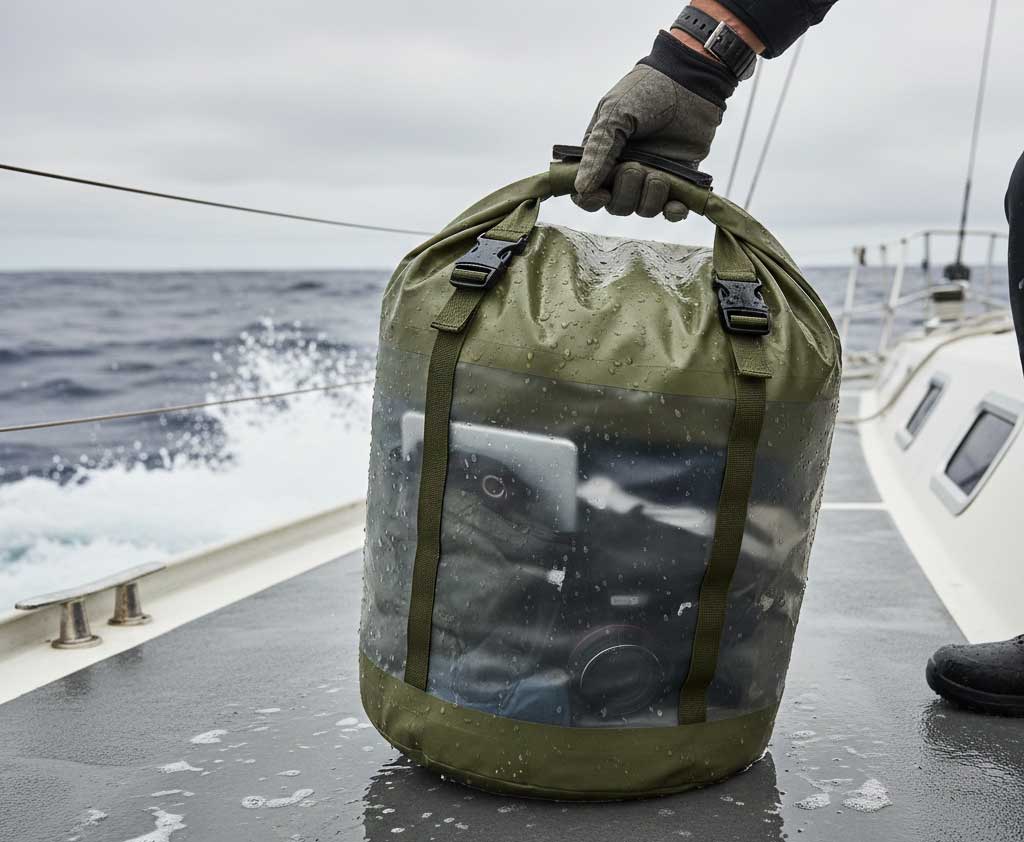
Roll-top dry bags are one of the most common solutions for marine crews. They are lightweight, easy to stow, and highly reliable when properly sealed. Yachting World suggests that roll-top dry bags provide excellent protection for sensitive gear when used correctly. These bags are often used as secondary protection inside lockers or as grab-and-go storage during transfers between vessels.
Waterproof Backpacks for Marine Use
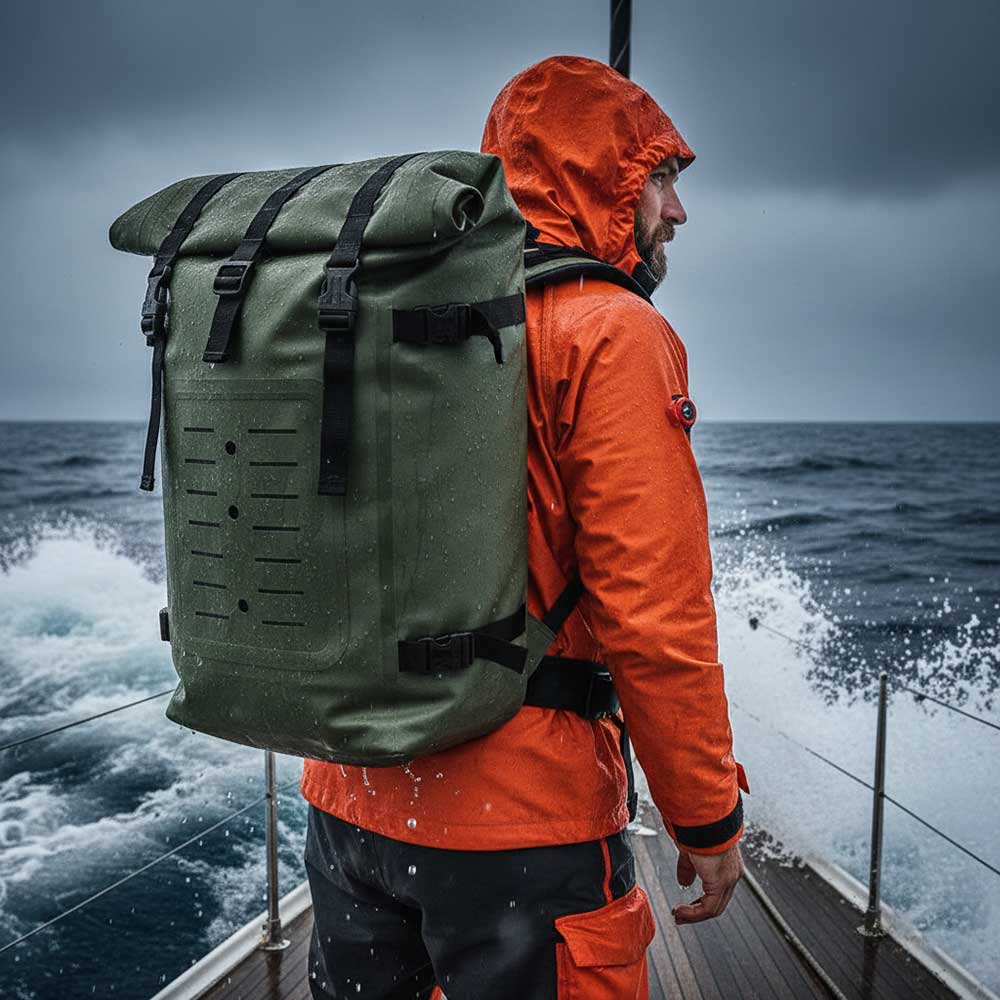
For crew members who move frequently between docks, boats, and shore facilities, waterproof backpacks are essential. Marine waterproof backpacks typically feature welded seams, reinforced shoulder straps, and abrasion-resistant outer fabrics designed specifically for marine environments. Boating Magazine suggests that backpacks with welded seams offer the best durability in harsh conditions compared to conventional stitched backpacks.
Waterproof Duffel Bags
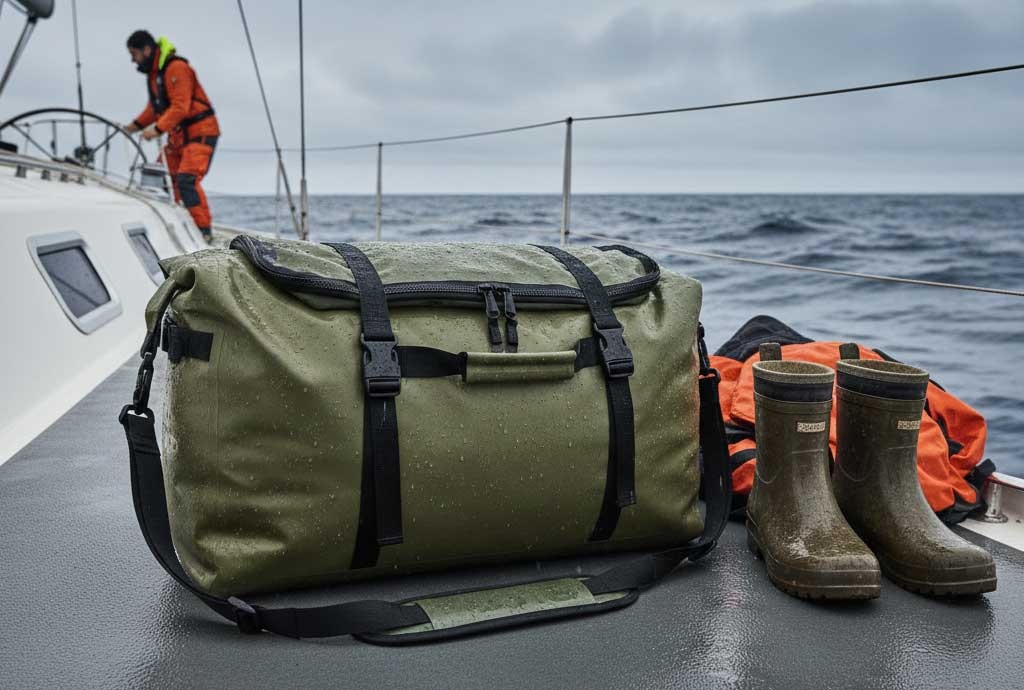
Waterproof duffels are widely used for clothing, safety gear, and longer assignments. Their soft construction allows them to fit into tight or irregular storage spaces onboard, making them more practical than rigid containers. Marine Brands like YETI have developed specialized waterproof duffels that can withstand high-pressure water exposure and intense UV damage, making them ideal for long-duration marine use.
Waterproof Tool & Equipment Bags
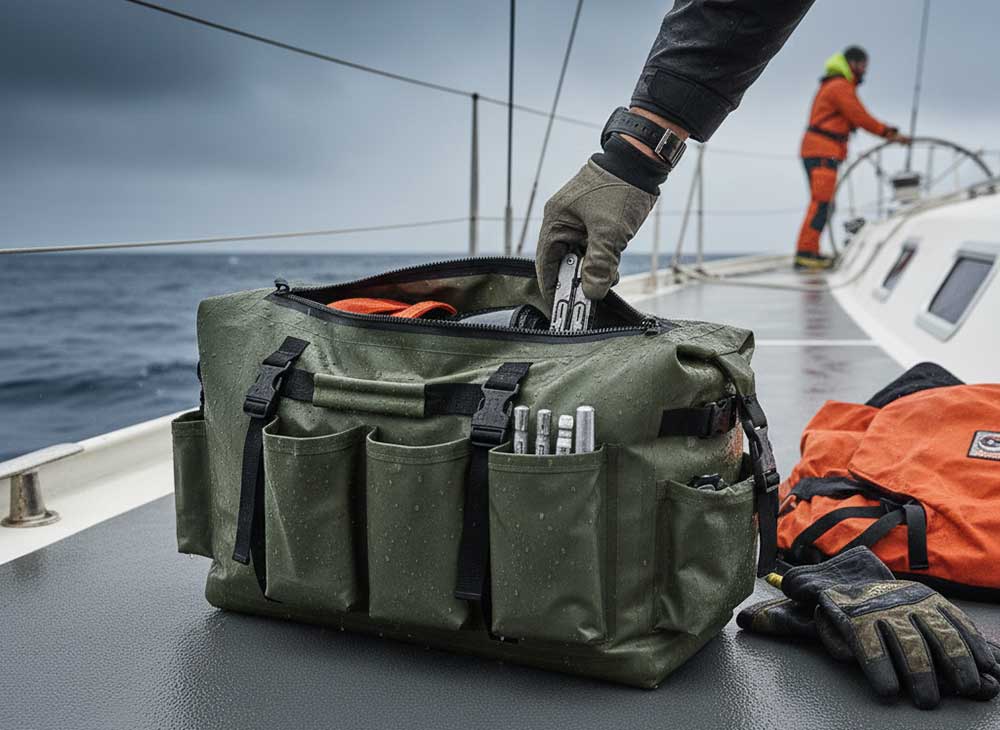
Tools and maintenance equipment must remain dry to function properly. Professional crews favor reinforced waterproof tool bags that prioritize durability, puncture resistance, and structural strength over comfort or appearance. Fisheries Supply explains that these bags are designed for the daily wear and tear of maintenance tasks in the harshest conditions.
Materials Professionals Trust in Marine Waterproof Bags
The performance of a waterproof bag depends heavily on its materials. Boat crews consistently favor materials that resist saltwater, UV exposure, and abrasion. For example, The American Boating Association highlights the need for high-quality materials that can stand up to saltwater corrosion and heavy UV exposure, making materials like TPU and heavy-duty PVC essential for marine applications.
Marine-Grade Materials Comparison
| Material | Key Properties | Typical Use Scenario | Trade-Off |
| TPU-Coated Fabric | Flexible, crack-resistant | Daily crew use, backpacks | Higher material cost |
| Heavy-Duty PVC | Extremely durable | Commercial fishing, tools | Heavier weight |
| Reinforced Polyester/Nylon | Balanced strength & weight | General marine gear bags | Requires coating for full waterproofing |
Material choice often depends on whether the bag is used daily, stored permanently onboard, or exposed to harsh offshore conditions. According to NOAA, PVC is often used in larger bags that need to withstand high-impact scenarios, while TPU is preferred for lighter, more flexible bags used for daily operations.
Construction Features That Matter to Professionals
Not all waterproof bags perform equally. Professionals look beyond marketing claims and focus on construction details. Marine manufacturers such as Pelican and YETI are known for their precision in bag construction, which ensures reliability in critical conditions.
Welded Seams (RF / HF Welding)
Professional marine bags almost always use welded seams rather than stitched seams. RF (Radio Frequency) or HF (High Frequency) welding fuses materials without needle holes, creating consistent airtight and watertight seams with superior long-term durability. Boating Magazine suggests that welded seams are a must-have feature for long-term use in the marine environment, as they eliminate the risk of leakage caused by stitching.
Roll-Top Closures vs Waterproof Zippers
Roll-top closures are favored for maximum waterproof reliability and minimal maintenance. Waterproof zippers offer faster access but introduce potential failure points and require regular care, which is why many crew-grade bags minimize zipper use.
Expert Tip: If you’re working in a high-humidity area, it’s critical to choose bags with waterproof zippers made from high-quality materials, such as YKK zippers. These are known for their reliability in marine environments.
Reinforced Stress Areas
Boat crews value bags with reinforced bases, strengthened grab handles, and durable attachment points. These features significantly extend service life under constant handling and harsh onboard conditions.
Boat Crew Bags for Fishing Operations
In the commercial fishing industry, waterproof bags are crucial to store sensitive equipment such as fish finders, bait, and fishing rods. The bag must not only be waterproof but also highly resistant to saltwater and UV exposure.
Fishing crews rely on waterproof bags for:
- Protecting Electronics: Fish finders, GPS devices, and communication radios.
- Storing Fishing Gear: Rods, reels, tackle boxes, and spare fishing lines.
- Keeping Fish Fresh: Special waterproof bags designed for storing fish while keeping them fresh.
Expert Recommendation: For fishing operations, roll-top dry bags and waterproof duffels are the preferred choice, as they offer both water-tight sealing and the flexibility needed to store a variety of fishing equipment.
What Makes Crew-Grade Bags Different from Recreational Bags
While recreational waterproof bags may look similar, professional crew bags differ in critical ways. Marine brands such as Pelican and YETI manufacture crew-grade bags designed for durability and daily use, while recreational bags often focus more on appearance and comfort.
| Aspect | Crew-Grade Bags | Recreational Bags |
| Material Thickness | Thicker, reinforced | Lighter materials |
| Seam Construction | Welded seams | Often stitched |
| Design Focus | Function & durability | Appearance & comfort |
| Intended Use | Daily professional work | Occasional leisure use |
| Service Life | Long-term | Shorter lifespan |
Crew-grade bags are designed to work every day in demanding marine environments, not just survive occasional trips.
How Boat Crews Use Waterproof Bags Onboard
Professional boat crews typically assign specific roles to each waterproof bag to improve organization and reduce risk. This systematic approach allows for better use of space and ensures critical gear is always protected.
Onboard Waterproof Bag Allocation
| Bag Role | Purpose | Typical Items |
| Personal Gear Bag | Daily essentials | Clothing, footwear, toiletries |
| Electronics Bag | Equipment protection | Radios, tablets, documents |
| Safety Bag | Emergency readiness | First aid kit, flares, tools |
| Maintenance Bag | Repairs & upkeep | Tools, gloves, spare parts |
This system-based approach improves efficiency and minimizes water damage during emergencies.
How to Choose the Right Waterproof Bags for Professional Boat Crews
Selecting waterproof bags for professional boat crews requires a different approach than choosing gear for recreational boating. Decisions are driven by operational needs, environmental exposure, and long-term durability rather than appearance.
Professional Selection Criteria
| Selection Factor | What Professionals Evaluate | Why It Matters |
| Frequency of Use | Daily vs occasional use | Determines material strength & seam durability |
| Vessel Type | Small boats, yachts, offshore vessels | Affects storage space and exposure level |
| Water Exposure | Deck use, lockers, transfers | Dictates sealing method and construction |
| Equipment Type | Electronics, tools, clothing | Defines internal layout and protection needs |
| Storage Space | Fixed or flexible spaces | Soft bags adapt better onboard |
| Maintenance Needs | Cleaning, repairability | Impacts long-term ownership cost |
Professionals also consider ease of cleaning, resistance to saltwater corrosion, and the ability to repair or replace components such as straps and buckles.
Experienced crews rarely rely on one universal bag. Instead, they build a bag system—separating personal gear, electronics, safety equipment, and tools—to improve reliability and extend product lifespan.
Why Many Marine Brands Use OEM Waterproof Bags
Many marine equipment brands and fleet operators choose OEM waterproof bag solutions to match their exact operational requirements. OEM programs allow for custom sizing, material selection, reinforced structures, and private labeling, ensuring consistency across crews and vessels.
Conclusion
For professional boat crews, waterproof bags are critical working tools. The best solutions combine marine-grade materials, welded construction, and function-driven design tailored to real onboard conditions.
Whether protecting personal gear, electronics, or safety equipment, professional crews rely on waterproof bag systems that prioritize reliability, efficiency, and long-term durability in demanding marine environments.
FAQ
What waterproof bags do professional boat crews use most?
Most crews use a combination of roll-top dry bags, waterproof backpacks, and waterproof duffels depending on task and gear type.
Are welded seams better than stitched seams?
Yes. Welded seams eliminate needle holes and provide more reliable long-term waterproof performance.
Do professional crews prefer PVC or TPU bags?
Both are used. PVC is favored for heavy-duty commercial use, while TPU offers lighter weight and flexibility.
Are waterproof backpacks suitable for offshore work?
Yes, as long as they use welded construction and marine-grade materials.
Can waterproof bags be customized for fleets or crews?
Yes. OEM programs allow customization of size, materials, structure, and branding.
See Also
Fishing Backpacks Versus Regular Backpacks for Anglers
How to Choose a Refrigerator Suitable for Kayaking Fishing
Why Are YETI Coolers So Expensive? Materials, Value & Comparison
Comments are closed