



Ultimate Guide: Best Kids Chalk Bags — Safe, Spill‑Proof
Introduction
Parents of 4–14‑year‑olds and youth coaches often want two things from a kids’ chalk bag: a safe, comfortable fit that kids can reach every time, and a setup that keeps dust and spills to a minimum in the gym. In this guide, you’ll learn the right opening diameters and heights for small hands, the closures that actually prevent messes, and kid‑friendly features that help beginners and youth team climbers stay focused on movement—not cleanup. Use the section headers to jump to sizing, safety and dust control, features, at‑home tests, and care. If you’re in a hurry, scan the Key takeaways below to shortlist the best kids chalk bags for your child.
Key takeaways
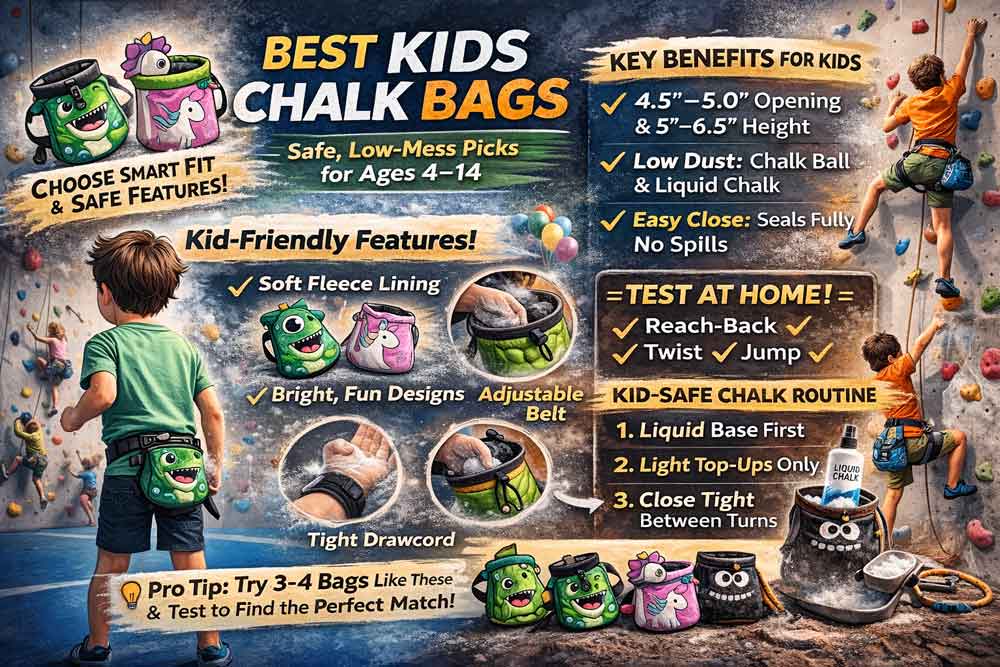
- For ages 8–11, target a mouth opening of about 4.5–5.0 inches and a bag height of roughly 5–6.5 inches for easy access without bulk.
- Favor chalk balls or liquid chalk in indoor gyms; many facilities discourage loose powder to reduce airborne dust, per the Climbing Wall Association’s guidance in 2024.
- Look for a stiffened rim, soft fleece lining, and a reliable drawcord that seals fully to prevent spills in packs and around the gym.
- Belt fit matters: choose an adjustable belt that positions the bag at harness waist height on the lumbar area, staying stable during twists and small jumps.
- Test at home: do reach‑back, twist, squat, and short‑jump checks; perform a closed‑bag shake test to confirm the seal.
Sizing and fit quick guide
Dialing in youth sizing is the single biggest factor in day‑one success. A kids climbing chalk bag that’s proportioned for smaller hands reduces awkward fumbles and overreaching, which can throw off balance on the wall. For 8–11‑year‑olds, the sweet spot is a slightly smaller opening and a moderate height so fingers can find chalk quickly but the bag still holds a chalk ball or a modest liquid‑chalk bottle for refills.
Openings and volume basics
For most 8–11‑year‑olds, an opening diameter of approximately 4.5–5.0 inches provides the best balance between access and control. It’s wide enough for a full palm dip yet small enough that the bag doesn’t collapse or swallow the hand. Aim for a bag height around 5.0–6.5 inches. That depth comfortably accommodates a chalk ball and a soft lining while keeping overall volume manageable on a shorter torso. Because manufacturer pages don’t always list mouth diameter, verify dimensions on a retailer listing or by measuring at home before removing tags.
Belts, placement, and access
A stable, kid‑friendly fit means the bag sits at harness waist height on the lumbar area, not bouncing low over the hips. Choose a belt with generous adjustability for small waists and easy threading through harness loops when needed. During movement, kids should be able to reach the bag with either hand without twisting excessively. A slightly stiffer rim improves one‑handed access so climbers can chalk up mid‑move without breaking flow.
Age ranges and hand size
Hand size changes quickly from 4 to 14. Generally, 4–7‑year‑olds do better with very small, ultralight bags and tight closures that minimize dust. The 8–11 range benefits from the 4.5–5.0‑inch opening and 5–6.5‑inch height not only for access but also for keeping a chalk ball from migrating. By 12–14, many climbers can transition to compact adult smalls, provided the rim is structured and the belt fits securely without slipping.
Safety and dust control
Indoor gyms care deeply about air quality and mess. Here’s the deal: the choices you make about chalk format and closures will do more to keep dust down than anything else. Start with the gym’s posted rules, then build a low‑mess kit that makes compliance easy for kids.
Low-dust chalk choices
When in doubt, default to contained chalk formats. Industry guidance from the Climbing Wall Association in 2024 recommends facilities reduce dust by prioritizing chalk balls, socks, and liquid chalk over loose powder; you can read those operational recommendations in the CWA’s piece on chalk dust strategies for indoor gyms (2024). For parents, a practical setup is a liquid‑chalk base layer at the start of the session with a chalk ball for light top‑ups. For a sense of what liquid chalk looks like and how it’s used, see this retailer explainer via a representative liquid chalk product page.
Closures that prevent spills
Not all drawcords seal equally well. Independent gear testers have found that some designs don’t close tight enough, which can lead to leaks in gym bags. Treeline Review’s long‑term testing notes that tight, center‑cinch systems on structured‑rim bags tend to spill less, while looser drawcords can dust packs or bouldering mats; they discuss this in their overview of best climbing chalk bags testing insights (2025–2026). The takeaway for kids: look for a firm rim plus a drawcord that fully puckers the mouth, and add a small zippered stuff sack for transport as secondary containment.
Gym etiquette and supervision
Teach kids a few simple rules: apply chalk away from fans and vents, close the bag between attempts, and “tap, don’t clap” to avoid clouds. Wipe any visible spills right away and keep a small brush handy for holds if your gym allows it. Supervision matters most in crowded bouldering zones—spotting and spatial awareness prevent collisions while kids are focused on chalking up.
Kid-friendly features that matter
A good kids chalk bag does three things: it opens readily with one hand, it resists spilling, and it makes kids excited to use it. The following features are worth prioritizing when you compare options in‑store or online.
Ease-of-use details
A stiffened rim keeps the mouth open so small hands can dip without hunting. A soft fleece or pile lining distributes chalk evenly while reducing the need for repeated dips. A brush holder can help with basic hold cleaning (respect gym rules). Most important is the closure: a well‑designed drawcord that seals fully and a tidy cord lock that kids can manage without help.
Materials and durability
Look for durable, easy‑clean fabrics like ripstop nylon or canvas with reinforced stitching at the belt attachment. A semi‑rigid base helps the bag stand when set down between attempts and reduces tipping. If the bag will see frequent team practices, prioritize abrasion resistance and a replaceable belt.
Fun designs and visibility
Bright colors and playful patterns can make kids more likely to wear the bag correctly and keep track of it in a busy gym. High‑visibility accents also help coaches and parents verify placement at a glance—if you can see it’s sitting at harness height, access will feel natural mid‑climb.
| Pick (mainstream example) | Kid‑fit score (8–11) | Mouth opening (in) | Height (in) | Closure & rim | Notes |
|---|---|---|---|---|---|
| Black Diamond Kid’s Chalk Bag | 9/10 | ~4.7 | ~5.5 | Tight drawcord, stiff rim | Balanced size; easy one‑hand access |
| Metolius Mini or Small | 8.5/10 | ~4.6 | ~5.0 | Center cinch, structured rim | Compact; great for smaller hands |
| Petzl Bandi (small) | 8/10 | ~4.8 | ~5.9 | Smooth cinch, rigid rim | Slightly taller for extra headroom |
| Edelrid Kid‑size | 8.5/10 | ~4.5 | ~5.0 | Firm rim, positive cord lock | Light and stable on small waists |
| Mammut Gym/Crag (small) | 8/10 | ~4.8 | ~6.7 | Reliable drawcord, stiff rim | Roomy height; check belt adjustability |
| 8BPLUS kid‑friendly styles | 8/10 | ~4.7 | ~5.7 | Drawcord, plush lining | Fun designs boost visibility |
Notes: Dimensions for mouth opening and height are typical targets for 8–11 and may vary by model year. Verify on the product page or by measuring at home before removing tags.
How to choose and test at home
The best time to find fit problems is before the first gym session. A short, playful try‑on routine at home tells you if the bag will stay put and seal tight.
Shortlist and feature checklist
Start with three candidates that meet the sizing baseline (4.5–5.0‑inch opening; 5–6.5‑inch height). Confirm a stiff rim, soft lining, a fully sealing drawcord, and a belt that reaches harness waist height securely. If your gym prefers liquid chalk, prioritize a slightly taller bag to accommodate a small bottle and a chalk ball. Keep designs bright and easy to spot in a shared team area.
Try-on and movement tests
Have your child wear their harness. Practice reach‑back with both hands, then twist both directions and do a few bodyweight squats. Ask for two or three small jumps—does the bag shift or bounce? Next, close the drawcord fully and perform a gentle shake test over a sink or outdoors. If dust escapes, try adjusting the cord lock; if it still leaks, consider a different model or add a transport stuff sack.
Budget, value, and longevity
For fast‑growing kids, value comes from fit and mess prevention more than extra pockets. Favor durable fabrics and reinforced stitching so a single bag can serve multiple seasons or siblings. Replace the belt as needed and refresh the lining with a gentle wash to extend life.
Care, cleaning, and storage
A simple maintenance routine keeps gear clean and your car and gym bag free of chalk.
Fill and transport without mess
Do refills outdoors or over a large bin. Use a chalk ball rather than loose powder when possible, and keep the mouth cinched closed between attempts. For transport, zip the bag into a small stuff sack to contain any residual dust.
Cleaning and drying steps
Empty the bag and shake it outdoors. Hand‑wash with mild detergent and cool water, rinse thoroughly, then air‑dry completely before refilling. Some long‑term testers suggest cleaning a couple of times per year and avoiding harsh detergents, a frequency echoed in gear‑testing guidance like Treeline Review’s hands‑on notes about chalk bag care and closure performance. General climbing gear care norms also favor gentle cleaners and thorough air‑drying, as seen in articles on rope maintenance from reputable outlets such as Climbing.com’s rope care guidance on detergent caution.
Teach good chalk habits
Kids respond well to simple, repeatable cues: liquid base layer at the start, light top‑ups only, close the bag between attempts, and tap rather than clap. Ask them to spot chalk spills and help with quick cleanups—it builds responsibility and keeps the community space pleasant for everyone.
Conclusion
You don’t need a lot of gear to keep kids comfortable on the wall—just the right size and a closure that truly seals. Prioritize a 4.5–5.0‑inch opening and 5–6.5‑inch height for ages 8–11, pair it with a chalk ball or liquid chalk to cut dust, and choose bright designs that make correct placement easy to verify. Your next steps are simple: check your gym’s current chalk rules, pick a size using the measurements above, and set up the four‑step no‑spill care routine so your child can focus on climbing—not cleanup.
Comments are closed