



The Ultimate Pickleball Bag Guide: Find the Best Bag
If you’re playing once or twice a week, a purpose-built pickleball bag can make everything simpler: your paddles stay protected, your balls and small items stop vanishing into a black hole, and you spend less time rummaging and more time playing.
This guide breaks down sizes, layouts, materials, comfort details, and the features that actually help beginners. You’ll leave with clear capacity rules of thumb, a simple buying framework, and care tips to make your bag last longer.
Think of this as your practical pickleball bag guide—not a list of models, but a way to match a bag to your game, your gear, and your budget.
Key takeaways
- A small backpack around 20–25 liters typically fits 2–4 paddles, ~12 balls, a towel, and a water bottle comfortably.
- Water-resistant fabrics and padded paddle sleeves protect gear during light rain and daily bumps; look for quality zippers and reinforced seams for longevity.
- Sling bags suit minimal carry for short walks; backpacks balance weight best for most beginners; duffels shine for carpools or weekend travel.
- Prioritize comfort (padded straps, breathable back panel) and organization (fence hook, quick-access pocket) over niche extras you won’t use.
Why a dedicated pickleball bag matters
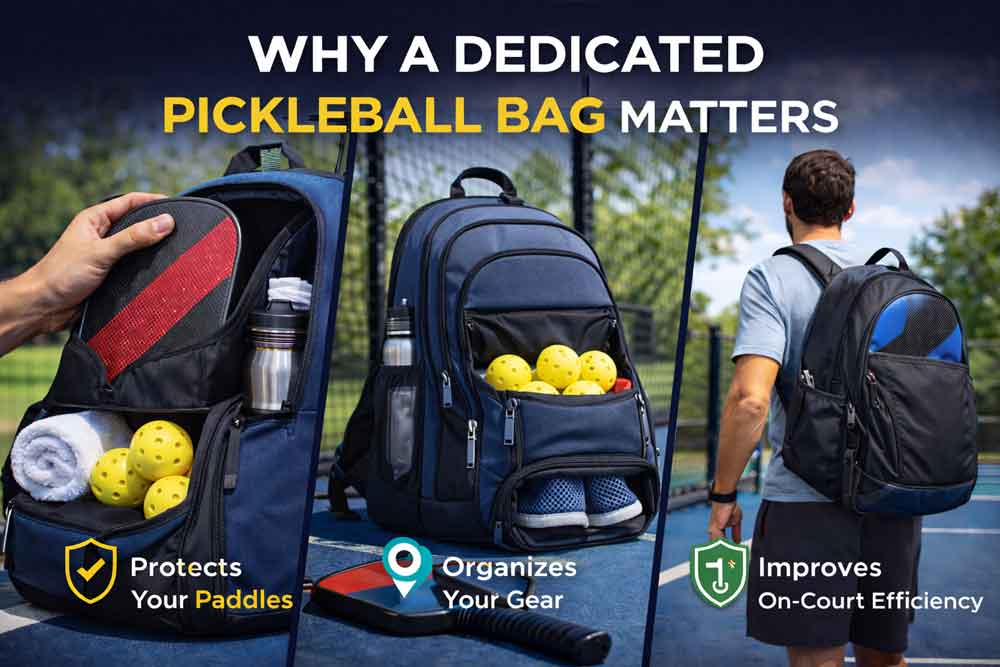
A dedicated bag keeps your gear safer, your pre-game smoother, and your dollars working harder over time.
Protecting gear and equipment
Paddles are vulnerable to edge-guard dings, scuffs, and heat. Dedicated paddle sleeves or holsters plus a water-resistant shell reduce routine damage. Many editorial and retailer guides call out padded paddle storage and reinforced bases as standard durability cues; see the feature overviews compiled in the independent testing roundup discussed by the publisher in the Best Pickleball Bags overview (2024–2026) for typical construction norms and protections highlighted in reviews in the Pickleball Effect bag overview.
Improving travel efficiency and game-day readiness
Quick-access pockets, external bottle holders, and a fence hook (to hang the bag off the court fence) keep essentials visible and off the ground. Beginner-focused roundups emphasize how backpacks streamline on-court flow with organized storage and even load distribution; see the publisher’s style/feature breakdown in the Pickleheads 2026 pickleball bags guide.
Long-term value and cost-per-use considerations
Longevity hinges on materials and hardware: higher-denier nylon/polyester, coated fabrics, and reputable zipper systems correlate with fewer failures and a longer lifespan. Travel/EDC reviewers regularly cite zipper and fabric quality as core predictors of durability; for context on zipper reliability signals and coated fabrics used in sport/travel packs, review the guidance consolidated by Pack Hacker in Best Backpack Brands (2025) — materials and zipper standards.
Bag sizes and compartment layouts
You’re reading this pickleball bag guide to figure out what actually fits. For most recreational players, a compact backpack covers weekly needs without bulk.
Single-compartment vs multi-compartment designs
- Single-compartment designs are simple, light, and inexpensive. Add-on sleeves and small zip pockets handle paddles and accessories.
- Multi-compartment designs separate shoes or sweaty clothes, add padded paddle sleeves, and often include a quick-stash top pocket for phone/keys. They cost a bit more but cut down on rummaging and keep clean/dry gear apart from wet items.
Paddle and ball capacity guidelines
A small-to-medium backpack in the 20–30 liter range typically fits 2–4 paddles, about a dozen balls, a towel, and hydration. These capacity norms are frequently cited in editorial guides; for example, an equipment guide explains that many standard pickleball backpacks cluster around 20–30L, a sweet spot for everyday carry in ADV Tennis’ size guidance.
Plain-English packing math for beginners:
- 2–3 paddles + 12 balls + 32 oz bottle + towel + phone/keys + small first-aid = roughly 20–25L
- Add shoes or a light jacket? Expect closer to 25–30L or look for a dedicated shoe pocket.
Pocketing for shoes, towels, and accessories
Ventilated shoe compartments keep odors and moisture from the main area. An insulated pocket can keep drinks cool and can also help shield paddles from heat on hot days. External bottle pockets, a small top “stash” pocket, and an interior mesh zip pocket cover most beginners’ needs.
Comparison at a glance (styles vs. best use/capacity):
| Bag style | Typical capacity | Best for | Trade-offs |
|---|---|---|---|
| Sling | ~12L | Minimal carry: 1–2 paddles, a few balls, phone/keys, small bottle | Least balanced when loaded; limited organization |
| Backpack (small/medium) | ~20–30L | Most beginners: 2–4 paddles, ~12 balls, towel, bottle, accessories | Slightly heavier than sling; may not fit bulky shoes unless designed for it |
| Duffel/hybrid | ~30–45L | Carpools, weekend play, or travel with shoes/clothes separation | Bulky to carry; overkill for quick local sessions |
Materials and durability
A bag’s lifespan is mostly about fabric, hardware, and stitching—not flashy extras.
Fabric types, water resistance, and build quality
Common shells include polyester (often 600D–840D) and nylon variants (ripstop, ballistic). Coatings like DWR, PU, or TPU add water resistance and abrasion protection. Water-resistant means it sheds light rain; waterproof requires seam sealing and watertight zippers and usually adds weight and cost. For a weekly player, water-resistant is usually enough. For a clear explanation of these trade-offs, see the outdoor gear explainer in Water-Resistant vs Waterproof — Pack Hacker guide (2024).
Zippers, seams, and overall longevity
Zippers are a common failure point. Look for smooth-running, robust zippers and reinforced stitching at stress points (bar-tacks/double-stitching). Industry reviewers frequently cite YKK as a reliability benchmark and note that PU-coated variants improve splash resistance. For zipper reliability context drawn from travel/EDC testing, review the standards highlighted in Pack Hacker’s materials and zipper overview.
Weight considerations and material trade-offs
Heavier, denser fabrics and added structure increase durability but add weight. Aim for small/medium day-use backpacks that stay under ~3 lb empty, especially if you walk to local courts. If you often carry shoes or extra layers, consider a slightly larger bag with a ventilated shoe pocket rather than overstuffing a smaller one.
Comfort and carrying options
Comfort isn’t just “nice to have”—it determines whether you actually enjoy carrying your gear.
Straps, back support, and load distribution
Dual padded shoulder straps spread weight evenly; a breathable back panel reduces sweat buildup. An optional sternum strap can stabilize the load during longer walks or bike rides.
Handling multiple bags or seconds-access to gear
If you’re carrying a second tote (for kids’ gear or snacks), prioritize a backpack with balanced straps rather than a single-shoulder sling. Quick-access pockets for phone, keys, and a couple of balls save time between games.
Portability features (luggage handles, detachable pouches)
A fence hook or loop is almost essential for keeping your bag clean and reachable. If you travel occasionally, a luggage handle pass-through is handy. Detachable pouches for sweaty items or small tech (earbuds, power bank) can keep the main compartment tidy.
Features to look for (paddle holsters, storage, tech)
Paddle holsters and securing mechanisms
A dedicated sleeve or holster with light padding protects paddle faces and edge guards from scrapes inside the bag. Elastic keepers or compression straps nearby prevent shifting when you walk or bike.
Insulated pockets and thermal care for drinks/food
An insulated pocket keeps drinks cool and can help buffer paddles and balls from heat. Several gear roundups note thermal-lined pockets as a higher-end feature and mention heat management for paddles; see the feature summaries in the publisher’s coverage of thermal-lined compartments discussed in the JOOLA bag features explainer at The Kitchen (2025).
Tech-friendly compartments and organization aids
Look for a soft-lined pocket for phone/sunglasses, a key leash, and an interior mesh zip for small accessories (grip tape, bandages, markers). These small touches reduce time spent digging for essentials.
Buying guide and top picks
You don’t need a tournament-sized bag to play great pickleball. Start with what you actually carry today and choose the simplest bag that fits it well.
How to evaluate value vs price across brands
Use this framework:
- Fit first: Does it comfortably hold 2–4 paddles, ~12 balls, a towel, and a bottle—with a little headroom?
- Build: Is the fabric a durable polyester/nylon with a practical coating? Are high-stress seams reinforced? Do zippers feel smooth and sturdy?
- Organization: Are there dedicated paddle sleeves/holsters, a quick-stash pocket, and a fence hook? Optional: ventilated shoe pocket, insulated pocket.
- Comfort: Are straps padded and adjustable? Is the back panel breathable? Is the empty weight reasonable (<~3 lb for small/medium day use)?
- Warranty/returns: Expect limited warranties (often measured in months to a year) that cover defects, not normal wear and tear. Retailers typically offer short return windows. For examples of typical policy language and limits, review mainstream policy summaries such as the retailer/manufacturer terms referenced in a general warranty overview from a major bag maker.
Recommendations by player type (scenarios, not brands)
- Casual beginner (1–2x/week, local courts): Small backpack ~20–25L with paddle sleeves, bottle pocket, fence hook, and quick-stash pocket. Skip the shoe compartment unless you truly need it.
- Frequent rec player (3–5x/week): Medium backpack ~25–30L with ventilated shoe pocket and better back ventilation. Consider a sternum strap.
- Travel/tournament weeks: Duffel or hybrid 30–45L with separated dirty/clean zones, luggage pass-through, and an insulated pocket. It’s bulkier, but you’ll appreciate the segmentation.
Care tips and warranty considerations
Basic maintenance goes a long way and costs almost nothing:
- Empty and air-dry after sweaty sessions or light rain.
- Wipe the exterior with mild soap and water; avoid harsh chemicals or dryers.
- Brush zipper teeth gently if grit builds up; a tiny touch of zipper wax or silicone can restore smoothness. Avoid overstuffing that stresses teeth and sliders. For zipper failure modes and care, see the practical explainer in Zippers 101 — Nomads Nation (2026).
- Inspect high-stress seams and the base occasionally; address small frays early.
Warranty expectations: Bags typically carry limited warranties that cover manufacturing defects under normal use, while excluding wear and tear. Duration often ranges from several months up to a year, depending on seller and price tier; see policy norms summarized by mainstream retailers such as the OGIO warranty policy page for representative limits and exclusions.
Conclusion
Choose the smallest bag that comfortably fits what you bring today, with room for one more item you’ll actually use. Favor durable fabric, smooth zippers, reinforced seams, and practical organization over flashy extras. Set your straps for comfort, hang the bag off the fence, and keep it clean and dry—small habits that stretch lifespan and save money.
Ready to pick a bag that works as hard as you do? Start with your real gear list, match it to the right size band, and you’ll be set for seasons to come.
FAQs
What size bag do I need for 2–4 paddles and a dozen balls?
Most beginners are well served by a small backpack around 20–25 liters, which typically fits 2–4 paddles, ~12 balls, a towel, and a water bottle, with a little room to spare. Volume norms in editorial guides place many everyday pickleball backpacks in the 20–30L range; see the size guidance summarized by ADV Tennis.
Are there specific materials to avoid for hot environments?
Instead of avoiding a single fabric, focus on heat management: choose water-resistant coated polyester/nylon, consider an insulated pocket to buffer heat, avoid leaving the bag in hot cars, and favor lighter exterior colors if you play in strong sun. Explanations of water-resistant vs waterproof trade-offs and coating behavior are outlined in Pack Hacker’s guide to water resistance, and paddle-heat risk is a recurring theme across gear guides.
How do I maintain zippers and seams to extend bag life?
Keep zippers free of grit with a soft brush, apply a tiny amount of zipper wax or silicone if they snag, and don’t overstuff compartments. Inspect seams (especially where straps anchor) and the bag’s base every few weeks; fix minor frays promptly. For zipper reliability background and common failure modes, see Nomads Nation’s Zippers 101.
Comments are closed