



Chalk Bag vs Chalk Bucket: Gift Guide 2026
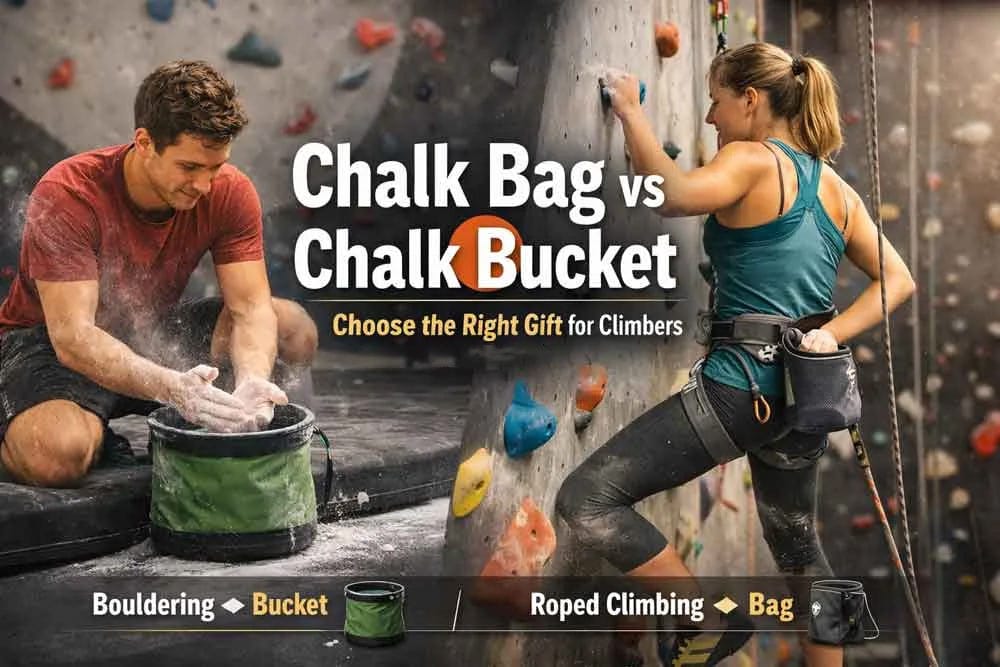
Looking for a climbing gift that feels personal, useful, and easy to buy? Here’s the quick answer: choose based on how your partner climbs, then personalize the look. In short, a chalk bucket typically wins for bouldering sessions; a chalk bag is best for roped routes where they need chalk mid-climb. From there, pick colors, patterns, or even a monogram to turn a solid pick into a memorable moment.
TL;DR verdict (scenario only): If they mostly boulder, go bucket. If they mostly climb on ropes, go bag. Not sure? A stylish chalk bag is the safest all-around gift. Prices checked: Mar 3, 2026.
According to consensus from recent gear guides, buckets shine for bouldering thanks to their wide, stable openings, while wearable bags are preferred for roped climbing because they allow one‑handed access on the wall. See the explanations in Climbing.com’s 2026 guide to category traits and use cases and TreeLine Review’s updated 2026 comparison, along with the bouldering vs. roped split outlined by Local Adventurer’s 2026 overview: these sources agree on the scenario-first difference between the two styles. For details, refer to the evidence links in the sections below.
What we checked
- Real-world use: on-route access vs. between-attempt dipping; stability and spill control
- Feature sets: opening size, closures (drawstring, magnetic, roll-top), liner type, pockets, brush holders
- Portability and comfort: wearable vs. ground-based, ease for small/large hands
- Cleanliness and gym policy trends (dust control and liquid-chalk rules)
- U.S. pricing ranges as of Mar 3, 2026 (subject to change)
For fundamentals on where each style excels, see the scenario guidance in the 2026 updates from Climbing.com and TreeLine Review, and the bouldering-specific advantages summarized by Local Adventurer’s 2026 buyer’s guide.
Quick decision tree
- Mostly bouldering (gym or outdoor)? Choose a chalk bucket for its big, stable opening and faster re‑chalks between attempts.
- Mostly roped (sport, trad, multi‑pitch)? Choose a chalk bag you wear, so they can dip one‑handed mid‑route.
- Does both styles equally? Start with a chalk bag; consider adding a budget bucket later for home or gym sessions.
- Large hands or often wear gloves? Prefer a wide‑mouth bucket or a large‑rim chalk bag for easier access.
- Loves personalization and the gift “wow” factor? Either style works—decide by their style first, then pick bold colors/prints or a monogram.
Chalk bag vs chalk bucket at a glance
Below is a side‑by‑side view of common traits in 2026. It reflects category norms summarized in reputable roundups and retailer spec pages.
| Dimension | Chalk Bag | Chalk Bucket |
|---|---|---|
| Best for | Roped climbing with on‑route, one‑handed access | Bouldering sessions and shared use |
| Capacity and opening | Small–medium volume; stiff rim for single‑hand dips | Large volume; wide, reinforced mouth for two‑hand dips |
| Portability | Wearable on belt/harness; light and compact | Ground‑based; carried by handle; not wearable |
| Spill resistance | Good when cinched; can tip if set down carelessly | Stable base; magnetic and/or roll‑top closures reduce spills in transit |
| Liner and chalk control | Fleece liners common to improve pickup and reduce dust clouds | Fleece/taffeta liners plus closures for better dust control |
| Accessories | Brush holder(s); sometimes a small zip pocket | Multiple brush holders; often multiple pockets for tape/phone |
| Materials and eco options | Nylon/polyester; some recycled content | Durable shells; recycled or deadstock fabrics increasingly common |
| Typical U.S. price band | About $20–$40 | About $35–$80 |
| Quick verdict | Best everyday pick for roped routes | Best session station for bouldering |
For deeper feature context, see the 2026 category explainers from Climbing.com and TreeLine Review, and bucket-specific traits like magnetic/roll‑top closures and stable bases noted in retailer tech pages.
When the chalk bag wins
If your partner clips into a rope—even just some of the time—a chalk bag is the “wear it and forget it” option. It sits at the waist or on a harness, so they can reach back and dip a hand without stopping. That one‑handed access is the key difference for roped routes, a point reinforced across recent category guides like the 2026 Climbing.com round‑up and TreeLine Review’s 2026 testing overview.
You’ll also find that chalk bags are compact, lighter to carry, and often more budget‑friendly. The stiff rim and fleece lining make it easy to grab chalk without a dust cloud. If your partner has large hands, look for a model described as “wide mouth” or “large,” which testers note is more comfortable for broader hands and gloved days.
Personalization tips: a chalk bag’s smaller size makes gift wrapping simple, and there are plenty of colorways and pattern-forward designs. Add a custom patch or a small monogram tag to make it feel made‑for‑them.
Evidence highlights you can skim: the roped‑climbing use case and typical bag features are summarized in Climbing.com’s 2026 buyer’s guide to chalk bags and the category notes in TreeLine Review’s 2026 update.
When the chalk bucket wins
If your partner mostly boulders, a chalk bucket speeds up the rhythm between attempts. The wide, reinforced mouth fits both hands, the freestanding base resists tipping, and modern closures help contain mess in the car or backpack. Many buckets also pack multiple pockets for tape, brushes, and a phone, so their essentials live in one place.
For gift givers, buckets also provide a larger “canvas” for bold prints and themes—which makes personalization pop. Think of it like picking a tote with personality: the function is the same, but the design can really reflect theirs.
Evidence highlights you can skim: bucket advantages for bouldering and typical closures (magnetic snaps paired with roll‑tops) are consistently noted in buyer’s guides and retailer tech pages that describe spill‑resistant designs and stable, wide bases used during bouldering sessions.
Authoritative sources to explore:
- Climbing.com’s 2026 category explainer on chalk containers for context on use cases and features: see the section on wearability vs. ground‑based setups in the 2026 gear guide: Best Climbing Chalk Bags — Climbing.com (Jan 29, 2026): https://www.climbing.com/gear/best-climbing-chalk-bags/
- TreeLine Review’s updated 2026 comparison summarizing liner types, closures, and practical trade‑offs: Best Climbing Chalk Bags — TreeLine Review (updated Mar 3, 2026): https://www.treelinereview.com/gearreviews/best-climbing-chalk-bags
- Local Adventurer’s 2026 overview clarifying when a chalk bucket beats a bag for bouldering: Best Chalk Bag and Chalk Bucket — Local Adventurer (updated Jan 24, 2026): https://localadventurer.com/best-climbing-chalk-bag-chalk-bucket/
- A representative retailer page describing bucket spill‑control features such as magnetic plus roll‑top closures and stable bases: Black Diamond Team Chalk Pot — Backcountry (updated Jan 19, 2026): https://www.backcountry.com/black-diamond-team-chalk-pot
- Capacity example for modern buckets and typical organizer features for context: Arc’teryx Ion Chalk Bucket — REI (updated Jan 31, 2026): https://www.rei.com/product/C00948/arcteryx-ion-chalk-bucket
- Gym dust and policy context (why adding a chalk ball or liquid chalk to your gift can be smart): Chalk Dust Strategies in Indoor Gyms — Climbing Wall Association (updated Mar 3, 2026): https://www.cwapro.org/blog/chalk-dust-in-indoor-climbing-gyms-strategies
Personalization and gift presentation ideas
Here’s the deal: once you’ve picked the right style (bag for ropes, bucket for bouldering), design choices turn a practical present into a moment. Choose a bold colorway or pattern that matches their vibe. Add a small handwritten tag or a custom patch/monogram. Tuck a chalk ball or liquid chalk inside to complete the bundle—many gyms prefer these for dust control, so your add‑on is thoughtful, not messy.
Prices checked: Mar 3, 2026. Suggested gift bundles:
| Gift tier | What to include | Estimated total (US) |
|---|---|---|
| Budget | Simple chalk bag or entry bucket + chalk ball | $25–$45 |
| Mid | Patterned bag or bucket + brush + chalk ball or liquid chalk | $45–$85 |
| Premium | Premium‑material bag or bucket + monogram/custom patch + chalk set + brush | $85+ |
Pro tip: wrap with kraft paper and a short note about why you chose that color or pattern. Small touches make it feel personal.
Pricing snapshot (U.S., as of Mar 3, 2026)
- Chalk bags commonly sit around $20–$40; sale and premium models may fall slightly below or above that band.
- Chalk buckets commonly sit around $35–$80; sales can bring some models into the mid‑$30s.
For current examples and capacities, you can browse representative listings such as the Arc’teryx Ion Chalk Bucket at REI (capacity and organizer features) and the Backcountry page for the Black Diamond Team Chalk Pot (magnetic plus roll‑top spill control). Prices change with promotions and availability, so check the date when you buy.
FAQ
Which is better for bouldering: a chalk bucket or a chalk bag?
A chalk bucket. Its wide, stable opening and higher capacity help climbers re‑chalk both hands quickly between attempts, a point echoed in bouldering‑focused buyer’s guides like Local Adventurer’s 2026 update.
Should I buy a chalk bag or a bucket for sport or trad climbing?
A chalk bag. It’s wearable, so your partner can dip one‑handed mid‑route without stopping, a scenario consistently highlighted in 2026 category explainers from Climbing.com and TreeLine Review.
What size works best for large hands?
Look for “wide mouth” or “large” in the description. Buckets naturally offer the biggest openings, but many large‑rim chalk bags also work well. If in doubt, a bucket is the safer bet for very large hands or frequent glove use.
Is liquid chalk allowed in indoor gyms?
Policies vary, but many gyms encourage liquid chalk or chalk balls to reduce dust. If you’re adding an accessory to your gift, those are usually the safest choices. For background on dust control trends, see the Climbing Wall Association’s policy overview updated in 2026.
Do climbers ever use both a bag and a bucket?
Yes. Many roped climbers use a chalk bag on the wall and keep a small bucket for home or gym sessions. If your partner climbs both styles, start with a chalk bag and consider a bucket later as a shared station.
How to choose in one sentence
Pick by climbing style first—chalk bucket for bouldering, chalk bag for roped routes—then personalize the color or pattern to make the gift feel unmistakably theirs.
Comments are closed