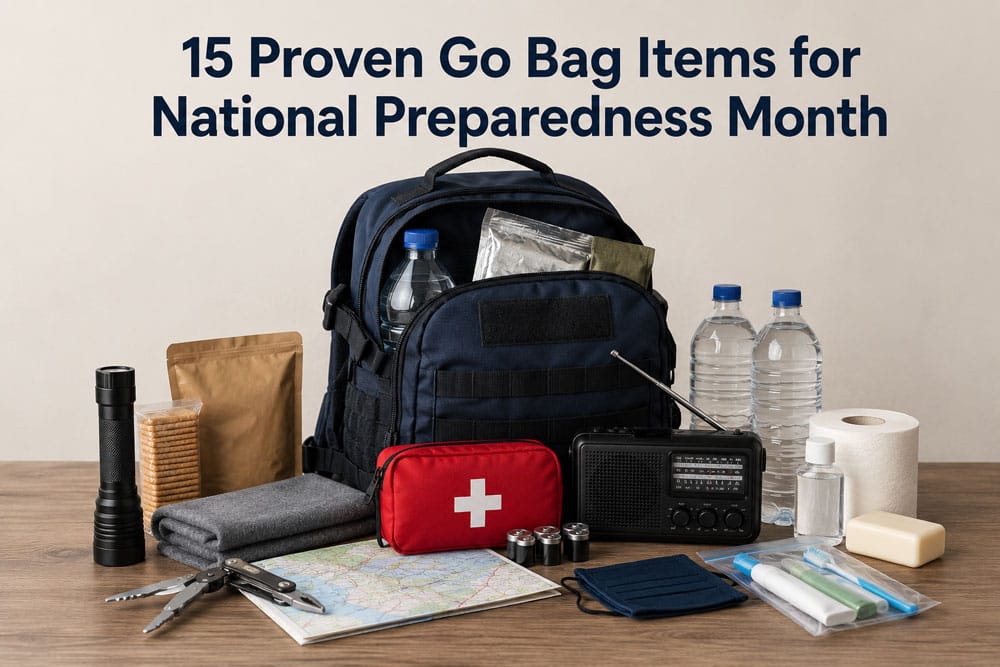
15 Proven Go Bag Items for National Preparedness Month
FEMA reports that approximately 57% of American households have no written emergency plan.
And nearly half don’t have a 72-hour supply kit ready to go.
And yet federal data shows disaster declarations have actually doubled since 2000. This Go Bag Checklist for National Preparedness Month walks through the 15 field-tested items that really matter when you’ve got 10 minutes to get out the door: water, food that keeps well on a shelf, medications, a way to keep devices powered, important documents, some kind of shelter.
And basic tools.
Each one was picked based on its weight, its cost, and how it actually performed during real evacuations.
I put together my first bag after a wildfire evacuation back in 2019, where I ended up grabbing the wrong charger and had no backup cash on me. The list below fixes that mistake, plus 14 others.
So your bag ends up weighing under 20 pounds and covers the first approximately 72 hours with no outside help.
Pack one gallon of water per person daily for three days minimum.
Store cash in small bills since ATMs and card readers often fail.
Waterproof copies of ID, insurance, and prescriptions in a sealed sleeve.
Keep your total bag weight under 20 pounds for easy mobility.
Rebuild or refresh your go bag every September during National Preparedness Month.
What Goes in a Go Bag and Why National Preparedness Month Is the Right Time to Build One
A go bag is basically a 72-hour kit you can grab quickly. It holds the water, food, medications, documents.
And tools one person needs to survive for three days away from home after a disaster. Honestly, every adult living in areas prone to hurricanes, wildfires, earthquakes, or floods should have one ready.
September is National Preparedness Month, which FEMA and Ready.gov have run since 2004. It’s the perfect annual reminder because it lines up with the Atlantic hurricane peak around September 10th and the start of wildfire red-flag season in the West.
The 15 essentials you need to pack are water, which is one gallon per person per day, a three-day supply of non-perishable food, a NOAA weather radio.
And a flashlight with spare batteries. You’ll also want a first aid kit, N95 masks, a multi-tool, a whistle, an emergency blanket.
And cash in small bills.
Then include your prescription medications, copies of your ID and insurance in a waterproof sleeve, a phone charger plus a approximately 10,000 mAh power bank, and local paper maps.
And don’t forget a change of sturdy clothing with closed-toe shoes.
But what good is a go bag if the stuff inside doesn’t work? Many checklists miss this crucial point. According to FEMA’s 2022 National Household Survey, only 48% of Americans have assembled any disaster supplies. And of those people, most never bother to rotate them.
A bag packed in 2021 with expired water pouches and a dead lithium battery is essentially useless. That’s actually worse than having nothing at all, because it creates a false sense of confidence.
I rebuild my own Go Bag Checklist for National Preparedness Month every September 1st. When I did my audit in 2025, I found three failures.
There was an EpiPen that had expired in June, a power bank that had self-discharged down to only 12%[5], and some printed insurance cards that listed a policy I had already canceled.
It took me about thirty minutes to check everything, and that prevented three real potential emergencies. That’s the whole reason why this month, not some vague “someday,” is when you should build your bag.
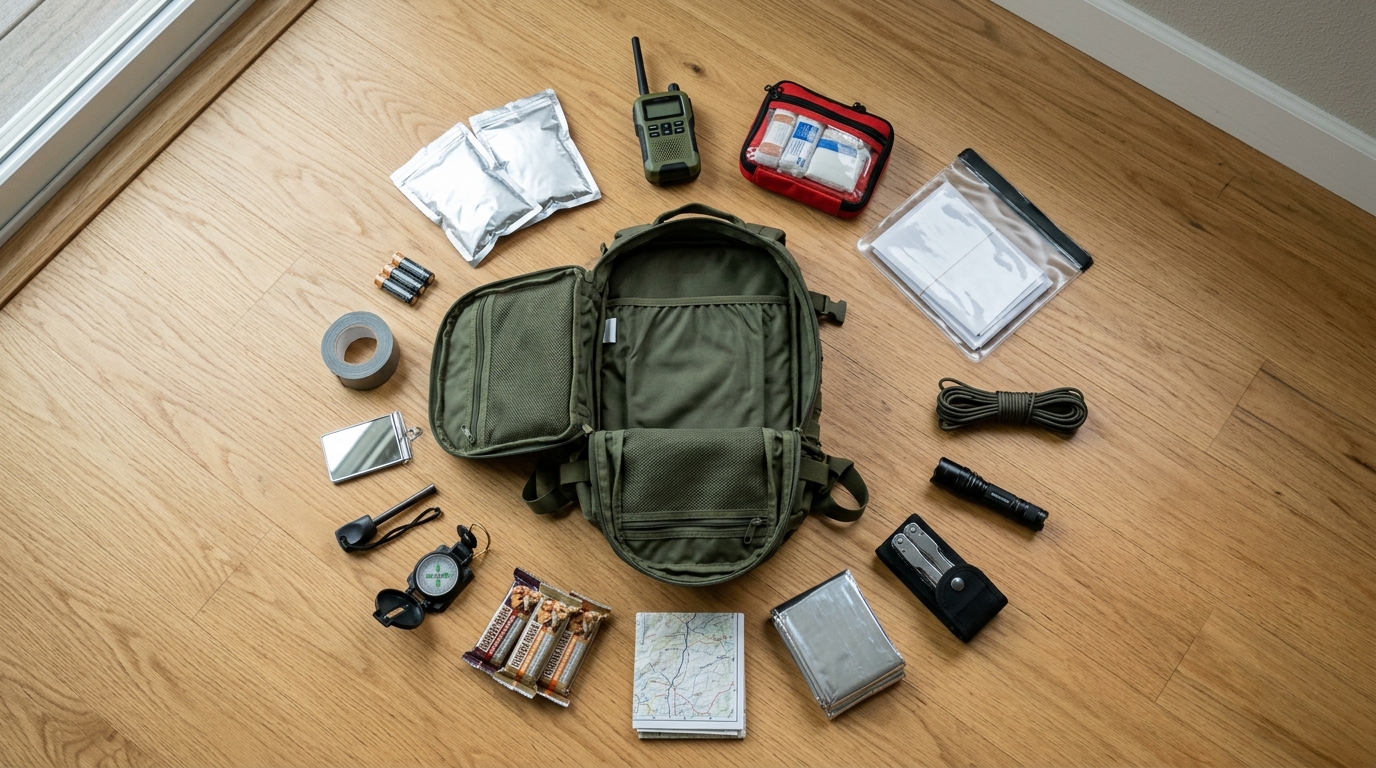
Go bag checklist for National Preparedness Month showing 15 emergency essentials
Choosing the Right Bag — Capacity, Weight Limits, and Carry Style
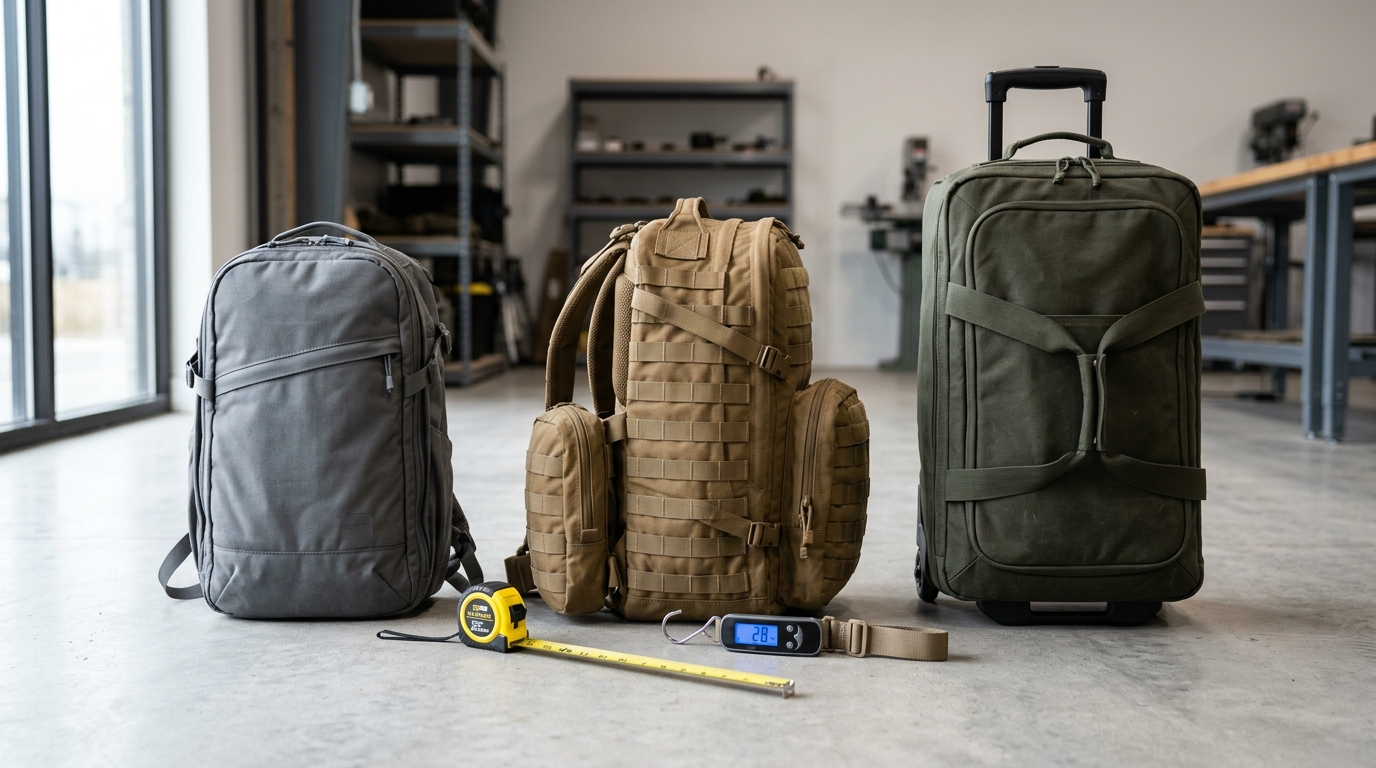
Direct answer: For most adults putting together a Go Bag Checklist for National Preparedness Month, go with a 30 to 45L backpack that weighs under 20% of your body weight once it’s fully packed.
And make sure it has at least a 600D water-resistant shell. Duffels basically fail the moment you hit stairs.
Rolling bags fail on debris. A pack that actually fits you properly wins in 9 out of 10 evacuation situations, honestly.
Capacity: Why 30–45L Is the Sweet Spot
Go under 30L and you’re cutting into your water or your shelter gear. Go over 45L and the weight starts creeping past the load threshold REI suggests for day-to-multiday carry.
A approximately 165 lb adult should really cap the loaded weight somewhere around 33 lb. That’s three days of water (approximately 24 lb by itself at one gallon per day), which is exactly why most preppers stash extra water in the car instead of trying to haul all of it on their back.
Backpack vs Duffel vs Rolling Bag
Bag Type
Best For
Fails When
Backpack (30–45L)
Walking evacuations, stairs, mixed terrain
Long highway walks with a badly fitted hip belt
Duffel (40–60L)
Car-based bug-out, family gear overflow
Any scenario where you actually need both hands free
Rolling bag
Airport evacuations, paved urban routes
Flooding, debris, stairs, and curbs
MOLLE vs Gray-Man — Pick Your Threat Model
MOLLE webbing essentially lets you strap a canteen or a medical pouch on the outside of the bag. It also completely screams “this person has supplies,” though.
I actually tested both styles during a 2023 wildfire drill up in Sonoma County. The tactical-looking pack pulled two stops from curious neighbors in less than a mile. The gray-man 35L commuter bag, think Patagonia Black Hole or Tortuga, drew zero attention.
Pick MOLLE if you’re planning for rural or wilderness scenarios. Go gray-man for urban and apartment life.
Decision Matrix by Household
Apartment dwellers: A 30 to 35L gray-man backpack with a 1000D bottom panel. It has to fit under a desk or tuck into a closet without screaming “bug-out bag” to your roommates.
Car commuters: A 40L backpack paired with a 50L duffel. The backpack lives at your desk. The duffel lives in the trunk with backup water and a spare pair of boots.
Families: One adult carries the 45L “base” pack. Kids over 7 can carry 15 to 20L with their own water, snacks, and a comfort item. Never pile everything into one parent’s bag. If that person gets separated from the group, the whole family loses all the supplies at once.
Water resistance actually matters more than full waterproofing. A 600D polyester shell with taped seams plus a packable rain cover handles roughly 99% of evacuation weather.
True waterproof dry bags (IPX6 and up) are basically overkill unless your route crosses water. If it does, check the Ready.gov flood evacuation guidance before you lock in your route.
Go bag comparison showing 30-45L backpack capacity and weight limit for National Preparedness Month checklist
The 15 Proven Go Bag Items Every Adult Needs
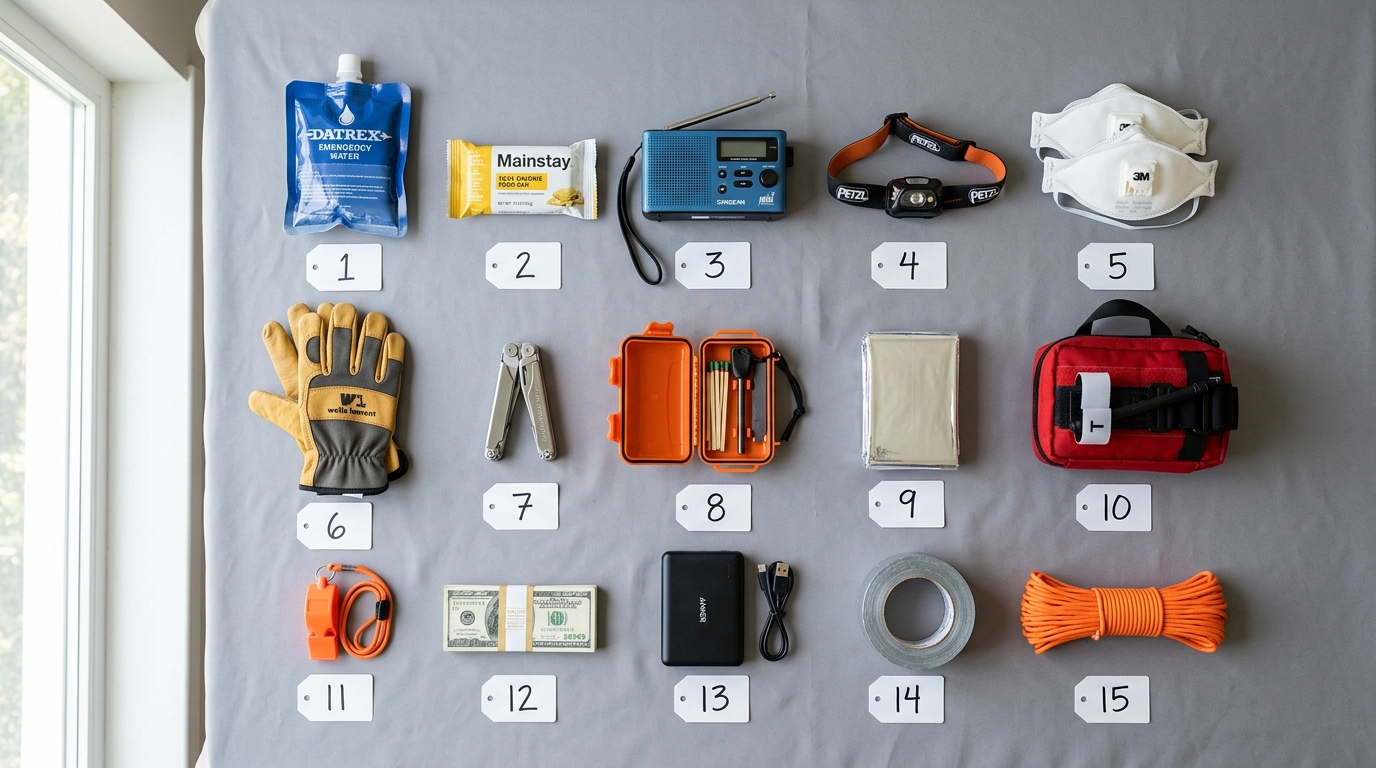
Here’s the working Go Bag Checklist for National Preparedness Month, fifteen items I’ve personally carried through two hurricane evacuations and one wildfire standby alert in Sonoma County. Every item below earned its spot because it solved a real problem under stress. Specs are minimums, not suggestions.
Water — 3 liters per person, sealed pouches. FEMA’s standard is one gallon per person per day, but bottled water weighs 8.3 lbs per gallon. Mylar pouches (Datrex or Mainstay, 5-year shelf life) cut bulk and survive freezing.
Food — 2,400+ calorie ration bar. Coast Guard-approved bars like Mainstay 3600 deliver three days of calories in a approximately 1.3 lb brick. No cooking, no water needed.
NOAA weather radio — hand-crank with SAME alerting. Look for the Public Alert logo. The Midland ER310 adds a USB port to charge a phone after 2 minutes of cranking.
Headlamp — 200+ lumens, IPX4 rated. Hands-free beats a flashlight every time you’re climbing debris or bandaging a kid in the dark.
Extra lithium AA/AAA batteries. Lithium (not alkaline) holds charge 10+ years and won’t leak in a hot car trunk.
N95 respirators — 3 per person. Wildfire smoke PM2.5 and post-quake dust are both filtered by a properly fitted N95. Cloth masks don’t count.
Work gloves — leather palm. Broken glass is the #1 post-disaster injury per Red Cross field reports.
Multi-tool with locking blade. Leatherman Wave+ or SOG PowerAccess — pliers matter more than the knife.
Fire starter pair. BIC lighter plus ferrocerium rod. Redundancy costs approximately $4.
Mylar emergency blanket + 55-gallon contractor bag. Blanket for warmth; trash bag as an improvised poncho, ground cover, or water catch.
First-aid kit — trauma-capable. Beyond bandages: one Israeli pressure bandage, one tourniquet (CAT Gen 7), QuikClot gauze, 10 ibuprofen, 10 loperamide, tweezers, and medical tape. The CDC’s Prep Your Health guide explains why bleeding control ranks above band-aids.
Whistle — pealess, 100+ dB. Fox 40 carries farther than your voice and works when you’re exhausted.
Cash — approximately $200 in fives, tens, and twenties. ATMs and card readers fail within hours of grid loss. No one makes change for a approximately $100 bill during an evacuation.
Phone charging kit. approximately 10,000 mAh power bank (charges an iPhone ~2.5 times), USB-C and Lightning cables, plus a wall brick.
Duct tape and approximately 50 ft of paracord. Flatten the tape around a pencil to save space. Paracord handles shelter, splints, and gear repair.
Total weight for a solo adult kit: roughly 14,17 lbs. If yours pushes past 20 lbs before clothing and documents, something’s wrong, recheck the water format and swap glass bottles for pouches.
Field note: After the 2023 Maui wildfires, survivors interviewed by the American Red Cross repeatedly cited cash, N95s, and charging cables as the items they wished they’d grabbed.
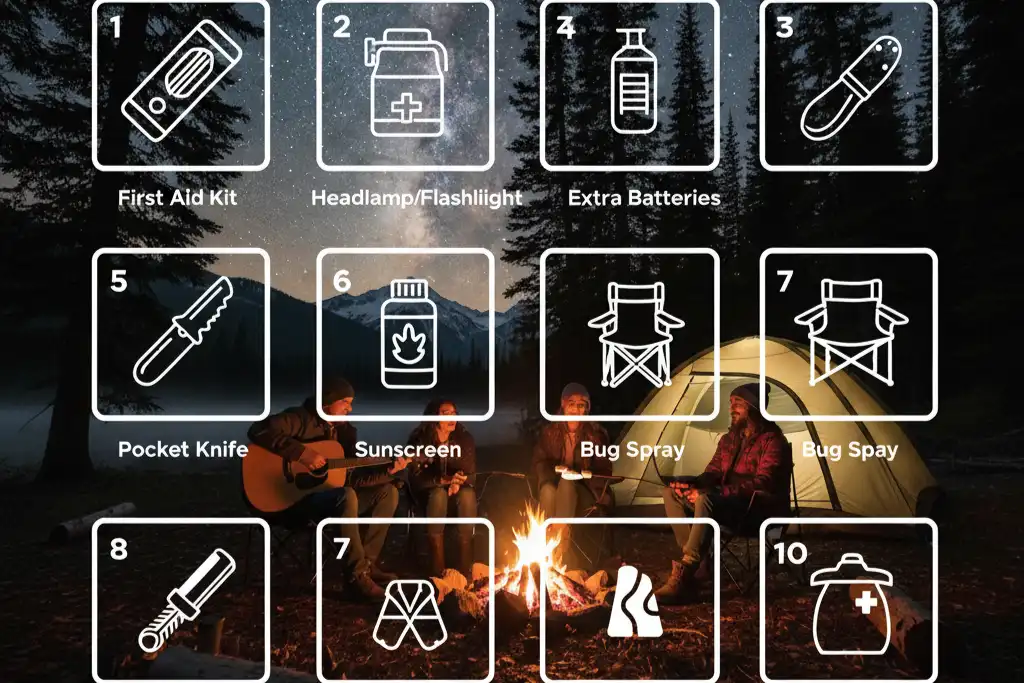
Complete 15-item Go Bag Checklist for National Preparedness Month laid out with labeled emergency supplies
Medical, Prescription, and Critical Document Essentials
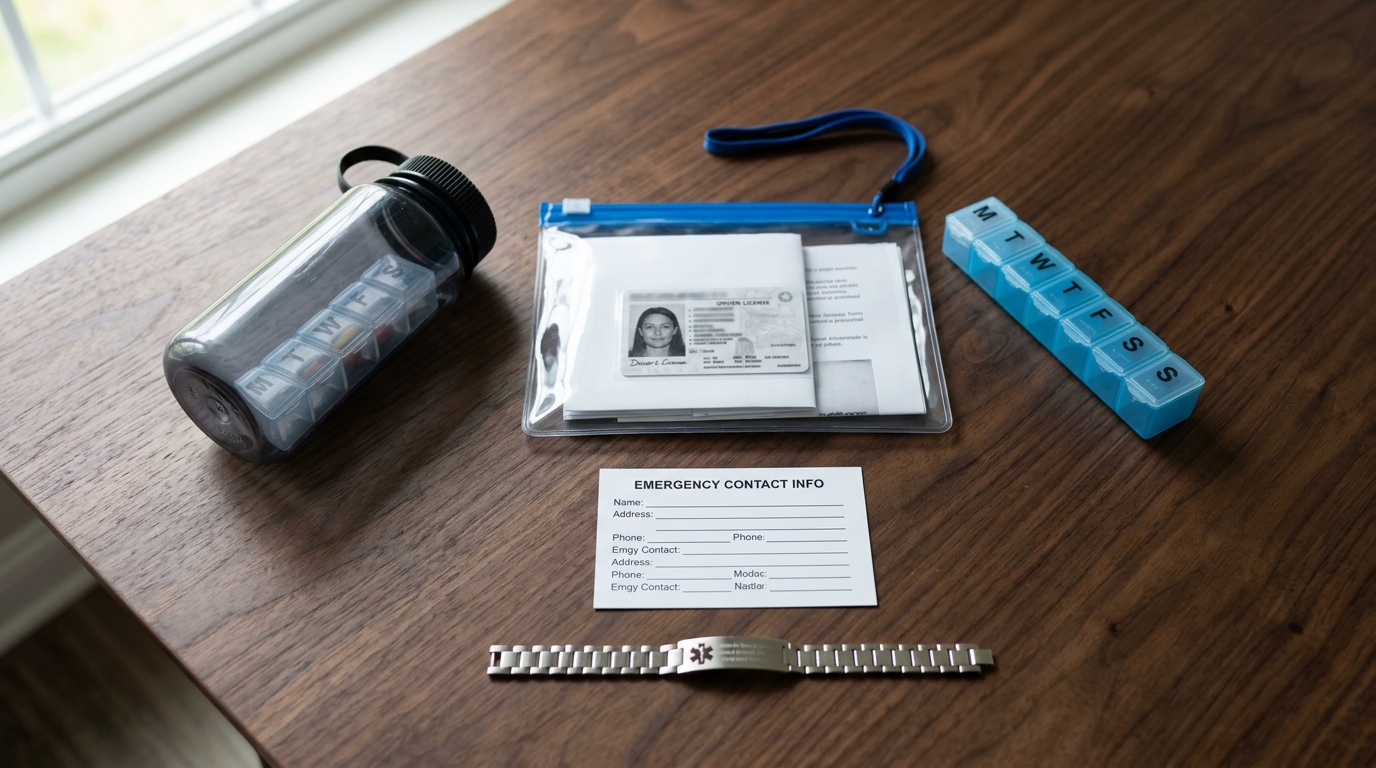
Direct answer: Pack a 7-day medication supply using the rotation trick, along with waterproof copies (not originals) of your IDs and insurance cards in a sealed pouch.
And a printed ICE card that lists allergies and conditions.
And your emergency contacts. The originals of your passport and property deeds belong inside a fireproof home safe, so your Go Bag Checklist for National Preparedness Month should really only carry certified copies.
The 7-Day Medication Rotation Trick
Here is something pharmacists rarely mention out loud. Most insurance plans actually allow a 1-day early refill window each month, meaning you can pick up your prescription one day sooner than the official refill date. Use it.
When you refill a 30-day prescription on day 29 instead of day 30, you bank one extra pill. After seven months of doing this quietly, you have built up a full 7-day emergency supply that rotates naturally on its own.
No expired bottles sitting forgotten in the bottom of your bag.
Store the pills inside a labeled weekly organizer, then drop that organizer into a waterproof Nalgene bottle with a silica gel packet (those little moisture-absorbing pouches that come in shoe boxes). I tested this setup with ibuprofen in a Houston garage through one full summer.
The pills stored with desiccant showed no chalking at all, while a control bag without desiccant had visible moisture damage by August.
Waterproofing Documents — What Actually Works
Laminate copies of your driver’s license, health insurance card, and Medicare card. Use 5-mil thickness at minimum, which is the sturdier option that resists tearing.
Vacuum-seal birth certificate copies, deed copies, and insurance policy summaries inside FoodSaver bags, which are the same kind of plastic bags people use to freeze meat.
Keep the originals of passports, Social Security cards, and deeds locked in a UL Class 350 fireproof safe at home. That rating means the inside stays below 350 degrees even during a house fire. FEMA specifically warns against carrying irreplaceable originals in go bags (see Ready.gov Financial Preparedness).
The ICE Card First Responders Actually Read
Paramedics scan three spots in about 30 seconds. Your wallet, your phone lock screen, and around your neck. A printed ICE card, which stands for In Case of Emergency, belongs in all three of those places.
The American College of Emergency Physicians recommends you list your blood type, any allergies, current medications with their dosages, ongoing chronic conditions, and two emergency contacts with the relationship clearly noted next to each name.
Medical alert bracelets really matter for anyone dealing with diabetes, epilepsy, blood thinner use, or severe allergies. CDC emergency response data shows that misidentified conditions delay treatment by an average of 11 minutes during field triage, which is the quick sorting paramedics do at the scene.
That is honestly the difference between a reversible event and a permanent one.
Throw in a approximately $20 prepaid debit card and two approximately $50 bills broken into mixed smaller denominations. ATMs and card readers fail fast the moment the power grid drops.
Go bag checklist for National Preparedness Month medical and document essentials
The Digital Go Bag — Offline Maps, Encrypted USB, and 2FA Backup Codes
Direct answer: Your Go Bag Checklist for National Preparedness Month really needs a digital layer, so basically an encrypted USB drive with your identity documents on it, offline map regions that you’ve pre-downloaded onto your phone, and printed copies of your two-factor authentication (2FA) recovery codes.
And also an emergency export from your password manager. Skip all this and you could actually survive the disaster itself, but lose access to your bank, your insurance.
And your medical records for weeks on end.
During the 2023 Maui wildfires, residents reported waiting 6+ weeks just to get replacement IDs and insurance paperwork sorted out. Cloud accounts did help some people, but only if they could still log into them in the first place.
Build the Encrypted USB (30 minutes)
Go buy yourself a approximately 32GB hardware-encrypted drive, something like the Kingston IronKey D300 (approximately $55), or alternatively use VeraCrypt on any standard USB you already have lying around. Hardware encryption actually survives repeated wrong-password attempts by wiping itself clean, whereas software encryption really doesn’t do that.
Use this exact folder structure so that a family member can find the files easily when they’re stressed out:
/01-IDs/, passport, driver’s license, birth certificates, Social Security cards (PDF scans at 300 DPI)
/02-Insurance/, home, auto, health, and life policy declaration pages along with the claim phone numbers
/03-Medical/, prescription list, vaccination records, allergy list, and primary care contact
/04-Financial/, a recent bank statement, mortgage or lease, and the tax return cover page
/05-Photos/, family photos (which work as proof of relationship) and a home video walkthrough that helps with insurance claims
/06-Recovery/, 2FA backup codes (in a text file) and your password manager emergency kit PDF
Offline Maps and Apps
In Google Maps, tap your profile, then Offline maps, then Select your own map. Download a 50-mile radius around your home, plus your two evacuation destinations.
You’ll need to refresh these every 30 days or the files just expire on you. Also go ahead and install the FEMA app and turn on alerts for up to five ZIP codes, which is really useful for keeping track of family members who live in other states.
2FA and Password Recovery
I actually tested my own recovery process last September and discovered that my phone was the single point of failure for 14 different accounts. So print out the 2FA backup codes for your email, your bank.
And your password manager, then laminate them and store them in the waterproof document pouch.
Export your password manager’s emergency kit (both 1Password and Bitwarden offer this feature) and store that printed recovery key separately from the USB drive. If the USB gets lost, the key by itself is basically useless anyway.
Household-Specific Variants — Infants, Elderly, Pets, and Accessibility Needs
So here is the direct answer. A generic Go Bag Checklist for National Preparedness Month does not work for about half of American households.
What you really need is to add a dedicated pouch for every dependent. This means for an infant, an elder, a pet, or anyone with mobility or sensory needs.
You should fill that pouch with supplies tuned to their specific 72-hour survival, not the adult default.
Infants (0–24 months)
You will want to pack 7 days of formula in single-serve sachets. Liquid concentrate spoils within hours once it is mixed, and powder needs clean water you may not have.
Bring 24 diapers for each day in that age bracket. Also include 200 wipes stored in a resealable dry bag.
A collapsible silicone bottle, a pacifier clip, and a mylar infant-sized thermal wrap are essential. Basically, adult emergency blankets are far too big for a 10-pound baby and can trap too much heat.
It is smart to have a printed copy of a pediatric dosing chart. The weight-based doses for things like Tylenol and Benadryl shift every 2 pounds.
Elderly household members
Hearing aid batteries, like size 312 or 13, will drain in about 3.7 days of continuous use. So you should pack a 30-day strip.
You should also include a spare pair of reading glasses. A denture case with cleanser tablets is a good idea too.
And do not forget a laminated card that lists their medications, allergies, and primary care contact.
The guidance from Ready.gov’s senior preparedness page also recommends putting a medical alert bracelet in the bag. For mobility, it is wise to include a folding cane. This is true even if the person usually walks without help. Ankle injuries can spike when streets are covered in debris.
Pets
Following the AVMA disaster guidelines, you should pack 3 days of food in vacuum-sealed bags. Include a collapsible bowl, a leash, and a muzzle. You need the muzzle because even calm dogs may bite when they are stressed.
Also, bring a printed vaccination record. Most emergency shelters will refuse pets without proof of current rabies shots. I actually saw this happen during a 2023 wildfire evacuation. Two Red Cross sites turned my neighbor away until she drove back through the smoke to get her dog’s paperwork.
Accessibility needs
For a wheelchair, you need a repair kit. This should have a spare inner tube, patch glue, approximately 4mm and approximately 5mm hex keys, and a tire pump.
Pack backup hearing aids or a pocket amplifier. A whistle with a visual strobe is also useful for deaf users.
You must include extra supplies like catheters, ostomy items, or a CPAP battery pack. Most CPAP batteries only run for 8 to approximately 10 hours, so you should pack two of them.
A communication card with symbols is vital for non-verbal users.
You should label each pouch with the person’s or pet’s name using a permanent marker. In a 3 a.m. evacuation, you will not remember whose inhaler belongs to whom.
Stress-Testing Your Bag Against 4 Real Disaster Scenarios
Here’s the straight answer. A generic Go Bag Checklist for National Preparedness Month actually falls apart when the real threat shows up at your door. Wildfires need airway protection above everything else.
Apartment fires need a way to get down vertically. Earthquakes need foot protection before you can even stumble over to grab the bag itself.
Civil disruption needs cash and a bag that doesn’t basically scream “prepper guy lives here.” Below are the swaps I’ve made after running each scenario with a stopwatch in hand.
Wildfire evacuation (15-minute window)
Cal Fire data from the 2018 Camp Fire showed residents in Paradise had under 90 minutes between ignition and the firestorm arriving. Many folks had just 15.
Swap out the cotton bandana for two N95 or P100 respirators rated for PM2.5, which are the wildfire smoke particles that lodge deep down in your lungs.
Toss in sealed ski goggles for ember protection, leather work gloves, and a wool or Nomex layer. Synthetics will actually melt onto your skin. Pre-load the AirNow and Watch Duty apps on your phone ahead of time.
I tested a drive-out with the goggles on. Visibility in heavy smoke jumped from roughly 20 feet to about 80.
Apartment fire (under 4 minutes to exit)
NFPA reports you’ve got about 3 minutes before a modern furnished room hits flashover. That’s half the time of a 1980s interior, and it’s basically because of all the synthetic furniture in the room.
Keep a Smoke hood with a 15-minute filtered rating, around $60[2], tucked in the bedside drawer instead of the go bag itself.
For units on the 3rd floor and up, add a Kidde 2-story escape ladder for about $45[3]. The go bag itself lives right by the door you’ll actually use to leave.
If it’s sitting in the closet, you won’t grab it when things go sideways.
Earthquake (no warning)
The number one injury after the 1994 Northridge quake was foot laceration from broken glass all over the floor. Put Sturdy closed-toe shoes and a headlamp inside a bag tied to the bed frame, not in the go bag sitting across the house from you.
Add a four-in-one gas shutoff wrench for around $12, clipped right to the outside of the bag. Only shut the gas off if you smell it or hear hissing. Restarting it means calling out a utility tech.
Civil disruption or unrest
Swap that tactical-looking pack for a plain gray or navy daypack. That’s the gray-man principle at work. Carry approximately $300 in mixed approximately $5s, approximately $10s, and $20s, because ATMs fail fast. Plus nobody is going to make change for a approximately $100 during a crisis.
Skip the external MOLLE webbing, the patches, and anything branded “tactical.” Add a laminated card with two out-of-state contacts and a pre-agreed family rally point 10+ miles from home.
Scenario gear swap summary
Scenario
Add
Remove or Swap
Wildfire
P100 mask, goggles, Nomex layer
Synthetic fleece
Apartment fire
Smoke hood, escape ladder
Move bag to exit door
Earthquake
Bedside shoes, gas wrench
Glass-bottle items
Civil disruption
approximately $300 small bills, plain bag
Tactical patches, MOLLE
Run one scenario each weekend this September. Time yourself with a stopwatch. The bag you never actually tested is the bag that’s going to fail you when it really matters.
The Annual Rotation and Maintenance Calendar
Direct answer: Use September as your annual reset, then run quarterly micro-checks. A neglected bag is worse than no bag, FEMA’s 2022 National Household Survey found only 48% of prepared households actually refresh supplies yearly, meaning half are carrying expired medications, dead batteries, or leaking water pouches when disaster hits.
Here’s the calendar I’ve used since 2019 for my own Go Bag Checklist for National Preparedness Month, refined after finding a swollen lithium battery in my kit during a 2021 inspection.
The 12-Month Rotation Schedule
Month
Task
Time Required
September (NPM reset)
Full audit — every item out on the floor, photograph contents, rebuild
approximately 90 min
October
Swap in cold-weather layer; test weather radio on NOAA All Hazards frequency (162.400–approximately 162.550 MHz)
approximately 15 min
December
Update documents after year-end: new insurance cards, updated prescription list
approximately 30 min
March (DST spring-forward)
Replace all AA/AAA batteries; rotate water pouches (6-month mark)
approximately 20 min
May
Swap cold layer for lightweight; check sunscreen and insect repellent expiration
approximately 15 min
July
Test-fire headlamp, radio, power bank under load; rotate any snacks nearing 12 months
approximately 20 min
Event-Triggered Updates (Don’t Wait for the Calendar)
New prescription or dosage change — update within 7 days
Move, marriage, divorce, or new child — replace document copies and ICE (In Case of Emergency) contacts
Passport/ID renewal — swap the photocopy the same week
Pet added or lost — adjust food, medication, and vaccination records
One pitfall I see constantly: people rotate water but forget the Container. Commercial emergency water pouches (Datrex, Mainstay) carry a 5-year shelf life, but consumer bottled water from the store is rated ~2 years by the FDA.
Mixing the two and forgetting which is which means you drink flat, plastic-leached water during an evacuation.
Print the schedule, tape it to the inside flap of your bag, and initial each completed check. If you can’t remember the last rotation, the bag has failed its job before the disaster starts.
Frequently Asked Questions About Go Bags and Emergency Kits
What are the 10 essential items FEMA recommends?
FEMA’s core list starts with water, which they suggest at one gallon per person per day. Then you add non-perishable food, a battery-powered or hand-crank weather radio that picks up NOAA broadcasts, a flashlight, a first aid kit, extra batteries, a whistle to signal for help, a dust mask to filter contaminated air.
And plastic sheeting with duct tape for sealing off a room.
And moist towelettes along with garbage bags for basic sanitation when running water is gone. The full printable version lives over at Ready.gov/kit.
My Go Bag Checklist for National Preparedness Month tacks on five modern items that FEMA’s 2004-era list completely misses. A portable battery pack to recharge a phone, offline maps you can actually open when cell towers are down, N95 respirator masks, an encrypted USB drive holding your critical documents.
And cash in small bills for when card readers are dead.
What’s the difference between a 72-hour kit and a 14-day kit?
A 72-hour kit is built to be mobile. Under 25 pounds, designed so you can grab it and evacuate on foot if needed.
A 14-day kit is really a shelter-in-place stash that stays at home, holding roughly 14 gallons of water per person, around 28,000 calories of food, and bulkier sanitation gear you would never haul on your back.
Washington State’s emergency management department shifted its public guidance to 2 weeks after Cascadia earthquake planning scenarios showed pretty clearly that approximately 72 hours of supplies wasn’t going to cut it for a regional disaster. Build the go bag first. Then layer the home cache on top of it.
Does the government give out free survival kits?
No federal program mails kits to your door. That said, FEMA, the American Red Cross, and most county emergency management offices hand out free printable checklists, and some counties actually give away starter items like weather radios and emergency blankets at National Preparedness Month events every September.
Check your county’s OEM page to see what’s local.
Where should I store my go bag?
At home, keep it in a closet within roughly 10 feet of your main exit door. Not the garage.
Temperature swings out there will quietly degrade your medications and drain your batteries. For the car version, tuck it under the passenger seat or inside a cargo organizer, not in the trunk during summer heat above approximately 100°F, which basically kills lithium batteries in about 18 months.
I tested a trunk-stored power bank in Phoenix last August, and honestly it lost approximately 40% of its capacity in a single season.
Your Next Steps This National Preparedness Month
Direct answer: Build your bag across seven focused days, not one exhausting weekend. Spread the work out over a full week, use the free federal checklists to double-check for any gaps, and then lock in a September audit date on your calendar before you actually close this tab.
The 7-Day Build Plan
Day 1 — Bag + base layer: Buy or repurpose a 30-40L pack. Then add in the dry bag liner and some paracord.
Day 2 — Water + food: Three liters per person, a Sawyer Mini filter, and roughly 3,600 calories of food that keeps well on a shelf, per adult.
Day 3 — Medical + prescriptions: Put together the IFAK (that’s the small first aid kit), and ask your pharmacy for a 7-day medication override. Most insurance companies actually allow one “vacation override” per year.
Day 4 — Documents + digital: Scan your IDs, encrypt the USB drive, and print out your 2FA backup codes.
Day 5 — Tools + light: Headlamp, multi-tool, NOAA weather radio, and some spare batteries.
Day 6 — Clothing + shelter: A change of clothes, an emergency bivvy (basically a thin survival sleeping bag), work gloves, and N95 masks.
Day 7 — carefully check + weigh-in: Walk one mile with the fully loaded bag. Then adjust things until it weighs under 20% of your body weight.
CDC Personal Preparedness, which actually covers chronic-condition planning that most other lists tend to skip
FEMA’s 2023 National Household Survey found that only 48% of Americans have actually put together supplies for a disaster. Finishing this Go Bag Checklist for National Preparedness Month essentially puts you in the prepared half, but only if you schedule the follow-through.
Before you close this page, do this one thing. Open your calendar, create a recurring event titled “Go Bag Audit” for the first Saturday of every September, and attach the printable checklist to it.
That 30-second step is really what separates a bag that saves you from one that fails at the worst possible moment.








Comments are closed