The “Fence Hook” Hack: Why It’s a Pickleball Bag Essential
Imagine stepping onto the pickleball court, ready for a competitive match, only to realize the ground is slick with morning dew or covered in gritty court dust. Where do you put your premium bag? Leaving it on the ground not only damages the fabric but forces you to constantly bend over to dig for hydration or a spare paddle. Enter the “Fence Hook” hack. As an experienced sports equipment designer and outdoor gear consultant, I’ve seen firsthand how micro-innovations dictate player performance and gear longevity. In this guide, we will unpack why a simple fence hook is the ultimate pickleball bag essential, transforming a frustrating on-court experience into a streamlined, pro-level setup. You’ll learn exactly what makes a good hook, how to integrate it seamlessly, and why this small detail will fundamentally upgrade your game prep.
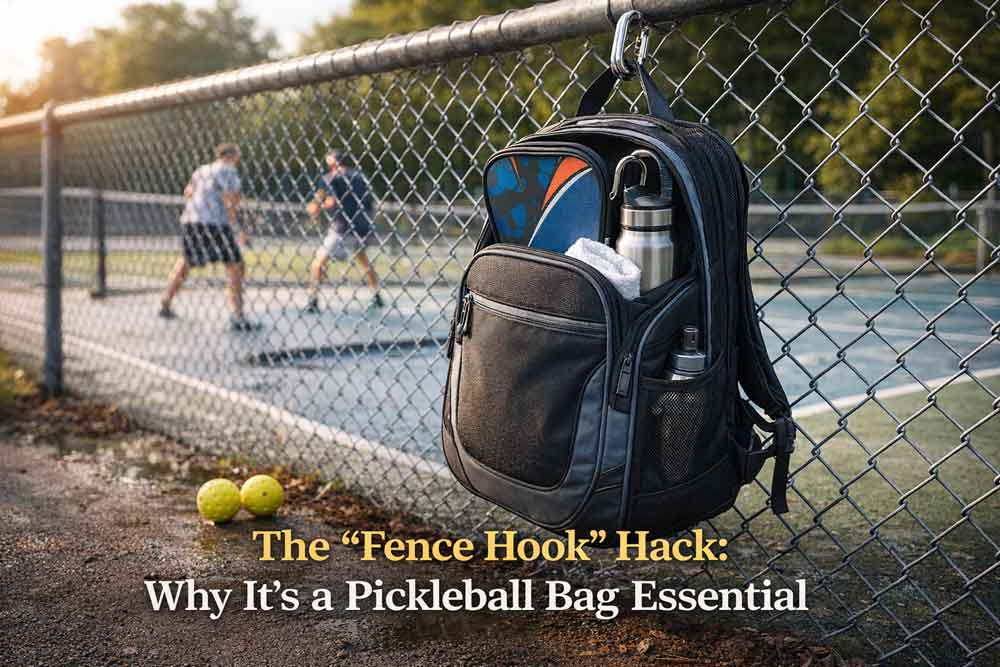
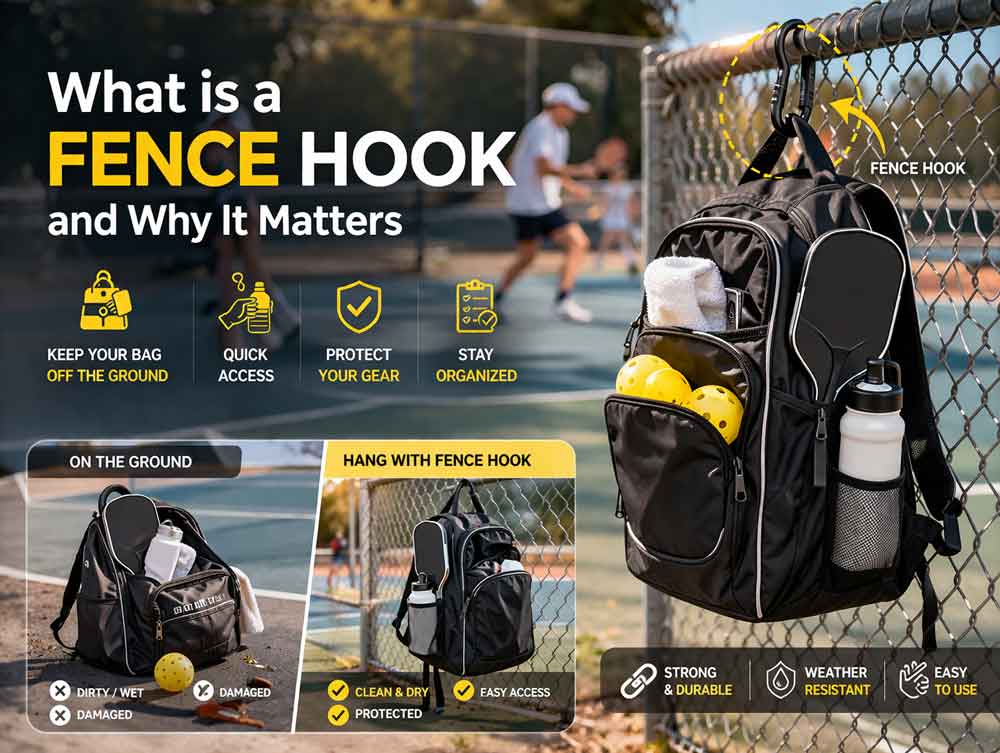
A “fence hook” is a specialized piece of hardware—often a J-hook, carabiner, or integrated clip—designed specifically to suspend your sports bag from the chain-link fences commonly surrounding pickleball and tennis courts. Picture this: instead of tossing your bag on the concrete, you simply unclip the hidden hook from your bag’s top handle and hang it securely on the fence at chest height. It instantly transforms your bag into a highly accessible, vertical locker.
Common Misconceptions and Why This Hook Design Matters
A major misconception is that any cheap plastic clip will do the job. In reality, a fully loaded pickleball bag can weigh upwards of 10-15 pounds. Using subpar hardware leads to breakage and potential damage to expensive carbon fiber paddles. According to sports gear manufacturing standards, load-bearing accessories must account for dynamic stress (like someone aggressively pulling a water bottle out of a hanging bag). A dedicated, well-designed fence hook protects your investment from ground moisture, dirt, and accidental trampling, significantly extending the lifespan of your bag’s base fabric.
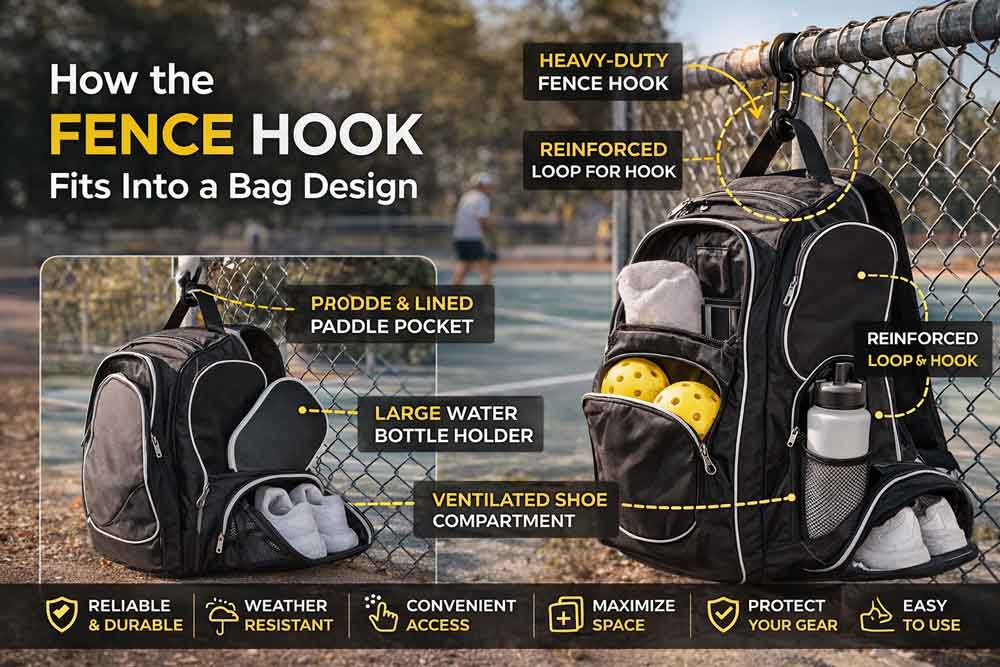
How the Fence Hook Fits Into a Bag Design
Placement Considerations on Different Bag Styles
The effectiveness of a fence hook relies heavily on its placement:
Backpacks: The optimal placement is integrated into or directly behind the top grab handle, keeping the bag’s center of gravity vertical and balanced against the fence.
Totes: Hooks are typically attached to the base of the shoulder straps to prevent the wide mouth from sagging open and spilling gear.
Duffels: A side-mounted D-ring with an attachable heavy-duty carabiner works best, allowing the duffel to hang vertically rather than horizontally, saving fence space.
Size, Weight, and Compatibility with Paddles and Accessories
A well-engineered hook should be lightweight (under 2 ounces) yet robust enough to handle the sheer weight of multiple paddles, balls, towels, and a 32oz insulated water bottle. The gate opening of the hook must be at least 1.5 inches wide to easily clear standard heavy-gauge chain-link fencing without snagging.
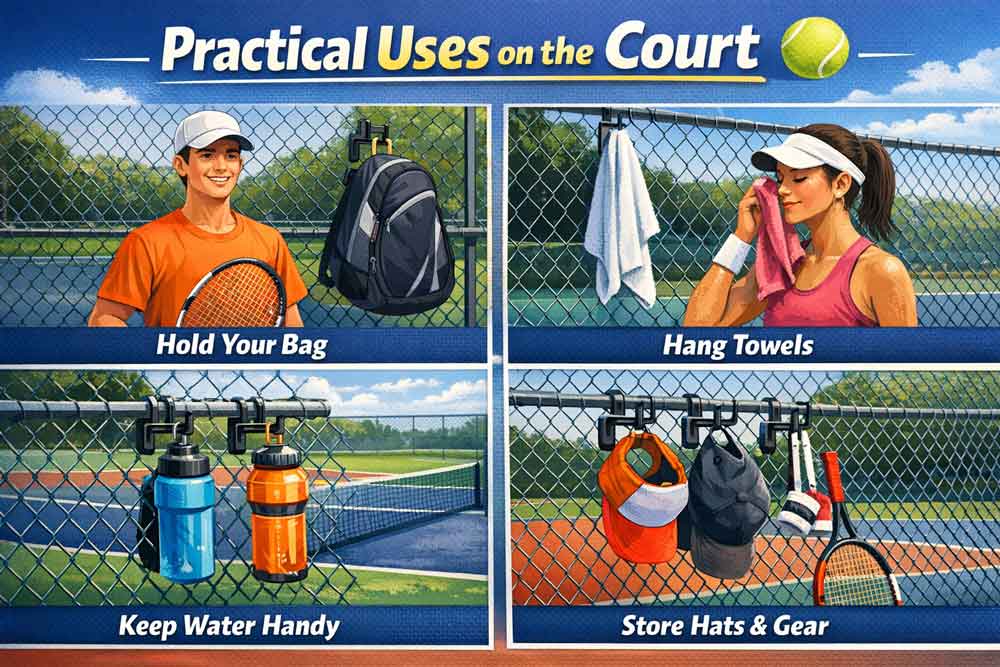
Practical Uses on the Court
Quick Access for Paddles, Water Bottles, and Towels
Hanging your bag elevates your gear to chest level, aligning with basic ergonomic principles. By eliminating the repetitive strain of bending down—a principle widely recognized in occupational ergonomics and sports biomechanics—players conserve lower back energy for the game. Your paddles, hydration, and sweat towels become instantly accessible during tight 60-second timeouts.
Keeping Gear Secure During Pack-Up and Transport
A suspended bag acts as a highly organized staging area. When the match is over, packing up is faster and more secure. You can easily visually inventory your gear—ensuring no expensive paddles are left behind—and zip up the compartments with two hands, directly transitioning from the fence to your shoulder.
Material, Durability, and Weather Resistance
Materials to Look For
When selecting a fence hook, material science is paramount.
Aluminum Alloys (e.g., 7075 Aerospace Grade): Offers the best strength-to-weight ratio.
Stainless Steel (304 or 316 Grade): Heavier but practically indestructible.
High-Density ABS/Polycarbonate: Acceptable for lighter tote bags, provided it’s reinforced.
Weather Exposure Impact and Maintenance Tips
Court environments are harsh. Hooks face relentless UV radiation, high humidity, and temperature fluctuations. Look for anodized aluminum or powder-coated steel. Based on ASTM B117 standards for salt spray and corrosion testing, anodized coatings significantly outperform raw metals in humid outdoor environments, preventing rust from transferring to your bag or the court fence.
Installation Tips: Choosing the Right Hook
Attaching Without Compromising Warranty
If your bag didn’t come with an integrated hook, retrofitting must be done carefully to avoid voiding the manufacturer’s warranty. Never puncture the fabric or cut structural seams. Instead, utilize existing attachment points such as factory-sewn D-rings, MOLLE webbing, or reinforced top carry handles.
Tools, Time, and Best Practices for a Secure Setup
Installing a modular hook takes seconds and requires zero tools. For a secure setup, use a carabiner with a wire gate or a dedicated S-biner. Ensure the attachment point on the bag is made of reinforced nylon webbing (box-stitched) rather than single-stitched elastic, which will tear under the sustained weight.
Alternatives and Accessories to Consider
Clip-ons, Carabiners, and Magnet-Assisted Designs
If a traditional J-hook isn’t your preference, consider alternatives:
Locking Carabiners: Excellent for security but slightly slower to detach.
Magnet-Assisted Clips: Utilizing strong N52 neodymium magnets, these allow for rapid, one-handed attachment, though they are generally reserved for lighter loads.
When to Upgrade or Customize
If you transition from a casual player to a tournament competitor carrying 4+ paddles, a change of clothes, and recovery gear, it is time to upgrade. A basic clip should be swapped for a heavy-duty tactical carabiner (rated for climbing or rigging) to ensure zero risk of failure.
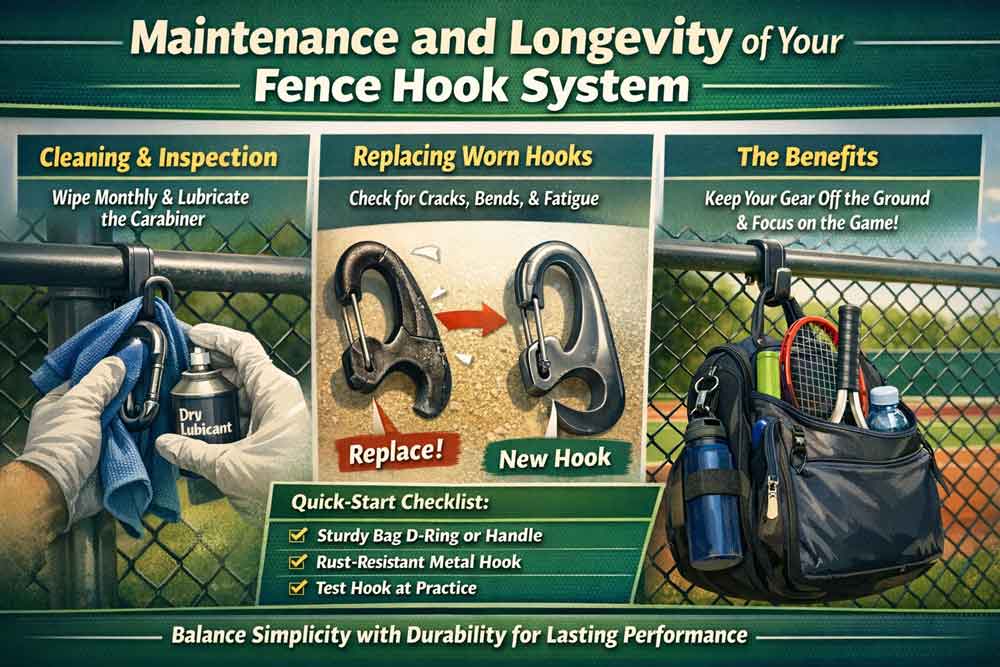
Maintenance and Longevity of Your Fence Hook System
Cleaning Routines and Inspection Schedules
Maintenance is simple but vital. Once a month, wipe down the hook to remove court grit. If you use a spring-loaded carabiner, apply a drop of dry silicone lubricant to the hinge to ensure the gate snaps shut cleanly.
Replacing Worn Hooks and Signs of Fatigue
Routinely inspect your hook for metal fatigue or plastic stress whitening. If a metal hook shows deep gouges or a plastic clip develops microscopic white hairline fractures near the curve, replace it immediately. It’s far cheaper to replace a $10 hook than a $200 paddle dropped on concrete.
Conclusion
The fence hook might seem like a minor accessory, but it is fundamentally a performance multiplier. By keeping your bag off the wet ground, providing ergonomic access to your gear, and streamlining your court transitions, it allows you to focus 100% of your mental energy on the game.
Quick-Start Checklist:
Check your current bag for a sturdy top D-ring or handle.
Select a corrosion-resistant aluminum or stainless steel hook.
Attach and test the weight distribution at your next practice. Final Tip: Always balance simplicity with durability—the best gear is the gear you don’t have to think about while playing.
FAQs
What is a fence hook and why is it called that? It’s a specialized clip or J-hook attached to a sports bag, specifically designed to hang the bag on the chain-link fences surrounding tennis and pickleball courts.
Will a fence hook fit all pickleball bags? While integrated hooks are specific to certain models, you can add an aftermarket fence hook (like a carabiner) to almost any bag that has a sturdy top handle or reinforced D-ring.
How do I install a fence hook without damaging my bag? Always loop the hook through existing structural elements like nylon handles or MOLLE webbing. Never cut fabric or pierce the bag’s shell, as this will cause fraying and void warranties.
How do I maintain a fence hook for longevity? Wipe it down to remove court dust, occasionally lubricate spring gates with dry silicone spray, and visually inspect for rust or stress fractures to prevent sudden breakage.








Comments are closed