


Weather-Resistant Chalk Bag: When and How to Choose
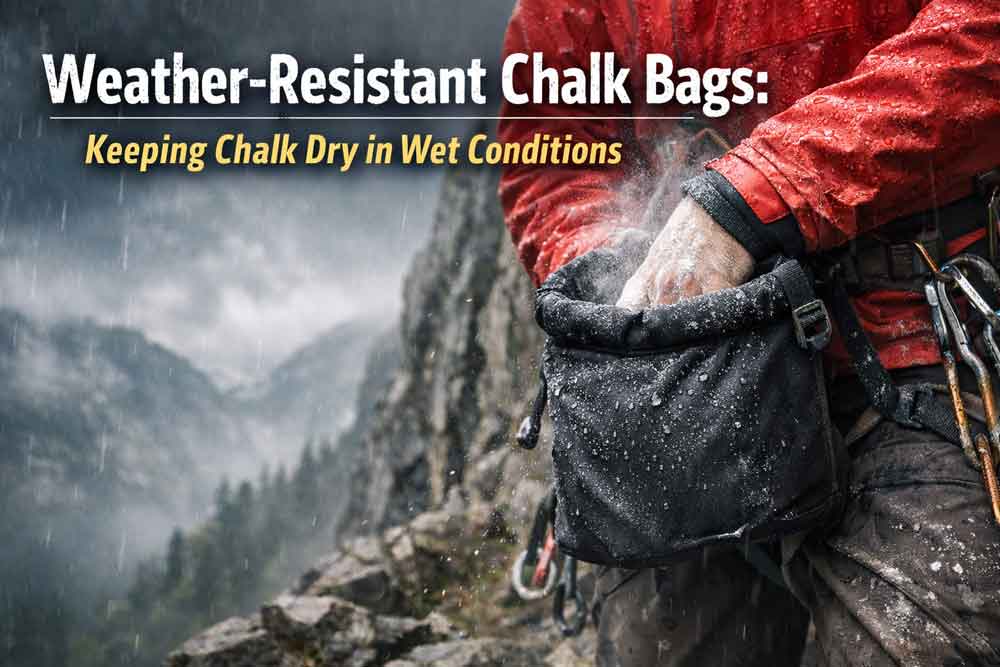
Introduction
Moisture control matters because wet or humid chalk tends to clump and spread unevenly, which can undermine grip just when you need precision. Lab findings on chalk’s friction effects are mixed, but the field takeaway is consistent: fresh, dry chalk helps you manage skin moisture; soggy, caked chalk doesn’t. Contemporary summaries note that chalk’s net effect depends on rock type, load, and application freshness, so keeping it dry is half the battle, especially outside in damp air. See evidence context in the 2001 PubMed-indexed study and a 2024 methods paper discussing condition-dependent outcomes: for a balanced view, start with the PubMed 2001 friction study abstract and this 2024 methodology note on friction testing.
When does a weather resistant chalk bag actually help? Think coastal mist, humid forests after rain, shoulder-season alpine with flurries, and any long, wet approach. In those settings, a bag that sheds light precipitation and seals quickly helps your chalk stay usable longer. Features and habits both matter—shell fabric with a repellency finish, a closure that really seals, and the discipline to keep it closed unless you’re chalking. Set expectations correctly: “water-resistant” means short, light exposure protection; “waterproof” implies seam-sealed construction and a highly reliable closure—uncommon in standard chalk bags, as explained in REI’s rainwear overview.
When it matters
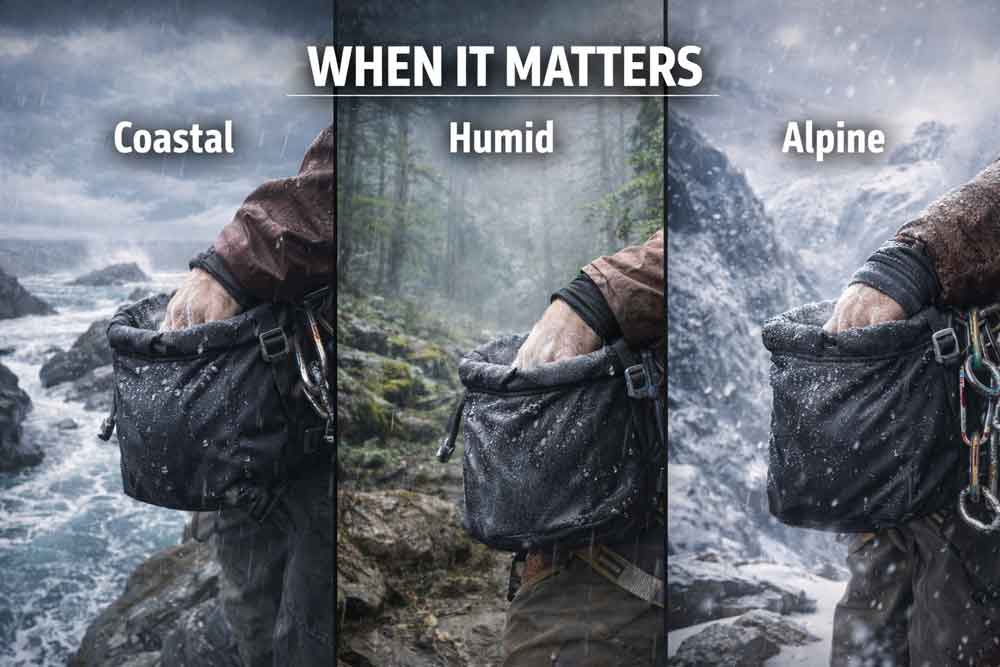
Coastal, humid, alpine
Coastal spray and persistent humidity raise ambient moisture around the bag, encouraging clumping. Alpine days often swing from sun to squalls; wind-driven mist can wet the shell while you’re racking or belaying.
Drizzle, mist, snow flurries
Light precipitation wets fabric surfaces and can creep through small gaps in a loose drawcord. A more sealing closure buys you time during passing showers and belay stints.
Long routes, wet approaches
The longer you’re out, the higher the odds of incidental wetting—from brushing through sodden brush to setting the bag down on damp ground. If your day includes miles of trail or many pitches, minor leaks add up.
How moisture affects chalk and grip
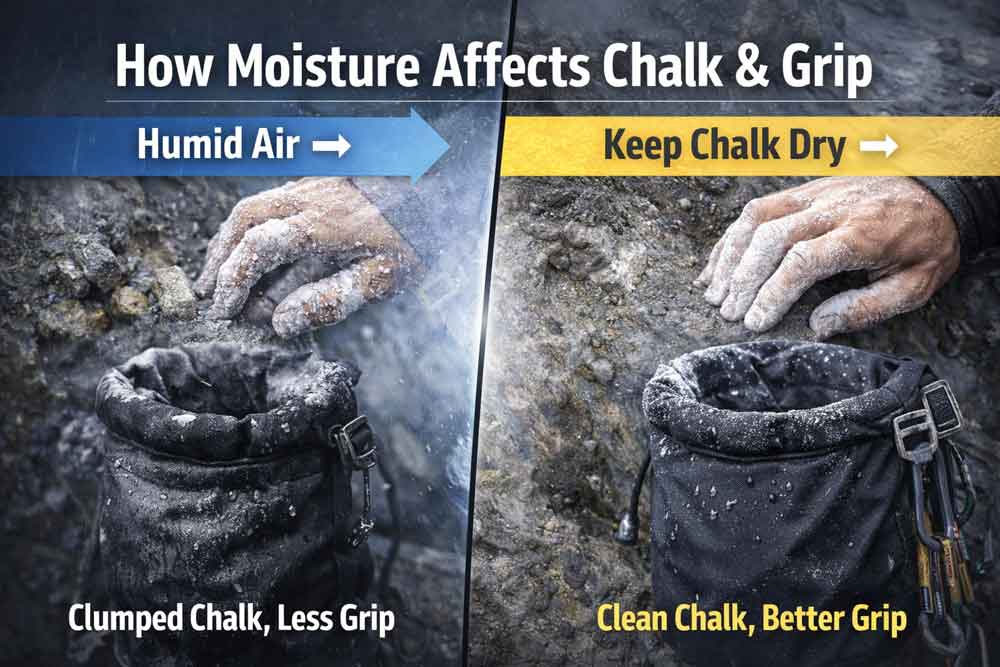
What humidity does to MgCO3
Magnesium carbonate’s role is to manage skin moisture; in humid air it tends to cake and spread less evenly, which can reduce the practical benefit at your fingertips. Research over the years shows variable friction outcomes across loads and rock types, but it’s clear that excessive, clumped residue isn’t helpful. For context, see the PubMed 2001 friction study and this 2024 testing methodology paper.
Water-resistant vs. waterproof expectations
A weather resistant chalk bag is designed to bead off light moisture (often via a durable water repellent finish on the exterior) and slow down ingress. A truly waterproof chalk bag would require waterproof materials plus sealed seams and a highly secure closure—more like a miniature dry bag. As a rule, plan for resistance to mist and drizzle, not immersion or hours of wind-driven rain, aligning with expert explanations of rainwear performance.
Minimize exposure, seal fast
Materials help, but your habits are decisive. Keep the bag closed unless you’re chalking. Brush off water beads before opening. Avoid setting it on wet ground. Store it in a dry pouch for the approach and between burns.
What to look for in a weather-resistant chalk bag
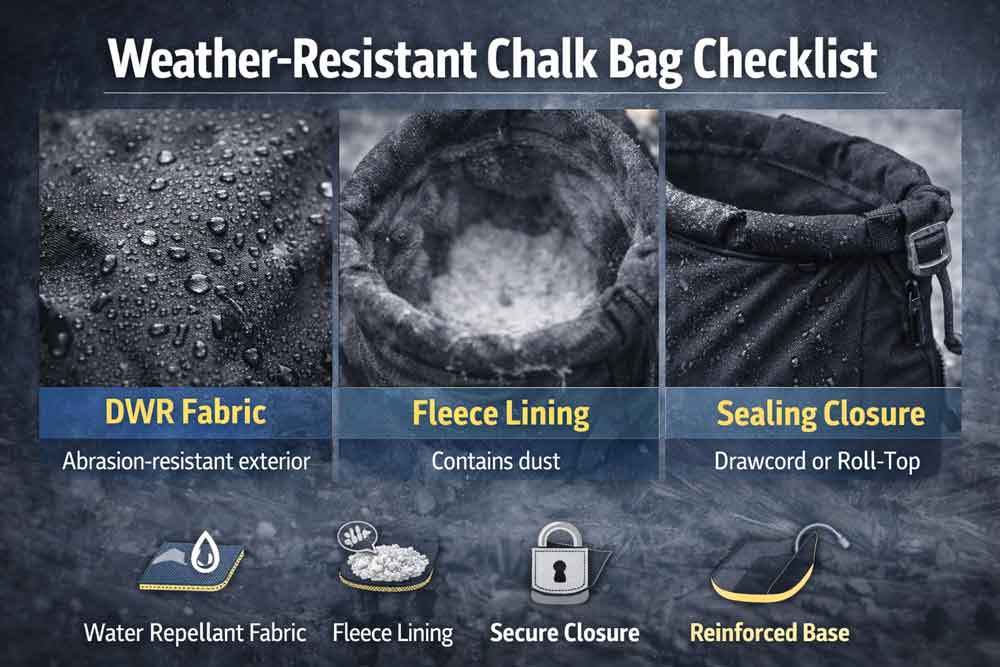
Fabrics and liners (DWR, PU, fleece)
- Exterior shells: Abrasion-resistant nylon or polyester with a water-repellent treatment (often called DWR) sheds light moisture and dries faster. Note that repellency finishes aid beading; they don’t make a bag waterproof. See REI’s rainwear guide on how DWR works for the general principle.
- Liners: Fleece liners help contain dust and spread chalk evenly; they’re comfortable and reduce mess but are not moisture barriers. This is a usability feature first, not a seal. A smooth, durable liner can dry quicker. A practical primer appears in REI’s chalk and chalk bag advice.
Closures that truly seal (drawcord, roll-top)
A closure that reduces gaps is your best defense in mist and drizzle.
| Closure | Moisture control | One‑hand speed | Notes |
|---|---|---|---|
| Drawcord | Fair if perfectly cinched; micro‑gaps possible | Fast | Light and simple; rely on cord quality and user tension |
| Roll‑top | Good to very good in drizzle/mist | Moderate | Overlapping folds create a more reliable barrier, as seen in small dry bags and panniers |
Real-world sealing principles for small roll‑top designs are well-established in wet-weather softgoods, which is why roll‑tops are favored in analogous gear like panniers and dry pouches (evidence echoed in retailer education and testing reviews of roll‑top systems).
Construction, carry, stability
Look for clean stitching, a stiffened rim that stays open when you need it, and a reinforced base to resist soaking from damp surfaces. Stable, flat-bottomed shapes tip over less at belays. A small pocket can stow a tiny indicating silica gel sachet to lower ambient moisture around your chalk (safety notes below). Secure belt or harness attachment prevents swinging that can expose the opening.
Use it right: keep chalk dry in the field
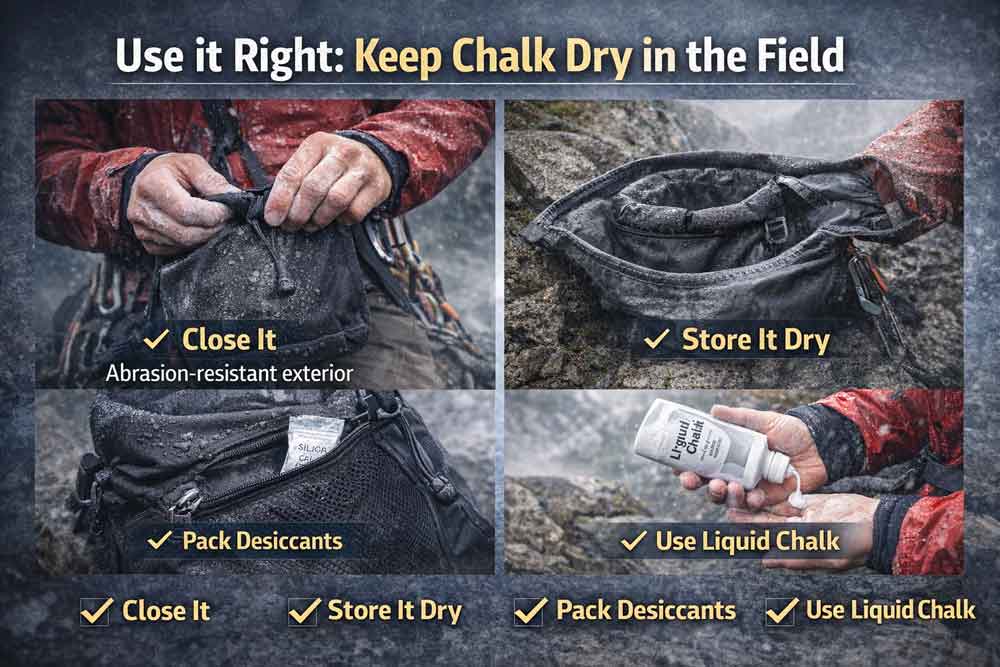
Close it unless chalking
Make this muscle memory. On damp days, wipe away visible moisture from the shell before opening. Use purposeful dips to limit airborne dust and exposure.
Store, desiccants, liquid base layer
- Storage: For wet approaches, stash your weather resistant chalk bag inside a small dry pouch or under a shell until you’re racked and ready.
- Desiccants: A small, sealed indicating silica gel sachet in an external pocket can help keep ambient humidity down around the chalk during transport. Keep packets sealed per instructions and away from kids/pets; “Do not eat” warnings are standard. The reliability of silica gel for moisture control is reflected in U.S. field methods such as EPA Method 0010.
- Liquid chalk base: In humidity, a liquid-chalk base layer can extend the dry feel and help loose chalk adhere. See testing notes in OutdoorGearLab’s liquid chalk review.
Drying, cleaning, reproofing
Air-dry thoroughly after damp outings. Shake out clumps and brush the liner gently. If water stops beading on the shell, wash per technical garment guidance and reactivate DWR with low/medium heat; if wetting-out persists, apply a spray-on or wash-in DWR and heat-set as directed. Practical care steps are outlined in GORE‑TEX’s DWR care page.
Buying checklist for US outdoor climbers
Fit/volume and rim access
- Choose a rim that stays open for quick, clean dips but seals securely. Size for your hand plus your preferred chalk format (ball or loose) and, if desired, a tiny desiccant sachet in a pocket.
Closure security over weight
- In damp climates or on long routes, prioritize closure reliability—roll‑top or well‑designed drawcords that truly cinch—over the absolute lightest option. For short, dry cragging, simple drawcords are fine; in mist and brush, sealing power matters more.
Pockets, quick-dry, harness fit
- A small zip pocket can store a desiccant sachet or tape. Favor abrasion-resistant shells with a repellency finish, liners that dry quickly, and stable, secure attachment to your belt or harness that won’t twist or spill.
Conclusion
Decide based on your climate, expected exposure time, and approach conditions. If you’re hitting coastal crags, humid forests, or shoulder-season alpine—with mist, flurries, or wet brush—a weather resistant chalk bag is worth it. Prioritize closure security, liner usability, and carry stability. In damp weather, pair tactics: use a liquid-chalk base, consider a chalk ball for tidier dips, add a sealed desiccant sachet in a pocket, and keep the bag closed unless you’re chalking. Maintain performance by drying fully and reproofing the shell as needed.
Author’s note: This guidance comes from seasons of coastal, humid, and alpine climbing, combined with conservative readings of materials care and friction research. For storm-level protection between pitches, stash the bag under a shell or inside a small dry pouch; even the best weather resistant chalk bag isn’t a fully waterproof chalk bag, and that expectation will save your chalk on big days.
Comments are closed