



Soft Cooler vs Hard Cooler: Which Is Better for You?

Both soft coolers and hard coolers play important roles in outdoor life. From camping and fishing to boating, road trips, and beach outings, keeping food and drinks cold is essential—but choosing the wrong type of cooler can quickly turn convenience into frustration.
Some people prioritize long ice retention. Others care more about portability, storage space, and weight. Many are unsure whether modern soft coolers can really compete with traditional hard coolers in terms of performance.
This guide compares soft coolers vs hard coolers based on real-world usage, not brand marketing. By the end, you’ll clearly understand which type fits your lifestyle, travel style, and usage frequency best.
What Is a Soft Cooler?
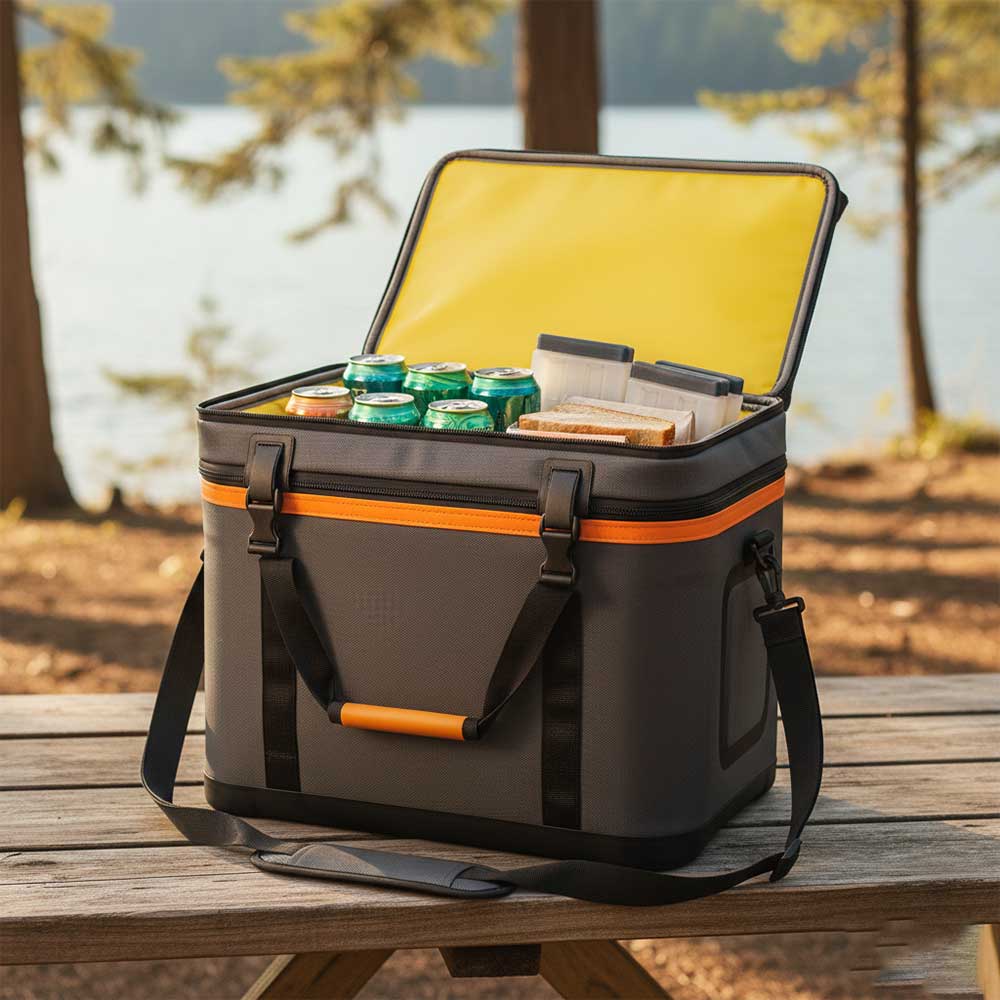
A soft cooler is a flexible, lightweight insulated bag designed to keep food and beverages cold for short to medium durations. Unlike rigid plastic coolers, soft coolers are made with layered fabrics and foam insulation, making them easier to carry, store, and transport. Many modern soft coolers are also designed for waterproof performance, especially in boating and fishing applications.
You can explore real product examples of this category in Vancharli’s custom soft cooler bag collection.
Basic Structure & Materials
Most soft coolers use a three-layer construction:
- Outer shell: Polyester, nylon, or TPU-coated fabric for abrasion resistance and water protection
- Insulation layer: EPE or PE foam that slows heat transfer
- Inner liner: TPU or PVC waterproof liner, often heat-sealed or welded to prevent leaks
High-end soft coolers now frequently use RF/HF–welded liners, which create fully leak-resistant interiors without needle holes. This type of construction is commonly used in professional RF welded waterproof bags, which you can learn more about through Vancharli’s RF welding bag manufacturing process.
Typical Capacity & Design
Soft coolers are commonly available in:
- 10L–15L: Day trips, beach use, office lunches
- 15L–25L: Camping, fishing, boating, road trips
- 25L–40L: Group outings, multi-day travel, events
Popular carrying styles include hand-carry, shoulder strap, and backpack-style soft coolers. Most models can be folded or compressed when empty, making them easy to store in cars, cabins, or apartments.
Key Advantages in Daily Use
Soft coolers are widely favored for their lightweight construction, easy portability, space-saving storage, flexible loading in car trunks and boats, and quick setup for short outdoor activities. For users who move frequently and value convenience, soft coolers offer clear everyday advantages.
What Is a Hard Cooler?
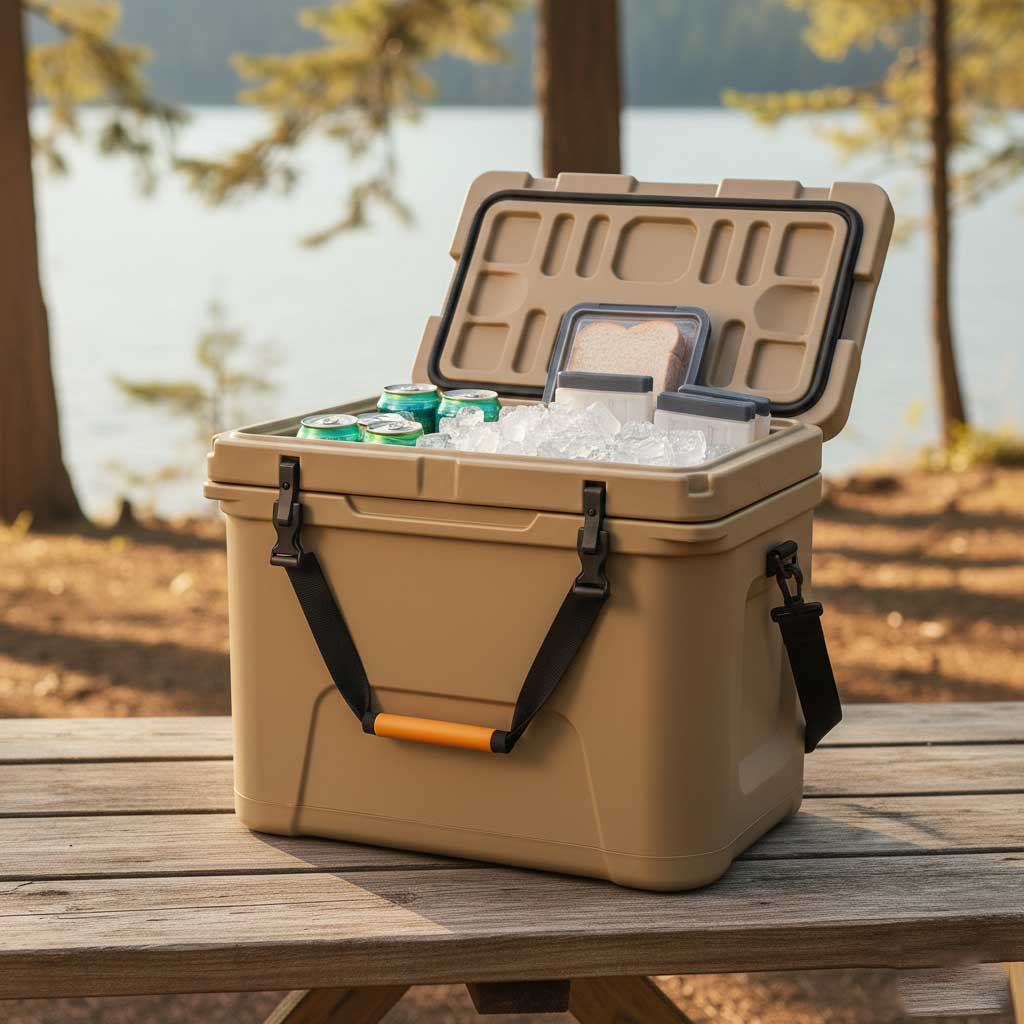
A hard cooler is a rigid insulated container, typically made of thick plastic with dense foam insulation. These coolers are built for maximum ice retention and durability in demanding outdoor environments such as long camping trips, offshore fishing, or overlanding base camps.
Rotomolded Construction
Most premium hard coolers use rotational molding (rotomolding), which forms a one-piece plastic shell with thick walls. Between the outer shell and inner wall is a dense PU foam insulation layer, responsible for long-term cold retention.
This construction creates very high impact resistance, thick insulation walls, and strong structural stability—but also adds significant weight and bulk.
Typical Capacity & Weight
Common hard cooler capacities range from:
- 20QT–30QT: Personal or day use
- 40QT–65QT: Camping, fishing, boating groups
- 75QT–100QT+: Extended trips, hunting, large crews
Even small hard coolers are heavy when empty. Once filled with ice and drinks, total weight increases dramatically, often requiring two people to lift.
Key Advantages in Performance
Hard coolers are chosen mainly for outstanding multi-day ice retention, high resistance to crushing or impact, the ability to double as a seat or step, and stable performance in high heat. For base camps or situations where mobility is limited, hard coolers remain the top choice for maximum cooling duration.
Soft Cooler vs Hard Cooler – Core Differences
| Dimension | Soft Cooler | Hard Cooler |
| Portability | Lightweight, easy to carry | Heavy, difficult to move |
| Weight | Usually 1–4 kg empty | Usually 6–15 kg or more empty |
| Ice Retention | 12–36 hours (up to ~48 hours for premium welded models) | 2–5 days |
| Leak Resistance | Fully leakproof with welded liners | Very good due to rigid sealing |
| Storage When Not in Use | Foldable and space-saving | Bulky and non-collapsible |
| Transport & Shipping | Compressible, low logistics cost | High freight & storage cost |
| Customization Options | Highly flexible colors, materials, branding | Limited by molds |
| Typical Use Duration | Short trips & frequent use | Long stationary use |
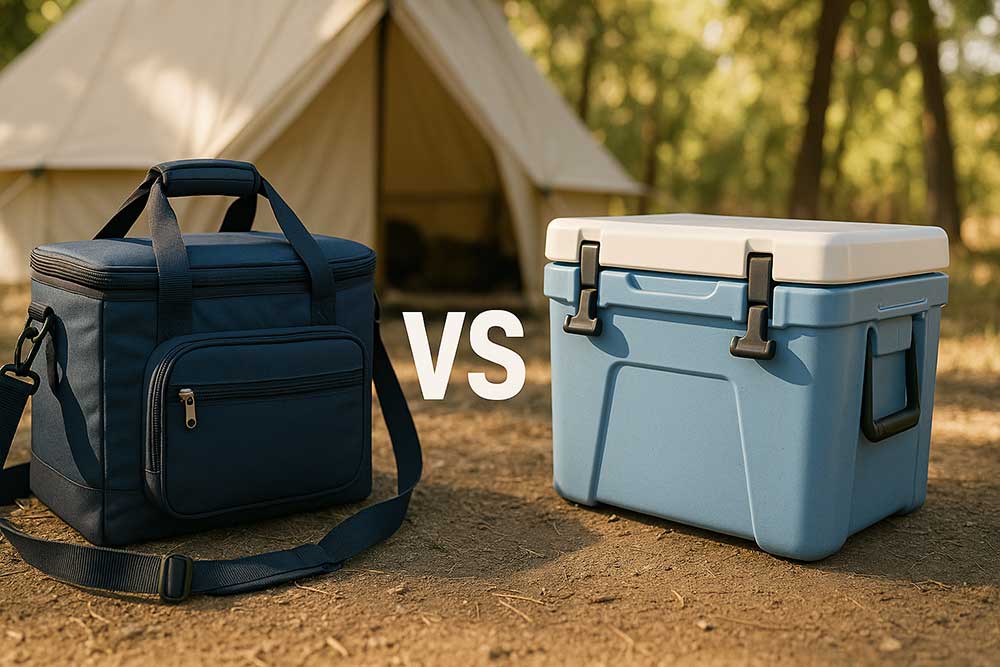
Overall, soft coolers focus on mobility and flexibility, while hard coolers focus on maximum ice retention and structural strength.
Which Is Better for Different Use Scenarios?
Use Scenario Summary Table
| Use Scenario | Soft Cooler | Hard Cooler | Recommended |
| Camping (mobile) | ✅ | ❌ | Soft |
| Camping (base camp) | ❌ | ✅ | Hard |
| Fishing & small boats | ✅ | ❌ | Soft |
| Large fishing boats | ❌ | ✅ | Hard |
| Road trips & family travel | ✅ | ❌ | Soft |
| Kayaking & SUP | ✅ | ❌ | Soft |
| Beach & picnics | ✅ | ❌ | Soft |
Camping & Overlanding
- Fixed base camp, multi-day stay → Hard cooler preferred
- Frequent movement, light travel → Soft cooler preferred
Fishing & Boating
- Small boats, limited deck space, frequent movement → Soft cooler with welded liner
- Large boats, long fish storage → Hard cooler
For boating safety and cold storage guidance, the U.S. National Oceanic and Atmospheric Administration provides detailed marine equipment recommendations through
NOAA’s official boating safety resources.
Road Trips & Family Travel
Soft coolers fit better in trunks, footwells, and tight spaces, while hard coolers occupy fixed cargo areas. For short family trips, soft coolers are usually more practical.
Kayaking, SUP & Rafting
Hard coolers are impractical due to weight and rigidity. Soft coolers are the only realistic option thanks to waterproof construction and backpack carry options.
Beach, Picnics & Outdoor Events
Long carry distance, short usage time, and appearance all favor soft coolers.
Insulation Performance – Does Hard Always Keep Ice Longer?
Realistic Ice Retention
- Hard coolers: Typically 2–5 days
- Soft coolers: Typically 12–36 hours, up to ~48 hours for premium models
Key Factors Affecting Ice Life
- Lid opening frequency
- Ambient temperature
- Ice-to-content ratio
- Liner sealing method (welded vs stitched)
- Pre-cooling of the cooler
For food safety during outdoor use, the U.S. Centers for Disease Control and Prevention also recommends proper cold-chain control, which can be reviewed at
CDC food safety guidelines.
Durability, Maintenance & Repair
Hard Cooler Durability
Hard coolers handle impact well and can serve as seats or steps. However, once cracked, they are usually not repairable. Hinges and latches are also costly to replace.
Soft Cooler Durability
Modern soft coolers use abrasion-resistant fabrics and welded liners. Zippers, straps, and certain panels can be repaired or replaced, giving lower long-term ownership cost.
Storage, Transport & Space Efficiency
Home Storage
Hard coolers occupy permanent space. Soft coolers fold down and store easily in closets, car trunks, or drawers.
Vehicle & Boat Transport
Soft coolers adapt to tight spaces and irregular layouts far better than rigid boxes.
Shipping & Logistics
Soft coolers can be packed at 2–3 times the container density of hard coolers, reducing freight and warehousing costs significantly—one of the main reasons many brands prefer soft cooler programs.
Environmental Impact & Sustainability
Material Recyclability
Hard coolers rely on thick molded plastics that are difficult to recycle. Soft coolers allow the use of rPET fabrics and recyclable TPU liners.
Carbon Footprint
Because soft coolers are compressible and lighter, their transport-related carbon footprint is significantly lower.
Cost Comparison – Purchase, Ownership & Long-Term Use
Retail Pricing
Entry-level soft coolers generally cost less than hard coolers. At premium levels, prices converge, while high-end hard coolers remain the most expensive.
Maintenance & Replacement
Hard coolers usually require full replacement after damage. Soft coolers allow partial repairs, reducing lifetime cost.
Total Cost of Ownership
Soft coolers are better suited for high-frequency, mobile use, while hard coolers are better for long-term, stationary use.
So, Which One Is Better for You? (Decision Guide)
- If multi-day ice retention is your top priority → Hard cooler
- If portability and flexibility matter most → Soft cooler
- If you move frequently or travel light → Soft cooler
- If you stay in one base camp for days → Hard cooler
In short:
Hard coolers = maximum cold, fixed use.
Soft coolers = mobility, flexibility, everyday convenience.
Brand & Retail Insight – Why Many Brands Are Expanding Soft Cooler Lines
- Lower product development risk
- Rapid SKU updates
- Higher container packing density
- Lower storage and shipping costs
- Easier seasonal and private-label programs
OEM/ODM Note for Custom Soft Coolers
Key factors to consider when sourcing custom soft coolers:
- Welded leakproof liners
- Foam insulation thickness
- Waterproof outer fabrics
- Ergonomic carry systems
- Branding methods and packaging
- MOQ and sampling lead time
If you are planning to develop your own cooler brand or custom private-label line, Vancharli provides full OEM/ODM bag manufacturing services for soft coolers, welded waterproof bags, and insulated outdoor product lines.
Conclusion
Hard coolers dominate in extreme ice retention and structural rigidity.
Soft coolers dominate in lightweight portability, flexible storage, and everyday convenience.
For mobile lifestyles, short trips, boating, and frequent outdoor use, soft coolers deliver the best balance of performance and practicality. For extended stationary use in high heat, hard coolers remain unmatched.
For brands and retailers, soft coolers also provide strong commercial advantages in development speed, inventory efficiency, and transport cost.
FAQ
Are soft coolers really leakproof?
Yes. Welded TPU liners provide fully leak-resistant performance.
Do soft coolers float?
Some designs offer natural buoyancy; floatation depends on structure and loading.
How long can a soft cooler keep ice?
Typically 12–36 hours; premium models can approach 48 hours.
Are soft coolers suitable for boating?
Yes. Their lightweight, waterproof, and non-slip designs make them ideal for small boats.
Can soft coolers be fully customized?
Yes. Capacity, fabrics, colors, construction, branding, and packaging can all be customized through OEM/ODM programs.
See Also
10 Best Soft Coolers of 2025 | Tested Reviews, Prices & Guide
Comments are closed