


Is Polyester Waterproof The Facts You Need in 2026
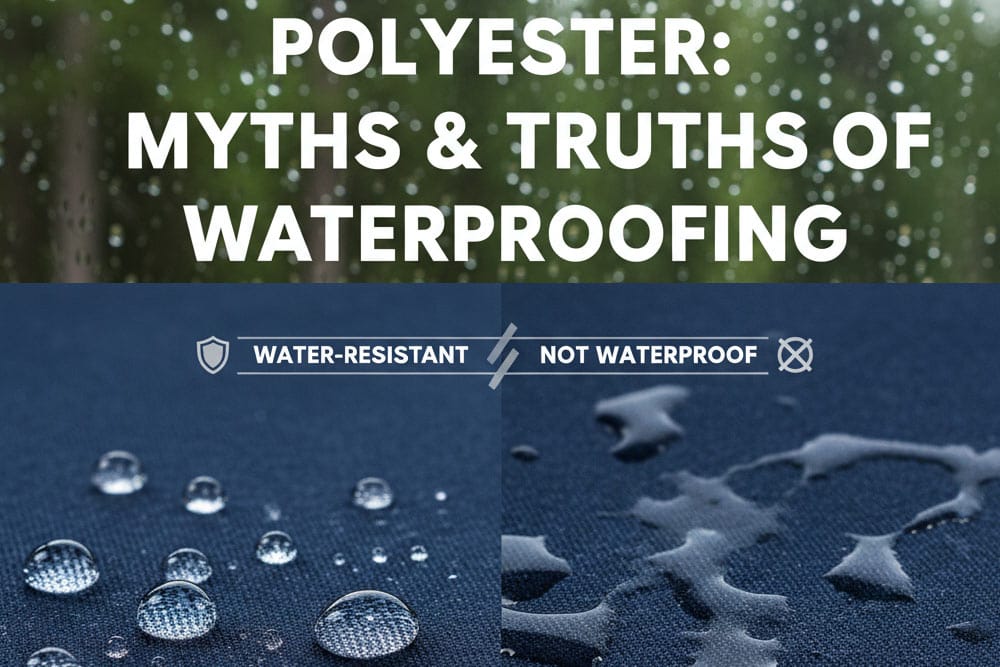
You may wonder, is polyester waterproof? While polyester does not provide complete waterproof protection, it does repel water more effectively than most natural fabrics. The fibers in polyester resist water, causing droplets to form and slide off, which demonstrates water resistance but not true waterproofing.
Keep in mind: Water-resistant means polyester slows down water penetration, but waterproof means water cannot get through at all.
If you want to ensure that polyester is waterproof, you should look for special treatments or coatings designed to make the fabric fully waterproof.
Key Takeaways
- Polyester is water-resistant. This means it pushes water away but is not fully waterproof. You need special coatings like PU or PVC to make polyester totally waterproof. Polyester without these coatings takes in very little water. This makes it good for light rain and small spills. Water-resistant fabrics are lighter and let air through better. Waterproof fabrics keep you dry in heavy rain. Always check the label to see if your polyester is water-resistant or waterproof. Take care of waterproof polyester by cleaning it often. Put on new treatments when needed. Pick strong polyester for better water resistance and longer use. Try recycled polyester to help the environment.
Is Polyester Waterproof?
Natural Water Resistance
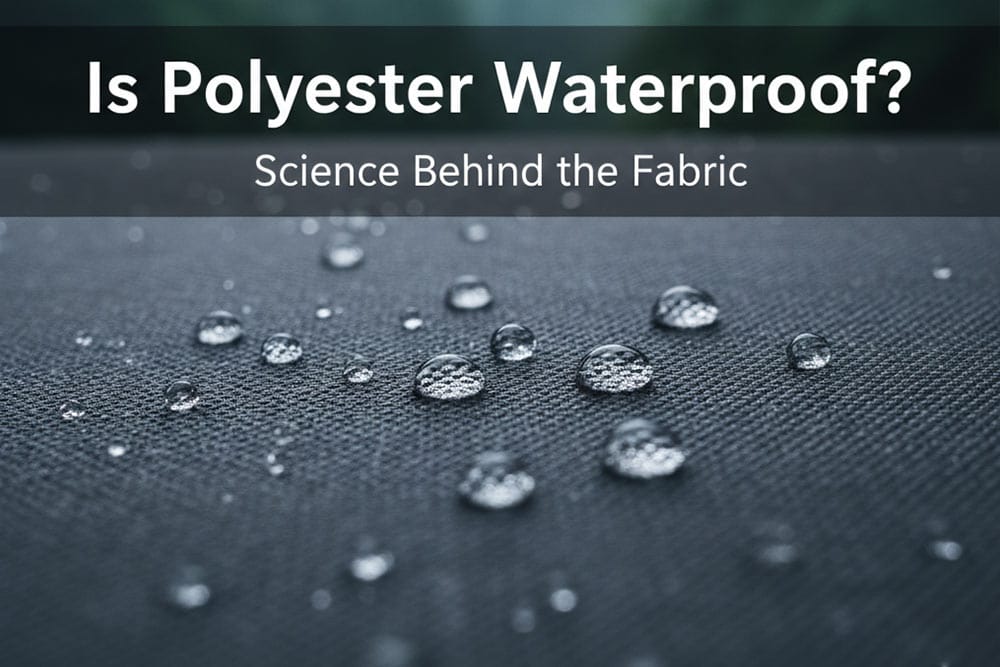
When you ask if polyester is waterproof, you need to see how it acts with water. Polyester fabric does not soak up water fast. The fibers in polyester push away moisture, so water sits on top. This makes polyester naturally water-resistant. You can notice this when you spill water on a polyester jacket or bag. The water turns into drops and rolls off instead of soaking in right away.
Scientists have checked how much water untreated polyester can take in. They found that polyester only absorbs about 1.26% of its weight in water. This means polyester protects you from light rain or small spills. Here is a table that shows the difference between untreated and treated polyester:
| Measurement Type | Untreated Polyester | Treated Polyester |
|---|---|---|
| Water Absorption (%) | 1.26% | Lower than untreated |
You should remember that water resistance is not the same as waterproof. Water resistance means the fabric slows down water, but it does not stop it all the way. If you use polyester in heavy rain or keep it wet for a long time, water will get through.
Hydrophobic Properties
Polyester fabric has hydrophobic properties. This means the fibers do not like water. When you wear polyester, you see that it stays dry longer than many other fabrics. The hydrophobic nature of polyester helps you stay comfortable in wet places.
Lab tests compare polyester to other synthetic fibers. The results show that polyester has strong hydrophobic properties. This helps stop moisture from hurting the fabric. Here is a table that compares polyester to polyamide (nylon):
| Fiber Type | Hydrophobic Properties | Impact on Wear Patterns |
|---|---|---|
| Polyester | High | Less moisture-related degradation |
| Polyamide | Low | Dimensional changes under humidity |
Because of these hydrophobic properties, polyester fabric lasts longer and keeps its shape better when it gets wet. You can trust polyester to handle everyday moisture, but you should not think it is fully waterproof without extra help.
Untreated Polyester Limits
You may wonder if polyester is waterproof in every situation. Untreated polyester has limits. It can resist water, but it is not truly waterproof. Here are some important points to know:
- Untreated polyester is water-resistant but not waterproof. It can keep water out for a short time, but water will get through if you use it in heavy rain or put pressure on it.
- The hydrophobic nature of polyester slows down water absorption, but it does not make the fabric totally waterproof.
- The level of water resistance depends on how tightly the fibers are woven and if the maker adds any special treatments.
Untreated polyester can handle light moisture, but it will not protect you in a big rainstorm. If you need waterproof polyester, you should look for products with special coatings. These coatings, like PU or PVC, turn regular polyester into waterproof polyester. Treated polyester can block water even in tough weather.
So, is polyester waterproof? The answer is no for untreated fabric, but yes if you pick waterproof polyester with the right coatings. Always check the label to see if your polyester fabric is water-resistant or really waterproof.
Water-Resistant vs. Waterproof Polyester
Key Differences Explained
You might notice “water-resistant” and “waterproof” on polyester items. These words are not the same. Water-resistant fabrics have coatings that help block light rain and splashes. One coating is called Durable Water Repellent (DWR). This makes polyester resist water for a short time. If you wear a water-resistant jacket in light rain, it keeps you dry for a bit.
Waterproof fabrics stop water from getting through. Makers use special ways to make polyester waterproof. They add layers or membranes that block water, even when pressed. You can wear waterproof clothes in heavy rain and stay dry.
Here is a table showing the main differences:
| Characteristic | Water-Resistant Polyester | Waterproof Polyester |
|---|---|---|
| Water Penetration Resistance | Stops some water but not all | Blocks water even under pressure |
| Construction | Uses DWR coatings, lighter and lets air through | Has membranes, heavier and less air flow |
| Performance Under Pressure | May let water in if pressed | Keeps water out even with pressure |
| Durability | Can wear out with lots of water | Lasts longer and needs less care |
| Cost | Usually costs less | Costs more to make |
Waterproof fabrics protect better. They use special ways to keep water out. Water-resistant fabrics are comfy and let air in, but do not stop water in tough weather.
Tip: Always check if your gear says “waterproof” or “water-resistant.” This can help you pick the right one.
Why It Matters for Buyers
Think about what you do before picking water-resistant or waterproof fabrics. If you walk outside and only see light rain, water-resistant fabrics are good. They are lighter and let air move, so you feel comfy.
If you hike, camp, or go out in bad weather, you need waterproof fabrics. These keep you dry in heavy rain. Waterproof fabrics are best for dry bags, marine gear, and tents.
Here are some points to help you choose:
- Water-resistant fabrics work well for jackets, backpacks, and everyday gear.
- Waterproof fabrics are best for sports, boating, and places with lots of water.
- Waterproof fabrics last longer and need less care, but cost more.
- Water-resistant fabrics give you comfort and some protection.
Pick what fits your needs. If you want comfort and light protection, choose water-resistant fabrics. If you need strong protection from water, pick waterproof fabrics.
Making Polyester Waterproof
Common Treatments and Coatings
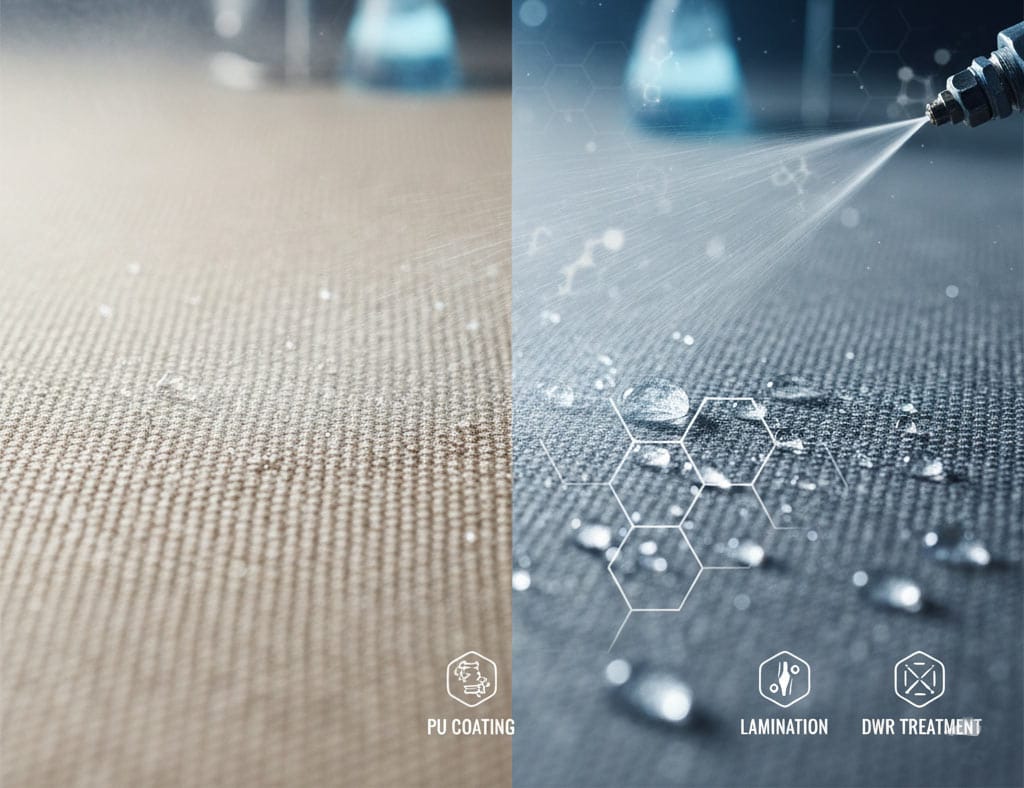
You can make polyester waterproof with special coatings. The most common way is to add a water-repellent layer. This helps the fabric keep water out and keeps you dry. In 2026, two main treatments are used.
Durable Water Repellent (DWR)
DWR is a chemical that makes polyester resist water. When DWR is on the fabric, water turns into drops and rolls off. This works well for light rain and splashes. DWR does not make polyester totally waterproof, but it helps a lot. You need to add DWR again after washing or heavy use. Many jackets and backpacks use DWR to help keep water out.
- DWR makes the surface repel water.
- Water forms drops and slides away.
- You must reapply DWR to keep it working.
Polyurethane (PU) and PVC Coatings
Polyurethane coatings make polyester waterproof by creating a strong barrier. PU stops water from getting through the fabric. This gives you the best waterproofing. You see PU-coated polyester in tents, bags, and outdoor gear. PVC coatings also block water, but PU is lighter and bends more easily.
Here is a table that compares coatings:
| Coating Type | Waterproofness | Durability | Longevity | Fire Retardant Compatibility | UV Resistance |
|---|---|---|---|---|---|
| Polyurethane (PU) | High | High | Moderate | Yes | Moderate |
| Polyether Urethane (PE) | Moderate | Moderate | Moderate | Yes | Moderate |
| Silicone | Moderate | Low | Low | No | High |
PU coatings give strong waterproofing and resist water well. They work with fire retardant treatments and block some UV rays. Silicone coatings help repel water and block UV, but they do not last as long.
Role of Weave and Thread Count
How polyester is woven and its thread count change how well it blocks water. A tight weave keeps water out better than a loose one. Thread count tells how many threads are in one inch of fabric. More threads mean better water resistance.
| Thread Count | Description | Impact on Waterproof Performance |
|---|---|---|
| 190T | Dense weave, lightweight | Better water resistance and durability |
If you pick polyester with a high thread count, you get stronger water resistance and longer-lasting waterproof fabric.
Advances in 2026
In 2026, new technology makes waterproofing even better. You see new materials like lab-grown spider silk and mycelium membranes. These give strong water resistance and are better for the planet. PFC-free treatments use silicone and plant waxes for lasting water repellency. Polyester felt makes the fabric stronger and helps with tough designs.
- Nanotechnology makes waterproof polyester last longer and bend more.
- Eco-friendly chemicals help the planet and make fabrics work better.
- Research for better waterproofing grows by 12% in 2026.
These advances give you waterproof fabrics that last longer and protect you more. Now, making polyester waterproof uses safer chemicals and stronger coatings. You can trust waterproof polyester to keep you dry and safe in all weather.
Types of Waterproof Polyester Fabrics
Coated vs. Laminated Polyester
There are two main types of waterproof polyester fabric. One type is coated polyester. It has a layer of polyurethane or other chemicals on top. This layer stops water from getting through. The coating sits right on the fabric’s surface. This makes the cloth waterproof. You see coated polyester in rain gear and bean bag chairs. It gives good protection from water. The other type is laminated polyester. This kind uses a thin waterproof membrane. The membrane is often made from ePTFE. It sticks to the fabric and makes a strong barrier. Laminated polyester lets air move through and lasts longer. These fabrics stay strong even if you use them a lot. Coated fabrics can wear out faster with water and rubbing.
| Type | Waterproofness | Breathability | Durability | Typical Use |
|---|---|---|---|---|
| Coated Polyester | High | Low | Moderate | Rain gear, bean bags |
| Laminated Polyester | High | High | High | Outdoor gear, tents |
Note: Laminated waterproof polyester fabric is more comfy and lasts longer. Coated polyester is good for short use and costs less.
Multi-Layer Constructions
Some waterproof polyester fabrics have many layers. Makers stack these layers for extra protection. The outside layer is polyester for strength. The middle layer is a waterproof membrane. The inside layer is soft and helps move sweat away. This design keeps water out but lets air in. You find these fabrics in jackets, tents, and backpacks. They protect you from heavy rain and wind.
- Outer layer: polyester for strength
- Middle layer: waterproof membrane to block water
- Inner layer: soft fabric for comfort
Multi-layer waterproof cloth works best when you need strong protection. You stay dry and comfy when you are outside.
Outdoor and Specialty Uses
Waterproof polyester fabric is used in many ways. People use it for tents, awnings, and outdoor furniture. You also see it in jackets, rain pants, and backpacks. Car makers use it for seat covers and tarps. Boats use waterproof polyester for sails and seats. Builders use it for covers and barriers.
Here are some common uses for waterproof polyester fabric in 2026:
- Clothes
- Outdoor fun
- Cars
- Building and roads
There are also special waterproof polyester fabrics. PVC-coated polyester is used for bean bag chairs and rain gear. Polyurethane laminate is good for backpacks and tents. TPU-coated polyester is tough and used for jackets and rain pants. Moisture-wicking polyester helps keep sweat away in sports, but it is not fully waterproof. Recycled polyester with a water-resistant finish is better for the planet.
Tip: Pick waterproof polyester fabric that fits your needs. Outdoor gear needs strong waterproof cloth. Eco-friendly products use recycled polyester with water resistance.
Waterproof polyester fabrics give you lots of choices. You can pick the right one for your activity, the weather, and your comfort.
Durability and Longevity
How Waterproofing Lasts
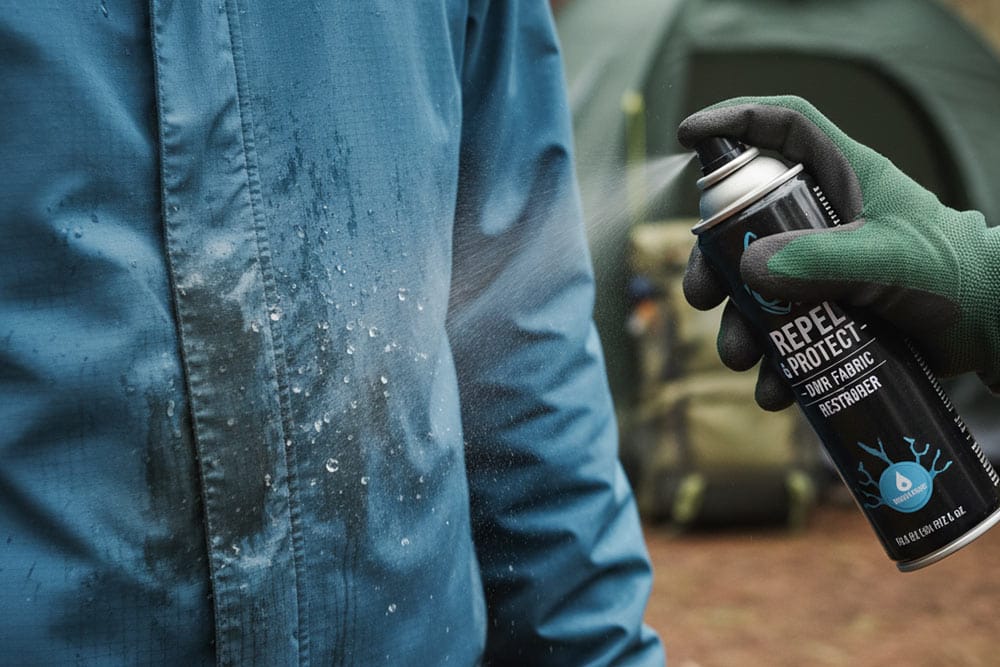
You want your waterproof polyester gear to last a long time. Polyurethane coatings help keep water out. These coatings make the fabric resist water and keep you dry. But the waterproof layer can wear out over time. Water can cause hydrolysis, which slowly damages the coating. You might not see this right away. Most waterproof polyester stays water-resistant for many years. If you store your gear in dry places and use it with care, it can last ten years or more. If you leave your gear wet or in damp places, the coating will break down faster. Check your gear often and add more treatment if you see water soaking in.
Tip: Keep waterproof polyester items dry and clean so the waterproof layer lasts longer.
Seam Sealing Importance
Seam sealing is important for keeping your waterproof polyester gear dry. Sewing fabric makes tiny holes. Water can get through these holes, even if the fabric resists water. Seam sealing blocks water from getting in. Seam tape is used on many waterproof items. It covers the stitches and acts as a barrier. This keeps water out and helps your gear stay strong and flexible.
- Seam sealing stops leaks at stitching holes.
- It improves water resistance and helps your gear last longer.
- Seam tape makes the fabric stronger and keeps water out.
- You need seam sealing for outdoor gear and tough weather.
If you want full waterproof protection, always look for seam sealing. Jackets, tents, and bags with sealed seams work better in wet weather.
Factors Affecting Performance
Many things change how well waterproof polyester works over time. You should know what affects water resistance and durability. Here is a table that shows the main factors:
| Factor | Description |
|---|---|
| Environmental Exposure | Sun, heavy rain, salt, and big temperature changes can make the fabric wear out faster. |
| Product Quality | Thicker fabrics and strong coatings last longer than thin or cheap ones. |
| Maintenance | Cleaning removes dirt and mold that can hurt the fabric and coating. |
| Storage | Store items dry, clean, and out of the sun to stop mildew and sun damage. |
| Usage Frequency | Using your gear a lot, like tents for camping, makes it wear out faster than if you use it sometimes. |
You can test waterproof polyester for strength and water resistance. Tensile strength tests show how much the fabric can stretch and hold. Tear resistance tests check if the fabric can stop rips. Water vapor tests show how well moisture can escape. These tests help you pick gear that lasts and keeps you dry.
Note: Clean your waterproof polyester gear often and keep it out of the sun. This helps keep water resistance strong and makes your gear last longer.
Waterproof polyester gives you good water resistance and protection. If you take care of your gear and pick high-quality products, you get the best waterproof performance and durability.
Polyester vs. Other Waterproof Fabrics
Polyester vs. Nylon
You may wonder how polyester compares to nylon for waterproof gear. Both fabrics work well for outdoor use, but they have important differences. Polyester dries very quickly and absorbs less water than nylon. You can see this in the table below:
| Fabric | Water Absorption | Drying Time |
|---|---|---|
| Polyester | ≈0.4% of weight | Very fast |
| Nylon | 1.5–9% (24h) | Fast |
Polyester lets your skin breathe better because it moves moisture away from your body. Nylon feels stronger and lasts longer, but it does not let air move as easily. You can check the main features in this table:
| Feature | Polyester | Nylon |
|---|---|---|
| Breathability | More breathable, wicks moisture | Less breathable, denser |
| Waterproofness | Can be treated for waterproofing | Naturally more water-resistant |
| Durability | Durable but less strong | Stronger and more resilient |
If you need gear for hot and humid weather, you may like polyester more. It keeps you cool and dry. If you want something for rough use, nylon may last longer and block water better. You should choose based on your activity and comfort needs.
Polyester vs. Cotton
Cotton feels soft and comfortable, but it does not work well for waterproof clothing. Cotton soaks up water quickly and stays wet for a long time. Polyester resists water and dries much faster. When you wear polyester in the rain, you stay drier and warmer. Cotton can make you feel cold and heavy when it gets wet.
You may see cotton in casual clothes, but you should pick polyester for outdoor jackets, tents, or bags. Polyester keeps its shape and does not shrink when wet. Cotton can stretch and lose its fit. For waterproof gear, polyester gives you better protection and lasts longer.
Tip: Choose polyester instead of cotton if you need to stay dry and comfortable outside.
Polyester vs. Blends
You may find many waterproof fabrics made from blends. These blends mix polyester with other fibers, like cotton or rayon. Blends can feel softer or look nicer, but they do not block water as well as 100% polyester. When you add natural fibers, the fabric can soak up more water. This means blends lose some of the water resistance that pure polyester gives you.
If you want the best waterproof performance, you should look for items made from 100% polyester. Blends may work for light rain or short trips, but they will not keep you as dry in heavy weather. Polyester stands out because it stays almost dry and keeps water away from your skin.
Note: For the strongest water resistance, pick 100% polyester instead of blends.
Care and Environmental Impact
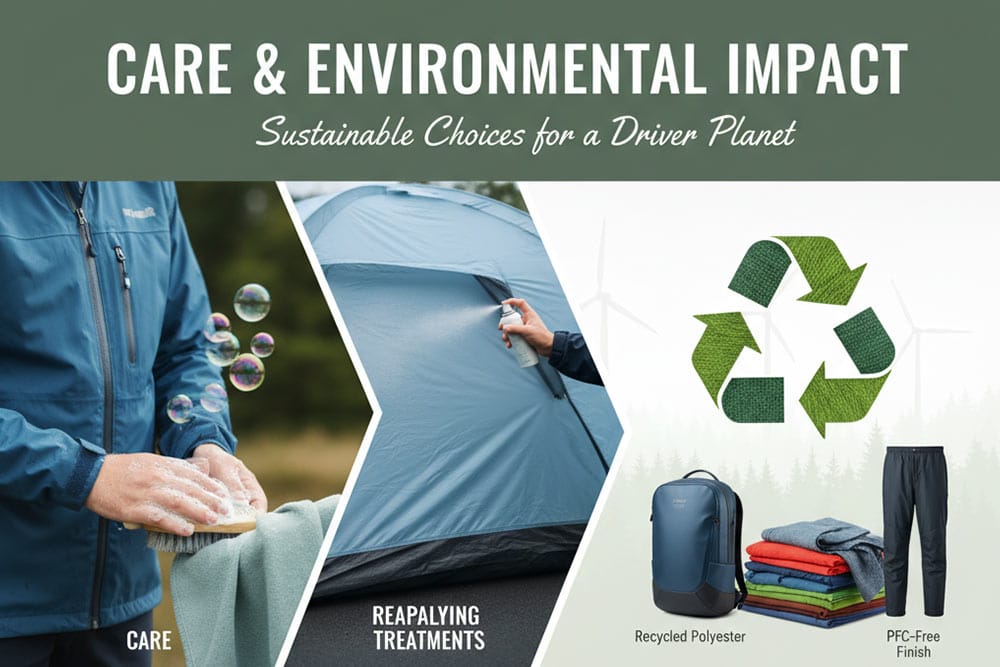
Caring for Waterproof Polyester
You want your waterproof polyester gear to last as long as possible. Good care helps keep water resistance strong and protects your investment. Here are the best steps you can follow:
- Brush off dirt with a soft-bristled brush or wipe with a damp cloth. Rinse outdoor items with clean water after each use.
- Hand-wash or machine-wash with mild detergent in cool or lukewarm water. Do not use bleach or harsh chemicals.
- Treat stains right away with mild soap and water. For tough stains, use a little diluted dishwashing liquid.
- Protect your gear from the sun. Use UV-protective sprays or store items in the shade to stop fading.
- Reapply protective sprays often to keep water resistance at its best.
- Make sure your items are dry before you store them. Let air move around your gear to stop mold and mildew. Clean any mildew with vinegar and water if needed.
- Store your waterproof polyester in a cool, dry place. Use breathable bags to keep moisture out.
Tip: Regular care keeps your waterproof polyester working well and looking new.
Reapplying Treatments
Waterproof treatments do not last forever. You need to reapply them to keep your gear’s water resistance strong. The type of treatment you use changes how often you need to reapply. Check the table below for guidance:
| Coating Type | Reapply Frequency |
|---|---|
| Silicone Spray | Every 2–3 months |
| Fluoropolymer Spray | Every 4–6 months |
| Beeswax Bar | Every 6–12 months |
| Spray DWR | Every 5–10 washes |
| Wax Treatment | Annually or biannually |
| Laminate Seams | Every 3 years |
You should check your waterproof polyester often. If you see water soaking in instead of beading up, it is time to reapply a treatment. This keeps your waterproof gear ready for any weather.
Environmental Considerations
You should know how waterproof polyester affects the planet. Making waterproof polyester uses chemicals called PFAS. These chemicals can harm the environment and health. Factories release them during production, and they can leak out when you use or throw away waterproof items. PFAS stay in the environment for a long time and can build up in people and animals. This raises concerns for both wildlife and humans.
- About 15% of fabric gets wasted during clothing production.
- Textiles make up as much as 22% of mixed waste around the world.
- In the USA, landfilled textile waste grew by 40% from 1999 to 2009.
You can choose better options in 2026. Some brands now use recycled polyester and PFC-free waterproof finishes. Nau, Lundhags, Quince, and Cotopaxi all offer waterproof polyester gear made with safer chemicals and recycled materials. These choices help lower pollution and protect the planet.
Note: When you pick eco-friendly waterproof polyester, you help reduce waste and support a cleaner world.
You have learned that polyester can resist water, but it is not fully waterproof by itself. Special treatments can make polyester more waterproof, but these might change how the fabric feels or how well air moves through it. Look at the table below for a quick summary:
| Key Aspect | Details |
|---|---|
| Water Resistance | Polyester keeps out some water but is not totally waterproof. |
| Treatment Effects | Coatings make polyester better at blocking water, but can make it less comfy. |
| Durability of Treatments | Waterproof coatings can wear away after a while. |
When you pick waterproof polyester in 2026, remember these tips:
- Know the difference between water resistance and waterproof.
- Choose waterproof polyester that fits your activity and the weather.
- Try to find recycled polyester and coatings that are better for the planet.
- Check if the fabric is strong, hard to tear, and lets air through.
Think about how well the fabric works, how long it lasts, and how it affects the earth. This will help you get the best waterproof polyester for what you need.
FAQ
What makes polyester water-resistant?
Polyester fibers push water away because they do not soak up much. The fabric is woven tightly, so water has a hard time getting in. You will see water form drops and roll off instead of soaking through.
Can you wash waterproof polyester products in a washing machine?
Most waterproof polyester items can go in the washing machine. Use cold water and a gentle soap. Do not use bleach or fabric softener. Always read the care label before you wash anything.
How do you restore water resistance to waterproof jackets?
You can make jackets water-resistant again with a spray or wash-in treatment. Clean and dry the jacket first. Follow the directions on the bottle for the best results.
Is waterproof fabric breathable?
Some waterproof fabrics let air move through them. Laminated polyester with special layers lets sweat out but keeps rain out. This helps you stay dry and comfy when you are outside.
Are waterproof polyester items safe for kids?
Yes, waterproof polyester is safe for kids to use. Many companies check their products for bad chemicals. Always look for safety labels and pick items made for children.
How long does waterproofing last on polyester?
Waterproofing can last from a few months to a few years. It depends on how much you use and wash the item. Add more treatment when water stops forming drops on the surface.
Can you recycle waterproof polyester?
Some waterproof polyester can be recycled, especially if it uses recycled stuff or safe coatings. Ask your local recycling center if they take these items.
What are the best uses for waterproof polyester?
Waterproof polyester is good for jackets, tents, backpacks, and outdoor furniture. It works well for sports, camping, and travel. Pick the right kind for your activity and the weather.
Comments are closed