



How to Get on the Water with Kayaking for Beginners
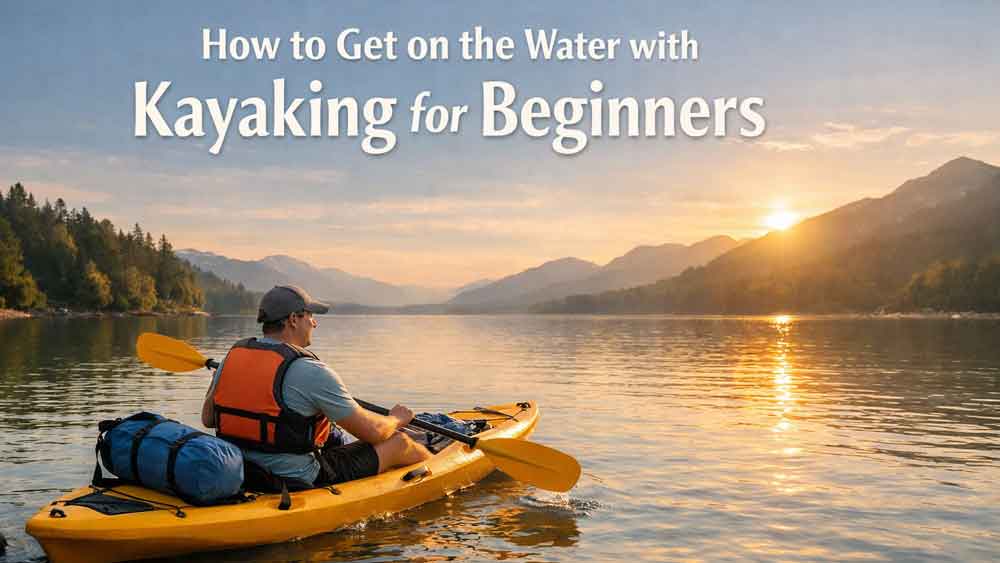
Kayaking feels easy to try, even if you have never paddled before. You just need to take the first step—pick a stable, comfy kayak and a life jacket that fits well. Many beginners wonder about safety, difficulty, or the price. You can start with short trips and basic gear, which keeps things simple and affordable. Wide kayaks help you stay steady, and you always check the weather before heading out. With this Beginner’s Guide, you’ll discover how fun and rewarding it feels to get on the water.
Key Takeaways
- Choose a stable kayak type. Sit-on-top kayaks are great for beginners due to their stability and ease of entry.
- Always wear a properly fitting life jacket. It is essential for safety and can save your life if you capsize.
- Start with short trips on calm waters. This helps build confidence and allows you to practice basic skills without overwhelming conditions.
- Pack essential gear like a whistle, dry bags, and quick-dry clothing. Being prepared keeps you safe and comfortable on the water.
- Check the weather before heading out. Avoid paddling in storms or high winds to ensure a safe experience.
- Practice basic paddling techniques. Focus on using your torso for power and learn how to steer and stop effectively.
- Consider renting gear or joining guided tours. This allows you to learn from experienced paddlers and try kayaking without a big investment.
- Stay aware of your limits. Know when to turn back and avoid challenging routes until you gain more experience.
Beginner’s Guide to Choosing Kayak Gear
Kayak Types for Beginners
Choosing the right kayak makes your first trip much easier. You want a boat that feels stable and fits your needs. This beginner’s guide helps you understand the main types.
Sit-on-Top vs. Sit-Inside
Sit-on-top kayaks work best for most beginners. You sit on the deck, not inside the hull. These boats feel stable and easy to get in and out of. If you tip over, you can climb back on without much trouble. Sit-on-top kayaks suit warm weather and calm lakes.
Sit-inside kayaks cover your legs and keep you dry. You sit inside the hull, which protects you from wind and cold water. These boats work well in cooler climates or windy days. If you want more comfort in rough conditions, try a sit-inside kayak.
Tip: Wide hulls help you stay steady. Look for a kayak with a broad base if you worry about tipping.
Inflatable vs. Hard-Shell
Inflatable kayaks fold up and fit in your trunk. You can carry them easily and store them in small spaces. These boats work well for beginners who want convenience. Hard-shell kayaks feel sturdier and offer better performance. They last longer and handle bumps better. If you plan to paddle often, a hard-shell kayak might be the right gear for you.
- Recreational kayaks offer the most stability for calm water.
- Touring kayaks move faster and turn better, but they feel less stable.
- Inflatable kayaks balance portability with decent performance.
Picking the Right Paddle
You need the right paddle to enjoy kayaking. This beginner’s guide shows you what to look for. The paddle should match your height and the width of your kayak. Use sizing charts to find the best length. Choose a paddle made from lightweight materials like fiberglass or carbon. These options reduce fatigue and help you paddle longer.
| Factor | Description |
|---|---|
| Paddle Length | Match your height and kayak width. Use charts for guidance. |
| Paddle Category | Pick based on your paddling style: recreational, touring, or performance. |
| Blade Styles | Different shapes affect control and efficiency. Choose for your activity. |
| Materials | Lightweight materials make paddling easier. |
| Testing | Try different paddles to find what feels best for you. |
Essential Gear List
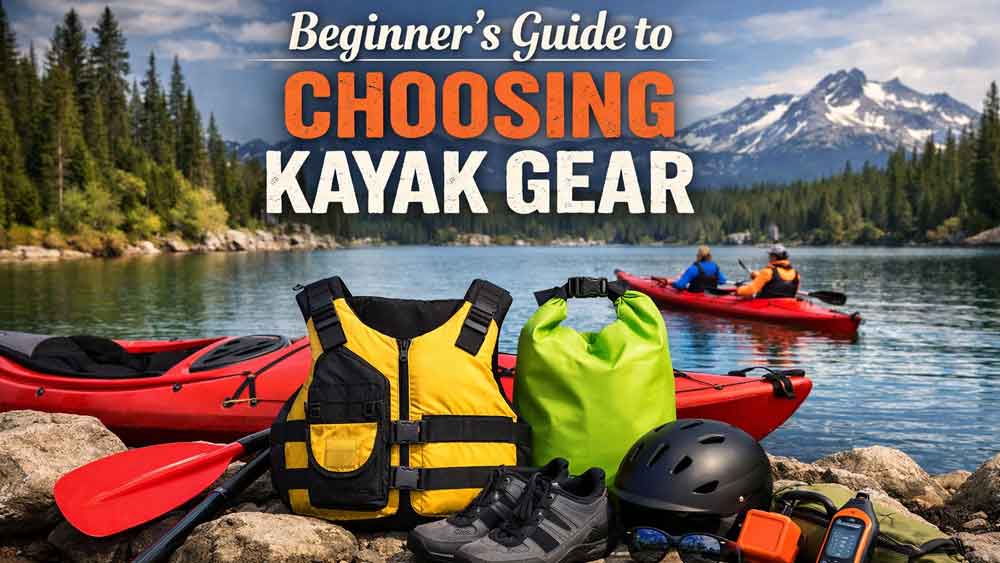
This beginner’s guide covers the right gear for safety and comfort. You need a few key items before you head out.
Life Jacket (PFD)
Always wear a personal flotation device. It keeps you safe and helps you float if you fall in. Make sure your PFD fits snugly and covers your chest and back.
Clothing and Footwear
Wear quick-drying clothes. They keep you comfortable and dry fast if you get wet. Choose sturdy shoes that protect your feet and grip slippery surfaces.
Dry Bags and Storage
Pack your belongings in dry bags. These bags keep your phone, snacks, and keys safe from water. Secure them to your kayak so you don’t lose anything.
Note: Polarized sunglasses protect your eyes from glare. Bring a bilge pump to remove water from your kayak.
This beginner’s guide helps you pick the right gear for kayaking. You feel confident and safe when you have the right equipment.
Optional Accessories
Once you have your basic gear, you might want to add a few extras to make your kayaking trips smoother and more enjoyable. These optional accessories can boost your comfort, safety, and convenience on the water. You do not need to buy everything at once. Start with a few items that match your needs and the places you plan to paddle.
Here are some popular accessories that many beginners find helpful:
- Paddle Leash: This simple strap keeps your paddle attached to your kayak. If you drop your paddle, it will not float away. You can focus on paddling, not chasing lost gear.
- Waterproof Phone Case: Protect your phone from splashes and rain. Many cases let you take photos without removing your phone. You can keep your phone handy for maps, music, or emergencies.
- Dry Box: A dry box gives you solid protection for valuables like keys, wallets, or cameras. It stacks easily in your kayak and keeps your items safe from bumps and water.
- Bilge Pump: Sometimes water gets inside your kayak. A bilge pump helps you remove it quickly. You stay dry and comfortable, even if you hit a wave or get caught in the rain.
- Sunglasses with Retainer Strap: Sunglasses protect your eyes from glare and UV rays. A retainer strap keeps them from falling into the water if you move suddenly.
- Kayak Safety Whistle: A whistle lets you signal for help if you need it. It is small but can make a big difference in an emergency.
- Multi-Tool: A multi-tool comes in handy for quick repairs or small tasks. You can fix loose screws, cut rope, or open snacks without digging through your bag.
- Spray Skirt: If you use a sit-inside kayak, a spray skirt keeps water out of the cockpit. You stay warmer and drier, especially in rough or cold conditions.
- Navigation Tools: Bring a map, compass, or GPS if you plan to explore new areas. These tools help you find your way and avoid getting lost.
- Flashlight or Headlamp: If you paddle near sunset or in low light, a flashlight or headlamp helps you see and be seen. Safety comes first, even on short trips.
Tip: Lightweight, quick-drying clothing and water shoes or sandals can make your trip more comfortable. These items dry fast and protect your feet from sharp rocks or slippery spots.
You do not need every accessory for every trip. Think about where you will kayak and what makes you feel safe and prepared. As you gain experience, you will discover which extras fit your style. Start simple, add gear as you go, and enjoy the adventure!
Preparing for Your First Kayaking Trip
Planning Your Route
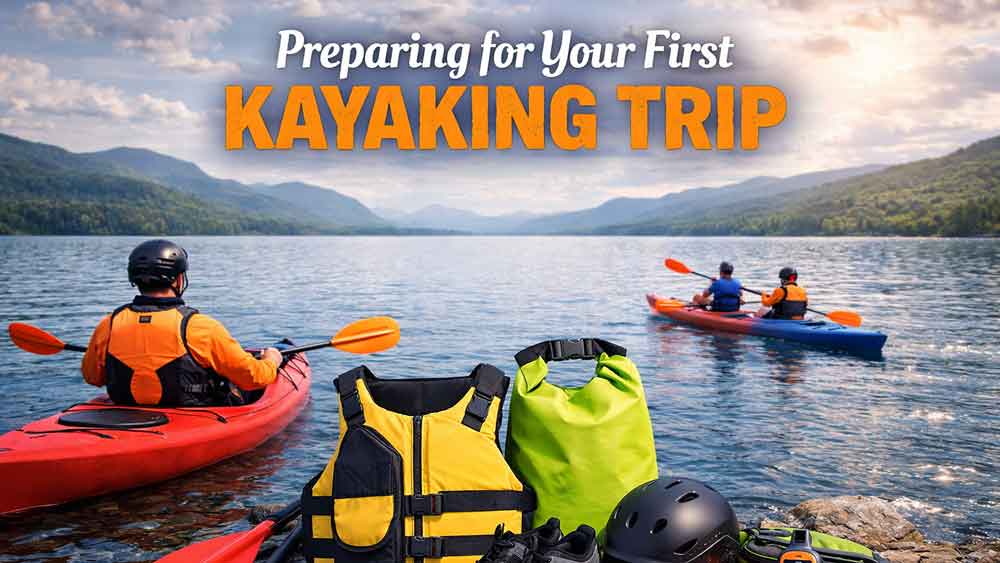
You want your first kayaking trip to feel safe and fun. Start by picking a calm lake or slow-moving river. Short routes work best for beginners. Plan to paddle with a friend or join a group. Always check the weather before you go. Look for sunny skies and light winds. Avoid fog, storms, or high winds because these can make kayaking dangerous.
Here’s a simple checklist for planning your route:
- Choose calm waters for your first outing.
- Go with a buddy or group for safety.
- Check the weather forecast and water conditions.
- Know your limits and start with short trips.
- Bring essential safety gear like a whistle and bilge pump.
- Learn about local hazards, such as rocks or fast currents.
Tip: Wear your personal flotation device every time you kayak. It keeps you safe if you tip over.
You should also pay attention to water conditions. Floods, low water, or changing rapids can make paddling tricky. If you see fast-moving water or hidden obstacles, pick another route.
What to Wear
Comfort and safety start with the right clothing. Dress for the weather and water temperature, not just the air. Quick-drying clothes help you stay comfortable. Water shoes protect your feet and grip slippery surfaces. If you paddle in cold water, wear a wet suit or dry suit.
| Clothing Type | Material | Weather Condition |
|---|---|---|
| Base Layer | Synthetics | Cold weather |
| Upper Body Layer | Synthetics | All weather, breathable |
| Footwear | Water shoes | In and out of water |
| Cold Water Gear | Wet suit/Dry suit | Cold water conditions |
Don’t forget sun protection. Wear a hat, sunglasses, and sunscreen. Bring extra layers if the weather changes. Pack snacks and water to stay hydrated and energized.
Transporting Your Kayak
You need to move your kayak safely from home to the water. Most people use a car rack and straps. Make sure your rack fits your vehicle and holds your kayak securely.
Car Racks and Straps
Pick a rack designed for kayaks. Use strong straps to tie down your kayak. Check that the kayak does not shift when you drive. Double-check the straps before you leave.
Loading and Unloading
Lift your kayak with a partner if it feels heavy. Place it gently on the rack. When you arrive, unload your kayak slowly to avoid damage. Carry it to the water using the handles.
Note: Practice loading and unloading at home before your trip. This helps you avoid surprises at the launch site.
You’re ready to start kayaking when you plan your route, dress for the conditions, and transport your kayak safely. Enjoy your adventure and stay safe!
Packing Essentials
Packing the right gear makes your first kayak trip smooth and stress-free. You want to feel ready for anything, from a sunny afternoon to a sudden breeze. Here’s how you can pack smart for a day of kayaking.
Start with the basics. Always bring your paddle and a spare if you have one. You never know when you might drop or lose your main paddle. Your life jacket (PFD) is a must. Wear it every time you get on the water. Quick-dry clothing keeps you comfortable. Choose items like quick-dry underwear, shorts or long pants, and a t-shirt. These dry fast if you get splashed or take a swim.
Layer up for changing weather. A wind-proof fleece jacket and a lightweight windbreaker help you stay warm if the wind picks up. Water sandals with a strap protect your feet and give you good grip on slippery rocks or muddy banks.
Tip: Pack your clothes and snacks in waterproof bags. This keeps everything dry, even if your kayak tips or water splashes inside.
Safety gear should always go in your bag. Bring a whistle for signaling, a small first aid kit, and a way to call for help. You can use a signaling mirror or a waterproof phone case. If you paddle in cold water, add a wetsuit or drysuit to your list.
Don’t forget sun protection. A hat, sunglasses, and sunscreen shield you from sunburn and glare. Polarized sunglasses help you see better on the water. Bring extra water bottles to stay hydrated and pack snacks like granola bars or fruit for energy.
Here’s a simple packing list for your kayak trip:
- Paddle (plus a spare)
- Life jacket (PFD)
- Quick-dry clothing (underwear, shorts/pants, t-shirt)
- Wind-proof fleece jacket
- Lightweight windbreaker
- Water sandals with a strap
- Waterproof bags or dry bags
- Whistle and signaling device
- First aid kit
- Sun protection (hat, sunglasses, sunscreen)
- Water bottles
- Snacks
- Navigation tools (map, compass, or GPS)
- Emergency kit (with repair tools and communication device)
Note: Check the weather and water conditions before you pack. If the water and air temperature together are less than 120°F, wear a wetsuit or drysuit for safety.
Packing well means you can relax and enjoy your kayaking adventure. You stay safe, comfortable, and ready for anything the day brings.
Kayaking Safety Basics
Reading Water and Weather
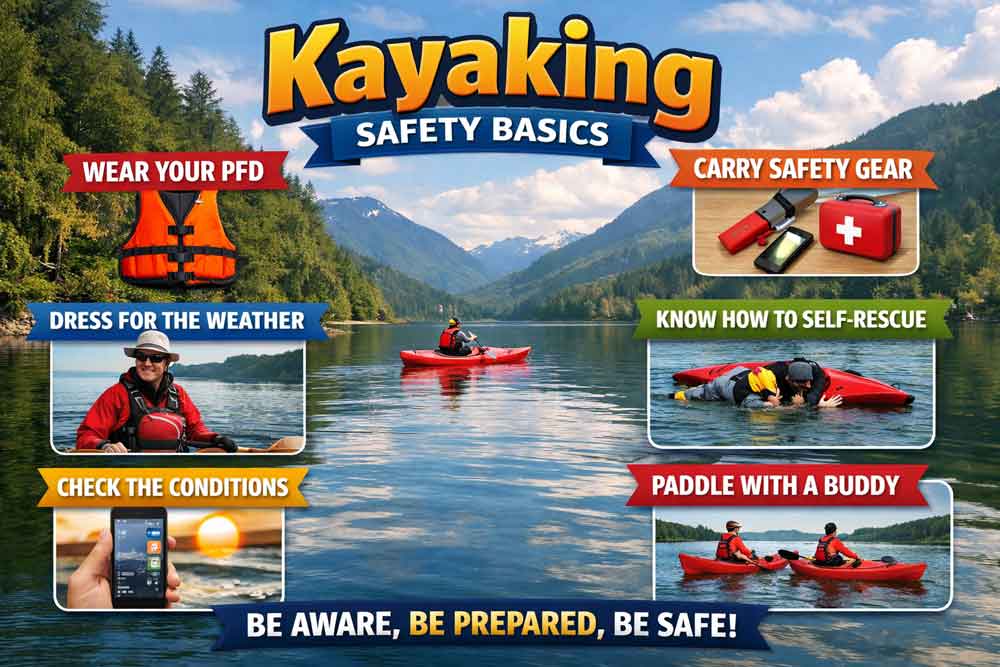
Before you start kayaking, take a good look at the water and sky. Calm, flat water is best for your first trips. If you see strong currents, big waves, or lots of boat traffic, pick another spot. Check the weather forecast before you leave home. Clear skies and light winds make for a safe and fun day. If you notice dark clouds, thunder, or sudden changes in wind, it’s time to head back to shore. Always trust your instincts. If something feels off, wait for better conditions.
Tip: Bring a weather app or radio so you can check for updates while you’re out on the water.
Wearing Your PFD
Your life jacket is your most important piece of safety gear. You should wear it every time you get in your kayak, even if you’re a strong swimmer. Many people skip this step, but the numbers show why you shouldn’t. About half of all kayaking fatalities happen when people don’t wear a personal flotation device. A life jacket keeps you afloat if you tip over or get tired. Make sure it fits snugly and doesn’t ride up when you move. Adjust the straps before you launch.
- Choose a life jacket made for paddling. It should let you move your arms easily.
- Check that all buckles and zippers work.
- Wear your life jacket at all times, not just when you feel nervous.
Safety Rules for Beginners
You can stay safe on the water by following a few simple rules. National boating groups recommend these steps for every beginner:
- Always wear your life jacket. It can save your life if you fall in.
- Use your paddle the right way. Hold it with both hands and keep your grip relaxed.
- Power your strokes with your torso, not just your arms. This helps you paddle longer without getting tired.
- Stay close to shore, especially if you’re new to kayaking. Dress for the water temperature, not just the air.
- Know your limits. Don’t push yourself too hard or try to kayak in rough water before you’re ready.
Remember: Sun and cold can sneak up on you. Wear sunscreen, drink water often, and bring extra layers if it’s chilly.
If you follow these safety basics, you’ll feel more confident every time you go kayaking. You’ll enjoy your adventure and come home with great memories.
Emergency Steps
You hope every trip on the water goes smoothly, but sometimes things change fast. You might tip over, lose your paddle, or see a storm roll in. If you know what to do, you can stay calm and safe. Here’s how you handle emergencies when you’re out kayaking.
First, always wear your life jacket. It keeps you afloat if you fall in. You don’t want to waste time putting it on after an accident. Make sure it fits snugly before you launch your kayak.
If your kayak capsizes, don’t panic. Take a deep breath and remember these steps:
- Stay calm and hold onto your paddle.
- Flip your kayak upright if you can reach it.
- If you’re in deep water, perform a wet exit. Slide out from under the kayak and come up for air.
- Hold onto your kayak for extra floatation. Most kayaks float even when full of water.
- Try a self-rescue. Climb back on top if you have a sit-on-top kayak. For sit-inside kayaks, practice re-entry at the shore before your trip.
Tip: Practice wet exits and self-rescue in shallow water with a friend before your first big adventure.
If you can’t get back in, signal for help. Use your whistle to call out. Three short blasts mean you need assistance. Wave your paddle or a bright piece of gear to get attention.
Always bring safety gear. Pack a whistle, a waterproof phone or radio, a bilge pump, and a spare paddle. These items help you handle surprises. A towline lets a buddy help you if you get tired or stuck.
Dress for the water, not just the weather. Cold water can be dangerous, even on a warm day. Wear quick-dry clothes or a wetsuit if the water feels chilly. This keeps you warm if you end up in the water.
Never paddle alone. A friend can help in an emergency. If you must go solo, tell someone your plan and when you’ll return.
Stay alert for sudden weather changes. If you see dark clouds or feel the wind pick up, head for shore right away. Don’t wait for the storm to hit.
Here’s a quick checklist for emergency steps:
- Wear your life jacket at all times.
- Know how to exit and re-enter your kayak.
- Bring safety gear: whistle, phone, bilge pump, spare paddle, towline.
- Dress for immersion, especially in cold water.
- Paddle with a buddy.
- Watch the weather and act fast if it changes.
You can enjoy kayaking with peace of mind when you know what to do in an emergency. Preparation and practice make all the difference.
How to Kayak: Getting On and Paddling Skills
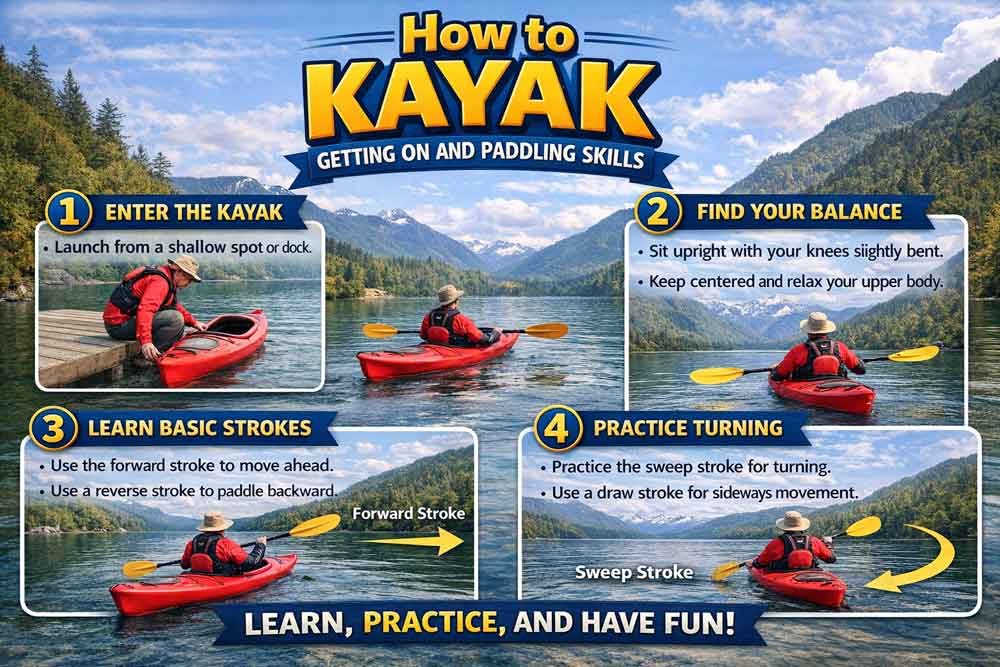
Entering the Kayak
Getting into your kayak can feel tricky at first, but you’ll get the hang of it with practice. You have three main methods to choose from. Each works best in different situations. Let’s break down how to kayak with these entry skills.
Straddling Method
The straddling method is the most common way to enter a kayak from shore. You use this when the kayak sits in shallow water, parallel to the shoreline.
- Carry your kayak to the water and place it parallel to the shore.
- Stand over the cockpit, straddling the kayak.
- Set your paddle across the kayak as an outrigger for balance.
- Place your hands on the paddle and cockpit.
- Lower your butt onto the seat.
- Bring your closest leg into the kayak, then your second leg.
This method gives you stability and control. You won’t tip over easily. If you have a longer cockpit, entry feels even easier. Gently sloped landings help, too.
With Support
Sometimes you need extra support, especially if you’re launching from a dock or have trouble balancing. You can use your paddle as an outrigger.
- Place your paddle behind the cockpit, with one blade on the dock or shore.
- Hold the paddle firmly and lower yourself into the seat.
- Slide your legs inside the kayak.
- Settle your feet on the foot pegs.
This technique works well when you need more stability. Low-sided cockpits make entry smoother.
Sidesaddle
The sidesaddle method is handy for kayaks with wide cockpits or when you launch from a dock.
- Sit on the edge of the dock or shore, facing your kayak.
- Dangle your legs into the cockpit.
- Lower your butt onto the seat.
- Rotate your body and slide your feet forward.
You use this method when you want to avoid standing or straddling. It’s great for beginners who feel nervous about balance.
Tip: Practice each entry method at home or in shallow water. You’ll find which one feels best for you.
Launching from Shore or Dock
Launching your kayak is the next step. You want to start your trip safely and smoothly. The right launch spot makes a big difference. Look for steady ground, good water depth, and no obstacles.
Launching from Shore
- Carry your kayak to the put-in point and set it in shallow water, perpendicular to the shoreline.
- Place one paddle blade under the deck line in front of the cockpit.
- Stand over the kayak, straddling the cockpit.
- Grab the cockpit and sit down on the seat.
- Lift your legs and slide your feet into the cockpit.
- Scoot your butt back into the seat and settle your feet on the pegs.
- Grab your paddle and use it to move your kayak past waves or wakes.
Launching from a Dock
- Carry your kayak to the dock and place it in the water, parallel to the dock.
- Set your paddle on the dock within arm’s reach.
- Sit on the dock and dangle a leg into the cockpit to hold the kayak close.
- Lower your butt onto the seat, rotating your torso and sliding your feet forward.
- Settle your butt fully back and get your feet on the pegs.
Tip: Keep your kayak parallel to the dock or shore for maximum stability. Use your paddle as an outrigger for extra support. Push off gently to avoid tipping.
Basic Paddling Skills
Now you’re ready to learn how to kayak with the right skills. Paddling is all about technique. You don’t need strength—just good form. Let’s start with the forward stroke, then move to turning, steering, stopping, and backing up.
Forward Stroke Phases
The forward stroke is your main move in kayaking. It has three phases. Each phase helps you paddle efficiently and keeps you moving straight.
| Phase | What You Do | Why It Matters |
|---|---|---|
| Catch | Engage your torso and immerse the blade fully next to your feet. | Sets up the stroke for power and control |
| Power | Rotate your torso as the blade moves behind you, push against the shaft. | Uses your core for strong propulsion |
| Release | Slice the blade out of the water just behind your hip. | Smooth transition, reduces drag |
You want to use your torso, not just your arms. This keeps you from getting tired and helps you paddle longer.
Turning and Steering
Turning and steering are key skills for how to kayak. You can turn left or right by paddling on the opposite side.
- To turn left, paddle on the right side.
- To turn right, paddle on the left side.
- Use your paddle behind you, parallel to the kayak, as a rudder for extra control.
The sweep stroke helps you turn faster. Extend your paddle forward and sweep it in a wide arc from front to back. For sharper turns, use the reverse sweep. Start near the stern and sweep from back to front.
Stopping and Backing Up
Stopping and backing up are important skills for safety and control.
- The reverse stroke moves you backward or stops your kayak.
- Place the paddle blade near your hip, push it forward, and lift it out near your feet.
- Wind your torso, immerse the blade, and slice it out when even with your feet.
Note: Practice these skills in calm water. You’ll build confidence and control.
Learning how to kayak with these basic skills makes your trip safer and more fun. Try each move slowly and focus on technique. You’ll improve with every paddle stroke.
Exiting the Kayak
Getting out of your kayak can feel tricky, but you can master it with a little practice. The right exit keeps you dry, safe, and ready for your next adventure. You want to avoid tipping over or slipping, so follow these simple steps.
Exiting in Shallow Water
Most beginners finish their trip in shallow water near the shore. This spot gives you the most stability and makes it easier to stand up.
- Paddle close to shore and position your kayak parallel to the land. This helps you stay balanced and prevents the kayak from drifting away.
- Ground the front of your kayak on sand or gravel if you can. This gives you extra stability.
- Lay your paddle across the back of the cockpit, with one blade resting on the shore. The paddle acts like a bridge and helps you balance.
- Hold the paddle and the rim of the cockpit. Lean slightly toward the shore to shift your weight.
- Slide yourself out of the seat into a low squat. Keep your center of gravity low so you don’t tip.
- Swing one leg out onto the shore, then the other. Stand up slowly.
Tip: Practice this exit a few times in calm, shallow water. You’ll feel more confident every time you do it.
Exiting in Deep Water
Sometimes you need to exit your kayak in deeper water, like at a dock or if you tip over. Here’s how you can do it safely:
- Paddle up to the dock and keep your kayak parallel to it.
- Place your paddle on the dock within easy reach.
- Hold onto the dock with both hands.
- Lift yourself up onto the dock, one leg at a time, or swing your legs out and sit on the edge before standing up.
If you capsize in deep water, stay calm. Hold onto your kayak for support. Slide out of the cockpit and kick gently to move toward the shore or dock. Most kayaks float, so you can use yours for extra stability until you reach safety.
Extra Tips for a Smooth Exit
- Always keep your weight low and centered when getting out.
- Use the paddle-bridge method for extra balance if you feel wobbly.
- If you’re kayaking with friends, ask for a steadying hand when you exit.
- Take your time. Rushing can make you lose balance.
Note: Practicing safe exits helps you avoid capsizing and builds your confidence for every kayaking trip.
You’ll find that exiting your kayak gets easier with each outing. Soon, you’ll step out smoothly and finish your day on the water with a smile.
Avoiding Common Beginner Mistakes
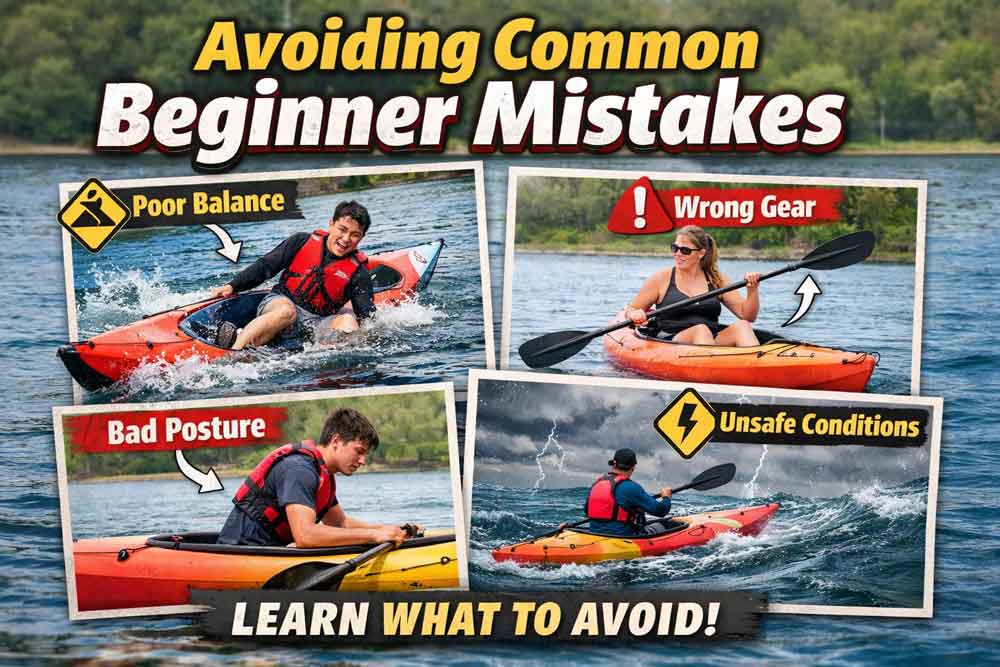
Wrong Gear Choices
You want your kayaking trip to feel comfortable and safe. Picking the wrong gear can ruin your day and make things harder than they need to be. Many beginners make simple mistakes with their equipment. You can avoid these problems if you know what to look for.
- Place drip rings closer to the blade. This stops water from running down the paddle and soaking your hands.
- Always wear your life jacket. It keeps you safe if you flip over. Make sure it fits well and lets you move freely.
- Dress for the water, not just the air. If you fall in, cold water can cause hypothermia. Wear quick-dry clothes or a wetsuit if needed.
- Keep your body loose. Stiffening up makes you less stable. Use your core for balance and stay relaxed.
- Invest in a good kayak seat. You will paddle longer and feel better with proper support.
- Secure your valuables in dry bags. If you tip over, your phone, keys, and snacks stay safe.
- Practice getting back on your kayak from the water. This skill helps you recover quickly if you capsize.
Tip: Avoid drinking alcohol while kayaking. It increases your risk of accidents and makes rescue harder.
Ignoring Weather or Water
You might feel excited to get on the water, but ignoring weather or water conditions can lead to trouble. Always check the forecast before you leave. Sudden storms bring lightning and strong winds. Fog makes it hard to see and find your way. High winds create rough water and make paddling difficult. Floods raise water levels and make rapids more dangerous. Low water exposes rocks and sandbars, which can damage your kayak. Tidal changes cause strong currents that may overwhelm you.
- Look for clear skies and light winds.
- Avoid paddling during storms or when fog rolls in.
- Watch for temperature changes. Cold water can cause hypothermia. Hot weather can lead to heatstroke.
- Stay away from flood conditions and strong currents.
Note: If you see dark clouds or feel the wind pick up, head for shore right away.
Skipping Safety Steps
You want to enjoy your trip, but skipping safety steps puts you at risk. Many beginners forget to check the weather or bring the right gear. You should always check the forecast before you paddle. This helps you prepare for changing conditions and avoid severe weather. Wear your life jacket every time. Bring a whistle and a waterproof phone for emergencies. Stay aware of your surroundings and watch for changes in weather.
- Check the weather before you leave.
- Wear your life jacket at all times.
- Bring safety gear like a whistle and phone.
- Stay alert for changing conditions.
Callout: Practicing safety steps makes your trip smoother and keeps you safe. You build good habits and enjoy kayaking with confidence.
Poor Technique
You might feel excited to paddle, but poor technique can make your trip harder and less fun. Many beginners struggle with basic moves. You can fix these mistakes with a few simple changes. Let’s look at the most common errors and how you can correct them.
| Technique Error | Correction |
|---|---|
| Improper paddle length | Choose a paddle that matches your height. This helps you paddle efficiently and reduces fatigue. |
| Incorrect foot bracing | Adjust your foot pegs so your knees stay slightly bent. You get better leverage and stability. |
| Poor weight distribution | Place heavier items low and near the center of your kayak. This keeps your boat balanced and steady. |
| Not using feathered paddle blades | Learn to feather your paddle blades. This reduces wind resistance and makes paddling easier. |
| Not mastering rudder and skeg use | Practice using the rudder or skeg. You keep your kayak straight and save energy. |
| Anxiety leading to fatigue | Try shallow-water re-entry drills. You build confidence and avoid overcorrecting your strokes. |
You can start by checking your paddle. If it feels too long or too short, you waste energy. Find a paddle that fits your height and kayak width. Adjust your foot pegs before you launch. Your knees should bend slightly. This gives you more control and helps you steer.
Balance matters. If you pack heavy gear high or off-center, your kayak wobbles. Keep your bags low and close to the middle. You’ll track straighter and feel less tired.
Feathering your paddle blades helps you cut through wind. Twist the shaft so one blade faces the water and the other faces up. You’ll notice less resistance and smoother strokes.
Rudders and skegs help you steer. Practice using them in calm water. You’ll learn how to keep your kayak straight, even in wind or waves.
Feeling nervous? Practice getting back in your kayak in shallow water. You’ll gain confidence and paddle with less stress.
Tip: Take your time. Focus on technique, not speed. You’ll improve faster and enjoy your trip more.
Overestimating Skills
You might feel ready for a big adventure, but overestimating your skills can lead to trouble. Many beginners think they can paddle farther or handle rough water before they’re truly prepared. This mistake often causes accidents.
- You may try routes that are too long or challenging.
- You might ignore your fitness level and get tired quickly.
- You could misjudge your kayak’s limits and end up in risky situations.
Start with short, easy trips. Build your confidence and endurance step by step. As you gain experience, you can try longer routes and tougher conditions. Always listen to your body and know when to turn back.
Callout: Honest self-assessment keeps you safe. Know your limits and respect the water. You’ll enjoy kayaking more and avoid dangerous surprises.
You can avoid common mistakes by practicing good technique and staying realistic about your abilities. Kayaking feels rewarding when you learn at your own pace and focus on safety.
Where to Kayak for Beginners
Easy Locations
You want your first kayaking trip to feel safe and fun. The best way to start is by choosing calm, beginner-friendly spots. These places have gentle water and beautiful views. You can relax and focus on learning.
Here are some great locations in the United States for new kayakers:
- Pleasure Point in Santa Cruz, CA: The water here stays calm. You can paddle without worrying about big waves.
- Cuyahoga River in Kent, OH: This river flows slowly through peaceful countryside. It’s perfect for practicing your strokes.
- Cannery Row in Monterey Bay, CA: You might see sea otters or seals while you paddle. The water is usually gentle.
- Lovers Point Park and Beach, CA: This spot has clear water and fewer crowds. You get space to practice.
- Stillwater Cove at Pebble Beach, CA: The lake water stays flat and easy to handle.
- Natural Bridges State Beach, CA: This beach offers a safe place to try kayaking for the first time.
Tip: Start on lakes or slow rivers. Avoid strong currents or busy boat traffic until you feel confident.
Rentals and Tours
You don’t need to buy a kayak right away. Many beginners use rental services or join guided tours. These options make your first trip easier and safer.
- Rental shops give you all the gear you need. You get a kayak, paddle, and life jacket.
- Guided tours often include short lessons. Instructors show you how to paddle and stay safe.
- You learn how to recover if you tip over. This helps you feel less nervous.
- Tours and rentals usually take place on calm water. You won’t face strong currents or big waves.
- You paddle with a group or an experienced guide. This means you get help and advice during your trip.
Note: Rentals and tours let you try kayaking before you buy your own gear. You can ask questions and learn from experts.
Online Resources
You can learn even more about kayaking from trusted online sources. These websites and guides cover everything from basic skills to safety tips.
| Resource Type | What You’ll Find | Example Topics |
|---|---|---|
| Instructional Sites | Step-by-step guides and videos | How to paddle, kayak setup |
| Safety Tips | Rules and safety checklists | PFD use, weather awareness |
| Gear Guides | Advice on choosing kayaks and accessories | What to buy, gear reviews |
| Community Support | Forums and local clubs for beginners | Finding lessons, meeting paddlers |
| Extra Resources | Special topics like repairs and sun protection | Fixing gear, staying safe in sun |
You can also find beginner courses with small class sizes. These classes give you personal attention and help you learn at your own pace. Instructors answer your questions and show you how to handle common challenges.
Callout: Take time to explore online guides and videos. You’ll feel more prepared and excited for your first kayaking adventure!
You’ve learned how to pick your gear, plan your trip, and paddle safely. Kayaking is simple and fun for everyone. You don’t need to be an athlete to enjoy it. The low-impact nature makes it gentle on your joints and great for all ages.
| Benefit | Why It Matters |
|---|---|
| Low-impact | Easy on your body, even for beginners |
| Accessibility | Anyone can try, no matter your fitness level |
| Mental boost | Time on the water lifts your mood |
Get your gear ready, stay safe, and head out for your first adventure. The water is waiting for you!
FAQ
How do I know which kayak is right for me?
You should try different kayaks at a rental shop. Look for one that feels stable and comfortable. Wide kayaks work best for beginners. Ask staff for advice if you feel unsure.
What should I wear for kayaking?
Wear quick-dry clothes and water shoes. Bring a hat and sunglasses for sun protection. If the water feels cold, use a wetsuit or dry suit. Always dress for the water temperature.
Do I need to know how to swim?
You do not need to be a strong swimmer. You must wear a life jacket every time you kayak. Practice basic water safety. Stay close to shore if you feel nervous.
Can I kayak alone as a beginner?
You should paddle with a friend or join a group. Kayaking feels safer and more fun with others. If you must go solo, tell someone your plan and check in when you finish.
How do I transport a kayak?
Use a car rack and strong straps. Practice loading and unloading at home. Ask for help if your kayak feels heavy. Make sure your kayak stays secure before you drive.
What if my kayak tips over?
Stay calm and hold onto your kayak. Wear your life jacket. Try to climb back on or swim to shore. Use your whistle to signal for help if needed.
Where can I find kayaking lessons?
Check local rental shops, outdoor stores, or community centers. Many offer beginner classes and guided tours. You can also find lessons online or join a paddling club.
Comments are closed