



How to Clean a Waterproof Phone Pouch: Quick, Safe Guide
Introduction
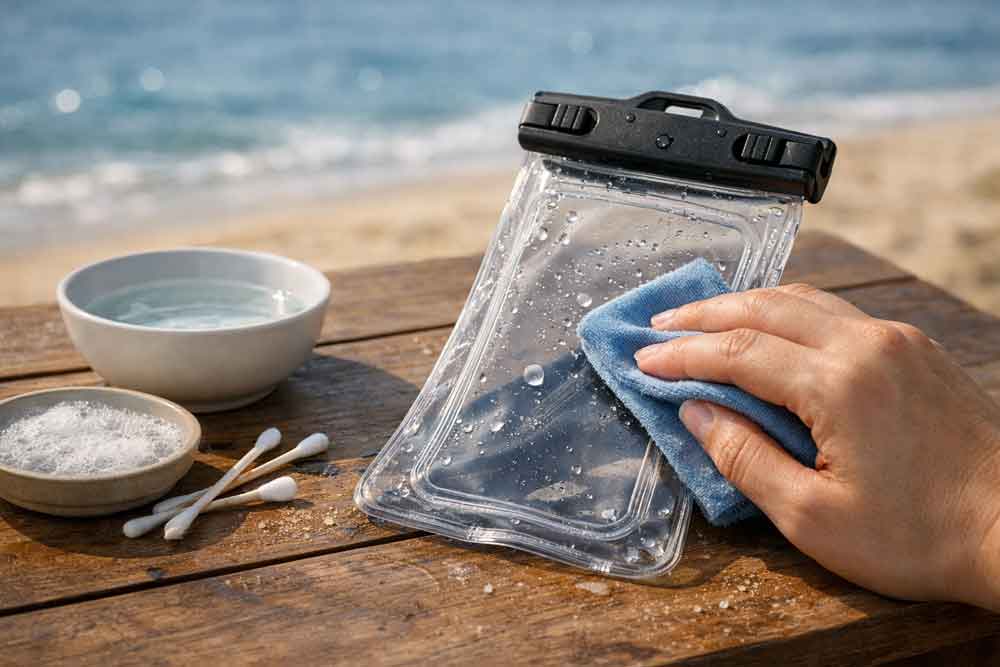
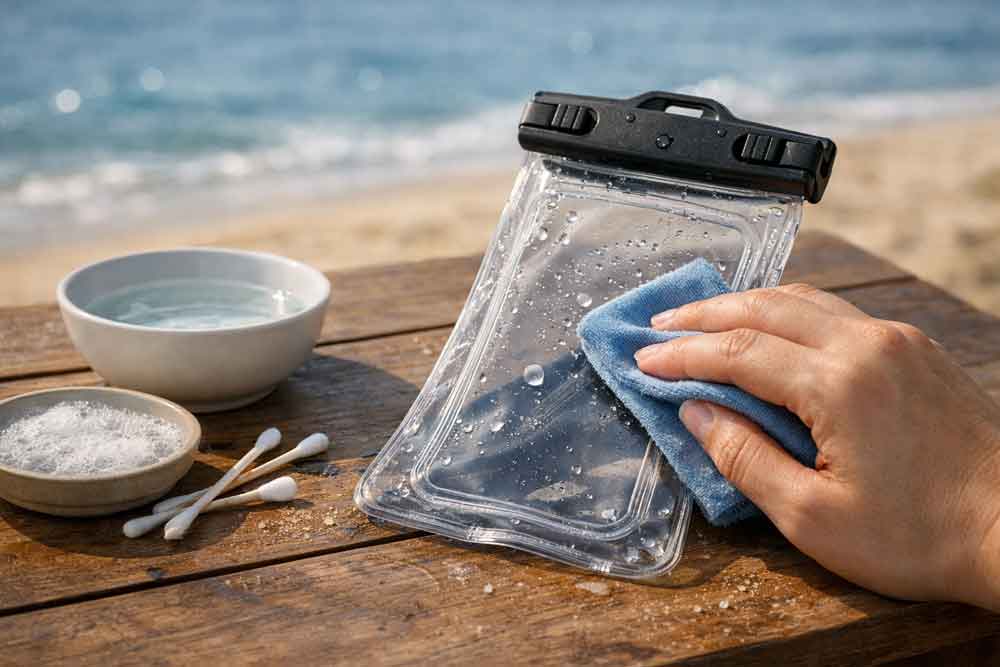
If you’re wondering how to clean a waterproof phone pouch after a beach or pool session, here’s the deal: quick, gentle care keeps the seal trustworthy and the window clear. Always remove your phone before cleaning and keep liquids away from device openings. You’ll need fresh lukewarm water, a drop of mild dish soap, a microfiber cloth, a soft brush or cotton swabs, an optional 70% alcohol wipe for exterior-only disinfection, and a clean towel. This guide focuses on clearing salt, chlorine, sand, and sunscreen residues, then walks you through shade drying, inspection, storage, and a quick empty‑pouch seal test.
Step-by-step cleaning
Fresh-water rinse after use
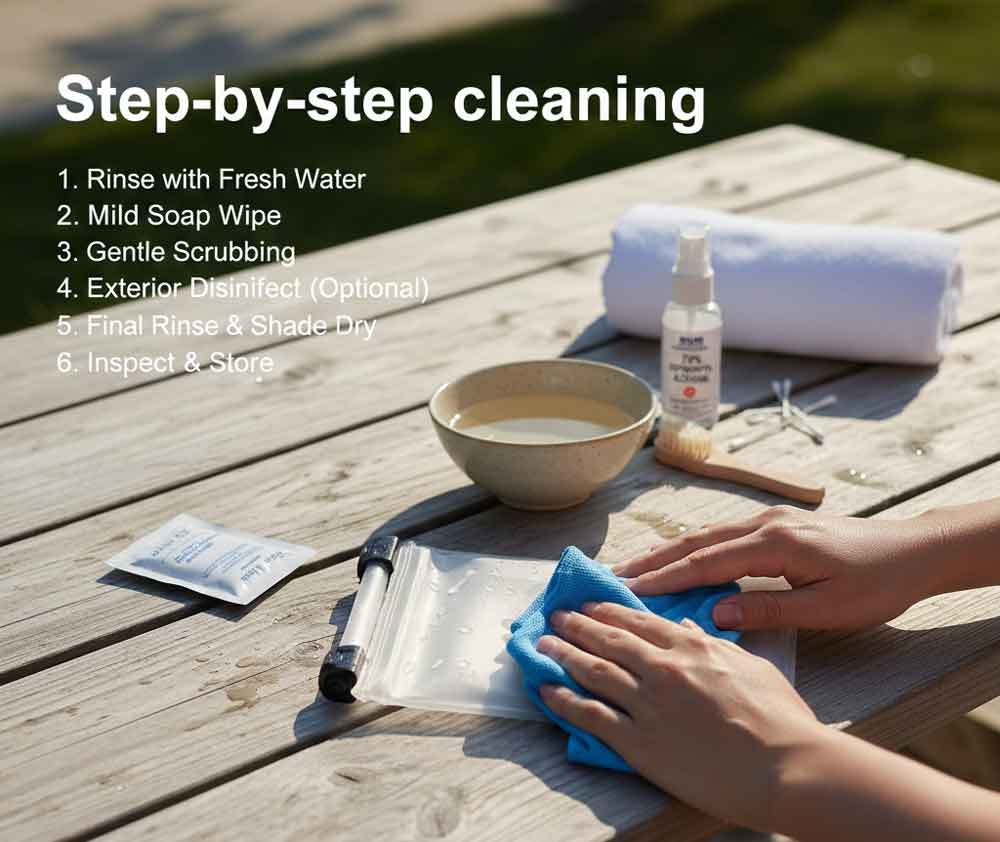
Start with an immediate fresh‑water rinse to dissolve salt and dilute chlorine (20–30 seconds per side). Hold the pouch so water flows away from the seal line and closures; don’t blast water into locks or gaskets. This first rinse lifts loose sand and prevents crystals from drying on the materials. Manufacturers consistently advise rinsing and drying after water exposure to preserve sealing surfaces, as noted by the guidance on thorough rinsing and drying from the sealing areas in the waterproof‑swimming overview by OtterBox in 2025: see the section on cleaning sealing areas in the OtterBox waterproof case guidance for swimming.
Gentle soap wipe and seam cleaning
Mix a drop of mild dish soap into a small bowl of lukewarm water. Wipe the windows and body with a microfiber cloth using light, overlapping strokes (30–60 seconds per surface). For seams, gasket grooves, and lock tracks, use a soft brush or cotton swabs to lift grit—light pressure only to avoid scratching TPU/PVC windows or nicking silicone/TPR seals. Consumer cleaning playbooks emphasize mild soap and soft tools for crevices; examples include the recommendations to use warm soapy water and a soft toothbrush for crevices in i‑Blason’s phone case cleaning guidance. OtterBox likewise calls out attention to sealing surfaces and port areas in its guidance linked above.
If you want to disinfect after cleaning, keep it exterior‑only: a 70% isopropyl or ethanol wipe is commonly allowed for many waterproof cases, but avoid pooling at seals and never soak. This aligns with manufacturer notes such as Catalyst’s hygiene guidelines that approve 70% alcohol wipes for their waterproof cases; after chemical disinfectants, they recommend rinsing and drying again. Apple’s device cleaning page also allows 70% IPA/75% ethyl alcohol on exteriors with the caution to avoid getting moisture into openings, which is a useful cross‑check: Apple’s cleaning your iPhone guidance.
Final rinse and shade drying
Rinse again with fresh water (20–30 seconds) to remove all soap and any dislodged debris. Pat dry with a lint‑free towel, then air‑dry fully in the shade with good airflow (typically 1–4 hours). Prop seals or open latches only if the manufacturer allows; the goal is to let gasket faces and tracks dry completely. Avoid hair dryers, radiators, hot water, or leaving the pouch to bake in direct sun, which can accelerate polymer and gasket degradation; extended sun exposure is widely cautioned against in consumer care articles like elago’s sunlight caution for waterproof cases.
Special cases: salt, pool, sand, sunscreen
These situations are common after surf, SUP, snorkel, sailing, and pool sessions. Prioritize safety of seals and clarity of the window.
Saltwater and chlorine rinse priorities
After ocean or pool use, make the fresh‑water rinse your first move, as soon as practical. Salt crystals can form as water evaporates, and chlorine residues can be harsh on polymers and adhesives. A rinse removes most of the residue before it hardens. Then do your mild soap wipe, concentrate on sealing areas, and finish with the final rinse and shade dry. This sequence reflects best practices found in manufacturer and consumer guidance that highlight rinsing and complete drying of sealing surfaces, including the OtterBox article cited earlier and the mild‑soap baseline echoed in i‑Blason’s do’s and don’ts.
Sand and grit in locks and gaskets
Grit is the enemy of seals. Flush gently under running fresh water first, holding the pouch so grains wash out of grooves rather than deeper in. Then, with a soft brush or cotton swabs, coax debris out of gasket channels and lock tracks using light, outward strokes. Alternate brush passes with brief rinses until tracks are clear. Don’t use metal picks or abrasive pads; micro‑scratches on gasket faces can become leak paths. Think of it this way: you’re cleaning a precision surface, not scrubbing a pan.
Sunscreen and body oils removal
Sunscreen and skin oils can smear the window and attract grit. Clean with mild soap and water first. If residue persists on the exterior window, use a 70% alcohol wipe very lightly and keep it away from seals; don’t let liquid pool along the gasket line. If you do use an alcohol wipe, a quick fresh‑water rinse and dry afterward can help remove any chemical trace, consistent with Catalyst’s post‑disinfectant rinse note.
Drying, inspection, and storage
A careful dry, a quick inspection, and thoughtful storage extend the life of your pouch and reduce fogging or odors next time out.
Dry fully in shade with airflow
After patting dry, let the pouch air‑dry fully in the shade with good ventilation. If the design allows, leave closures unlatched or slightly open so tracks and gasket faces dry completely. Avoid heat sources and direct sunlight; prolonged exposure can warp plastics and flatten seals over time, a caution echoed in consumer care summaries like the elago overview and in manufacturer guidance that stresses complete drying of sealing areas as mentioned by OtterBox.
Inspect seals, windows, and locks
Once dry, check gasket faces for cracks, cuts, or flattening (loss of elasticity). Confirm latches align and lock smoothly. Inspect windows for scratches that could reduce clarity. Any lingering grit in tracks? Repeat a gentle rinse and swab until clean. If damage is visible—or if you’re unsure—plan a quick seal test before your next session.
Store ventilated; use desiccants
Store the pouch cool, dry, and ventilated, out of direct sun or heat. Add a small silica‑gel packet in the storage pocket or container to absorb residual humidity. Some users prefer to store unlatched to reduce long‑term compression on gaskets; follow your manufacturer’s guidance if available. A little moisture control goes a long way to prevent mildew smells and haze.
[PLACEHOLDER-IMAGE alt=”A compact checklist highlighting shade-dry, open seals until dry, inspect gaskets, add silica gel in storage”]
Conclusion
Clean your pouch after each beach or pool session with fresh water and mild soap. Optionally, once clean and dry, you can disinfect the exterior with a 70% alcohol wipe—avoid pooling near seals, then rinse and dry again. Before the next outing, run a quick empty‑pouch seal test: place a dry tissue inside, seal carefully, submerge in a sink or tub for 5–10 minutes, and check for moisture—a method recommended in 2025 by Consumer Reports for verifying case and pouch integrity, as described in their waterproof cases and pouches guide. If the tissue is damp, replace the pouch.
Avoid bleach, ammonia, solvents, abrasives, hot water, heat sources, and prolonged sun exposure. Follow these steps and you’ll preserve clarity and waterproof integrity—so your phone stays safe while you focus on the water.

Frequently asked questions (FAQs)
1. How soon should I rinse my waterproof pouch after ocean or pool use?
Rinse it as soon as practical—ideally immediately after leaving the water. A quick fresh‑water rinse removes salt crystals and chlorine that can stiffen or degrade seals; follow with the mild‑soap clean described above for best results
2. Can I disinfect the pouch with alcohol wipes?
Yes—use 70% isopropyl or ethanol wipes only on exterior surfaces, spot‑test first, and avoid letting liquid pool at the gasket line; rinse and dry after disinfecting if the product guidance recommends it
3. What’s the safest way to remove sand from locks and gasket grooves?
Flush the area under gentle fresh water, then coax grit out with a soft brush or cotton swab using light, outward strokes. Repeat brief rinses until clean—never use metal picks or abrasive pads that can nick gasket faces and create leak paths
4. How do I check the pouch still seals properly before using it with my phone?
Do an empty‑pouch tissue test: insert a dry paper towel or tissue, seal the pouch correctly, submerge in a sink or tub for 5–10 minutes, then check the tissue for moisture. If the tissue is damp, do not use the pouch and consider replacing it
5. How should I store the pouch between sessions to avoid odors and gasket damage?
Store the pouch clean, fully dry, and in a cool, ventilated spot out of direct sunlight; add a small silica‑gel packet to control humidity and, if manufacturer guidance allows, store unlatched to reduce long‑term compression on gaskets. Regular inspection before reuse prevents surprises on the water.
Comments are closed