



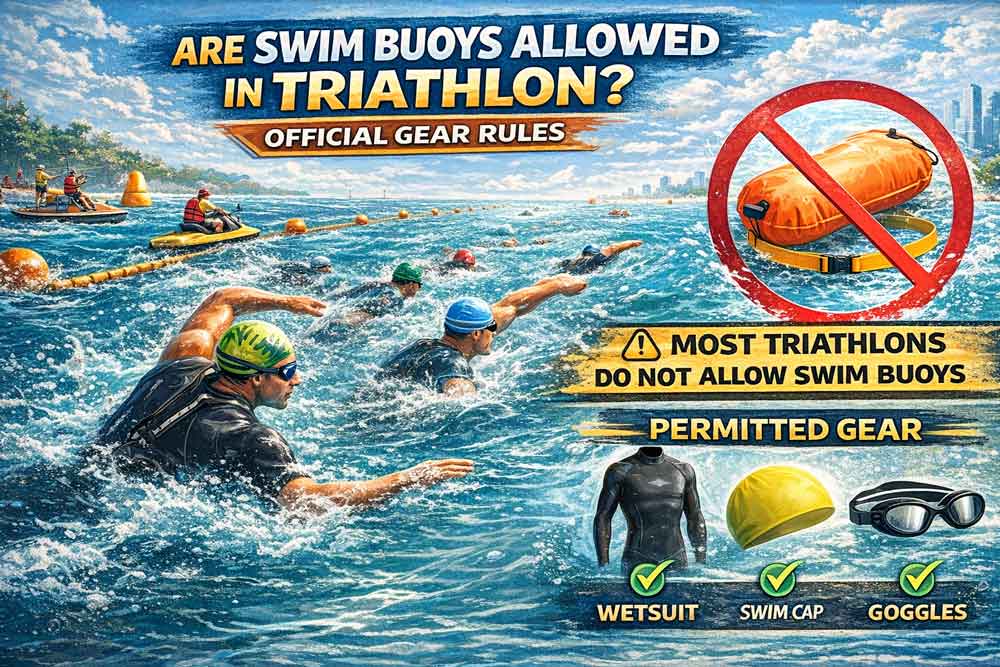
Are Swim Buoys Allowed in Triathlon? Official Gear Rules

You might wonder if you can use a swim buoy in your next race. According to triathlon swim rules, most events do not allow swim buoys during the competition. Knowing what you can and cannot bring helps you avoid surprises on race day. Always check the official gear list for your event. Rules can change from one race to another, so staying informed keeps you safe and prepared.
Key Takeaways
- Most triathlons do not let you use your own swim buoys. Only the RESTUBE Safety Buoy is allowed in races with World Triathlon rules.
- Always look at the official gear list for your race. Rules are different for each race, so knowing them helps you not get in trouble.
- Using gear that is not allowed can get you disqualified. Learn the rules so you can have a fair and safe race.
- Gear you can usually use includes wetsuits, swim caps, and goggles. These things help keep you safe and help you swim better.
- If you feel worried about swimming, ask if you can use the RESTUBE Safety Buoy for more support in your race.
Triathlon Swim Rules and Swim Buoys
Official Regulations on Swim Buoys
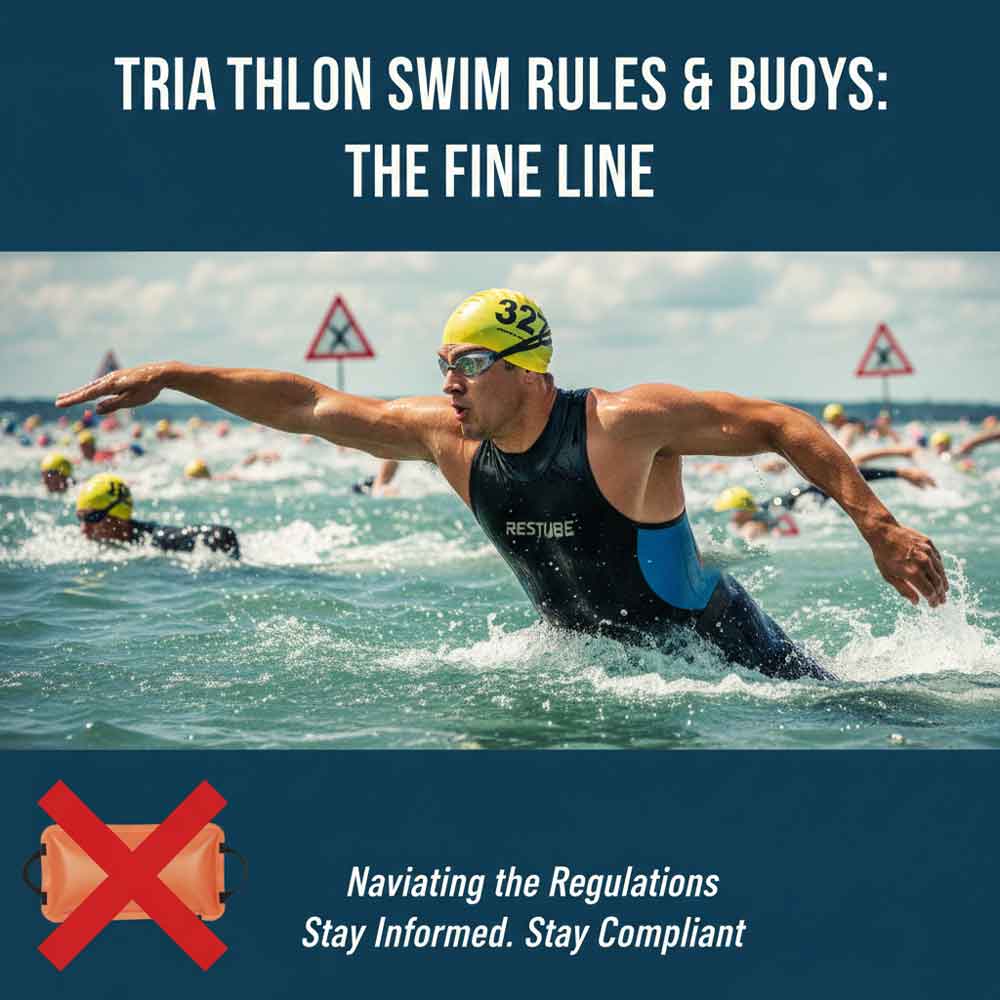
Before a race, you should learn the triathlon swim rules. These rules are made by big groups to keep everyone safe and fair. Most races use rules from World Triathlon or Ironman. These groups have strong rules about what you can bring in the water.
- The RESTUBE Safety Buoy is allowed by the World Triathlon Committee for races.
- This means the RESTUBE Safety Buoy fits World Triathlon’s rules.
- Ironman does not talk about swim buoys in its rules.
Most triathlon swim rules say you cannot use your own swim buoy. You can only use the RESTUBE Safety Buoy if your race uses World Triathlon rules. Always look at your race’s rules before you race. Some local races might have different rules, but most are the same.
“No, personal swim buoys are not allowed at any Cal Tri Events race due to risks they create for other athletes. Our courses are fully supported with lifeguards and rescue crafts to ensure everyone’s safety.”
This quote explains why many races do not let you use swim buoys. Race leaders want to stop accidents and keep the swim area clear. They give safety help so you do not need extra gear.
Tow Buoys and Other Prohibited Gear
You may see different buoys and gear when you train or race. It is important to know how they are not the same. The table below shows how triathlon swim buoys and open water swim buoys are different:
| Feature | Triathlon Swim Buoy | Open Water Swim Buoy |
|---|---|---|
| Purpose and Functionality | Made for being seen and safe in races, usually smaller and smooth. | Mostly for fun swimming and practice, easy to see and helps you float. |
| Design Features | Small and shaped to move fast in water. | Bigger, floats more, and may have pockets. |
| Buoyancy and Visibility | Gives enough float and tries to stay small. | Floats more and is easy to see for safety. |
| Usage Context | Good for races; check rules for what is allowed. | Best for fun and practice swims, helps in many ways. |
Tow buoys and big open water buoys are not allowed in most races. These things can block other swimmers and make things unsafe. Triathlon swim rules want the swim to be fair and safe for all. Only use gear your race says is okay. If you do not know, ask the race leader before the race.
You must follow triathlon swim rules or you could get a penalty or be kicked out. Knowing what gear is okay or not helps you get ready and feel sure on race day.
Exceptions and Special Cases
RESTUBE Safety Buoy Exception
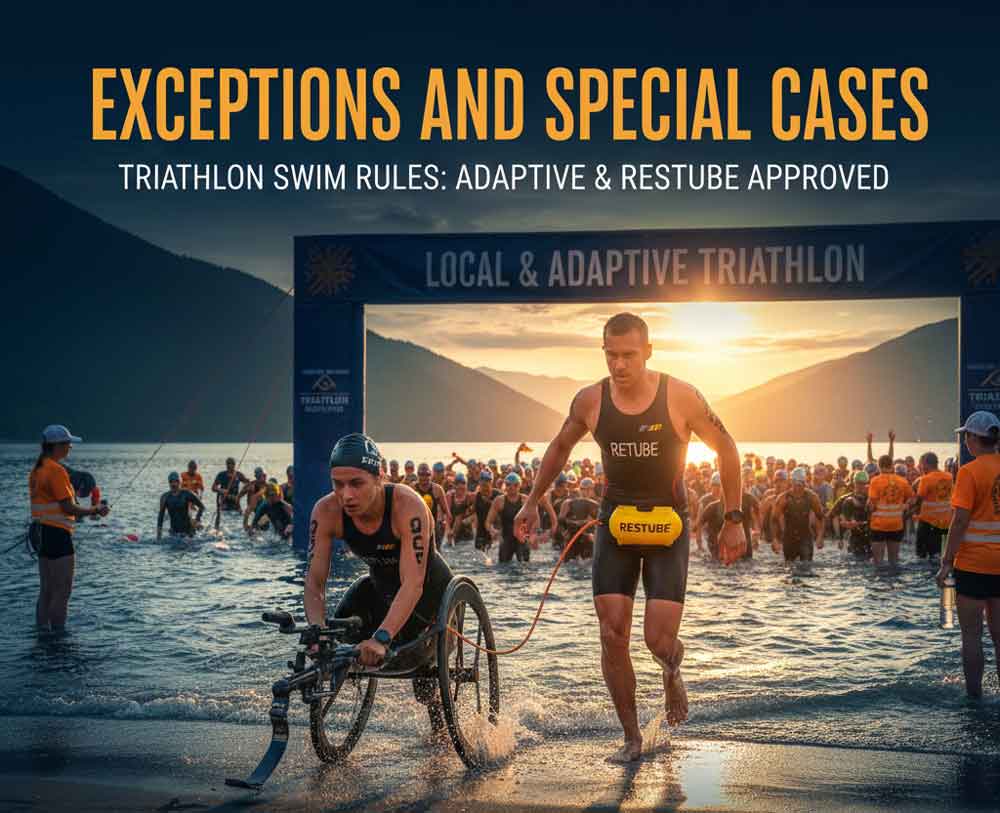
You might know about the RESTUBE Safety Buoy. It is a small, inflatable safety tool you wear on your waist. Some triathlon groups let you use this buoy, but not every group does. The rules can be different at each race. For example, the German Triathlon Union and International Triathlon Union say you can use the RESTUBE Safety Buoy. The race organizer will tell you if you must wear it or if it is just for extra safety. At some races, like the Nordschwarzwald Triathlon, you have to use the RESTUBE. Other races let you pick if you want to wear it for more safety.
Here is a table that shows what different groups say about the RESTUBE Safety Buoy:
| Organization | Approval Status |
|---|---|
| Triathlon Quebec | Accepted |
| USAT | Approved |
| World Triathlon | Not Mentioned |
You should always look at the triathlon swim rules for your race. If you do not know, ask the race director before race day.
Tip: If you feel worried about swimming in open water, ask if your race lets you use the RESTUBE Safety Buoy. It can help you feel safer.
Local and Adaptive Events
Some local races have their own rules. They might let you use extra safety gear, especially for new racers or kids. Smaller races sometimes have more flexible rules. Always read the athlete guide for your race.
Adaptive and paratriathlon races have special gear rules. These races help athletes with disabilities join in. You might see gear like swim tethers, prosthetics, or racing wheelchairs. The table below shows some gear used in these events:
| Gear Type | Description |
|---|---|
| Swim goggles | Protect your eyes and help you see underwater. |
| Swim cap | Keeps your hair in place and helps with warmth. |
| Wetsuit | Adds warmth and helps you float. |
| Swim tether | Used by visually impaired athletes to stay close to their guide. |
| Racing wheelchair | Used for the run portion by wheelchair athletes. |
| Prosthetic | Used by athletes with limb differences for cycling or running. |
You should always follow the triathlon swim rules for your event. If you need special gear, talk to the race organizer before you race.
Permitted Swim Safety Gear
Allowed Gear (Wetsuits, Caps, Timing Chips)
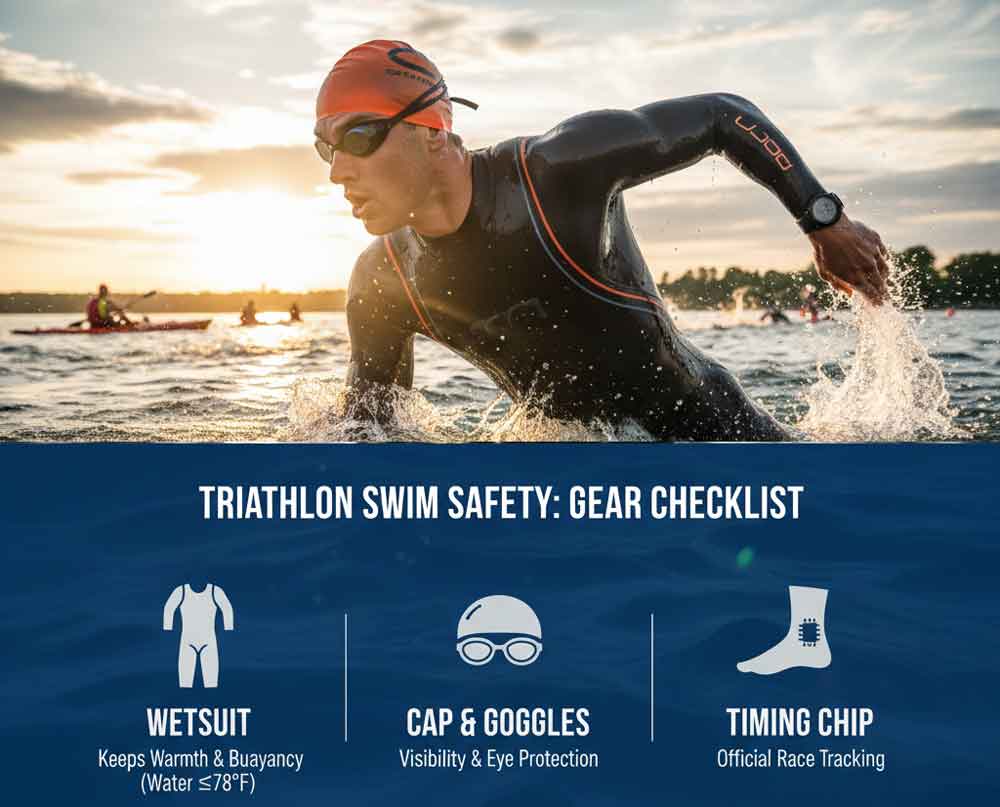
You need to know what safety gear you can use in the swim part of a triathlon. Most races follow strict triathlon swim rules. The most common types of permitted swim safety gear include:
- Wetsuits
- Goggles
- Swim caps
- Timing chips
Wetsuits help you stay warm and float better. You can wear a wetsuit if the water is 78°F or colder. If the water is between 78°F and 84°F, you may wear a wetsuit, but you cannot win prizes. Wetsuits are not allowed if the water is warmer than 84°F. Make sure your wetsuit is not thicker than 5mm, or you could get disqualified.
Race officials give you a swim cap before the race. You must wear this cap or a bright one if they do not give you one. Not wearing the right cap can lead to a time penalty. Timing chips track your race time and are usually worn on your ankle.
Here is a quick table to help you remember:
| Gear | Allowed? | Notes |
|---|---|---|
| Wetsuit | Yes (if ≤78°F) | Not allowed if water >84°F; ≤5mm thick |
| Swim Cap | Yes | Must wear official or bright cap |
| Timing Chip | Yes | Usually provided by race officials |
| Goggles | Yes | Highly recommended for comfort |
Tip: Always check your race packet for the official swim cap and timing chip before race day.
Training vs. Race Day Gear
You might use extra gear when you train, but not all of it is allowed during the race. In training, you can use items like fins, snorkels, pull buoys, and ankle straps. These tools help you build strength and improve your swim skills. On race day, you must follow triathlon swim rules and only use gear that is allowed by the race officials.
Here is a list of gear you might use in training but not in a race:
- Fins or flippers
- Snorkels
- Pull buoys
- Ankle straps
Using non-permitted gear during a race can lead to penalties or even disqualification. Always check the rules for your event and leave training aids at home on race day. This keeps the race fair and safe for everyone.
Consequences of Unauthorized Gear
Penalties and Disqualification
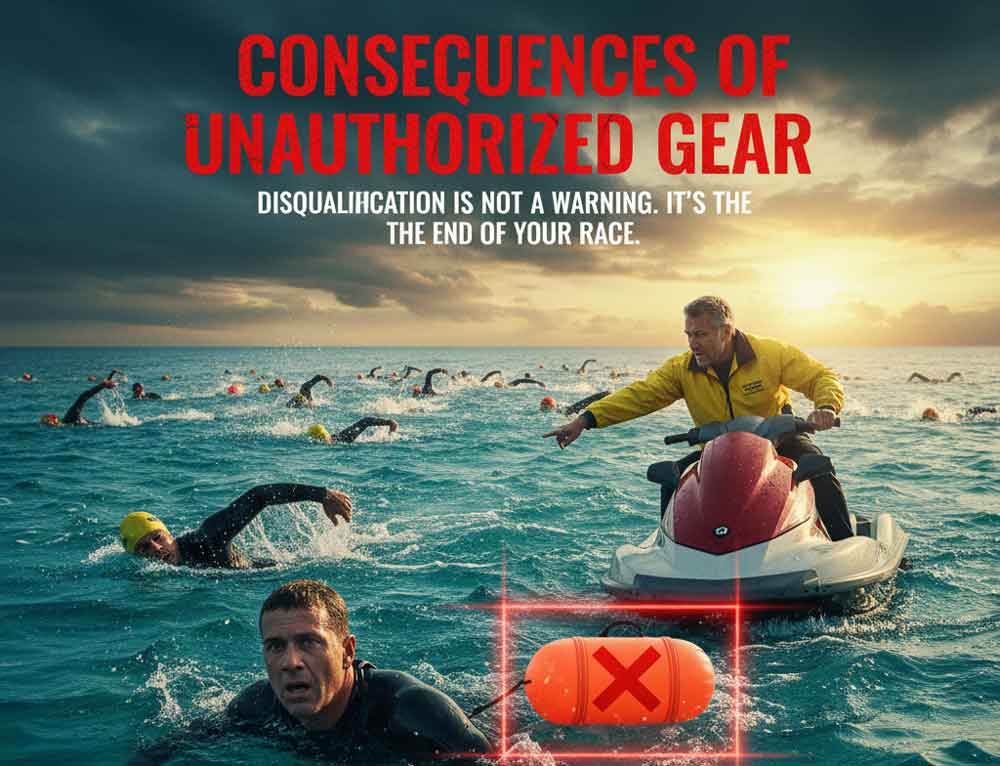
You must follow the gear rules in a triathlon. If you use gear that is not allowed, you can get a penalty or even be disqualified. Race officials want to keep everyone safe and make the race fair. They look for gear that gives you an unfair advantage or puts others at risk.
Here is a table that shows what can lead to disqualification:
| Violation Type | Description |
|---|---|
| Hazardous Items | Wearing items that can hurt you or others, like hard casts, jewelry, or headphones. |
| Unauthorized Equipment | Using gear that is not allowed, such as swim buoys, fins, or anything that helps you float more. |
If you break these rules, you might get a warning first. If you keep using the gear, you could lose your race spot. Sometimes, you do not get a warning and are disqualified right away. You should always check your gear before the race starts.
Note: If you are not sure about your gear, ask a race official before the event. This can help you avoid problems on race day.
Enforcement During Races
Race officials check for unauthorized gear in many ways. They want to make sure everyone follows the same rules. You will see officials at check-in and in the transition area. They look at your gear and make sure you have what you need.
Here is how officials enforce the rules:
| Requirement | Description |
|---|---|
| Equipment Checks | Officials check your gear during check-in and when you enter the transition area. |
| Pre-race Inspection | You can show your gear to an official if you are not sure it is allowed. |
Officials also watch during the swim. They look for things like missing swim caps or extra floatation devices. You must wear the swim cap given by the race. Your torso must stay covered during the swim. If you break a rule, an official may stop you and ask you to remove the gear.
🏊♂️ Tip: Always follow the rules and listen to officials. This helps keep the race safe and fair for everyone.
Safe Alternatives for Nervous Swimmers
On-Course Support
You might feel nervous before the swim part of a triathlon. Many races offer strong support to help you feel safe in the water. Lifeguards, rescue kayaks, and safety boats watch swimmers closely. These helpers use rescue tubes and buoys to reach swimmers quickly. Inflatable rescue tubes work well in remote areas because they are easy to carry and fast to use. Lifeguards train with throw ropes and other tools to help swimmers in trouble. Their training teaches them to act fast and follow safety steps. When a swimmer panics, a lifeguard’s quick thinking and skill can prevent accidents.
Here are some ways on-course support keeps you safe:
- Lifeguards and rescue kayaks watch the swim course.
- Rescue tubes and buoys help lifeguards reach swimmers quickly.
- Inflatable rescue tubes are easy to use in remote spots.
- Lifeguards train to use rescue gear and follow safety rules.
Tip: If you feel overwhelmed during the swim, signal for help. Lifeguards and rescue staff are ready to assist you.
Training with Swim Buoys
You can use swim buoys during practice to build confidence in open water. Swim buoys help you stay visible to others, even when the light is low. They give you a safe place to rest if you get tired. You can float with the buoy and save energy. Swim buoys also help you call for help if you feel exhausted or hurt.
Try these steps to make your training safer and more comfortable:
- Practice swimming in open water to get used to the environment.
- Train in places that look like your race course, such as lakes with waves.
- Use calming techniques, like floating on your back or repeating a soothing mantra.
- Start at the back of the group to avoid crowded starts.
- Hold onto your swim buoy if you need a break.
A swim buoy lets you relax and focus on your stroke. You know you have a buoyant aid behind you, which helps you feel calm. This makes your training safer and helps you enjoy swimming more.
🏊♀️ Note: Always use your swim buoy during practice, but remember you cannot use it in most races. Check your race rules before race day.
You cannot use personal swim buoys in most triathlons. Following official gear rules helps you avoid penalties and keeps the race fair. Always pack only what you need for the swim. Common mistakes include forgetting essential gear or bringing too much. Use permitted items like wetsuits, swim caps, and goggles to prepare safely:
| Gear Type | Purpose |
|---|---|
| Wetsuit | Keeps you warm and helps you float in cold water |
| Swim Cap | Makes you easy to see and keeps hair out of your face |
| Goggles | Protect your eyes and help you see underwater |
If you feel unsure about any gear, ask your race organizer before race day.
FAQ
Can you use a swim buoy in any triathlon?
No, you cannot use a personal swim buoy in most triathlons. Only special safety buoys like the RESTUBE are sometimes allowed. Always check your race’s rules before you pack your gear.
What happens if you bring unauthorized gear to the swim?
Race officials may stop you from racing or give you a penalty. You could even get disqualified. Always show your gear to an official if you feel unsure.
Are wetsuits always allowed during the swim?
You can wear a wetsuit if the water is 78°F or colder. If the water is warmer, wetsuits are not allowed. Race officials will tell you the water temperature before the race.
What safety support do races provide for swimmers?
Most races have lifeguards, kayaks, and rescue boats on the course. These helpers watch swimmers and act fast if you need help. You can always signal for help if you feel tired or scared.
Comments are closed