


5 Best Shore-Based Spearfishing Gear for Long Hikes
Introduction
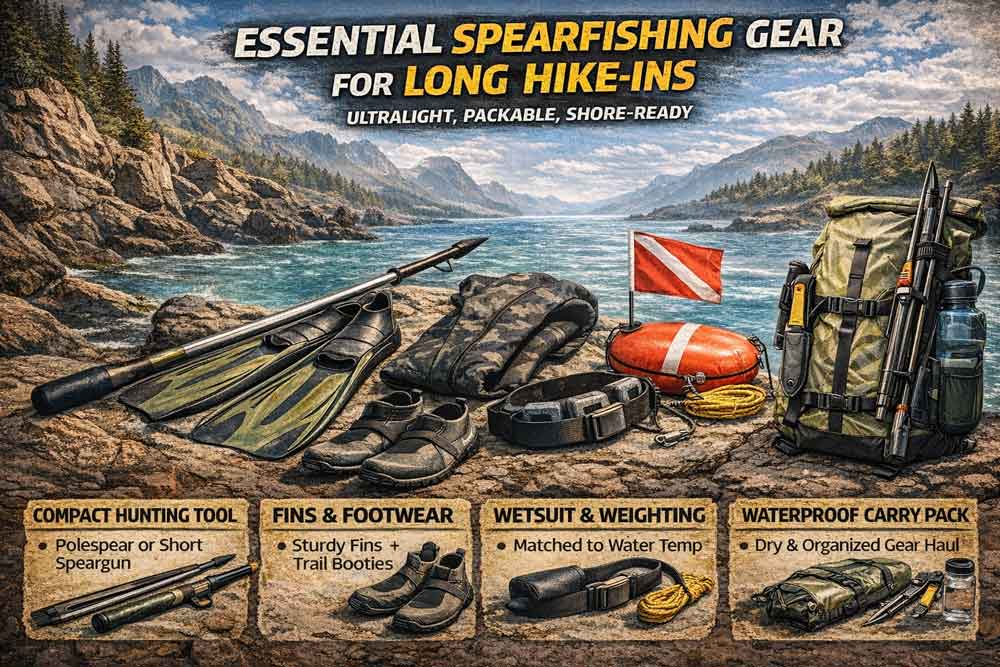
Long hike-ins change everything. When you’re walking miles to a rocky entry, the best shore setup shifts from “max power” to a careful balance of weight, packability, and safety. The goal is simple: arrive with enough capability to hunt effectively—and enough energy to get home safely.
Here’s the deal: the lightest kit isn’t always the safest, and the bulkiest kit isn’t always the most effective. This guide shows you how to prioritize compact, durable pieces, how to set them up for rocky approaches and exits, and what to check against local rules. You’ll learn the five must-haves, why each matters on hike-ins, and how to tailor a beginner-friendly, shore-based spearfishing gear for long hikes setup without overpacking.
How we chose (Methodology)
We evaluated each must-have using a hike-first rubric: weight-to-performance, packability and modularity, durability in rocky entries, safety and compliance readiness, ease of transitions (shore to water), and overall value. Evidence comes from reputable training and gear resources plus official state regulatory pages. Pricing is shown as typical ranges and is subject to change.
Disclosure: We have no financial relationships with any gear or brands referenced. Recommendations are based on published specs, common practices for hike-in shore dives, and publicly available regulations.
Compact Hunting Tool (Speargun or Polespear)
Speargun vs polespear
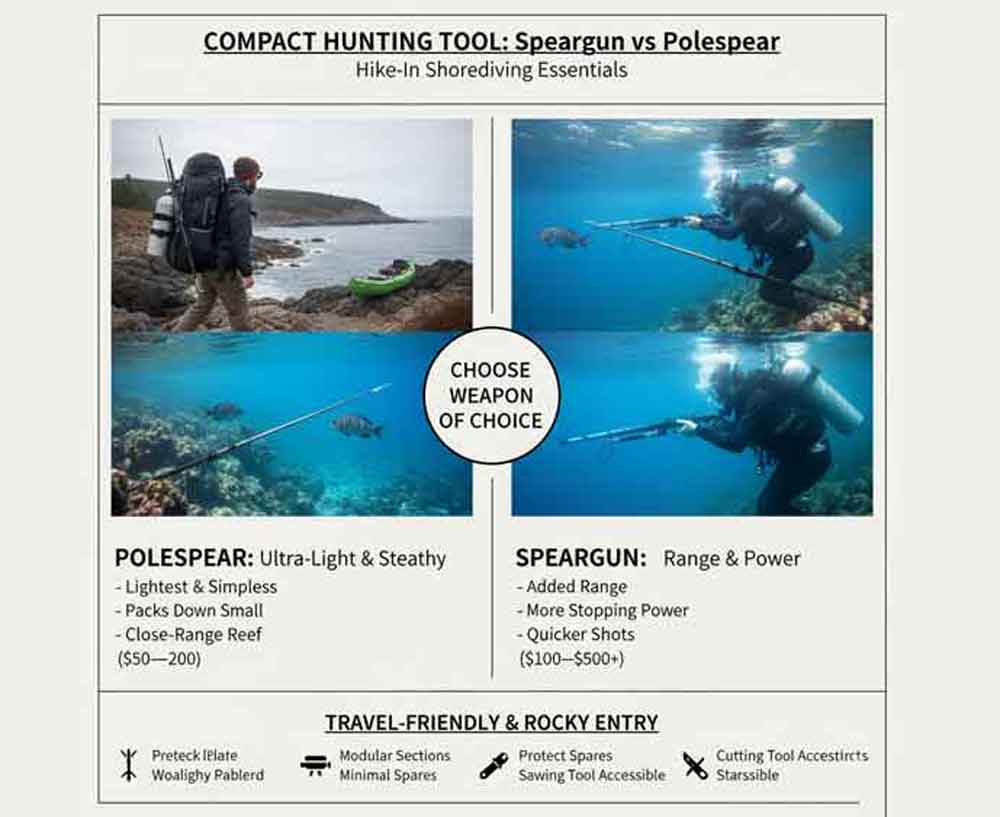
For beginners planning long approaches, a polespear keeps things ultra-light and simple. It excels at close, careful shots on reef fish and packs down small. A short “reef/cave” speargun adds range and stopping power but brings more bulk, parts, and maintenance. Think of it this way: polespear for minimal weight and stealth practice; short speargun when you expect slightly longer or quicker shots.
For a balanced start, many hikers pick a compact polespear for ultralight missions and a short gun for nearby spots with better conditions. Technique primers comparing range, power, and simplicity are helpful—see a representative overview of polespear vs. speargun trade-offs in this practical explainer from Max Spearfishing on polespears versus other tools.
- Best for: Close-range reef targets, beginners honing approach and aim, ultralight packing.
- Not for: Larger, warier fish or long shots in open water.
- Weight & packed size: Polespears win here; short spearguns are manageable if they break down and travel well.
- Price range (subject to change): Polespears ~$50–$200; entry spearguns ~$100–$500+.
Travel-friendly features
- Break-down sections that fit inside or alongside your pack.
- Minimal spares: a couple of extra bands for guns or a spare tip for polespears.
- Simple, robust rigging—fewer failure points to tangle on rocks.
Rocky entry setup
- Cover sharp points with protectors and secure bands/elastic to prevent snags.
- Stow the tool externally but tight to the pack; nothing should swing or scrape during scrambles.
- Keep your cutting tool accessible on your person, not buried in the pack.
Fins and Footwear
Blade material and length
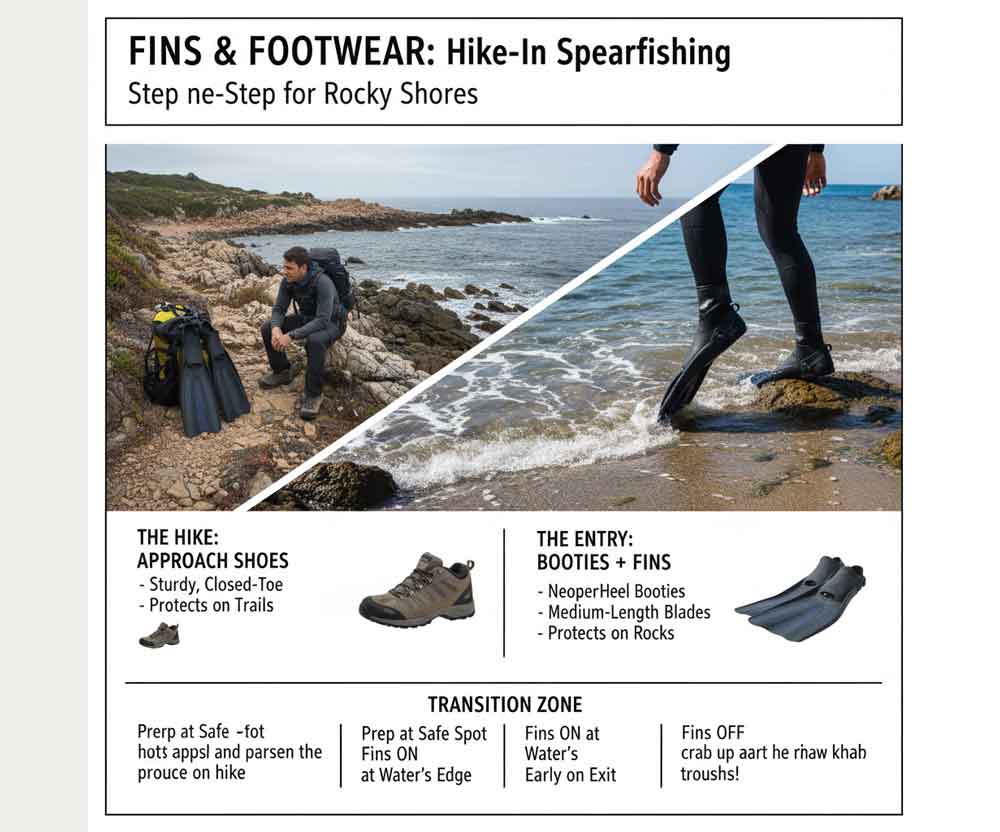
Long plastic or polypropylene blades are durable for shore abuse and beginner-friendly. Extremely stiff or extra-long blades may feel powerful in clear, calm water but can be awkward around rocks and in surf. Many new shore divers prefer medium-length, forgiving blades to reduce trip fatigue. For a baseline on blade length and materials, see this readable freediving fins guide from Scuba.com.
- Best for: Balanced thrust with durability; practice in varying conditions.
- Not for: High-speed bluewater pursuits where ultra-long, stiff blades shine.
- Price range (subject to change): Fins ~$60–$250.
Approach shoes and booties
Protect your feet on the hike and at the entry. Use sturdy approach shoes for the walk-in, then swap to neoprene booties (with solid soles) at the waterline. Open-heel fins plus booties give more protection and stability on rocks than many full-foot options.
Entry and exit transition
- Prep at a stable staging spot above the surge line.
- Put on booties first, then fins at the last safe step into the water.
- On exit, reverse the process early, switching back to approach shoes before climbing.
Wetsuit and Weighting
Regional thickness picks
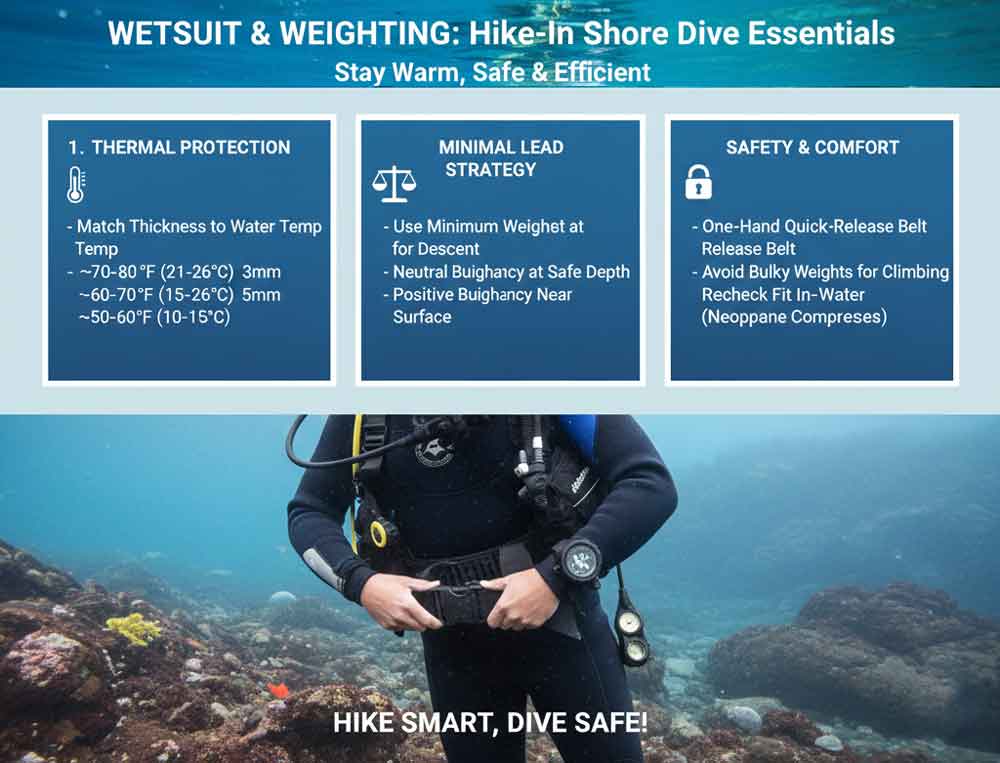
Match thickness to expected water temps and your own tolerance. A simple starting point for freediving: around 3 mm for roughly 70–80°F, 5 mm for roughly 60–70°F, and 7 mm for roughly 50–60°F. Your comfort will vary. For a concise primer on selecting freediving suits, see PADI’s tips for buying a freediving wetsuit.
- Price range (subject to change): Full suits commonly ~$120–$450+.
Minimal lead strategy
Heavier suits add buoyancy. Start with the minimum lead that allows gentle descents and neutral buoyancy at a safe depth, then fine-tune in calm, shallow water. Always keep a margin of positive buoyancy near the surface. For fundamentals on weighting, PADI’s overview of proper weighting techniques for freediving is a useful refresher.
- Price range (subject to change): Weight belts/vests ~$30–$150; lead varies regionally.
Belt comfort and safety
- Use a quick-release you can operate one-handed.
- Avoid rigid, bulky weight placements that snag during rocky climbs.
- Recheck fit after a few minutes in the water; neoprene compresses and belts can loosen.
Float and Flag System
Inflatable vs rigid options
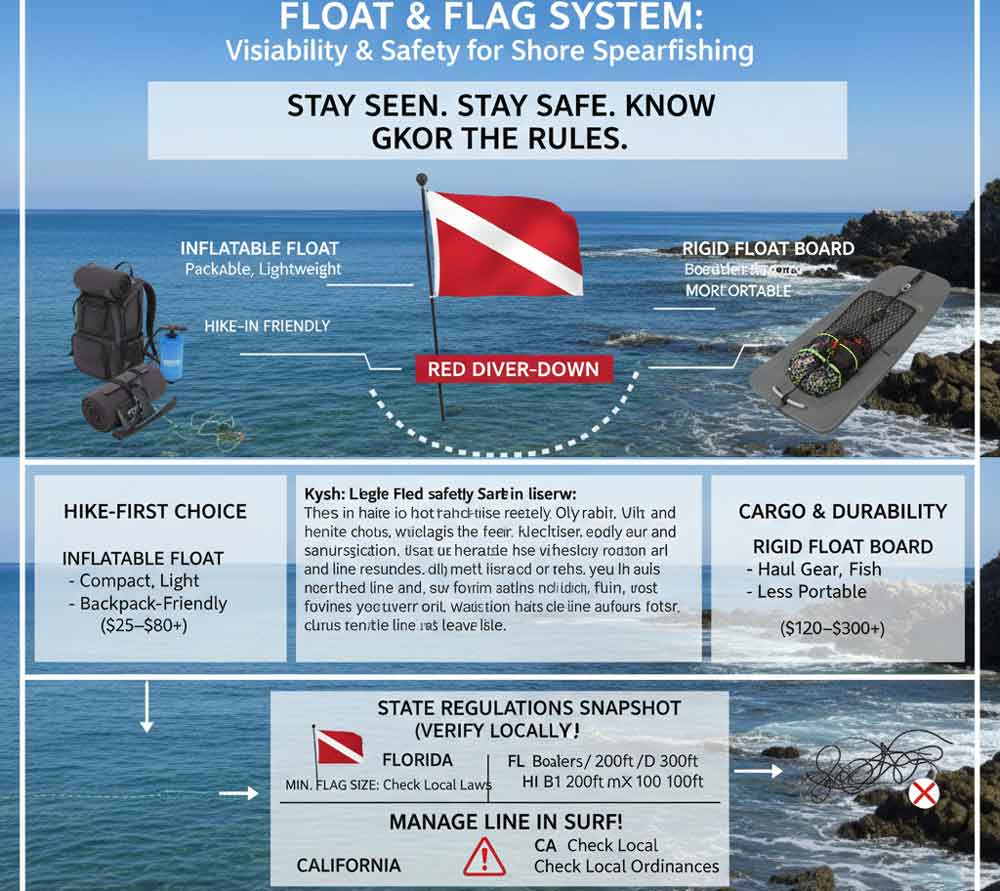
Inflatable floats pack small and ride easily in a backpack—great for long hike-ins. Rigid board-style floats are more durable and can haul fish or gear, but they’re bulkier and heavier on the trail.
- Price range (subject to change): Inflatable floats with flag ~$25–$80; rigid/board-style ~$120–$300+.
Manage line in surf
Surf and rocks magnify line headaches. Keep only the length you need in play, keep coils tidy and out of crack zones, and watch the line during entries and exits. Slightly more buoyant or semi-rigid floatlines can reduce snagging compared to very limp lines. Practice in small surf before committing to bigger days.
State distance snapshot
Distances and sizes vary by state and can change. Always verify locally before diving and follow the most conservative interpretation when in doubt.
- Florida (shore divers using floats): A red divers-down symbol on a float should be at least 12×12 in; vessel flags 20×24 in. Boaters should idle within 300 ft in open water (100 ft in rivers/inlets); divers stay within the same distances. See the Florida agency’s summary in FWC’s divers-down device advisory (2024).
- Hawai‘i: Education materials from DLNR indicate boaters should operate slow/no‑wake within 200 ft of a dive flag; DAR guidance notes divers should not surface more than 100 ft from their flag. Details in DLNR DOBOR boating education and DAR fishing regulations brochure (2025).
- California: Current DBW quick references do not specify statewide numeric diver/boat distances or minimum flag size for ocean diving; they reference federal diving signals and note that local ordinances may apply. Start by reviewing California DBW Quick Codes (2025) and confirm local rules.
Waterproof Carry System
Pack size and build
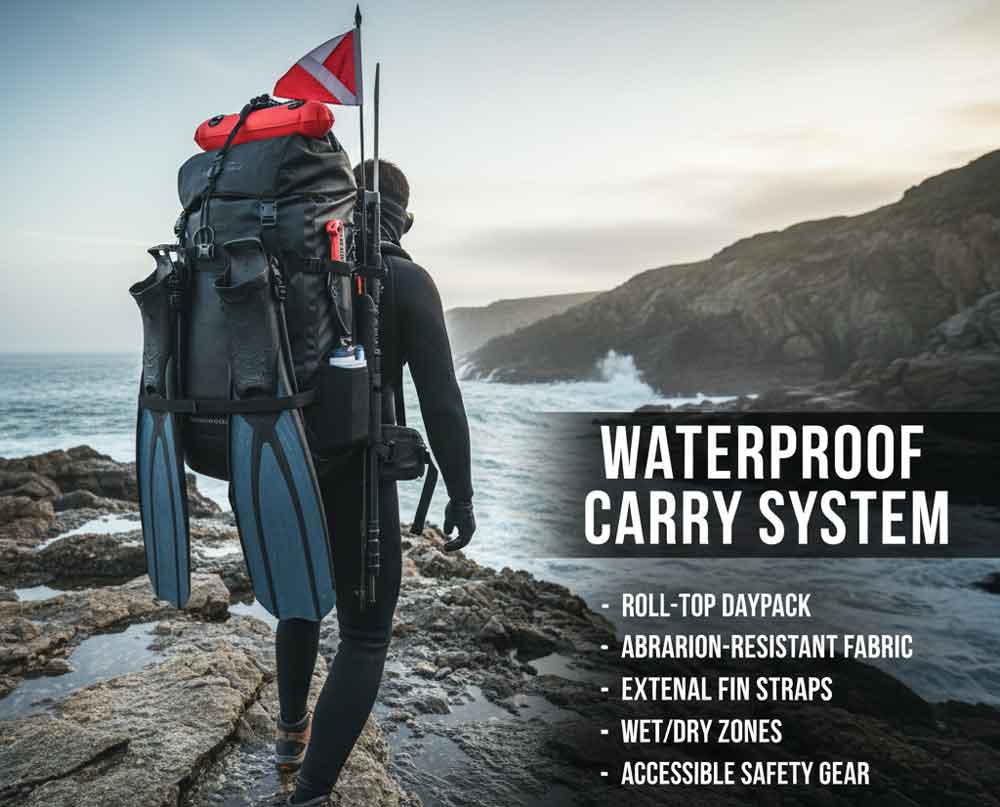
Look for a waterproof roll-top daypack that fits your torso and carries comfortably for miles. Prioritize abrasion-resistant fabric, sealed seams, and external fin straps or sleeves. A padded hip belt and breathable shoulder straps help transfer weight to your hips instead of your shoulders.
Pack layout and weight
Keep heavy items close to your back and centered vertically. Long fins can ride outside under straps; compact spearguns or polespears lash tight along the side or in a sleeve. Separate wet and dry zones with an inner liner or dry bag. Stash sharp tips with covers, and keep your cutting tool, whistle, and first-aid items immediately accessible. This hike-first packing approach draws on general backcountry load principles adapted to rocky shoreline entries.
Hydration and add-ons
Carry enough water for the round-trip hike and surface intervals; a side pocket or bladder hose keeps sipping easy. Add a compact repair kit (zip ties, tape, spare bands/tips), a small light, sunscreen, and a snack. Keep it simple—every ounce counts on the way out.
Quick Planning Matrix (Optional Comparison Table)
| Item | Recommended for | Weight | Packed size | Key traits | Price range | Notes |
|---|---|---|---|---|---|---|
| Compact hunting tool (polespear / short speargun) | Beginners on hike-in reefs | Light–Med | Short sections if travel-friendly | Polespear ultralight; short gun adds range | $50–$500+ | Subject to change; check local regs |
| Fins & footwear | Rocky entries and scrambles | Med | Long blades carry outside | Plastic/PP blades; open-heel + booties | $60–$250 (fins) | Balance thrust vs. scramble ease |
| Wetsuit & weighting | Temp-matched comfort | Med–Heavy | Bulky when wet | 3/5/7 mm guidance; quick-release belt | $120–$450+ (suit); $30–$150 (belt) | Test buoyancy in shallows |
| Float & flag | Visibility and compliance | Light–Med | Inflatable packs small | Inflatable = packable; rigid = durable | $25–$300+ | Verify state rules locally |
| Waterproof carry | Long approaches | Med | 20–35 L daypack typical | Roll-top, fin straps, hip belt, wet/dry | $100–$250 | Comfort and access at entry |
FAQ
- Is a polespear better than a speargun for long hikes? For beginners focused on weight and simplicity, a polespear is easier to carry and learn. A short speargun offers more range if you can handle the extra bulk. A balanced approach is to start with a polespear and add a short gun once you know your conditions. See a practical comparison in Max Spearfishing’s polespear overview.
- What fin blade length works best for long rocky entries? Medium-length, moderately soft plastic blades strike a good balance between thrust and control around rocks. Extremely long, stiff blades can be fatiguing and awkward during scrambles. A readable baseline is Scuba.com’s freediving fins guide.
- How much lead should I carry with a 3 mm/5 mm wetsuit on shore dives? Start minimal and test. As a rough orientation, some divers begin with light weights for 3 mm and a bit more for 5 mm, then tune buoyancy in calm shallows. Always ensure a quick-release belt. A fundamentals refresher is PADI’s weighting techniques overview.
- How far must I stay from my flag in CA/FL/HI? FL commonly references 300 ft in open water (100 ft in rivers/inlets) for both boaters’ keep-away and divers’ stay-within distances; see FWC’s agency advisory (2024). HI education materials note boaters slow/no‑wake within 200 ft and divers should not surface beyond 100 ft; see DLNR DOBOR education and DAR brochure (2025). CA’s DBW quick references don’t list statewide numeric distances for ocean diving; start with DBW’s Quick Codes (2025) and verify local ordinances.
- How do I manage float line in surf without snags? Keep only necessary slack, watch the line in the surge, and choose a line with enough buoyancy or stiffness to avoid wrapping around rocks. Practice in small surf first and escalate slowly.
Conclusion
For long hike-ins, the five essentials—compact hunting tool, fins and footwear, wetsuit and weighting, float and flag system, and a waterproof carry pack—work best when chosen for light weight, packability, and rocky-entry safety. Keep setups simple, protect sharp points, manage your float line proactively, and rehearse transitions before committing to bigger surf or distance.
Final reminder: regulations and conditions change. Always verify local rules (especially diver‑down flag requirements) and check weather, tides, and swell before you go. Build from a conservative baseline, add only what you truly need, and you’ll preserve energy for a safe exit.
Comments are closed