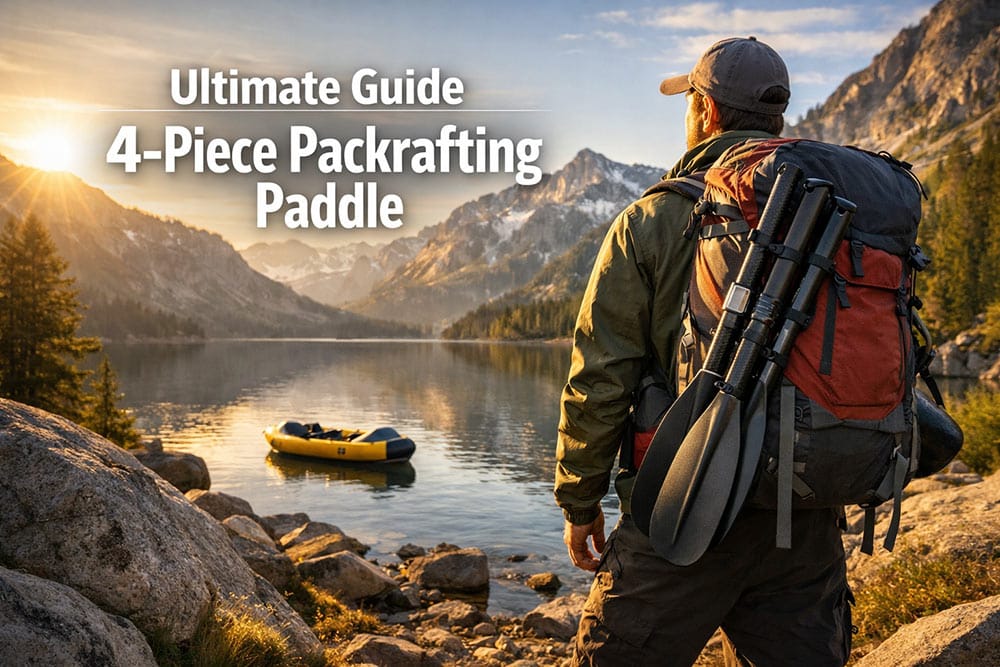
A 4-piece packrafting paddle breaks down into four short sections so it packs inside a 30–40 L backpack or a bike frame bag, yet assembles into a full-strength touring or whitewater tool on the water. For backcountry travel, this format matters: you can hike or ride efficiently without a long shaft snagging brush, then launch with a paddle that fits your water and stroke style. Quick wins for sizing: start with your height, the packraft’s inner width, and your stroke angle. As a rule of thumb for packrafts, add about 6–10 cm to traditional kayak charts to clear the tubes and maintain an efficient stroke path—an outfitter-tested heuristic noted by a leading whitewater retailer in 2025 according to the River Sports Whitewater Kayak Paddle Buyers Guide (see citation below). In this guide, you’ll learn how blade shapes, materials, ferrules, collapsed length, weight, and 2026 price bands influence comfort, control, and durability on multi-day mixed-water trips.
Key takeaways
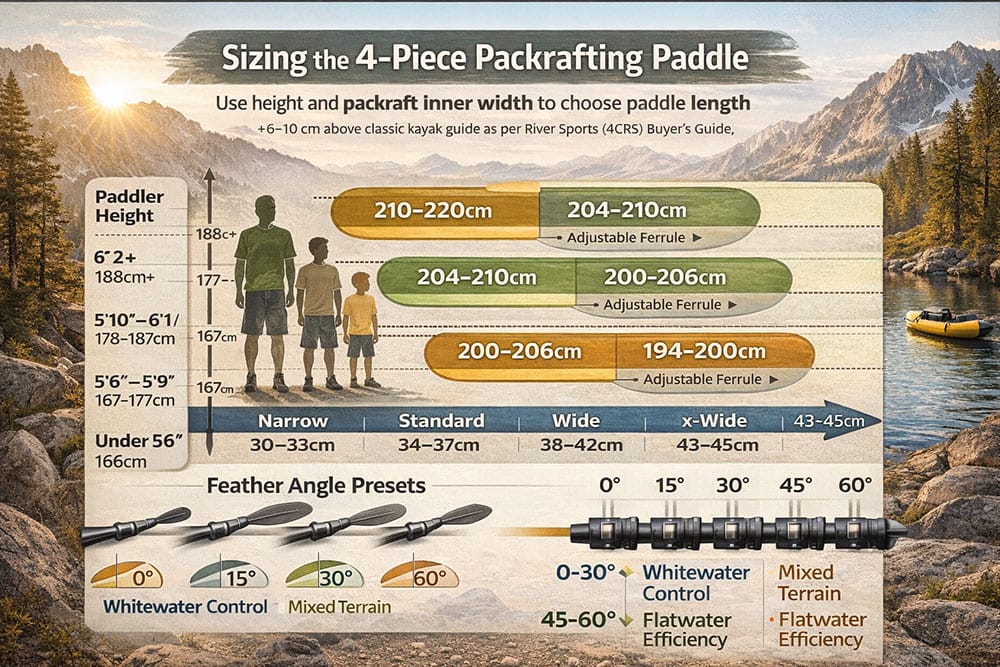
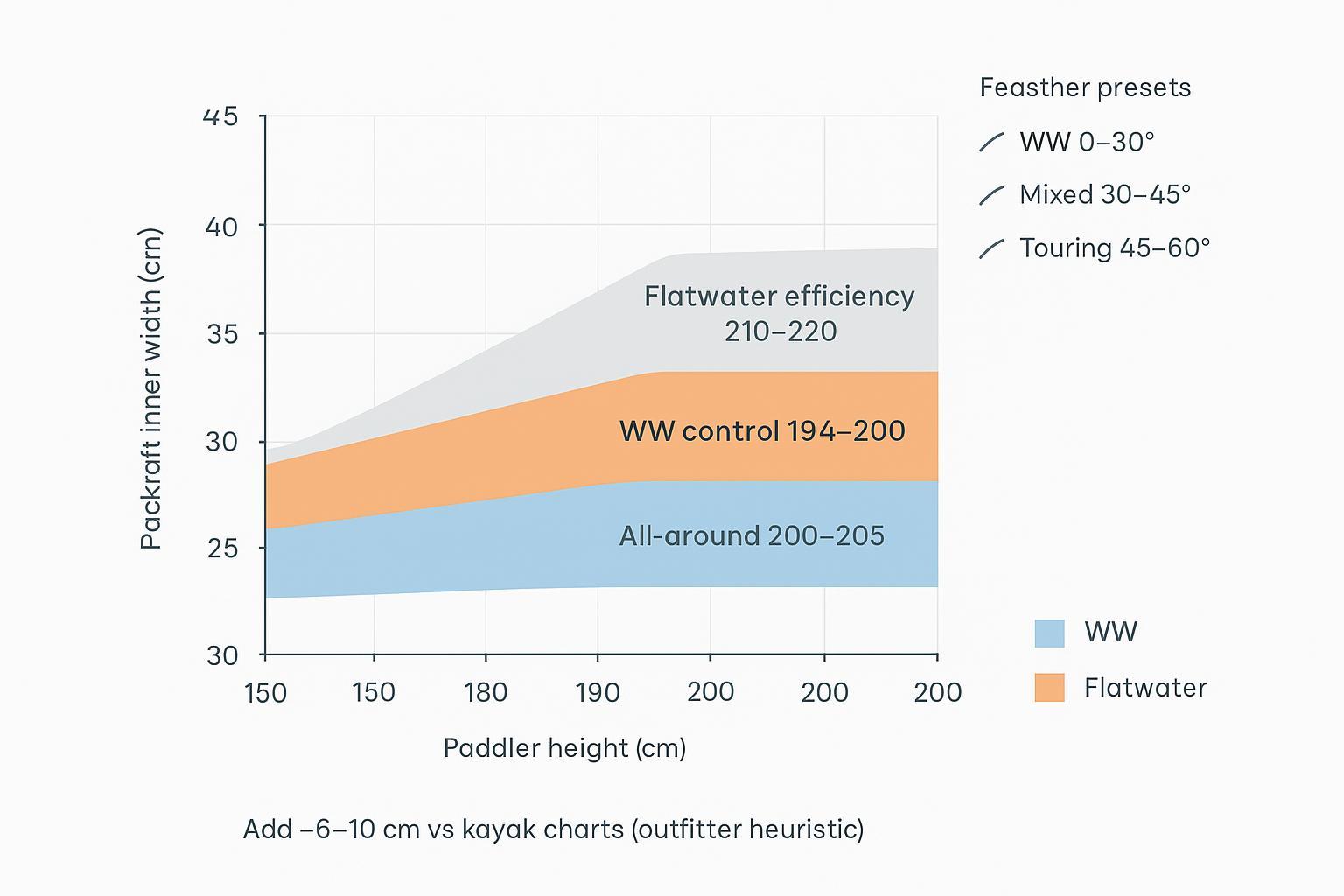
Start length around 200–205 cm for mixed itineraries; shorten toward ~194–200 cm for technical whitewater control; lengthen toward ~210–220 cm for flatwater efficiency.
For packrafts, plan to add ~6–10 cm versus classic kayak charts to accommodate wider tubes and seating.
Choose blade shape to match stroke angle: high-angle for power and control; low-angle for endurance and reduced fatigue.
Ferrules that offer 0–60° feather and 10–15 cm length adjust make one paddle work across boats, users, and conditions.
Ultralight targets under ~30 oz favor long carries but may trade away rock-hard durability; reinforced builds often exceed ~30 oz for river abuse.
2026 US price tiers: Entry ~$150–$250, Mid ~$250–$400, Premium ~$400–$550, with materials/weight/adjustability scaling by tier.
Sizing the 4-Piece Packrafting Paddle
Selecting a 4-piece packrafting paddle begins with fit. Your torso height, the raft’s inner width and tube diameter, and your preferred stroke angle all influence the optimal length. Adjustable ferrules let you fine-tune on trip days, which is invaluable for mixed itineraries.
Pick your length by height, tube width, and stroke style
Use standard whitewater kayak charts as a baseline, then add ~6–10 cm for packrafts to clear the tubes and sustain a natural entry angle—this increase is an outfitter field heuristic reported by a respected whitewater retailer in 2025 in the River Sports (4CRS) buyer’s guide. Taller paddlers and wider boats skew longer; a high-angle stroke can skew shorter, while a low-angle touring stroke benefits from length. For most multi-day mixed-water riders, 200–205 cm is a versatile starting band; if you often tour flatwater with a relaxed cadence, test 210–220 cm. When between sizes, prioritize a ferrule that allows 10–15 cm of length adjust so you can experiment.
Whitewater vs flatwater: choose control or efficiency
Shorter paddles (roughly 194–200 cm for many packrafters) promote quick cadence, braces, and maneuverability in whitewater. Longer paddles (about 210–220 cm) improve efficiency on lakes and windy crossings by reducing stroke frequency and easing a low-angle technique. Practitioners and brand education pages align on these bands: whitewater applications tend to favor the shorter end, while flatwater touring often lives longer, a pattern reflected across outfitter education and manufacturer content such as Kokopelli’s sizing basics and Aqua Bound’s packraft resources.
Feather angle basics and when to adjust
Feather angle reduces wind resistance and can align wrists for comfort. Simple presets work: 0–30° for whitewater agility, 30–45° for mixed days, and 45–60° for flatwater touring. Modern ferrules offer right- or left-hand control and fine increments, so treat these as starting points rather than rules. Systems that combine infinite feather with length adjust shine when switching between river miles and lake slogs or sharing a paddle among partners.
Evidence and further reading: A prominent whitewater retailer’s 2025 buyer’s guide documents the +6–10 cm packraft heuristic and angle norms; major paddle makers acknowledge packraft width and offer adjustable ferrules and packraft collections. See the River Sports (4CRS) Whitewater Kayak Paddle Buyer’s Guide and Aqua Bound’s packrafting education and collections linked below.
Blade Shapes and Materials
Blade geometry and layup determine how power feels and how your shoulders and elbows feel at the end of day three.
High-angle vs low-angle blades and fatigue trade-offs
High-angle blades are shorter and broader. They deliver quick acceleration and crisp corrections—handy when you’re loaded and threading shallow shoals—but the larger bite can fatigue smaller paddlers over long distances. Low-angle blades are longer and narrower. They favor smooth, horizontal strokes that reduce cadence and conserve energy on lakes. If your itinerary includes both, a mid-size blade paired with length and feather adjustability can balance control and endurance.
Carbon blades maximize stiffness and minimize swing weight, which improves efficiency and cadence control on long carries and calm miles. They can be less forgiving against rocks.
Fiberglass blades offer a sweet spot: solid stiffness with better impact tolerance in rocky rivers, and usually a friendlier price.
Foam-core constructions (often with carbon skins) reduce swing weight and add buoyancy, aiding blade recovery. They’re efficient for long days but still warrant careful edging around rocks. Authoritative primers from paddlesports educators outline these differences and why carbon’s stiffness feels “snappy” while fiberglass’s flex can be joint-friendly on chattery rivers, as discussed by NRS Learn and Aqua Bound’s materials education.
Edge reinforcements and river abuse considerations
Reinforced blade edges (thicker rails or protective laminates) help when you push off gravel bars or scull along boulders. They add grams but pay back in longevity. If you frequently scrape and brace in shallow creeks, prioritize fiberglass or reinforced edges over the lightest carbon layups.
Shaft, Stiffness, and Ergonomics
The shaft is your daily driver for feel, warmth, and fatigue.
Carbon vs fiberglass vs aluminum shafts
Carbon shafts are the lightest and stiffest, transferring power cleanly with minimal flutter—great for big mile days and long portages. Fiberglass shafts bring moderate flex that’s kind to joints and a warmer hand feel. Aluminum shafts are budget-tough but heavier and cold to the touch in winter; gloves mitigate this but increase bulk.
Straight shafts for 4-piece designs
Four-piece paddles overwhelmingly use straight shafts because they pack shorter and keep interfaces simple and reliable. More sections mean more joints; straight designs minimize complexity and allow robust ferrules and length-adjust mechanisms without awkward bends.
Grip texture and cold-weather handling
A light, matte texture improves wet grip without hot spots. In shoulder seasons, tape or fingerless pogies keep hands warm on carbon and fiberglass. Aluminum can feel biting cold; if winter trips are your norm, weigh that comfort factor heavily.
Ferrules and Adjustability
Ferrules are the heart of a 4-piece packrafting paddle. The best systems are precise, debris-tolerant, and easy to service in the field.
Push-button vs micro-adjust locks
Basic push-button/snap ferrules are simple and robust but limit feather choices and rarely offer length adjust. Micro‑adjust ferrules add indexed or infinite feather settings and, on some systems, length overlays. Look for positive engagement, minimal play, and sand tolerance.
Feather angles: 0°–60° and ambidextrous setups
Quality ferrules allow 0–60° feather with right- or left-hand control. Start with 0–30° for whitewater, 30–45° for mixed days, and 45–60° for headwind lake crossings, then tweak for wrist comfort.
Length-adjust overlays (10–15 cm) and field reliability
A 10–15 cm range effectively turns one 4-piece packrafting paddle into several. On mixed itineraries, you can shorten for a technical creek day and lengthen for a windy reservoir. Periodically rinse and dry the joints, carry a tiny bit of silicone-based lube, and inspect bolts or clamps seasonally so grit and silt don’t compromise function. Manufacturer education highlights that many modern systems now combine infinite feather with up to 15 cm of length adjust.
Packability and Weight
Packability is where a 4-piece shines: short segments stash inside packs and bags, protecting the paddle and keeping your silhouette clean on the trail or bike.
Collapsed section lengths and backpack/bike carry
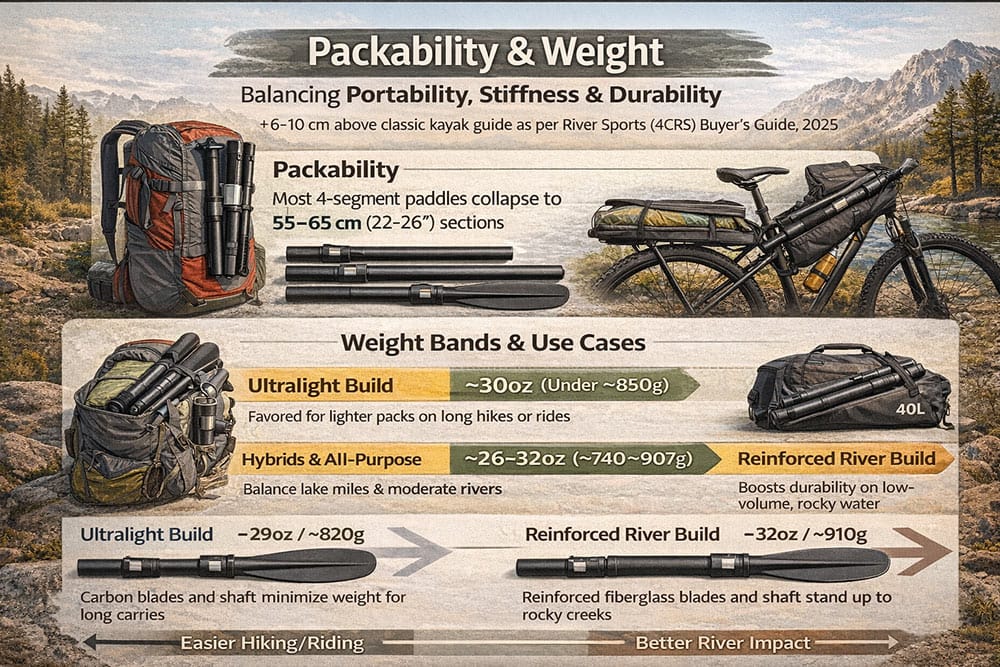
Most 4-piece paddles break into segments roughly in the 55–65 cm range (about 24–30 in on some models). That fits inside many 30–40 L packs or diagonally along a bike frame bag. Use side compression straps or an internal sleeve to anchor the bundle and protect blades from abrasion.
Weight bands from ultralight to reinforced river use
Ultralight builds push under ~30 oz for easier hiking and riding, but may be less forgiving when prying off rocks. Reinforced river-focused builds commonly sit around or above ~30 oz thanks to thicker edges and burlier shafts. Retailer filters and manufacturer collections illustrate whitewater-oriented paddles clustering in the mid-30s ounces while all-purpose and touring options dip into the mid-20s to low-30s.
Balancing packability, stiffness, and durability
Think of it this way: you’re trading grams, stiffness, and impact tolerance. If your route is lake-heavy with long carries, prioritize low swing weight and a stiffer layup. If shallow rivers and gravel bars dominate, accept a few extra ounces for reinforced edges and a slightly more flexible shaft that shrugs off hits.
Budget and Market Snapshot (US, 2026)
The 2026 U.S. market offers clear tiers for a 4-piece packrafting paddle. Rather than naming brands, use these ranges and typical specs to match your priorities.
Entry, mid, and premium price ranges
Entry: about $150–$250
Mid: about $250–$400
Premium: about $400–$550 These envelopes reflect current listings across major packraft-oriented collections and retailers in 2025–2026.
What you gain with each tier
Entry: Fiberglass or fiberglass-reinforced nylon blades; aluminum or fiberglass shafts; basic push-button ferrules; limited or no length adjust; often 30–39.5 oz.
Mid: Hybrid fiberglass/carbon layups; reinforced edges more common; micro‑adjust feathering; 10–15 cm length adjust on many models; typically ~25–33.5 oz.
Premium: Full/near-full carbon, sometimes foam-core; precise ferrules with infinite feather and up to ~15 cm length adjust; often ~25–30 oz (or lighter).
When to prioritize adjustability or spare-part support
Choose length-adjust ferrules if you share gear, paddle different boats, or face varied wind and water. If you travel far from service, favor systems with readily available replacement parts and straightforward clamp/bolt servicing.
Tier
Street price band (USD)
Typical materials
Typical weight (oz)
Adjustability & ferrule
Best-fit use
Entry
~$150–$250
Fiberglass or fiberglass-reinforced blades; aluminum or fiberglass shaft
Indexed or infinite feather; 10–15 cm length adjust typical
Frequent use; versatility
Premium
~$400–$550
Full/near-full carbon; sometimes foam-core
~25–30 (or lighter)
High-precision ferrules; infinite feather; up to ~15 cm length adjust
Long carries; performance touring/WW
Sources for ranges and specs include packraft-focused collections and education pages from major manufacturers and retailers in 2025–2026, such as Aqua Bound’s packrafting collections and AQ Outdoors’ category pages. See links below for details.
Care, Repair, and Longevity
Good habits keep a 4-piece packrafting paddle tight, smooth, and rattle-free for years.
Field maintenance for ferrules and joints
After silty runs, fully break down the paddle, rinse ferrules, and let them dry before reassembly. A tiny amount of silicone-based lubricant restores smooth operation. Periodically check for play and retighten any user-serviceable bolts or clamps.
Blade and edge protection habits
Avoid levering against sharp rocks. Smooth small chips with fine sandpaper; consider a thin epoxy repair on deeper nicks. If your routes are consistently rocky, a fiberglass or reinforced edge construction will outlast the lightest carbon skins.
Storage, transport, and seasonal checks
Store the paddle dry and disassembled, out of UV and heat. Use blade covers or wrap them inside the pack to prevent scuffing from tent stakes or cookware. Once a season, do a full teardown, clean interfaces, and replace worn parts so your ferrules lock with crisp precision.
Conclusion
Match length to your height, raft width, and stroke angle—then fine-tune with ferrules. Pick blade shape and materials for your water: high-angle and reinforced edges for control in current; low-angle and lighter layups for mileage on lakes. Practical picks for most mixed-water trips: an all-around 4-piece packrafting paddle at 200–205 cm; whitewater-focused days at about 194–200 cm; and ultralight builds under ~30 oz if you’re willing to trade some rock-hard durability for easier carries.








Comments are closed