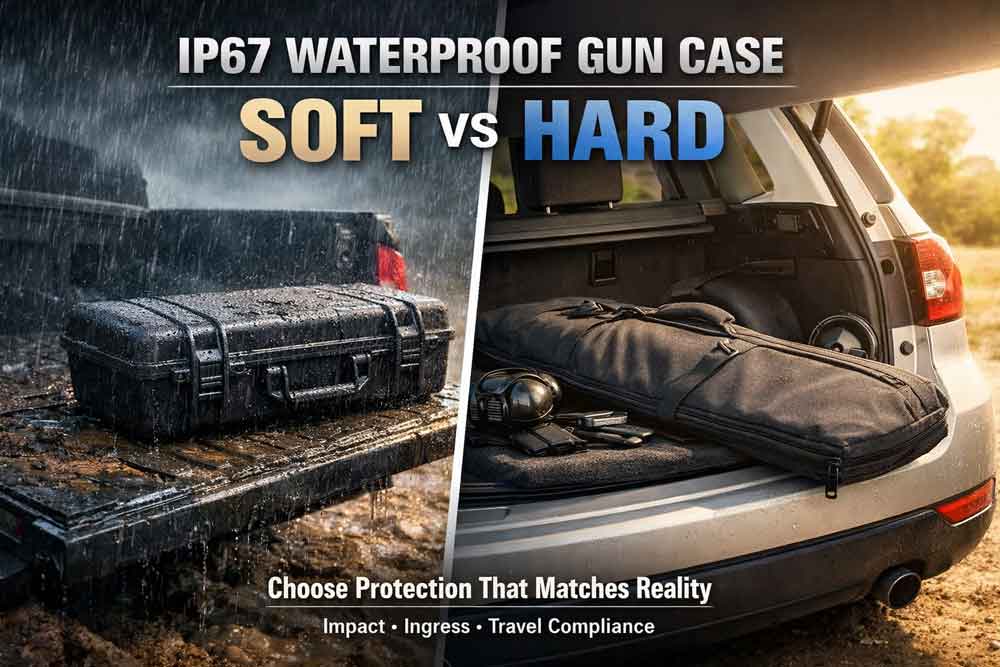
If you mostly drive to the range or trailhead, a lightweight sleeve can feel perfect. If you’re flying or handing your gear to anyone else, a locked hard case isn’t optional—it’s required. In this guide, you’ll learn exactly when a gun sleeve is the right everyday choice and when a hard case is non‑negotiable. We’ll compare protection, portability, moisture control, cost, and legal basics in plain English, then wrap with a quick decision checklist you can use before each trip.
Key Takeaways
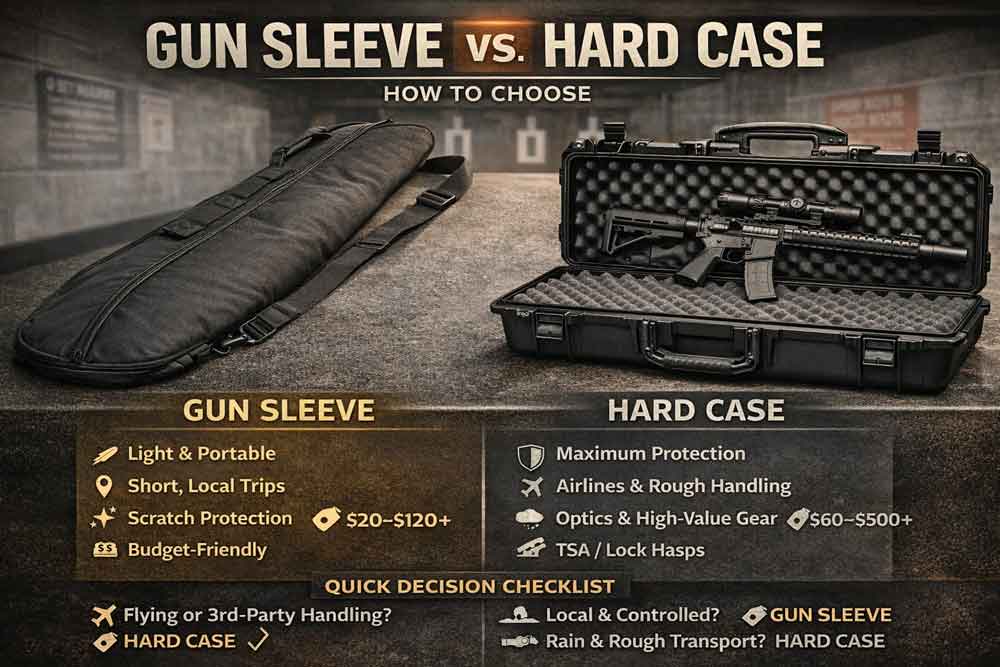
For short, local trips where you keep custody of the firearm, a padded sleeve is lighter, faster, and protects against scratches and minor bumps.
For flights, rough handling, bad weather, long rides, or protecting optics/high‑value builds, choose a locked, hard‑sided case.
Airlines in the U.S. require an unloaded firearm in a locked, hard‑sided case, declared at check‑in. See the official TSA guidance and confirm your airline’s page before traveling.
Moisture and dust sealing (e.g., gasketed lids, IP‑rated protection) are strengths of hard cases, not sleeves.
Budget smart: start with a good sleeve for local carry, then add a hard case for travel and harsher conditions.
When a sleeve makes sense
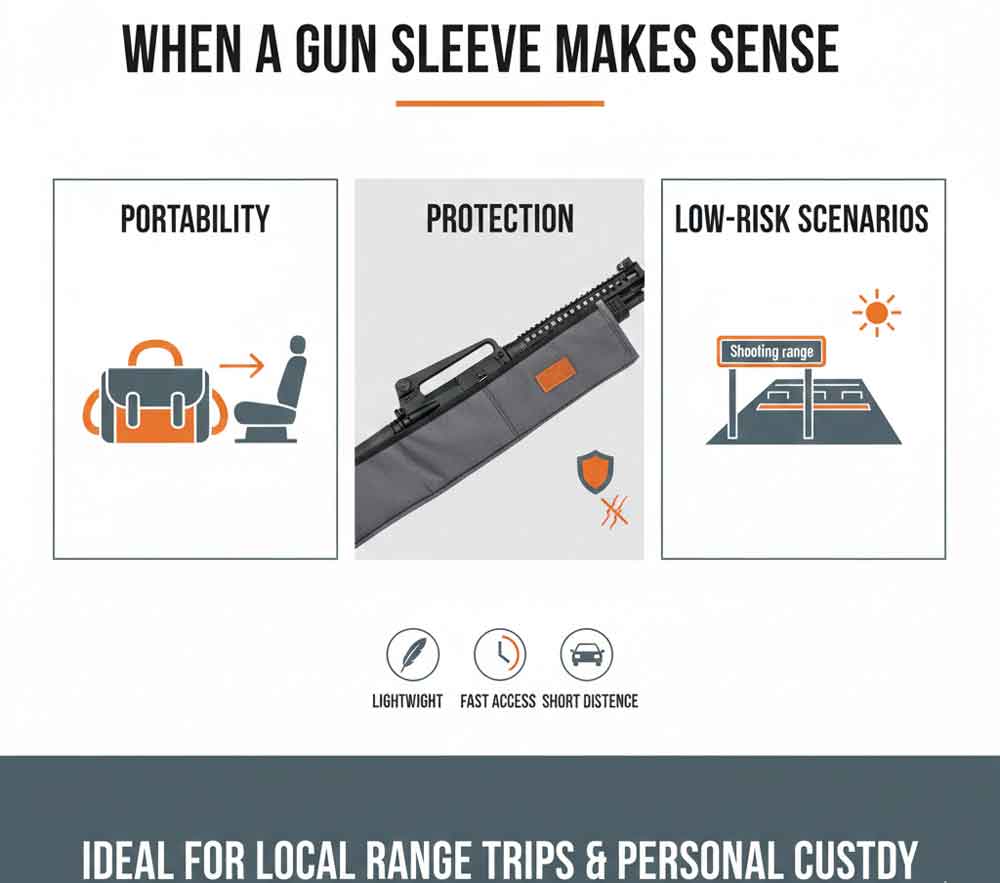
Portability and storage wins
Sleeves are slim, light, and easy to carry over a shoulder. They slide behind a truck seat, sit neatly in a closet, and won’t hog space in a small trunk. If you’re moving between home, vehicle, and a nearby range—where you personally handle the firearm end‑to‑end—a sleeve keeps the footprint tiny and the carry simple.
Scratch and minor-bump protection
A quality soft gun sleeve (or soft case) uses padded fabric, typically polyester or nylon, with a full‑length zipper and a soft liner that shields finishes from scuffs. Padding absorbs small knocks from door frames, benches, and the tailgate. It’s not crush‑proof, but for controlled, low‑risk trips it’s enough to keep cosmetic wear at bay.
Real-world low-risk scenarios
Think short drives to the local range, a quick tune‑up at the smith, or walking from cabin to truck. You’re not stacking gear, nobody else is tossing your bag, and weather is cooperative. In those conditions, a sleeve is fast, quiet, and gets out of your way.
When a hard case is non-negotiable
Air travel requirements
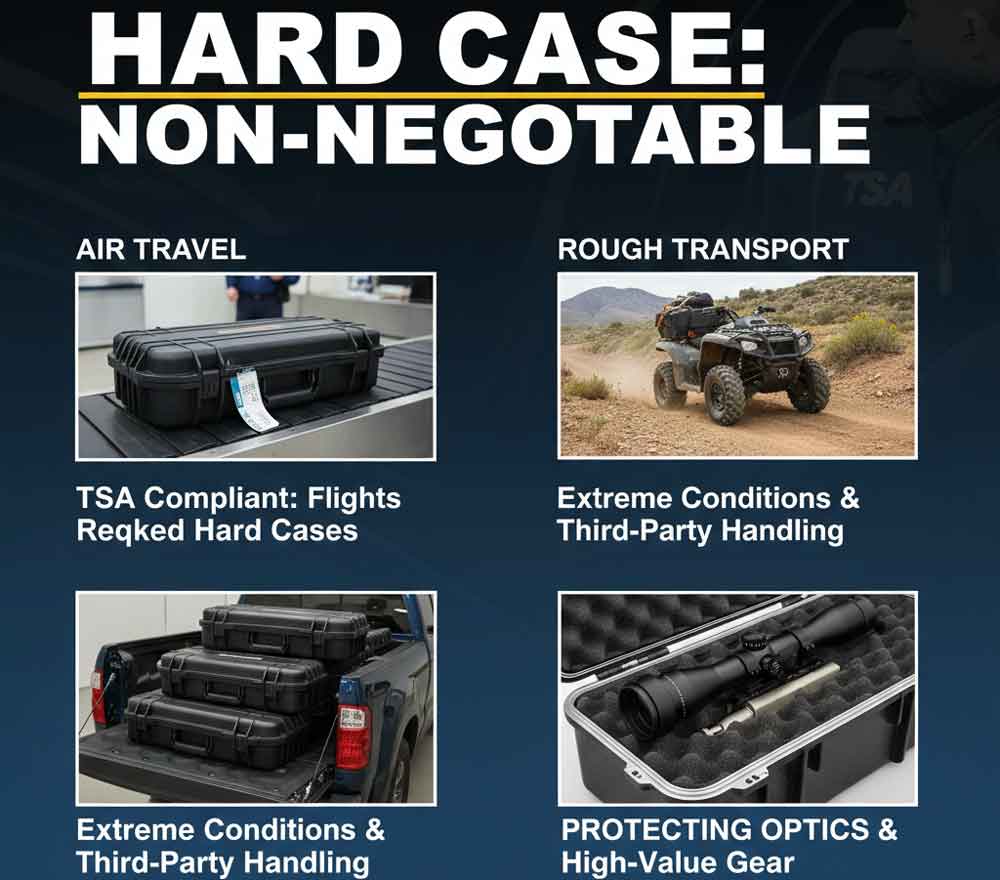
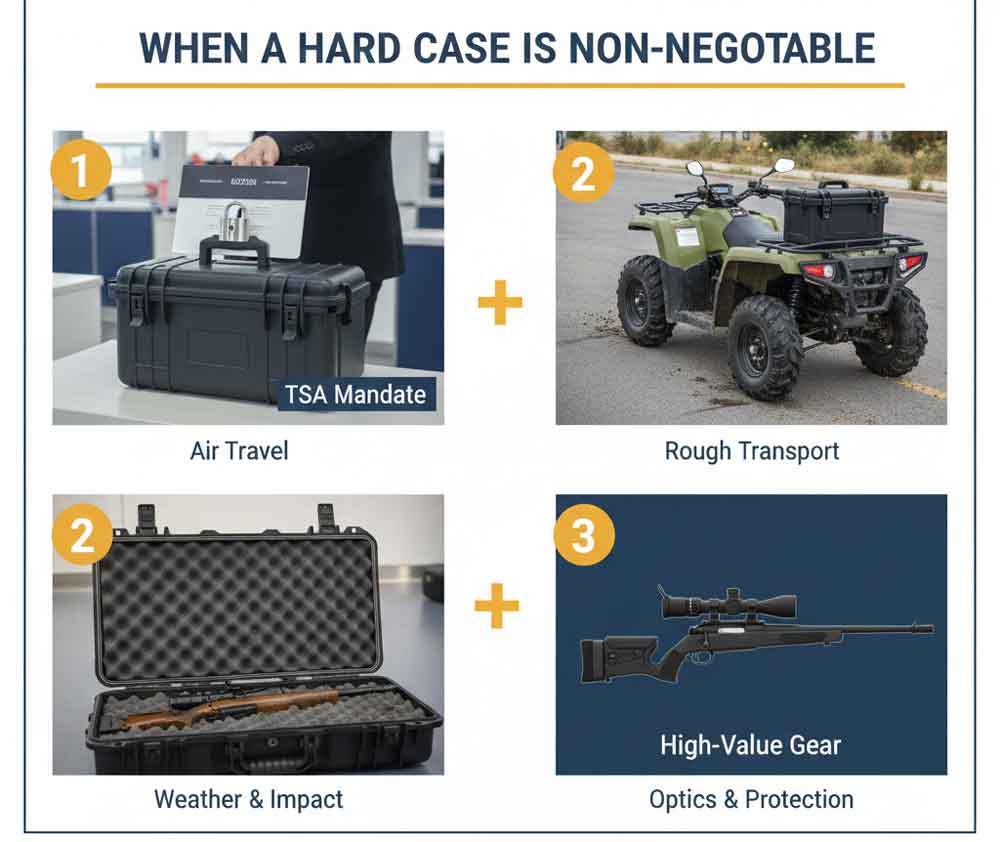
For U.S. air travel, an unloaded firearm must ride in a locked, hard‑sided case inside checked baggage, and you must declare it at the airline counter. That’s the Transportation Security Administration’s baseline; sleeves/soft cases don’t qualify. See the TSA page “Transporting Firearms and Ammunition” and confirm your carrier’s rules—major airlines like United and Southwest reiterate the locked, hard‑sided standard in their policies (links in Legal & travel basics below).
Rough transport and security
If baggage handlers, shipping services, or a gear pile will touch your case, a rigid shell with multiple lock points and stout latches protects against crushing, prying, and hard knocks. On trucks, ATVs, trailers, and boats, a hard case shrugs off vibration, stacking, and the stray cooler slide far better than fabric.
Optics and high-value gear
Precision optics, long turrets, bipods, suppressors—these all benefit from custom or pluck‑and‑pick foam that immobilizes the rifle. A fitted cavity reduces shock transfer and helps prevent zero shift. That level of stabilization is the hard case’s wheelhouse.
Materials and features to compare in the gun sleeve vs hard case choice
The differences aren’t just feel—they’re structural. Here’s a compact look at the essentials.
Feature
Soft sleeve/soft case
Hard case (gasketed)
Impact/crush protection
Fabric + foam absorbs minor bumps; not crush‑resistant
Rigid polymer/HDPE walls resist drops, stacking, and prying
Moisture/dust control
Water‑resistant fabric at best; zippers leak
Gasketed lid with O‑ring; some models meet IP67 (dust‑tight; resists temporary immersion) per the IP code standard overview
Optics protection
Loose padding; no immobilization
Custom/pluck foam cradles rifle/optic to reduce shock and zero shift
~ $200–$500+ for IP‑rated models; basic hard cases ~$60–$180
Sleeves: fabrics, padding, closures
Most sleeves use rugged woven polyester or nylon with foam inside and a soft liner to protect finishes. A full‑length zipper makes loading straightforward and offers quick access at the bench. Prioritize dense padding, stout stitching, and a liner that won’t snag sights or turrets. When you’re weighing gun sleeve vs hard case for a local run, these sleeve traits are usually enough.
Hard cases: shells, foam, locks
Quality hard cases pair thick polymer shells with gasketed lids, pressure purge valves, and multiple latches. Many models are designed to meet airline shipping durability benchmarks and list ingress‑protection ratings (for example, IP67 is dust‑tight and resists temporary water immersion). Look for solid foam you can cut to shape or pluck‑and‑pick foam to create snug cavities, plus reinforced lock hasps. In the gun sleeve vs hard case debate for travel or rough handling, these features tip the scales hard toward a lockable hard case.
Care and moisture tips
Sleeves air‑dry quickly after light rain; just unzip, open, and hang. Hard cases excel at prevention: add a reusable desiccant to stabilize humidity, and open the lid to air out after wet use. A light coat of quality oil on bare metal helps ward off rust in either format.
Legal and travel basics
TSA baseline for airlines
For checked baggage in the U.S., TSA requires firearms to be unloaded and secured in a locked, hard‑sided container; passengers must declare at the counter. Ammunition must be boxed per rules. Review the official guidance in the Transportation Security Administration’s page on Transporting Firearms and Ammunition (check the current text before you fly). Airlines echo this requirement—see United’s firearms policy and Southwest’s guidelines for checking guns for examples and weight/packing nuances.
Ground transport varies
Vehicle transport rules depend on your state and local laws. The federal safe‑passage statute (18 U.S.C. § 926A) offers limited protection when traveling between places where possession is legal, but conditions apply; see the overview at Cornell Law School’s LII entry on Title 18, Chapter 44. State agencies publish specifics; for example, California’s Bureau of Firearms outlines locked‑container and trunk rules on the California DOJ firearms portal.
Verify current rules
Policies and statutes change. This guide isn’t legal advice. Before each trip, confirm TSA guidance, your airline’s firearms page, and official state resources for origin, destination, and any transit states.
Decision checklist
Quick decision flow
Flying, shipping, or expecting rough third‑party handling? Choose a locked, hard‑sided case.
Local, low‑risk trip where the firearm stays in your custody? A padded sleeve fits.
Bad weather, sand, or boat spray? Go hard case with a gasketed seal (IP‑rated if possible) and add desiccant.
Scoped, high‑value setup? Hard case with custom or pluck foam to immobilize the rig.
Budget and ROI
As of 2026‑02‑12 (subject to change): soft sleeves/soft cases typically run about $20–$120+, basic hard cases about $60–$180, and gasketed/IP‑rated hard cases about $200–$500+. If you’re mostly driving locally, start with a quality padded sleeve and plan to add a travel‑ready hard case when you book flights or begin hauling with other heavy gear.
Complementary use strategy
Own both if you can. Use the sleeve for quick, controlled trips and range days when you want speed and light carry. Use the hard case whenever compliance, rough handling, weather sealing, or optics protection is in play. Think of it this way: sleeve for convenience, hard case for consequences.
Conclusion
For short, controlled, everyday trips where you carry the firearm and conditions are calm, a gun sleeve keeps things light, fast, and protected from scratches. For flights, rough transport, bad weather, or anytime optics and high‑value gear are on the line, a locked, hard‑sided case is the right tool—and for airlines, it’s the required one. Use the checklist above before each outing and you’ll pick the right case with confidence.










Comments are closed