If you’re building your first spearfishing kit, choosing the right spearfishing backpack can feel like guesswork. This guide shows you how to pick confidently by matching your diving style—shore, boat, travel, or bluewater—to the right pack design. Use it like a checklist: start with design type (mesh vs dry vs hybrid), then confirm capacity and long-fin/speargun fit, and finally fine-tune comfort and budget.
Here’s the quick preview:
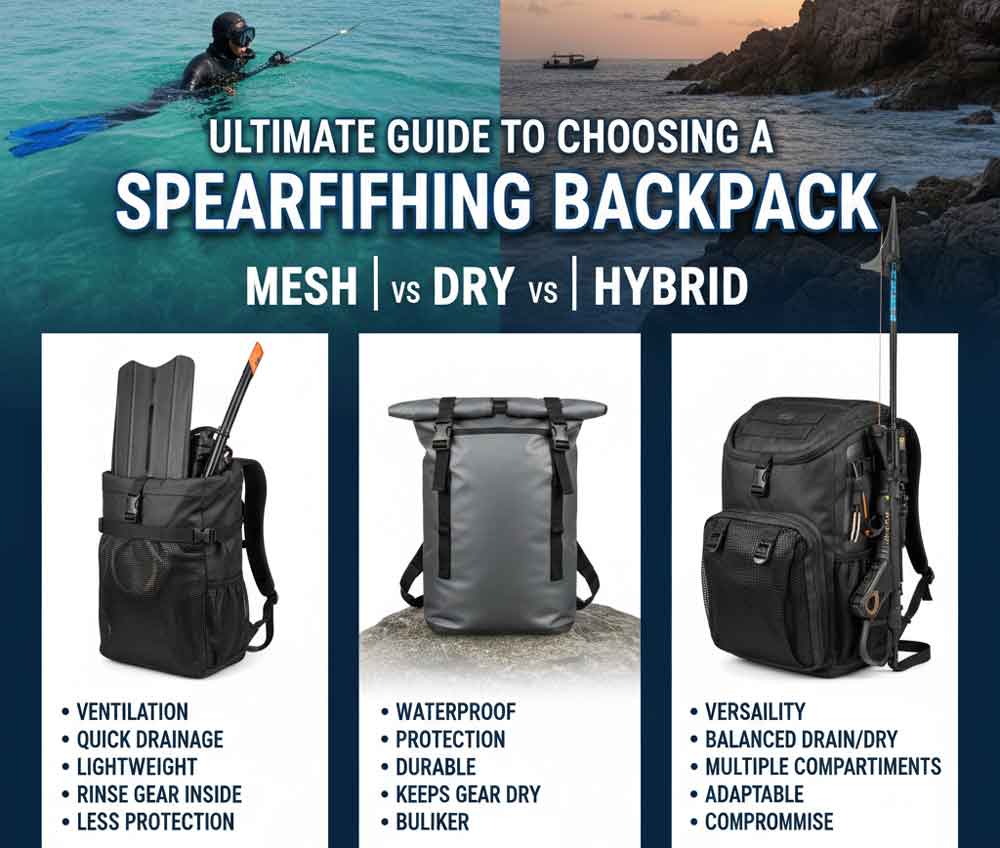
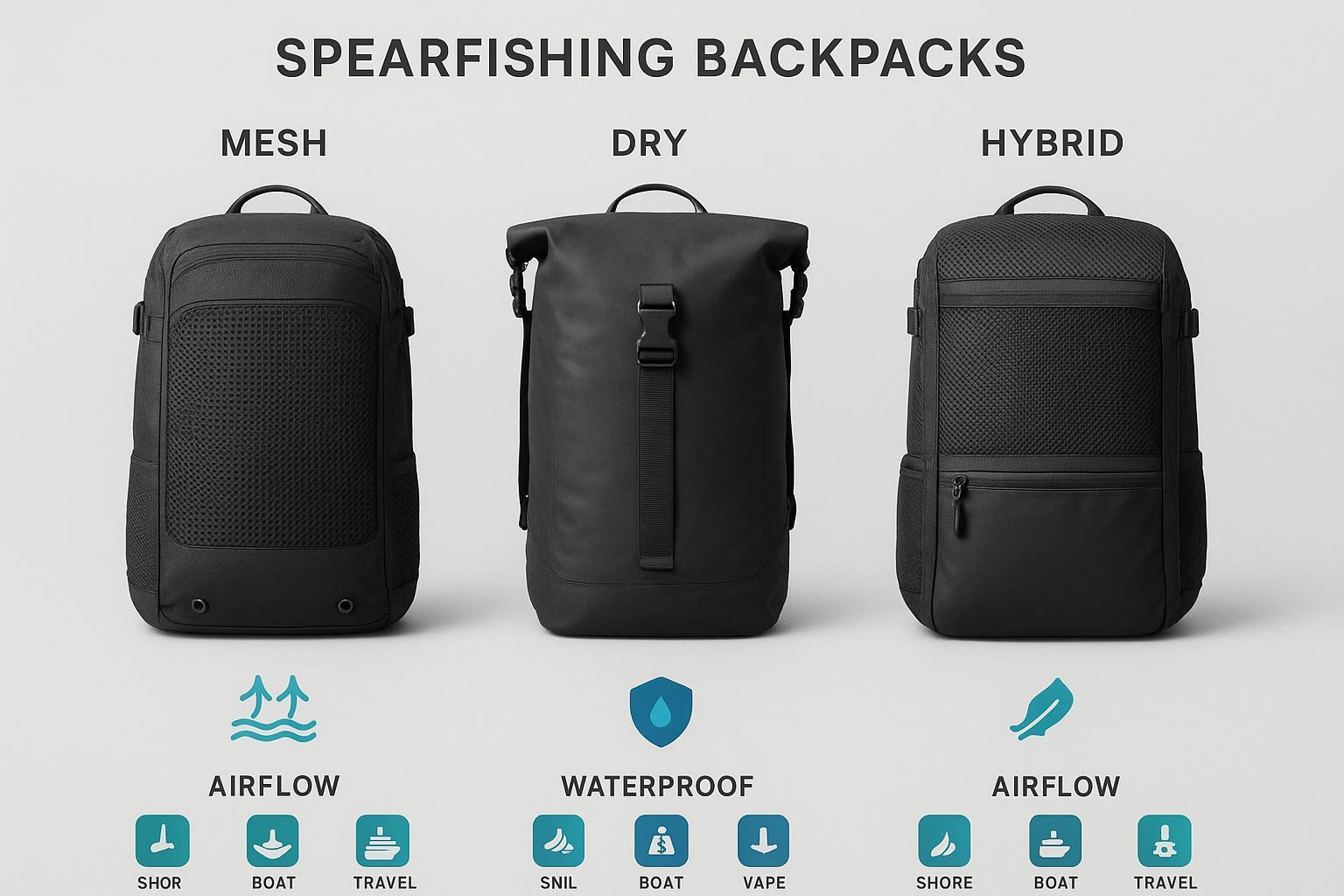
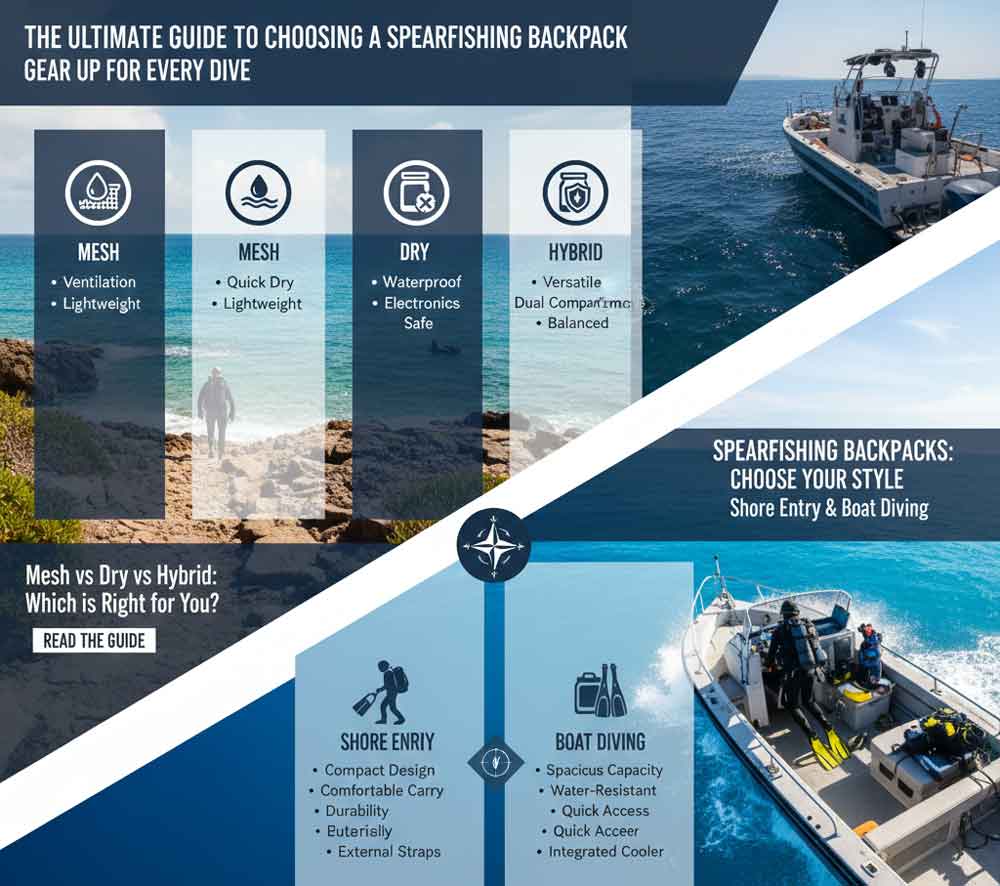
Mesh vs dry vs hybrid: mesh breathes and drains fast; dry protects valuables and clothes; hybrids blend both.
Styles: shore, boat, travel, bluewater—each demands different capacity and carry features.
What matters most: capacity and fit for long fins and spearguns, materials and water handling (ventilation vs waterproofing), comfort when loaded, and price range.
The number-one decision factor in this guide is simple: will your pack safely fit and retain your long fins and speargun(s) without bending blades or letting the gun swing? Keep that front and center as you read.
Mesh vs Dry vs Hybrid
Mesh packs: airflow and drainage
Mesh spearfishing backpacks prioritize ventilation and fast drainage. Large vent panels and drain grommets help wet suits and socks dry quicker and reduce odor on shore hikes. They’re typically lighter and simpler to rinse. The trade-off is protection: mesh won’t keep valuables dry, and gear is more exposed to rain and spray. Mesh shines for shore sessions where most items are already wet and you value airflow over water sealing.
Key cues for beginners:
Look for big mesh panels, reinforced bottoms, and drain ports.
Expect to carry valuables in separate waterproof pouches if you choose mesh.
If internal height is short for your long fins, plan secure external carry with two strap points and a bottom cup to stop sliding.
Dry packs: protection for valuables
Dry packs use welded seams, roll-top closures, or watertight zippers to keep contents dry—great for boat decks, rain, and travel days. Real waterproof performance depends on closure/seam design, not marketing labels alone. Independent testing notes that submersible builds with robust closures stay dry far better than splash-only sacks. For background on how closure and seam construction affect performance, see the testing emphasis in the OutdoorGearLab dry bag reviews (publisher; various years), such as their overview of dry-bag performance and specific case reviews of watertight closures.
Dry-pack trade-offs:
Heavier and warmer on the back with limited ventilation.
Excellent for protecting clothes, electronics, and documents.
Roll-top technique matters; practice correct sealing.
Hybrid spearfishing backpacks combine vented panels with at least one sealed pocket to separate wet and dry items. They’re versatile when your day includes a wet shore entry, a boat transfer, or a rainy commute. Expect moderate weight with better organization than pure mesh and more breathability than full dry packs. If your routine changes week to week, hybrids are often the safest bet.
Design type
Airflow
Waterproofing
Weight feel
Best use cases
Pros
Cons
Mesh
Excellent
Minimal
Lightest
Shore dives, fast drying
Breathable, easy rinse, budget-friendly
Poor for valuables, exposure to rain/spray
Dry
Low
High to submersible (varies by closure/seams)
Heavier
Boat days, rain, travel
Protects valuables; clean storage
Warmer on back; needs correct sealing
Hybrid
Medium
Medium–High (varies by build)
Moderate
Mixed shore/boat/travel
Versatile compartments
Not as breathable as mesh; not as dry as top dry packs
Choose by Style: Shore & Boat
Shore diving essentials
For most beginners, a 35–60 L spearfishing backpack is the sweet spot for shore sessions. It holds a 5 mm wetsuit, weight belt, mask/snorkel, gloves/booties, long fins, small float/line, water/food, and a few spares—without becoming unwieldy on rocky entries. Many long fins measure around 90–93 cm total length depending on model, so don’t bend them to force an internal fit. If your pack’s straight internal height is 5–10 cm shorter than your fins, plan to carry fins externally.
Fin and speargun fit checks (do this at home):
Measure total fin length (heel to tip). Compare to your pack’s internal height or fin-sleeve length.
If shorter by more than a few centimeters, switch to external carry using two straps plus a bottom cup or sleeve to stop sliding and rattling.
Check speargun retention: the pack should secure the barrel and butt to prevent muzzle swing when scrambling over rocks.
Comfort and safety cues for shore trails:
Prioritize padded, contoured shoulder straps, a sternum strap, and a hip belt. These reduce sway and keep weight high and centered.
Breathable back panels help on hot hikes; mesh or hybrid packs dry faster between entries.
Keep knives accessible; know your weight-belt quick release; review buddy procedures. For practical safety planning, Divers Alert Network highlights key spearfishing practices like pre-dive planning, team roles, and deck handling in their spearfishing safety guidance.
Fin-fit quick table (beginner reference):
Typical long fin length (total)
Minimum internal pack height for internal carry
External carry recommendation
~80 cm
≥ 82–85 cm
Optional; secure tips/heels if external
~90–93 cm
≥ 95–100 cm
Recommended external carry if internal is shorter
~100–105 cm
≥ 105–110 cm
External carry with two straps + bottom cup
Why these numbers? Many long fins cluster around ~90–93 cm total; allowing a small buffer prevents bending and stress on blades. For representative fin dimensions and how models vary, see examples curated by Apneapassion’s equipment dossiers, such as their overview of spearfishing and freediving bags and specific fin-length writeups referenced there.
Boat diving essentials
Boat days favor water protection and tidy, compact gear. Dry or hybrid packs work well because rain and spray are common, and you may stash valuables or dry layers inside.
Water handling: Prefer roll-top or zipper-sealed compartments for clothes and electronics. A deck-safe, grippy base and drain ports help keep rinses tidy.
Compact footprint: Choose streamlined shapes that stand upright and slide under benches without hogging space.
Handling and safety: Unload guns in the water, pass butt-first, and stow immediately on deck. Coordinate with the crew and keep a small first-aid kit handy. DAN’s safety notes on boat handling and team roles are a worthwhile refresher in their spearfishing safety article.
Choose by Style: Travel & Bluewater
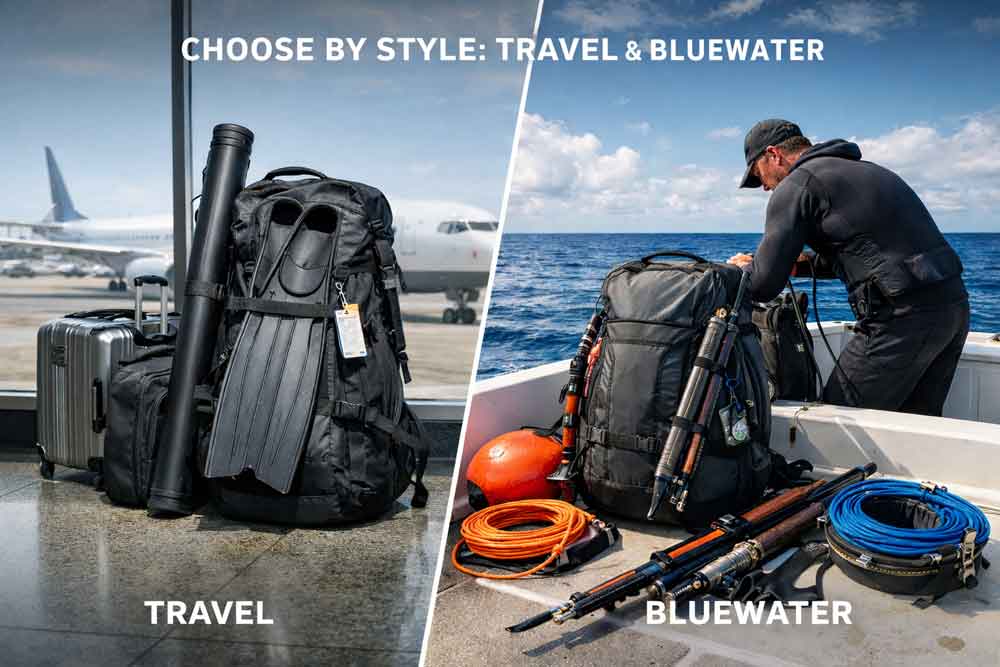
Travel spearfishing essentials
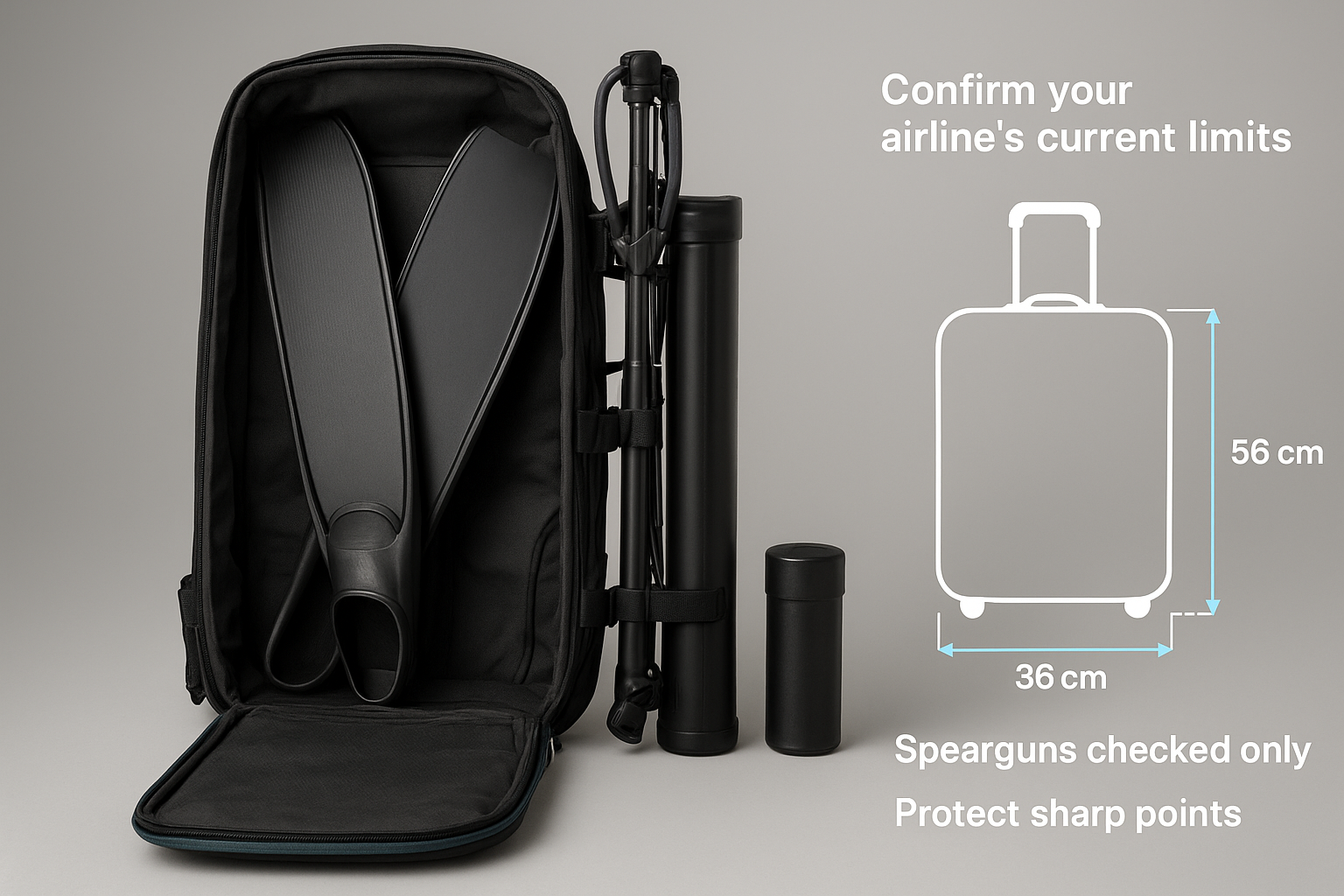
Airline size rules vary, but many carriers cluster around a 22 × 14 × 9 in (56 × 36 × 23 cm) carry-on guideline. Long fins that run ~90+ cm typically won’t qualify as carry-ons and often need to be checked or packed in sport tubes. Always verify exact rules with your airline.
What to carry on vs check:
Carry on personally fitted, hard-to-replace items like your mask and possibly your dive computer (permitted rules vary). Training-agency guidance suggests checking bulky or sharp gear and verifying local regulations before you go; see the travel-packing overview from SDI/TDI on packing dive gear.
Spearguns: Plan to check them (not carry on), and protect shafts and tips. Policies differ by carrier and country. Industry bodies like IATA explain that baggage allowances and categories vary by airline; start with the IATA baggage overview and then check your airline’s live page. For concrete examples of dimensions, compare major carriers, such as United’s carry-on limits or Ryanair’s cabin bag sizes, and then confirm your own flight’s specifics.
Packing priorities for airports and transfers:
Disassemble the speargun where possible; cap or protect sharp points; use a hard tube or structured case for checked transport.
Keep lithium batteries within carry-on limits per airline security rules, and pack knives in checked baggage when permitted by local law.
Weigh your bag at home, label your case, and bring printouts of airline policies in case staff request details.
Bluewater hunting essentials
Bluewater adds bulk and safety complexity. Expect larger guns, heavier shafts, reels, slip tips, floats, floatlines, and bungees. If you’re piecing together a beginner-friendly bluewater kit, consider whether your spearfishing backpack can handle modular carry (or if you should split loads across a pack plus a separate crate or float bag).
What to prioritize:
Capacity and structure: Bigger loads demand 60–100 L+ or modular systems. Ensure sturdy lash points for floatlines and spare shafts.
Retention and line management: Keep lines neat to avoid snags. Learn breakaway setups that connect floatlines to the shaft instead of the gun body. For a primer on common breakaway rigs and scaling bungees to target species, see these instructional overviews from Neptonics, such as their notes on breakaway rigging and picking bungees for bluewater.
Safety and roles: Double down on buddy structure and deck protocol. Divers Alert Network highlights team roles, device handling, and medical readiness in their spearfishing safety guidance.
Conclusion
Quick shortlist flow you can follow today:
Pick your design type: mesh for airflow, dry for protection, or hybrid for mixed days.
Match capacity to style: shore 35–60 L for most beginners; boat and bluewater often more; travel requires structure and protection.
Confirm fin and gun fit: measure fin length, compare to internal height, and secure fins/guns externally if needed with two straps and a bottom cup.
Check ergonomics and safety: padded straps, sternum/hip belts, tidy line management, and a buddy plan.
Final tips:
Verify waterproof claims by looking for welded seams and proven closures; the OutdoorGearLab dry bag guide explains how design, not just fabric, drives real performance.
Rinse gear with fresh water and let it dry fully before storing to prevent odor and material fatigue.
Before flying, confirm your airline’s current baggage limits and security rules. Use examples like United’s carry-on page or Ryanair’s cabin sizes only as references, then check your specific itinerary.
Frequently Asked Questions
1. Will long freediving fins fit inside a spearfishing backpack? How do I check?
Measure the fin from heel to tip and compare it to the pack’s stated internal height or fin-sleeve length; allow a 5–10 cm (2–4 in) buffer to avoid bending blades. Many specialist fin bags and larger spearfishing backpacks list fit for fins up to about 43–44 in (≈110–112 cm), but internal-fit varies widely—if the internal height is shorter, plan for secure external carry using two straps plus a bottom cup or sleeve to stop sliding. For typical fin dimensions and example bag fits
2. How should I transport a speargun in a backpack or when flying?
On shore and boat days, secure the gun to the pack with dedicated gun loops or dual compression straps that control both the barrel and the butt to prevent muzzle swing. For air travel, disassemble shafts/tips where possible, sheath or cap sharp ends, and check spearguns as sports equipment in a hard tube or rigid case—policies vary by carrier and country, so always confirm with your airline beforehand. Training-agency travel advice covers common packing steps for dive equipment
3. Should I choose mesh, dry, or a hybrid pack? What are the real trade-offs?
Pick by how you use the pack: mesh packs give the fastest drainage and lightest carry for shore sessions but don’t protect valuables; dry packs (welded seams, roll-top or watertight closures) offer real protection for clothes and electronics at the cost of ventilation and extra weight; hybrids combine vented panels with sealed pockets for mixed shore/boat days. Note that waterproof performance depends on seam and closure quality more than fabric name—see testing guidance on dry-bag construction for detail.
4. What’s the best way to clean, dry, and store a spearfishing backpack to avoid odor and damage?
Rinse the pack and gear thoroughly with fresh water after each session, turn removable liners or wetsuits inside out to speed drying, and leave the main compartment open to air-dry in shade. Mesh and hybrid packs dry fastest; dry packs protect contents but must be emptied and aired occasionally to prevent trapped moisture. Store dry, fully dry gear in a cool, ventilated place and avoid long-term compression of foam padding.
5. Can I carry fins or a speargun as carry-on luggage? What should I check before a flight?
Most long fins (≈90+ cm total) won’t meet common carry-on size limits (many carriers use ~22 × 14 × 9 in / 56 × 36 × 23 cm), so expect to check fins in a sport bag or 44″ fin bag and to check spearguns in rigid cases. Confirm rules with your airline and consult industry guidance on packing dive gear and sports equipment categories; start with an IATA baggage overview and then check your carrier’s live policy pages for specifics.










Comments are closed