



How to Choose an Open Water Swim Buoy for Solo River Training

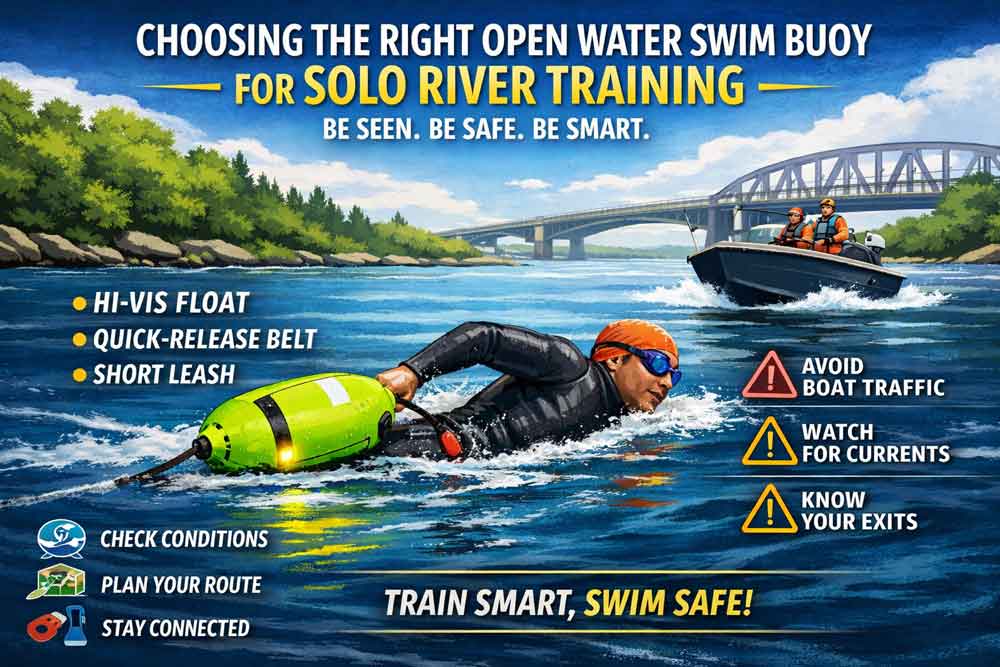
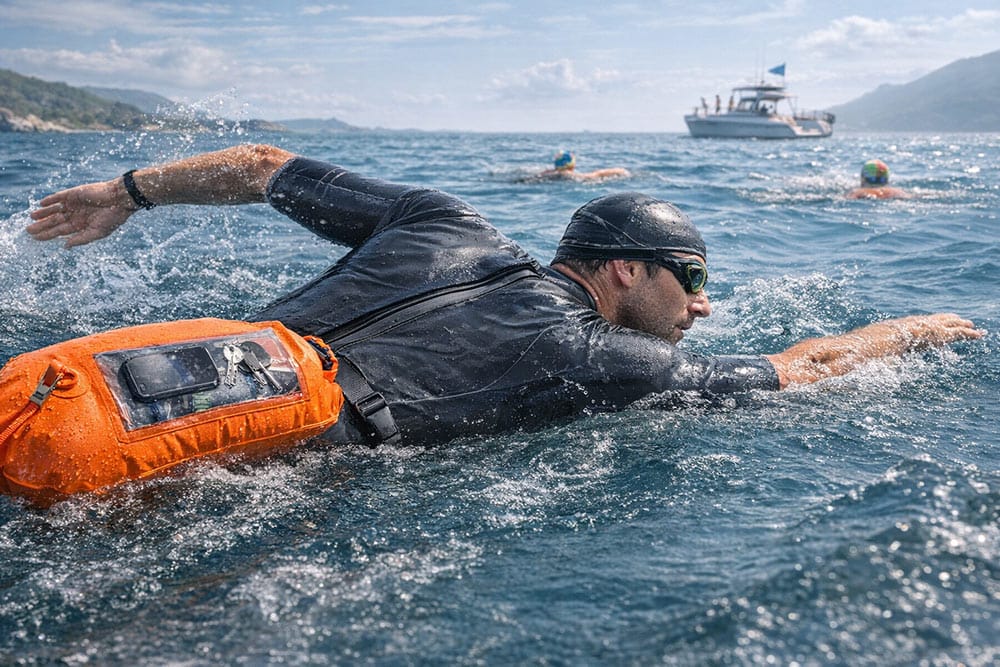
If you swim solo in rivers with current and boat traffic, your swim buoy isn’t a fashion choice—it’s a visibility tool that can also give you a brief breather when you need it. This guide shows you how to pick and set up an open water swim buoy that’s easy to spot without turning into a drag anchor.
Safety note: Local rules vary. Use conservative judgment, pick low‑traffic windows, and consider an escort or shore spotter whenever possible.
Quick decision matrix: visibility vs. drag vs. storage
| Priority | Best choice | Trade‑offs | Use when |
|---|---|---|---|
| Max visibility, minimal drag | Fluorescent yellow‑green, low‑profile 20–28 L tow float; short adjustable leash | Least storage; brief rests only | Solo training in rivers with traffic/current |
| More rest support | 28–35 L streamlined buoy | More windage and drag in stronger current | Long sets, occasional mid‑swim rests |
| Storage focus | Tall dry‑bag style with roll‑top | Highest drag/windage; more entanglement risk | Easy river sections, gear carry‑over to/from entry |
Pre‑swim checklist for rivers (print this)
- Flow and forecast: current speed, recent rain, debris likelihood, and water temperature.
- Route and timing: upstream‑side shoreline where practical, avoid blind bends and bridge piers, choose low‑traffic windows.
- Entry/exit plan: confirm eddies or calm pockets to stage and finish; identify bail‑out points.
- Visibility gear: bright cap, reflective accents on the buoy, and an optional small waterproof light for civil twilight where legal.
- Buoy setup: quick‑release belt at the hip bones, short adjustable leash, firm (not rock‑hard) inflation.
- Communication: shore contact with timing/route; consider a buddy, spotter, or escort craft for exposed sections.
How to choose the right open water swim buoy (river‑first, drag‑aware)
Color and conspicuity

For daytime detection on water, fluorescent colors dominate. Evidence from Mustang Survival’s on‑water visibility work indicates that fluorescent yellow‑green generally offers the highest conspicuity for small floating targets, with fluorescent orange close behind. See their synthesis in the company’s research overview: Mustang Survival on‑water visibility. Add reflective patches or panels to boost returns at low‑angle light.
Why orange is everywhere: Some maritime standards specify International Orange for equipment finishes, which influences what you see on rescue craft and hardware. That doesn’t negate the relative visibility advantage of fluorescent yellow‑green for swimmer‑scale targets; it explains the color convention. For context, review the U.S. Coast Guard’s coatings manual reference to International Orange: USCG Coatings and Color Manual.
Practical pick: A fluorescent yellow‑green open water swim buoy with reflective accents is the first choice for rivers; fluorescent orange is a solid alternative if yellow‑green isn’t available.
Volume and shape (practitioner guidance)
- Aim for mid‑volume—about 20–28 liters—for rivers with current and boat traffic. This range balances visibility and brief rest capability while keeping frontal area and windage in check. Larger buoys offer more visibility and float but can feel like a sail in faster flow.
- Prefer a low‑profile, tapered shape over tall, boxy dry‑bag forms if minimal drag is your top priority. A lower ride height creates a smaller swing arc and less vortex shedding.
- Expectation setting: In still water many swimmers see little to modest speed change with a streamlined 20–28 L buoy; in current, lateral load increases and perceived drag can feel notably higher depending on flow angle. Treat this as typical experience, not a standard.
Materials, construction, and hardware
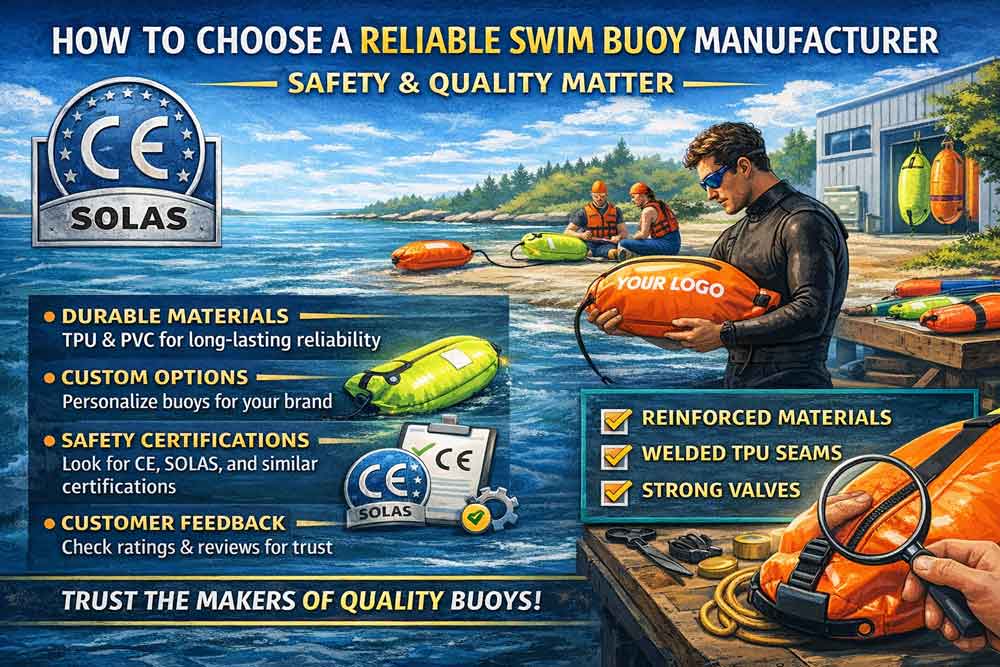
- Fabrics: TPU‑coated nylon (or welded TPU) is widely favored for flexibility in cold and better abrasion behavior around debris compared with basic PVC. Because standardized, comparable test data is rarely published on consumer pages, treat this as reasoned guidance rather than lab‑verified fact.
- Seams and tow points: Look for welded seams where possible, reinforced tow points, and robust D‑rings.
- Belt and buckles: A wide waist belt with a reliable quick‑release is prudent in moving water so you can jettison the system if it snags.
- Leash: Short, adjustable, ideally with a swivel to reduce twist; a bit of elasticity can soften tugs in chop.
- Valves: Lockable, with tethered caps and controls large enough to operate with cold or gloved hands.
Configure your buoy for rivers (minimal drag, less entanglement)

- Mount the belt at or just above your hip bones, snug enough to stay put without restricting breathing. Use a quick‑release buckle you can find and operate by feel.
- Set a short leash so the buoy drafts close behind you—near your knees but not tapping your feet. Keep the line free of knots and long tails; add a swivel if twist develops.
- Inflate to firm but not rock‑hard. Overinflation raises ride height, increases windage, and can make the buoy wander in chop.
- Add visibility aids: reflective patches on the buoy and belt; a compact waterproof light for civil twilight only where it’s permitted and appropriate.
- Practice: Do a few turns, sighting lifts, and brief stops to ensure the leash doesn’t wrap around you in eddies or during quick direction changes. A “short leash” approach is also echoed in training safety resources such as the WOWSA‑hosted Swim Secure safety guide.
Swim lines and habits that help you get seen
Swim on the upstream side of the river when feasible so vessels have more time to see and avoid you as they approach bends. Give extra space to bridge piers and blind corners; pause to listen before crossing a channel and time crossings between boats rather than assuming you’ll be spotted. Sight a little more often than in lakes—brief, purposeful lifts that don’t disrupt your rhythm. If traffic density or speeds rise, tighten your line toward shore and shorten sets so you can exit quickly.
For broader safety frameworks that echo these practices—training visibility aids, supervision when possible, and conservative route choices—review WOWSA’s rules and safety resources and the United States Lifesaving Association’s safety tips.
Low‑light aids and legal signals
A small waterproof light can improve conspicuity around dawn or dusk, but avoid anything that mimics a distress signal unless you intend to call for help. Distress‑signal rules are written for vessels and vary by jurisdiction; swimmers should ensure any lighting is legal and appropriate for training. For context on accepted night signals for boats, see the BoatUS guide to Visual Distress Signals.
Troubleshooting and emergency procedures
- Leash wrap or snag: Stop kicking, face the buoy, and reverse a stroke or two to clear. If the line is snagged on debris and won’t free quickly, use the quick‑release to jettison.
- Overinflation windage: If the buoy rides too high and wanders, let out a small amount of air to reduce profile.
- Slow leak or valve seep: Dry the valve seat, check the cap tether, and re‑seat firmly. Log recurring leaks and repair or replace the buoy.
- Visibility dip in glare/chop: Pivot the buoy momentarily to expose reflective panels, and increase your sighting frequency until conditions improve.
Maintenance and lifecycle care
Rinse after murky or silty water, especially around seams, valves, and buckles. Dry fully before storage to avoid mildew and material tackiness. Inspect tow points, leash hardware, and belts for wear; replace any cracked plastic or frayed webbing. Keep a small patch kit and spare valve cap in your swim bag. When the fabric feels brittle or tacky, or seams show creeping failures, retire the buoy.
Simple field tests you can run
Visibility spot check: With a friend stationed on shore or on a dock, swim 25–50 yards away at varying light angles. Ask when your buoy color first “pops” against the background. Try fluorescent yellow‑green and fluorescent orange if you have access to both.
Drag check: In a calm section, do 2–3 x 100 m repeats at steady effort with and without your open water swim buoy, noting times and perceived effort. If the time gap widens significantly in current, shorten the leash a bit or lower the inflation slightly and retest.
One‑line takeaway you can act on today: Choose a fluorescent yellow‑green, low‑profile 20–28 L open water swim buoy, run a short adjustable leash and a quick‑release belt at the hip bones, inflate to firm—not rock‑hard—then do a three‑minute pre‑swim check before you push off.


Comments are closed