



Where to Put Ice in Your Cooler Bag for Best Results
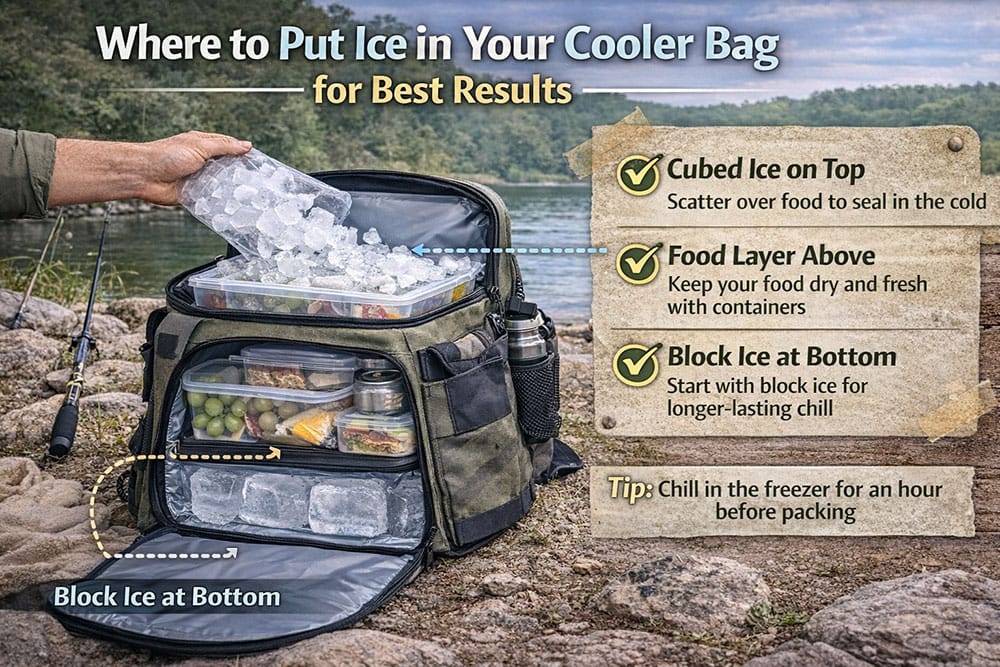
You want your cooler bag to keep everything cold and fresh. Place block ice or ice packs at the bottom, stack your food above, and scatter cubed ice on top for the best cooling. Layering like this helps cold air move around, keeps food dry, and slows down heat transfer. Fill your cooler bag almost to the top—packing it snugly with food and ice or using towels in empty spots helps maintain a steady temperature.
Tip: Pre-chill your cooler bag in the freezer for an hour before packing to boost cooling power.
Key Takeaways
- Place block ice at the bottom of your cooler bag for longer-lasting cold.
- Stack food in waterproof containers to keep it dry and safe.
- Pre-chill your food and cooler bag to enhance cooling efficiency.
- Limit how often you open the cooler bag to keep cold air inside.
- Fill two-thirds of your cooler with ice for optimal temperature control.
Ice Placement in Your Cooler Bag
Block Ice or Ice Packs at the Bottom
Start by placing block ice or ice packs at the bottom of your cooler bag. This step sets the foundation for keeping everything cold. Block ice works best because it melts slower than cubed ice. When you use block ice or ice packs, cold air can move up and around your food. The insulation in your cooler bag traps this cold air, stopping warm air from sneaking in. You get a steady chill that lasts longer.
Experts recommend using more ice than food. Try to fill about two-thirds of your cooler bag with ice and one-third with food. This ratio surrounds your snacks and drinks with cold, keeping them safe and fresh. If you pack warm items, you risk melting the ice faster and raising the temperature inside. Always pre-chill your food and drinks before packing.
Tip: Pre-chill your cooler bag before you load it. This simple step helps your ice last longer.
Food Layer Above the Ice
Next, stack your food on top of the ice layer. This spot is perfect for perishable items like meat, cheese, and dairy. Cold air sinks, so placing food above the ice keeps it at a safe temperature. You lower the risk of spoilage and keep everything below 40 degrees Fahrenheit. That means less chance of food poisoning and more peace of mind.
- Place raw meat and dairy in the middle layer.
- Keep snacks and drinks above the ice, but not directly touching it.
- Use containers or bags to keep food dry and organized.
The insulation inside your cooler bag uses closed-cell foam to trap cold air. This design slows down heat transfer and keeps your food cold for hours.
Cubed Ice or Packs on Top
Finish by adding cubed ice or extra ice packs on top of your food. This layer helps seal in the cold and keeps the temperature low. Cubed ice melts faster than block ice, but it fills gaps and covers your food evenly. Cold air sinks, so ice on top cools everything below as it melts.
- Fill empty spaces with cubed ice or small ice packs.
- Aim for a balanced ratio—about half ice and half food.
- Pack your cooler bag tightly to limit air gaps.
A well-packed cooler bag keeps cold air inside and blocks heat from getting in. The inner liner, often made of aluminum foil, reflects heat and adds waterproofing. Proper layering means your food stays dry and cold for longer.
| Layer | Purpose | Benefit |
|---|---|---|
| Block Ice | Base layer | Slow melting, steady cold |
| Food | Middle layer | Keeps perishables safe |
| Cubed Ice | Top layer | Fills gaps, seals cold |
Note: Avoid leaving your cooler bag open or in direct sunlight. Zip it up and find a shady spot to keep everything cold.
Layering for Maximum Cooling
How to Layer Ice and Food
You want your food to stay cold and safe, right? The way you layer ice and food makes a big difference. Here’s a simple way to do it:
- Place ice packs or frozen items at the bottom. This keeps the base cold and helps everything above stay chilled.
- Add meats, dairy, or other perishable foods next. These need the coldest spot.
- Put drinks and snacks on top. You reach for these most often, so you won’t let out too much cold air when you open your cooler bag.
- Try to group items you use together. This helps you grab what you need fast.
Tip: Keep drinks on top so you don’t have to dig through everything and let out cold air.
Separating Ice from Food
You can use dividers or barriers to keep ice away from your food. This trick creates different temperature zones inside your cooler bag. When you separate ice from food, the ice melts slower. Your food stays fresh longer, and you get better organization. You won’t have soggy sandwiches or wet snacks. Dividers also make it easier to find what you need.
Filling the Cooler Bag Efficiently
Packing your cooler bag the right way helps keep everything cold for hours. Here’s a step-by-step guide:
- Chill your food and drinks before packing.
- Lay a cold pack flat at the bottom.
- Place the coldest items, like meat and dairy, in the center.
- Slide slim ice packs along the sides if you have them.
- Add another cold pack on top before closing the bag.
- Fill any empty spaces with a towel or cloth. This stops warm air from sneaking in.
- Seal your cooler bag tight and keep it out of the sun.
Note: A full cooler bag works better than one with lots of empty space. Less air means less heat can get inside.
By following these steps, you keep your food cold, dry, and ready to enjoy.
Types of Ice for Cooler Bags

Block Ice vs. Cubed Ice
You have two main choices for ice: block ice and cubed ice. Block ice melts slower and keeps things cold longer. Cubed ice cools quickly but does not last as long. If you want to keep food fresh for a whole day, block ice works best. Cubed ice is great for short trips or when you need to fill small spaces.
Here’s a quick look at how they compare:
| Type of Ice | Melting Rate | Cooling Duration |
|---|---|---|
| Block Ice | Slowest melting | Long-lasting for trips |
| Cubed Ice | Melts faster | Cools quickly, shorter duration |
| Dry Ice | Most efficient | Ideal for extended trips |
Block ice lasts longer and cools better over time. Cubed ice is easier to handle but melts faster. You might want to use both for the best results.
| Type of Ice | Advantages | Disadvantages |
|---|---|---|
| Block Ice | Lasts longer, slower melting rate, more effective for cooling over extended periods | Less convenient to handle |
| Cubed Ice | More convenient, readily available | Melts faster, limited cooling capacity |
Tip: Use block ice for long trips and cubed ice for quick outings.
Using Frozen Bottled Water
Frozen bottled water works well as an ice alternative. You can freeze bottles at home and pack them in your cooler bag. These bottles absorb heat slowly, keeping everything cold for hours. If you add salt before freezing, the bottles stay frozen even longer—sometimes up to 6 hours. When the ice melts, you have cold water to drink. This method keeps your food dry and saves space.
Gel Packs and Alternatives
Gel packs are another smart choice. You can reuse them many times, and they fit easily around food. Most gel packs last for 2 to 4 hours, but some brands like Engel Ice and Cooler Shock can keep things cold for up to 36 hours. Gel packs do not leak water as they melt, so your snacks stay dry.
Here’s a table to help you compare:
| Ice Pack Type | Longevity | Cooling Duration | Reusability |
|---|---|---|---|
| Gel Packs | 18-24 months | 2-4 hours | 30-50 times |
| Engel Ice | Up to 36 hours | N/A | N/A |
| Cooler Shock | Up to 26 hours | N/A | N/A |
| Yeti Ice | Shorter than Engel | N/A | N/A |
Note: Try mixing gel packs with block ice or frozen bottles for the best cooling power.
You have lots of options for keeping your cooler bag cold. Pick the type of ice that fits your trip and enjoy fresh food all day.
Keeping Food Dry in a Cooler Bag
Waterproof Containers and Bags
You want your sandwiches and snacks to stay dry, even when the ice starts to melt. Waterproof containers and bags help you do just that. The inside of your cooler bag uses aluminum foil lining and seamless hot press technology. This design keeps water out and stops leaks from reaching your food. When you pack your food in tightly sealed containers or zip-top bags, you block moisture and keep everything fresh. Always store raw meat, poultry, and seafood at the bottom in sealed containers. This way, you avoid drips and keep other foods safe.
Tip: Keep drinks separate from perishable foods. This prevents cross-contamination and keeps your snacks dry.
Using Towels or Mats
Towels and mats work like magic for soaking up extra moisture. Lay a clean towel or absorbent mat at the bottom of your cooler bag before you add ice. This layer catches any water that escapes from melting ice packs. You can also wrap your food containers with a towel for extra protection. If you notice water pooling at the bottom, swap out the towel for a dry one. This simple trick helps keep bread, chips, and fruit from getting soggy.
| Item | Purpose | Benefit |
|---|---|---|
| Towel | Absorbs moisture | Keeps food dry |
| Mat | Adds extra barrier | Prevents sogginess |
Organizing for Easy Access
Smart organization makes your trip easier and keeps food dry. Group similar items together in separate containers. Place raw meats at the bottom, away from ready-to-eat foods. Use different utensils for raw and cooked items. Pre-chill your food before packing, and always keep the temperature below 40°F. If you pack drinks on top, you can grab them quickly without digging through everything. This helps you avoid letting warm air inside and keeps your cooler bag cold.
- Store uncooked meats in sealed containers.
- Use separate utensils for raw and cooked foods.
- Clean surfaces before and after use.
- Discard food left out for more than one hour in hot weather.
Note: Packing your cooler bag with care keeps your food dry, safe, and ready to enjoy.
Cooling Efficiency Tips
Pre-Chill Your Cooler Bag
You want your food and drinks to stay cold as long as possible. Pre-chilling your cooler bag is a smart move. When you chill the bag before packing, you lower its temperature. This means the ice does not have to work as hard to keep things cold. You can put your empty cooler bag in the freezer or fill it with ice packs for about an hour before you load it. This step slows down how fast the ice melts and helps your snacks stay fresh longer.
Tip: Always start with cold or frozen items. Warm food will melt your ice faster.
Minimize Openings
Every time you open your cooler bag, warm air rushes in. This makes the inside temperature rise and your ice melt faster. Try to plan ahead so you only open the bag when you really need something. Keep drinks and snacks you reach for most often near the top. That way, you can grab them quickly and close the bag right away.
- Keep the cooler bag zipped or closed as much as possible.
- Group similar items together for easy access.
- Store the bag in the shade to help it stay cool.
Note: A tight seal keeps cold air in and warm air out.
Replenish Ice as Needed
Ice does not last forever, especially on hot days. Check your cooler bag from time to time. If you see the ice melting or the temperature rising, add more ice or ice packs. The more ice you have, the colder your food and drinks will stay. For long trips, bring extra ice packs or frozen water bottles so you can swap them in when needed.
- Add new ice when you notice melting.
- Use high-quality ice packs for better results.
- Fill empty spaces with extra ice or cold items.
Tip: Less empty space means less warm air can sneak in.
By following these tips, you can keep your cooler bag cold and your food safe for hours.
You want your cooler bag to keep food cold and safe. Here are some top tips to remember:
- Use block ice at the bottom for longer cooling.
- Store food in watertight containers to keep it dry.
- Pack raw meat separately and keep it at the bottom.
- Pre-chill your food and drinks before packing.
- Limit how often you open the bag.
Block ice lasts much longer than cubes. Layering ice and food helps keep everything fresh. When you follow these steps, you enjoy cold snacks and safe meals on every trip!
FAQ
How much ice should I put in my cooler bag?
You want to fill about two-thirds of your cooler bag with ice. This keeps everything cold and helps your food stay safe. If you pack less ice, your food may warm up too fast.
Can I use regular ice cubes from my freezer?
Yes, you can use regular ice cubes. They cool things quickly but melt faster than block ice. For best results, mix cubes with block ice or ice packs.
How do I keep my cooler bag from leaking?
Pack your food in sealed containers or zip-top bags. Use gel packs or frozen bottles instead of loose ice. This keeps water from pooling at the bottom.
Tip: Lay a towel under the ice to soak up extra moisture.
What should I do with melted ice water?
Pour out melted water when you notice it. This stops your food from getting soggy. If you use ice packs or frozen bottles, you will have less water to deal with.
How to Choose the Best Fishing Tackle Bags and Backpacks for Your Needs
How to Prevent Fish Smell in Your Waterproof Fishing Bag

Comments are closed