



How to Tell If Your Travel Backpack Will Last

The fastest way to tell if your travel backpack will last is to check for clear signs of quality. Don’t just trust the brand or price tag. Look at the little details—strong fabric, tough zippers, and sturdy seams. A quick hands-on check can show you a lot. Trust your eyes and your touch. You have the power to spot a backpack that can handle every adventure.
Key Takeaways
- Look at the fabric quality. Pick nylon or ripstop nylon for strength. These materials do not tear easily and last longer.
- Check the stitching and seams. Find double or triple stitching and bar tacks at stress spots. This makes the backpack stronger.
- Try the hardware. Make sure zippers and buckles feel strong and work well. Good hardware stops the backpack from breaking fast.
- Focus on comfort features. Padded straps and adjustable back panels spread weight. They help lower strain when you travel.
- Read user reviews and look at warranties. Other travelers’ feedback can help you choose. A good warranty helps you feel safe.
Travel Backpack Materials
When you want a travel backpack that lasts, start by checking what it’s made of. The right materials can make all the difference. Let’s break down what you should look for.
Fabric Quality
You can spot a tough travel backpack by feeling the fabric. Most backpacks use nylon, polyester, or canvas. Each one has its own strengths. Nylon stands out for its high durability. It resists tears and abrasions better than polyester. Take a look at this table to see how nylon and polyester compare in lab tests:
| Test Category | Nylon (500D) | Polyester (500D) |
|---|---|---|
| Abrasion Resistance | 15,000+ rubs | 9,000–11,000 rubs |
| Tear Strength (lbs) | 90–120 | 70–90 |
| Puncture Resistance | High | Medium |
Ripstop nylon is even better. It lasts for several years and handles rough use. Standard polyester does not last as long, but it costs less and keeps its color well. If you want a backpack that can handle lots of trips, nylon is a smart choice.
Water resistance is another key factor. Waterproof materials help your travel backpack last longer. They keep out rain and spills, so your gear stays dry. Waterproof fabrics are also easier to clean. Non-waterproof materials can get moldy or smelly if they get wet. Here’s a quick comparison:
| Material Type | Durability Impact | Maintenance Requirements |
|---|---|---|
| Waterproof Materials | More durable and resistant to wear and tear, leading to longer lifespan. | Easier to clean and maintain, requiring less frequent deep cleaning. |
| Non-Waterproof Materials | More susceptible to degradation from moisture, leading to mold and mildew. | Require careful maintenance to prevent water damage and odors, leading to faster wear. |
Tip: Run your hand over the fabric. If it feels thick and tightly woven, it will likely last longer.
Hardware Durability
Don’t forget to check the hardware. Zippers, buckles, and straps take a lot of stress. If they break, your travel backpack becomes useless fast. Look for plastic zippers, especially coil or molded types. These resist jamming and last longer than metal zippers, which can rust or snag. Here’s what you need to know:
- Plastic zippers (coil and molded) are strong and less likely to jam.
- Coil zippers bend easily and keep out water, but sand can cause jams.
- Vislon zippers are tough and rarely jam, but if a tooth breaks, the zipper may stop working.
- Metal zippers can rust and catch on fabric, so they are not the best for travel.
Note: Give the zippers a few test pulls. If they move smoothly and feel sturdy, you’re on the right track.
Strong buckles and thick straps also matter. Try tugging on them. If they feel flimsy or bend easily, they might not last. A good travel backpack uses hardware that feels solid in your hands.
Construction
When you want your travel backpack to last, you need to look closely at how it’s put together. The way a backpack is built can make or break its durability. Let’s dive into the details you should check before you trust your bag for a big trip.
Stitching
Start by inspecting the stitching. Good stitching keeps your backpack from falling apart when you load it up. You’ll want to see double or even triple rows of stitches, especially along the main seams. Single stitching can split under pressure, but double stitching holds strong.
Take a look at the seams where the straps meet the body. If you spot extra rows of thread or thick stitches, that’s a good sign. Bar tacks—those tight, zigzag stitches—show up at stress points like the ends of straps and handles. These help prevent tears and keep the fabric from wearing out too fast.
Tip: Gently pull on the straps and seams. If the stitches stay tight and don’t stretch, you’ve got a well-made backpack.
Here’s a quick checklist for stitching:
- Double or triple stitching along main seams
- Bar tacks at the ends of straps and handles
- No loose threads or skipped stitches
Seams and Reinforcements
Seams and reinforcements matter just as much as the fabric. Strong seams keep your travel backpack together, even when you pack it full. Reinforced stress points, like the base of the shoulder straps and the top handle, help spread out the tension. This means less chance of ripping when you lift or carry heavy loads.
You’ll often find extra layers of fabric or thick patches at these spots. These reinforcements work with bar tacks and strong stitching to protect high-pressure areas. If you see padded or layered handles, that’s a sign the manufacturer expects you to carry weight and wants the bag to last.
Here’s what to look for:
- Reinforced straps and handles made from tough materials
- Extra fabric or padding at stress points
- Seams that run straight and don’t pucker or gap
| Feature | What to Check For | Why It Matters |
|---|---|---|
| Bar Tacks | Zigzag stitches at stress points | Prevents tears and wear |
| Double Stitching | Two or more rows of stitches | Distributes tension, reduces failure |
| Reinforced Handles | Extra layers or padding | Handles heavy loads without breaking |
Don’t forget the zippers and pulls. These parts get a lot of use. If the zipper is sewn in with double stitching and the pulls feel sturdy, you’re less likely to deal with breakage on the road.
If you spot all these features, you can trust your travel backpack to handle tough journeys.
Comfort and Fit
When you pick a travel backpack, comfort matters just as much as durability. If your bag hurts your shoulders or strains your back, you won’t enjoy your trip. Let’s look at the features that help you stay comfortable, even when you carry your gear all day.
Padded Straps
Shoulder straps are the first thing you feel when you put on a travel backpack. Thick, padded straps make a huge difference. They spread the weight across your shoulders, so you don’t get sore spots. If the straps feel thin or stiff, you might end up with red marks or pain after a few hours.
Here’s a quick table to show how strap thickness affects comfort:
| Aspect | Description |
|---|---|
| Weight Distribution | Thick straps spread weight evenly, making heavy loads easier to carry. |
| Pressure Points | Padding reduces pressure, so your shoulders don’t ache. |
| Potential Discomfort | Straps that are too wide can rub your neck or arms. |
| Padding Material | Closed-cell foam and EVA padding give better support than soft foam. |
Tip: Try on the backpack and adjust the straps. If they feel soft and chunky (about 1.5 cm thick), you’ll notice less pressure on your shoulders.
Adjustable Back Panel
A good travel backpack lets you change the back panel to fit your body. Adjustable panels follow the curve of your spine, so you stand up straight and avoid back pain. You can move the panel up or down to match your height. This helps spread the weight and keeps your muscles active.
Check out these benefits of adjustable back panels:
| Benefit | Description |
|---|---|
| Contours to Your Spine | Keeps your back aligned and reduces strain. |
| Even Pressure Distribution | Stops painful pressure points from forming. |
| Supports Lower Back Muscles | Helps your muscles stay strong and engaged. |
| Customizable Adjustability | Lets you pick the support that feels best for you. |
| Proven Health Benefits | Can lower back pain and improve posture over time. |
Note: If you travel often, an adjustable back panel can make long walks or hikes much easier.
Travel Backpack Ergonomics
Ergonomic design keeps you safe and comfortable. Look for features like double shoulder straps, sternum straps, and waist belts. These help balance the load and stop the bag from swinging. If you carry more than 15% of your body weight, you risk neck and back pain. Experts say you should keep your load under 10% of your weight.
Here are some ergonomic features physical therapists recommend:
| Feature | Description |
|---|---|
| Side bags | Help you stand upright by loading weight vertically. |
| Accessibility | Easy-to-reach compartments on each side. |
| Adjustable straps | Fit different body heights and shapes. |
| Sit strap | Transfers weight to your thighs when you sit. |
| Organization | Lots of pockets to keep gear sorted. |
- Rounded shoulders happen when backpacks pull you forward.
- Spinal misalignment comes from uneven weight or single-strap use.
- Neck and shoulder tension builds up if straps dig in or don’t adjust well.
- Balanced loads and stabilizing belts help prevent pain and injuries.
If you want to avoid aches and pains, choose a travel backpack with ergonomic features. Your body will thank you after a long day of exploring.
Organization and Features
Staying organized can make your trip smoother and less stressful. When you choose a travel backpack, you want features that help you pack smart and find things fast. Let’s break down what matters most.
Compartments
You need enough compartments to keep your stuff sorted. Multiple sections let you separate clothes, documents, and personal items. You won’t have to dig through everything just to find your charger. Packing cubes work great for this. You can stack them, grab what you need, and keep clean clothes away from dirty ones.
- Separate pockets for documents and essentials help you stay organized.
- A special spot for personal items keeps work and fun things apart.
- Packing cubes let you organize clothes and papers for quick access.
- You can stack cubes to save space and find things fast.
Tip: Try packing your backpack with cubes or pouches. You’ll see how easy it is to grab what you need without making a mess.
Laptop Sleeve
If you travel with a laptop, a padded sleeve is a must. It protects your device from bumps and drops. You want a sleeve that fits snugly so your laptop doesn’t slide around. Some backpacks offer extra padding or a raised bottom to keep your computer safe.
- A padded compartment keeps your laptop secure.
- Separate storage for tech gear means less risk of damage.
- You can keep your laptop away from snacks or water bottles.
Note: Always check if the sleeve fits your laptop size. A tight fit gives better protection.
Compression Straps
Compression straps help you manage the load. You can tighten them to shrink your backpack when it’s not full. This brings the weight closer to your body and makes the bag easier to carry. You’ll feel less pressure on your shoulders, and the backpack won’t swing around as much.
- Adjust the straps to match your load size.
- Tight straps improve weight distribution and comfort.
- Load adjusters help you save energy while walking.
| Feature | What It Does | Why You Need It |
|---|---|---|
| Compression Straps | Shrinks and stabilizes the backpack | Makes carrying easier |
| Load Adjusters | Centers the weight | Reduces shoulder pressure |
If you want a backpack that feels light and stays close to your body, look for strong compression straps.
Carry-On Compliance
Size and Dimensions
You want your travel backpack to fit in the overhead bin. Most airlines set strict size limits for carry-on bags. If your backpack is too big, you might have to check it at the gate. That can slow you down and cost extra money.
Start by measuring your backpack. Use a tape measure to check the height, width, and depth. Most international airlines allow bags around 21.5 to 22 inches tall and 14 inches wide. The FAA says your carry-on should not be more than 45 linear inches. If your backpack holds up to 42 liters, you’re usually safe.
Here’s a quick table to help you compare:
| Airline | Maximum Height | Maximum Width |
|---|---|---|
| Most Airlines | 21.5 – 22 in | 14 in |
| Lufthansa | 21.6 in | 14 in |
| Qantas, El Al | 22 in | 14 in |
Tip: Always measure your backpack when it’s full. Stuffed pockets and bulging sides can push it over the limit.
Airline Regulations
Every airline has its own rules. Some budget carriers use stricter limits for size and weight. You need to check the airline’s website before you fly. Most major airlines like Delta, Alaska, and Allegiant Air stick to 22” x 14” x 9” for carry-ons.
Here’s what you should do:
- Look up your airline’s carry-on size and weight rules.
- Pack your backpack and measure it again.
- Make sure your bag fits under the seat or in the overhead bin.
Most travel backpacks meet these rules, but not all do. If your bag is too big, you might have to check it. That means more waiting and possible fees.
- Backpacks up to 42 liters usually work for carry-on.
- The FAA allows bags up to 45 linear inches.
- Budget airlines may ask you to weigh your bag at the gate.
If you want a smooth trip, double-check your backpack’s size before you leave home. You’ll save time and avoid surprises at the airport.
Design and Style
User-Friendly Layout
When you pick a travel backpack, you want it to feel easy to use. A user-friendly layout helps you stay organized and makes your trip smoother. You don’t want to waste time digging for your passport or charger. Instead, you want everything right where you expect it.
Take a look at how certain features boost comfort and satisfaction:
| Feature | Description |
|---|---|
| Padded Back Panels and Straps | Cushioning reduces back strain by up to 30% during long walks, so you feel less tired. |
| Dedicated Compartments | Special pockets keep your gear sorted and stop things from shifting around. |
| Quick-Access Pockets | You grab your phone or snacks fast, which makes travel less stressful. |
| Balanced Layout | Even weight keeps you steady and helps you avoid sore muscles. |
| Intuitive Layout | You find what you need quickly, so you don’t have to empty your whole bag. |
Tip: Try packing your backpack before your trip. If you can reach your essentials without searching, you’ve found a smart design.
Practicality
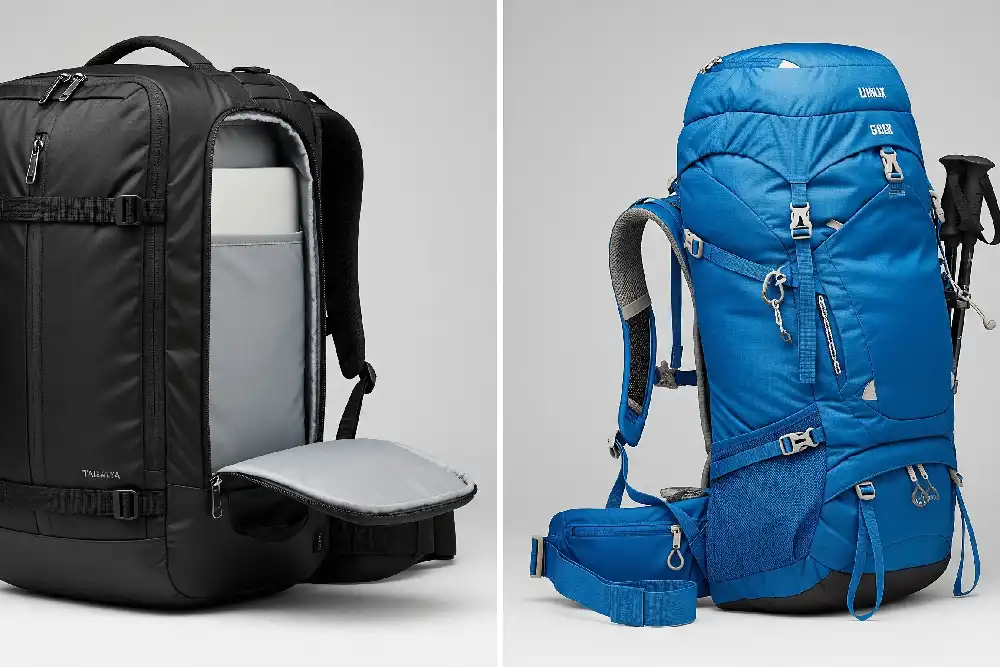
A practical travel backpack makes your journey easier. You want features that help you pack, carry, and protect your stuff. Many travelers love backpacks that open fully, so you can see everything at once. Thick shoulder straps and padded hip belts help you carry heavy loads without pain.
Here are some practical design elements travelers mention in reviews:
- Two main zippers let you open compartments from either side.
- The bag opens flat, so packing is quick and simple.
- Mesh zippered pockets keep small items organized.
- Thick shoulder straps and padded hip belts add comfort.
- Spacious main compartment fits everything you need for minimalist travel.
- Well-padded laptop sleeve protects your device.
- Stylish look with sturdy, non-mesh side pockets.
- Customizable add-ons with strong attachment points.
- Waterproof and eco-friendly materials keep your gear safe and support the planet.
- Adjustable sternum strap gives you a secure fit.
- Extra padded top pocket protects fragile items.
If you want a backpack that works for every trip, choose one with practical features. You’ll travel smarter and feel more confident wherever you go.
Reviews and Reputation
User Feedback
If you want to know if a travel backpack will last, read what other travelers say. Real user reviews tell you how a backpack works in real life. You can find patterns in what people like or dislike. If the same problem comes up a lot, pay attention.
Here are some things people often complain about:
- The Osprey Fairview 40L backpack looks big on smaller people, especially if you are about 5’2″.
- Some people wish they could put the hip belt away by itself, not with the straps.
- The Cotopaxi Alpa 35L backpack does not work for every way of packing. If you like packing cubes, it might feel strange.
- Many travelers worry about backpacks that weigh more than 4 lbs. Heavy bags can hurt your shoulders after a long day.
Tip: Read reviews from people who travel like you or have a body like yours. Their stories can help you see if a backpack is right for you.
If lots of people say a backpack is strong, that is a good sign. If many people complain about straps, zippers, or weight, you may want to pick a different one.
Warranty
Warranty rules show how much a brand trusts its backpacks. A good warranty means you get help if something breaks too soon. Always check the warranty before you buy a travel backpack.
Here’s a quick look at how top brands compare:
| Brand | Warranty Type | Coverage Details |
|---|---|---|
| Jansport | Limited Lifetime | Covers manufacturing defects; excludes wear and tear, accidents, and misuse. |
| North Face | Limited Lifetime | Covers manufacturing defects; excludes wear and tear, accidents, and misuse. |
| L.L.Bean | Satisfaction Guarantee | Returns within one year; after that, only defective items accepted. |
| Adidas | 3 Year Limited | Covers defects; excludes wear and tear; replacement within five years. |
| Osprey | All Mighty Guarantee | Free repairs for any damage or defect; replacement if repair is not possible. |
| Swiss Gear | Limited Lifetime | Covers defects; requires original purchaser for repairs. |
If you want to feel safe, pick a backpack with a strong warranty. Brands like Osprey fix almost any problem for free. This means you can travel without worry, knowing your backpack is protected.
You want a travel backpack that will last. Look for these signs: strong fabric, good stitching, comfy straps, smart pockets, right size, easy layout, and positive reviews. Here is a checklist:
- Choose nylon or strong fabric for long use.
- Find backpacks with tough seams and rain covers.
- Pick bags with lots of compartments.
Experts say these things matter:
| Key Factor | Description |
|---|---|
| Comfort Features | Padded straps, hip belts, and back vents make carrying easier. |
| Versatile Design | Good for work, fun, and outdoor trips. |
| Security Features | Hidden pockets and lockable zippers keep your stuff safe. |
| Sustainability | Eco-friendly materials like recycled fabrics help the planet. |
| Size and Material | Match your trip and packing style. |
You can find a strong backpack with these ideas. It is easy to pick the right one when you know what to check. 😊
FAQ
How can you quickly check if a backpack is durable?
Run your hand over the fabric. Tug on the straps and zippers. If everything feels sturdy and the stitching looks tight, you’ve got a tough backpack.
What’s the best way to clean your travel backpack?
Empty your backpack. Use a damp cloth with mild soap. Wipe the inside and outside. Let it air dry. Avoid harsh chemicals or machine washing.
Should you choose a backpack with a warranty?
Yes! A strong warranty means the brand trusts its product. You get free repairs or replacements if something breaks. Always check the warranty before you buy.
How do you know if a backpack fits you well?
Try it on with some weight inside. Adjust the straps and back panel. If the bag sits close to your body and feels comfortable, you’ve found a good fit.
Can you use any backpack as a carry-on?
Not always. Measure your backpack when it’s full. Compare the size to airline rules. Most carry-ons should be under 22 inches tall and 14 inches wide.
See also
Why Smart Paddlers Choose Kayak Drying Bags
What Size Dry Bag Is Best for Kayaking Adventures
Step-by-Step Guide to Getting Air Out of Your Dry Bag
What Is The Most Common Size Of a Drying Bag?



Comments are closed