Почему изготовление образцов сумок на заказ обходится дороже, чем оптовые заказы?
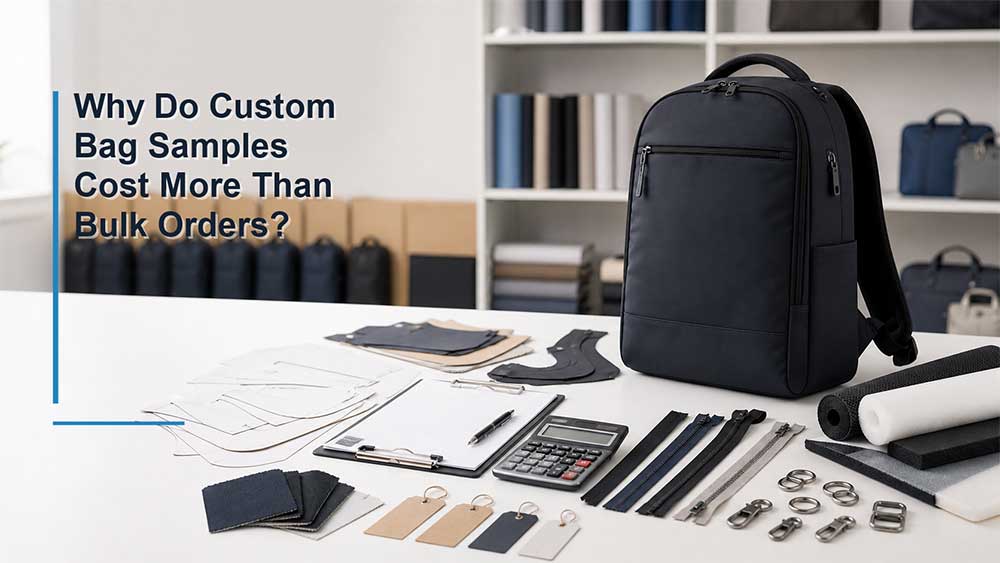
A custom bag sample usually costs much more per piece than the final bulk order because product development, pattern making, small-quantity material sourcing, setup, skilled sample labor, inspection, and international courier costs are concentrated in one or a few pieces.
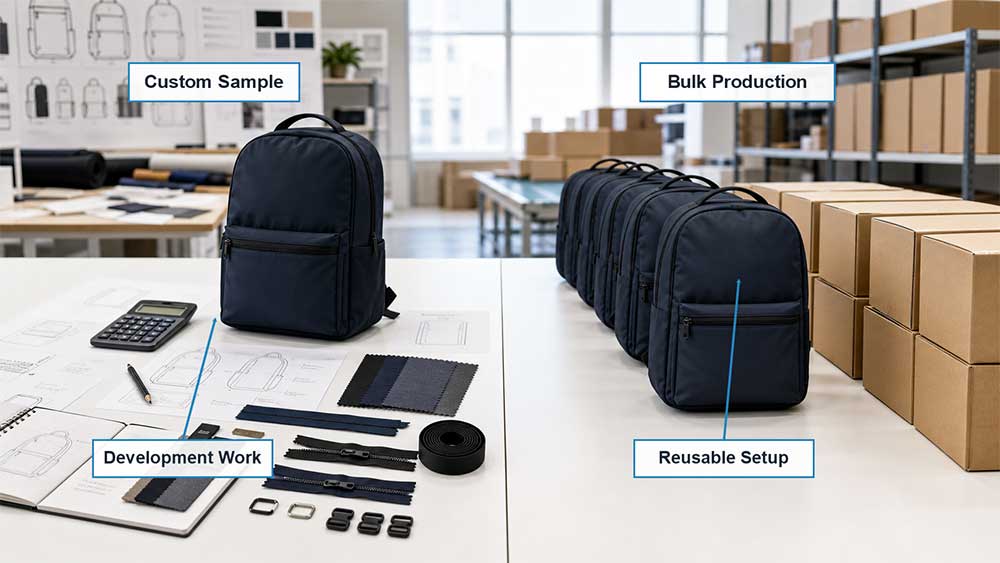
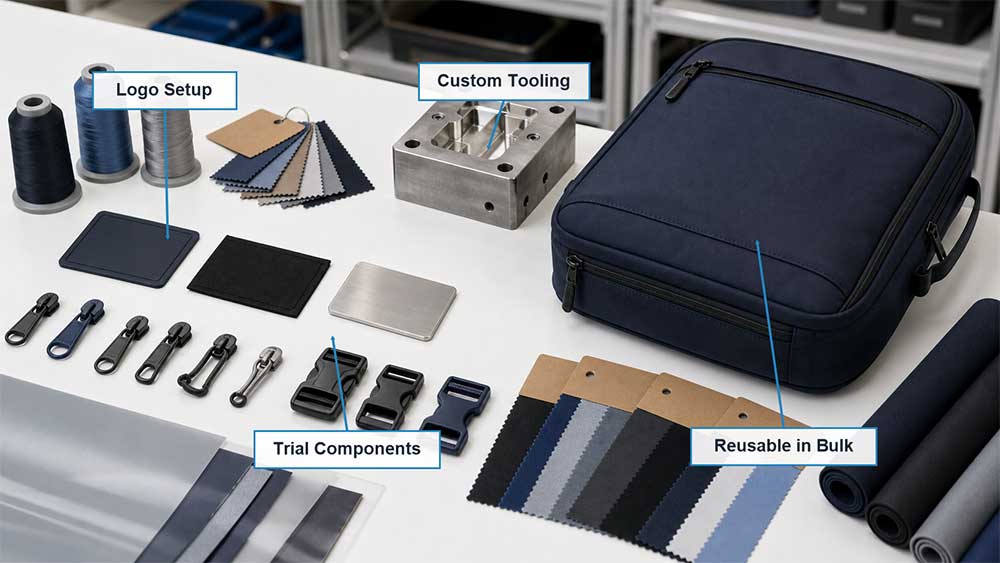
Bulk production works differently. Once the design, materials, construction, and workmanship have been approved, the factory can reuse the patterns, purchase materials in larger quantities, divide operations across a production line, and spread setup costs over hundreds or thousands of bags.
Tooling, testing, and shipping may also be quoted separately. A custom sample should therefore be viewed as part of product development—not simply as one unusually expensive bag.
Вкратце:
Sampling develops and verifies the product.
Bulk production relies on repetition and production-line efficiency.
Tooling and other one-time charges may sit outside both the sample fee and bulk unit price.
Repeated operations divided across a production line
Настройка логотипа
Setup cost concentrated in a few pieces
Reused or spread across the order
Инструменты
May require a separate upfront charge
Approved tooling can be reused
Инспекция
Detailed review of the development sample
In-line and final production inspection
Координация
Frequent technical decisions and updates
Production follows approved specifications
Доставка и оплата
Usually sent by international courier
Freight is spread across many units
Some manufacturers combine several items into one sample charge. Others quote pattern making, materials, logo setup, tooling, sample construction, testing, and courier fees separately.
Before comparing sample quotations, buyers should check what each price includes instead of comparing only the total amount.
1. Product Development Is Concentrated in the First Sample
A new bag cannot always be made directly from a sketch, reference photo, tech pack, or AI-generated design draft.
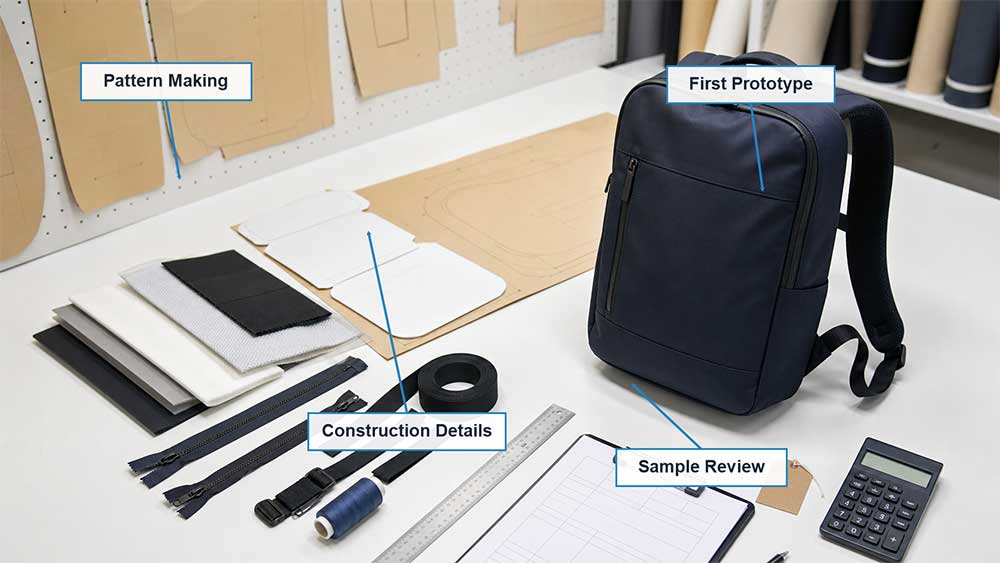
A pattern maker may first need to translate the concept into:
Individual pattern pieces
припуски на швы
Застежки-молнии
Размеры кармана
Foam and reinforcement panels
Webbing lengths
Binding construction
Размещение логотипа
Руководство по сборке
Fabric thickness, foam, curved panels, folds, binding, and seam construction can all affect the finished dimensions. These details must be considered before an accurate prototype can be produced.
The first pattern may also need adjustments after the sample is measured, assembled, and reviewed. Once the pattern and construction have been corrected and approved, they can support hundreds or thousands of production units. The initial development cost, however, remains concentrated in the sampling stage.
A complete tech pack can reduce uncertainty and unnecessary revisions, but it does not always eliminate pattern development. The manufacturer still needs to confirm that the design can be converted into a stable and repeatable production method.
2. Small-Quantity Material Sourcing Is Less Efficient
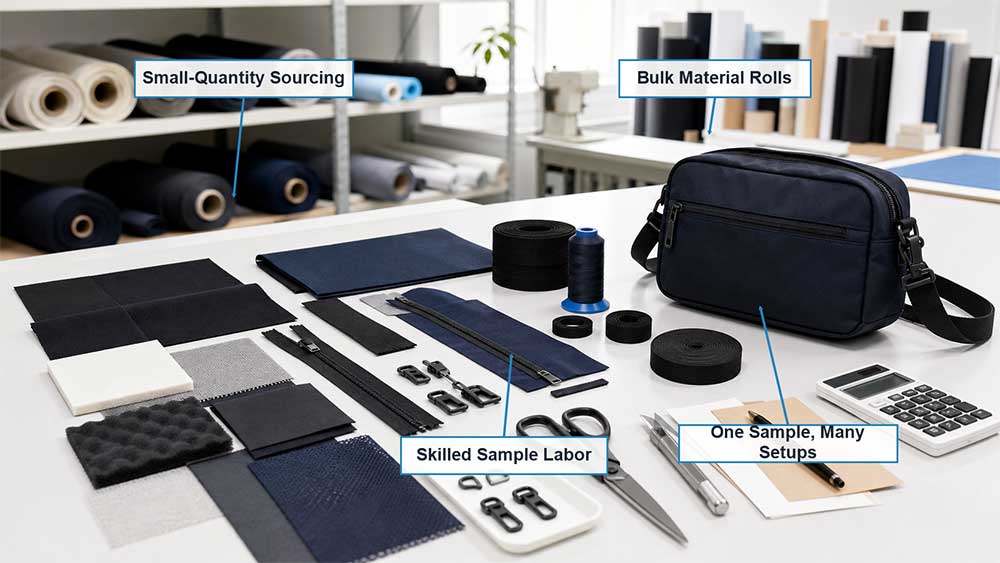
One sample may use only a small amount of fabric, lining, webbing, foam, zippers, and hardware. Material suppliers, however, may not sell every component in the exact quantity required for a single bag.
The manufacturer may have to:
Purchase a supplier’s minimum quantity
Buy a full roll, zipper chain, or pack of sliders
Pay a small-order surcharge
Arrange special pickup or delivery
Order a custom color or finish
Hold unused material after the sample is completed
For bulk production, materials can be planned around the total order quantity, quantity per color, cutting consumption, and expected wastage. This creates a more efficient purchasing structure and allows material costs to be distributed across the order.
If an early prototype is intended only to check dimensions, capacity, pocket layout, or construction, approved substitute materials may sometimes be used. The substitutions should be clearly recorded, and the intended production materials must still be approved before bulk cutting.
3. Sample Making Requires More Skilled Labor
Bulk production is organized around repeated operations. Pocket preparation, zipper installation, shoulder strap construction, lining assembly, binding, and final assembly can be divided among different operators.
A sample maker works differently. The person may need to:
Interpret a new pattern
Determine the assembly sequence
Test machine and tension settings
Solve difficult sewing areas
Coordinate structural changes with the pattern maker
Open and resew sections that require adjustment
Measure the completed sample against the latest specifications
Making the first bag therefore requires considerably more labor per piece than repeating an approved design on a production line.
The technical knowledge gained during sampling can later be converted into production instructions, approved construction details, and quality-control checkpoints. That preparation helps the bulk-production team repeat the product consistently.
4. Logos, Custom Components, and Tooling Need Upfront Setup
Adding a logo or custom component involves more than the material cost of that feature on one sample.
Depending on the design, preparation may include:
Embroidery programming
Подготовка экрана
Heat-transfer artwork setup
Woven label sampling
Rubber or silicone patch development
Metal logo plate engraving
Custom zipper-puller tooling
Buckle or plastic-part tooling
EVA-molded panel tooling
Подбор цвета
Application testing on the selected fabric
Some custom components require a new mold or tool before an accurate sample can be produced. The tooling quotation may cover mold design, tool production, initial trial parts, or adjustments after the first trial.
Is Tooling Included in the Sample Fee?
Not necessarily. A manufacturer may quote the following separately:
Примерная конструкция
Logo or artwork setup
Mold or tooling charges
Special material development
Тестирование
Международный курьер
Tooling is often separated because the approved tool can be reused during bulk production.
Before authorizing a new mold or tool, confirm:
Which component requires tooling?
Are the initial trial parts included?
Are post-trial adjustments included?
Кому принадлежит форма для отливки после оплаты?
Как долго завод будет его хранить?
Is it restricted to the buyer’s orders?
Will a design change require new tooling?
Can any tooling charge be credited against a bulk order?
If a custom component does not affect the bag’s structure or function, a standard substitute may be used in the first structural prototype. Tooling can then begin after the main design is stable.
If the component’s dimensions, weight, installation method, or performance affect the product, it should be tested before final sample approval.
5. One Sample Cannot Spread Setup and Courier Costs
The difference between sample and production pricing can be understood through a simplified cost structure:
Bulk unit cost = recurring materials, labor, overhead, and packaging + a small share of production setup costs
This is an explanatory model rather than a universal accounting formula. The important point is that one sample must absorb costs that can later be spread across an entire order.
Bulk efficiency also depends on repeatability. Dividing one order into many colors, materials, logos, hardware combinations, or packaging versions reduces the quantity of each version and may increase the unit price.
Samples are commonly shipped by international courier so the buyer can inspect the physical product before approving production. Carriers may charge according to the higher of actual or dimensional weight, as explained in FedEx’s dimensional-weight guidance.
Buyers should confirm whether the quotation includes:
The physical sample
Экспортная упаковка
Международный курьер
Fuel or remote-area surcharges
Ввозные пошлины и налоги
Payment or bank fees
Different Sample Types Have Different Costs
Not every sample requires the same amount of development.
Тип образца
Главное предложение
Типичные факторы, влияющие на стоимость
Фондовый образец
Review general quality and workmanship
Existing product, handling, and shipping
Existing style with logo
Review branding on a proven design
Existing bag plus logo setup
Modified sample
Check changes to an existing product
Pattern adjustments, materials, labor, and branding
Full custom prototype
Test a new design and construction
Development, sourcing, pattern making, sewing, and inspection
Custom component sample
Approve a separately developed part
Tooling, trial parts, color matching, and testing
Пересмотренный образец
Confirm requested corrections or changes
New materials, labor, development, and shipping
Предсерийный образец
Approve the final production standard
Intended materials, colors, trims, logo, and construction
A stock sample may demonstrate a supplier’s general workmanship, but it cannot confirm that the buyer’s custom dimensions, structure, materials, logo, and components will be produced correctly.
When comparing quotations, buyers should first confirm that suppliers are quoting the same sample type.
Can the Sample Fee Be Credited After a Bulk Order?
Sometimes, but it should not be assumed.
A supplier may:
Credit the full sample-making charge after a qualifying order
Credit only part of the sample fee
Exclude tooling, testing, special materials, and courier costs
Require the order to reach a stated MOQ
Require the order to be confirmed within a specified period
Treat sampling as a separate development service
Eligibility may also depend on whether the final order keeps the same design and specifications. Major changes to materials, construction, hardware, logo methods, tooling, or quantity can make part of the original development work unusable.
Before paying, obtain written confirmation of:
The exact amount that may be credited
The required order quantity
The order-confirmation deadline
Whether the credit applies to the deposit or balance
Which charges are excluded
Whether tooling is included
Whether design changes affect eligibility
Until all stated conditions have been met, a potentially creditable sample fee should still be treated as a real product-development cost.
Does the Sample Price Determine the Final Bulk Price?
No. A sample fee and a bulk unit price are calculated for different purposes.
An early bulk quotation is normally based on a defined set of assumptions, including:
Sampling may reveal that the product needs additional reinforcement, different foam, a stronger zipper, revised construction, or a more suitable material. Buyer-requested changes can also affect material consumption and sewing time.
The final bulk price should therefore be reconfirmed after the approved sample, specifications, bill of materials, order quantity, color breakdown, packaging, testing requirements, and delivery terms have been settled.
A sample charge cannot be divided by an assumed multiple to predict the production price. The recurring factors that affect each unit are explained in this guide to custom laptop bag cost drivers.
How to Reduce Sample Costs Without Increasing Production Risk
The goal is not simply to obtain the cheapest sample. It is to reduce preventable uncertainty and avoid unnecessary sampling rounds.
Provide a Complete Development Brief
State the product type, dimensions, intended use, material preferences, compartment layout, padding, hardware, logo method, estimated order quantity, quantity per color, target market, packaging, testing, and delivery requirements.
Also distinguish between decisions that are already fixed and areas where you want the manufacturer to recommend a solution.
Reference images are useful, but they should be accompanied by written specifications. A photo alone may not show dimensions, internal construction, material weight, padding thickness, or the intended quality level.
Use Available Materials for Early Structural Samples
If an early prototype is intended only to check dimensions, capacity, pocket placement, or construction, documented substitute materials may reduce sourcing costs and delays.
Delay Nonessential Tooling Until the Design Is Stable
Custom zipper pullers, metal plates, molded patches, buckles, EVA panels, and special packaging may not be necessary for the first structural prototype.
When these parts do not affect fit, construction, or function, stabilizing the bag design before opening new tooling can prevent wasted development costs.
Consolidate Sample Feedback
Design, purchasing, marketing, compliance, and management teams should align internally before sending one controlled revision document.
Scattered or conflicting comments create extra work and increase the chance of another sample round. This guide to giving useful feedback on a bag sample explains how to identify the location, current problem, intended result, and supporting measurements or images.
Feedback should also distinguish between:
A workmanship defect
A difference from the approved specification
A new design preference
A change to the original project scope
This distinction helps both parties determine responsibility, cost, and the need for another physical sample.
Confirm the Number of Revisions Included
Clarify whether the quotation includes:
One or several physical samples
One or several revision rounds
Resourcing after a material rejection
Revised logo or component samples
Tooling adjustments and additional trial parts
A final pre-production sample
Courier charges for each submission
“Sample development included” is too vague unless both parties agree on the actual scope.
Ten Questions to Ask Before Paying a Sample or Tooling Fee
What type of sample does this quotation cover?
Are pattern making and technical development included?
Will the sample use the intended bulk-production materials?
Which materials or components will be substitutes?
Are logo setup and artwork preparation included?
Which components require new tooling?
Do tooling charges include trial parts and adjustments?
How many physical samples and revision rounds are included?
Are courier, duties, taxes, and testing included or separate?
What conditions apply to any sample-fee or tooling credit?
These questions make quotations easier to compare and reduce disputes after development begins.
A buyer paying for a custom sample is not paying only for one physical bag. The project may involve design interpretation, pattern making, small-quantity sourcing, setup, skilled sample labor, troubleshooting, inspection, tooling, communication, and international shipping.
Once the product has been approved and can be produced repeatedly, materials can be purchased in larger quantities, operations can be organized efficiently, and setup costs can be spread across the order.
The purpose of a good sample is not just to show how the bag will look. It helps prevent an error in dimensions, materials, structure, logo placement, custom components, or user experience from being repeated across hundreds of products.
Confirm the Scope of Your Custom Bag Sample
Before paying a sample fee, buyers should understand exactly what the quotation covers. Through Vancharli Outdoor’s sample and design service, you can submit a tech pack, reference images, product dimensions, material and color requirements, logo details, and estimated order quantity for review.
Based on the project, the sampling plan can identify whether you need a stock sample, a modified existing style, or a fully custom prototype. It should also clarify which materials will be used, whether tooling or testing is required, how many revisions are included, which charges are separate, and whether any sample fee may be credited after a qualifying bulk order.
Defining this scope before development makes the sample quotation easier to evaluate and reduces unexpected costs during later revisions.
Часто задаваемые вопросы
How many times higher than the bulk unit price should a sample cost?
There is no standard multiple. The difference depends on whether the buyer needs a stock sample, an existing style with a logo, a modified product, or a fully custom prototype. Materials, tooling, revisions, testing, and courier charges also affect the total.
Must the first prototype use final production materials?
Not always. An early structural prototype can use documented substitutes when the purpose is to check size, capacity, pocket layout, or construction. The intended production materials and colors must still be approved before bulk production.
Why might a revised sample require another charge?
A revision may require new materials, pattern changes, recutting, resewing, revised branding, tooling adjustments, inspection, and another courier shipment. Suppliers may also distinguish between correcting their own workmanship and implementing a new buyer-requested design change.
Who owns a custom mold after the buyer pays for it?
Policies vary. Buyers should obtain written terms covering ownership, storage period, maintenance, exclusive use, and what happens if production later moves to another factory.
Can sampling be skipped for a proven stock product?
It may be possible when the product, materials, colors, logo, packaging, and specifications are completely unchanged and have previously been approved. The decision should still reflect the buyer’s quality-control requirements. For a new or materially modified bag, sampling remains an important production-risk control.









комментарии закрыты