Cos'è il materiale TPU? Proprietà, tipologie e utilizzi nelle borse
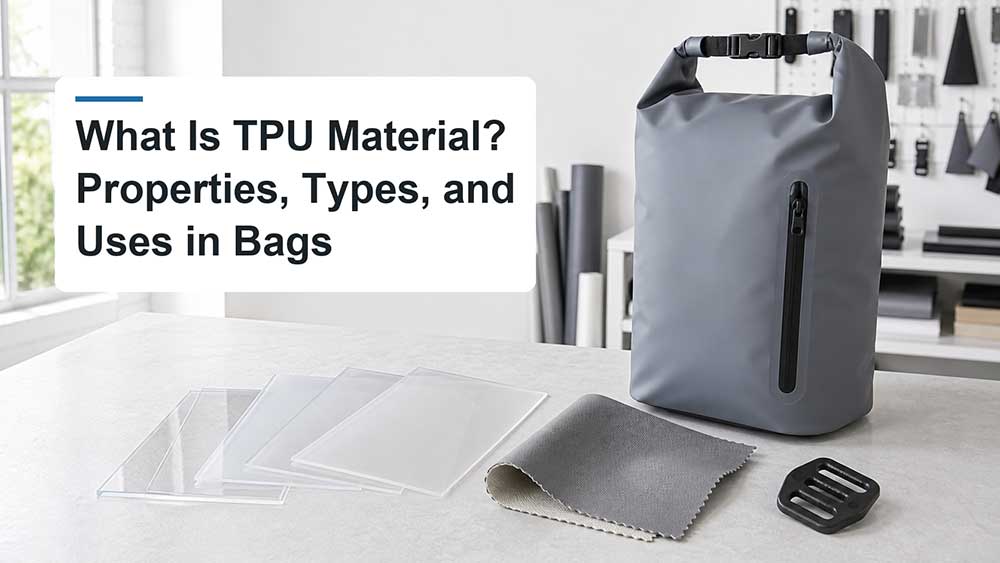
TPU sta per poliuretano termoplastico. It is a flexible polymer that combines some of the elasticity of rubber with the processing advantages of thermoplastics.
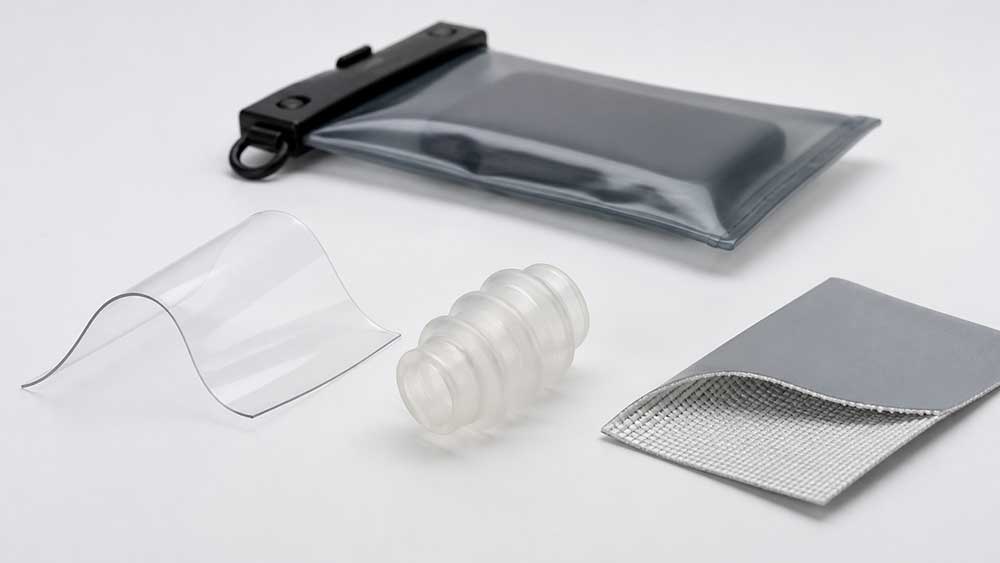
Depending on its formulation, TPU can provide flexibility, abrasion resistance, tear strength, oil resistance, weather resistance, transparency, and reliable welding performance. It can be produced as a film, molded into components, or combined with a textile through coating or lamination.
In bag manufacturing, TPU is commonly used for:
Waterproof or water-resistant fabric layers
Welded dry bags and waterproof duffels
Transparent windows and phone pouches
Pannelli rinforzati
Molded patches, labels, and accessories
Scompartimenti interni protettivi
However, “TPU” alone is not a complete material specification. Bag buyers should also confirm the base tessuto, TPU type, coating or film thickness, bonding method, surface finish, seam construction, performance requirements, and testing method.
TPU is technically a elastomero termoplastico. It belongs to the polyurethane family but behaves differently from both rigid plastic and conventional vulcanized rubber.
Like rubber, TPU can be flexible and elastic. Like a thermoplastic, it can be softened with heat and processed into films, sheets, coatings, or molded parts.
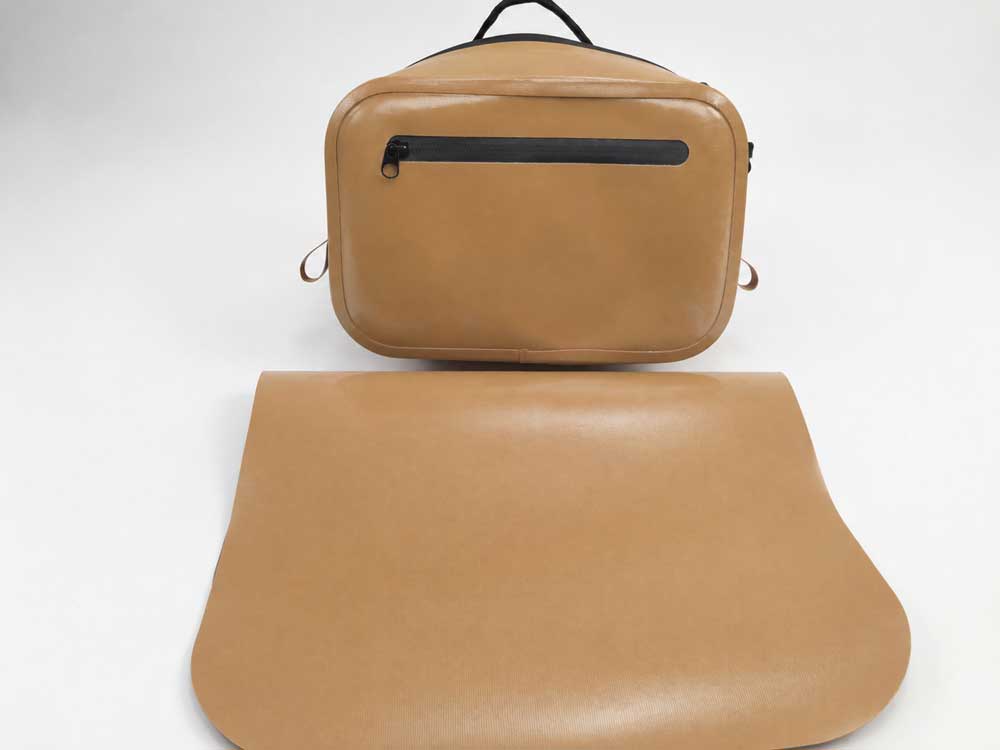
TPU itself is not a woven fabric. When suppliers use terms such as “TPU fabric,” they usually mean a textile combined with a TPU coating or film.
A typical TPU bag material may contain:
Strato di materiale
Funzione principale
Nylon or polyester base fabric
Provides structure, tear strength, and dimensional stability
TPU coating or film
Creates a protective or waterproof barrier
Surface finish or treatment
Influences texture, appearance, friction, and cleanability
Backing or additional layer
May improve adhesion, strength, or processing performance
Two materials described as “TPU fabric” can therefore perform very differently. The base textile, yarn density, film thickness, TPU formulation, and bonding quality all matter.
How Does TPU Work?
TPU contains both hard and soft molecular segments.
The hard segments contribute strength, toughness, and heat resistance. The soft segments provide flexibility, elasticity, and low-temperature performance. Manufacturers can adjust the balance between these segments to produce TPU grades with different hardness, stretch, transparency, chemical resistance, and processing properties.
This is why TPU can be used in products as different as flexible films, footwear components, industrial parts, cable coverings, medical products, and waterproof bag materials.
Migliori BASF Elastollan technical overview shows that TPU performance depends on polymer chemistry, hardness, additives, processing conditions, and the intended application. Buyers should evaluate the actual grade and complete material construction rather than assuming that all TPU performs the same way.
TPU-Coated Fabric vs TPU-Laminated Fabric
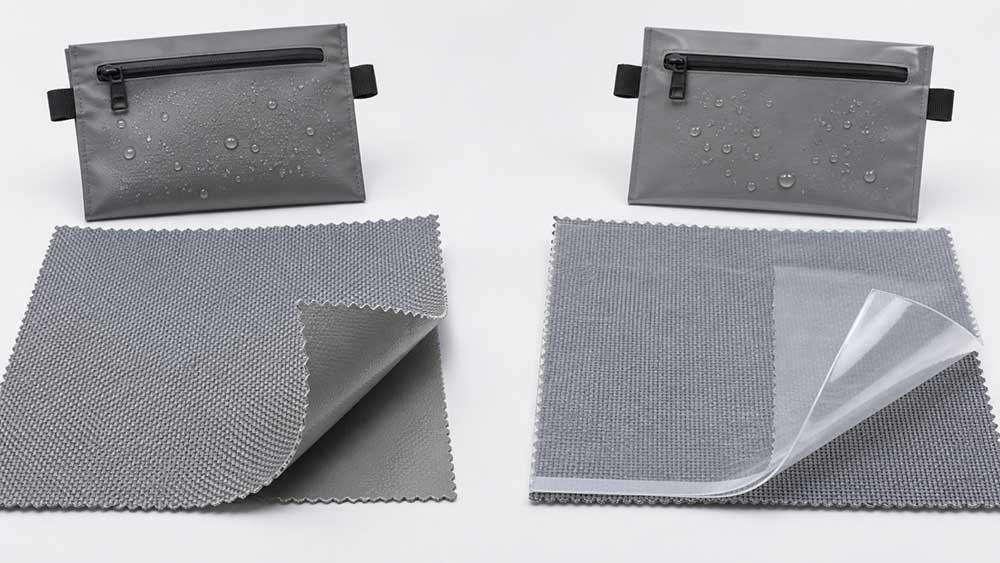
TPU-coated and TPU-laminated fabrics both combine a textile base with a TPU layer, but the layer is applied differently. This affects color development, surface appearance, thickness consistency, hand feel, MOQ, cost, and the risk of delamination.
How TPU-coated fabric is made
In a coating process, a TPU-based coating compound is applied directly to a woven or knitted base fabric. The material is then dried, cured, or otherwise processed to form a continuous layer.
The final color may come from:
A dyed nylon or polyester base fabric
Pigment or color masterbatch added to the TPU coating
A colored base fabric combined with a transparent or tinted coating
Printing or another surface treatment
TPU-coated fabric is not normally dyed after the complete coating has been applied. When people say TPU coating is “easier to dye,” they usually mean that the base fabric can be dyed before coating or that pigments can be added to the coating formulation.
In some supply chains, developing a custom coating color can be more flexible than producing an entirely new colored TPU film. This is not a universal rule. The MOQ still depends on the coating factory, raw material, coating quantity, color-matching requirement, and production schedule.
Advantages of TPU-coated fabric
Flexible color development
The base fabric and TPU coating can be colored separately. A supplier may use a dyed fabric with a transparent coating, or combine a colored fabric with a pigmented TPU surface.
This gives designers more ways to control the final shade and appearance. It may also make custom colors more practical when a supplier can adjust a coating batch without producing a completely new film.
Adjustable coating weight
The supplier may be able to adjust the coating amount according to the required weight, flexibility, appearance, and protective performance.
More textile-like hand feel
Because the TPU layer is formed directly on the textile, the finished material may feel more integrated and less like a separate plastic sheet.
Personalizzazione della superficie
TPU coatings can be developed with matte, glossy, smooth, dry-touch, or textured finishes, depending on the production process.
Potential for lighter constructions
A controlled coating can sometimes achieve the required surface protection with less material than a relatively thick laminated film.
Limitations of TPU-coated fabric
Thickness may be less uniform
Coating consistency depends heavily on the equipment, viscosity, line speed, application method, and process control.
Pinholes or uneven coverage may occur
A very thin or poorly controlled coating may contain small gaps or inconsistent areas that reduce barrier performance.
Color variation is still possible
Differences in the base-fabric shade, coating batch, pigment concentration, and curing conditions can affect the finished color.
Transparency is usually limited
A coating does not normally provide the same clear and film-like appearance as a transparent TPU laminate.
Performance is process-dependent
Coating weight, adhesion, surface preparation, drying, and curing conditions must all be controlled. A material that looks acceptable may still have weak adhesion or inconsistent waterproof performance.
How TPU-laminated fabric is made
In a lamination process, a TPU film is produced separately and then bonded to the textile using heat, pressure, hot-melt adhesive, another adhesive system, or a combination of methods.
Covestro explains that TPU films can be joined to textiles using different lamination methods, including hot-melt and adhesive lamination. Different film thicknesses and activation conditions can be selected for different applications. Buyers can review the company’s official TPU film lamination overview.
The final color may come from:
A dyed base fabric covered with transparent TPU film
A colored TPU film
A colored base fabric combined with a tinted or translucent film
Printed graphics placed beneath or on the film, depending on the construction
A transparent TPU film allows the color and weave of the base fabric to remain visible. A custom-colored film can create a more uniform TPU surface, but it may require a larger extrusion batch and therefore a higher MOQ.
Advantages of TPU-laminated fabric
More consistent film thickness
Because the TPU film is produced separately, its thickness is generally easier to define, measure, and keep consistent.
A clearly defined barrier layer
A continuous film can provide predictable waterproof performance when it is correctly bonded to the textile.
Aspetto liscio e uniforme
Laminated TPU can produce clear, glossy, matte, translucent, or highly consistent surfaces.
Better transparency options
TPU film is particularly useful for transparent windows, phone pouches, map pockets, and products where the contents must remain visible.
Controlled welding surface
A defined TPU film layer can make welding trials and production settings more repeatable, provided that the film, base fabric, and welding process are compatible.
Specialized film properties
Buyers can select films with a particular thickness, hardness, transparency, hydrolysis resistance, UV resistance, or surface texture.
Limitations of TPU-laminated fabric
Custom film colors may require higher MOQs
Producing a new colored TPU film may require a dedicated extrusion batch. For smaller orders, a dyed base fabric with a transparent stock film may be more practical.
Delamination can occur
Poor surface preparation, an unsuitable adhesive, insufficient bonding, heat, humidity, chemicals, or repeated folding may cause the film to separate from the fabric.
The material may feel stiffer
A thicker TPU film can make the textile feel less flexible or more plastic-like.
Additional processing can increase cost
Producing the film and bonding it to the textile adds manufacturing steps.
Adhesive compatibility must be controlled
If an adhesive system is used, it must remain stable under the expected temperature, humidity, flexing, and chemical exposure.
Heat may cause distortion
Temperature and tension need to be controlled during lamination and later welding to reduce shrinkage, wrinkles, or film deformation.
TPU Coating vs TPU Lamination at a Glance
Fattore
Tessuto rivestito in TPU
Tessuto laminato in TPU
Processo di base
TPU is applied directly to the textile
A preformed TPU film is bonded to the textile
Sviluppo del colore
Dyed fabric and pigmented coating can be combined
Uses dyed fabric, transparent film, or custom-colored film
Quantità minima d'ordine per colori personalizzati
Can be more flexible, depending on the coating supplier
Custom-colored film may require a larger batch
Consistenza dello spessore
More dependent on coating-line control
Usually easier to specify and keep consistent
Aspetto superficiale
Often feels more integrated with the textile
Usually smoother and more film-like
Trasparenza
Generalmente limitato
Better for clear or translucent applications
Sensazione della mano
Can be softer and lighter
May feel stiffer when a thicker film is used
Barriera impermeabile
Good when coverage is continuous and defect-free
Predictable when the film is correctly bonded
Prestazioni di saldatura
Depends on coating formulation and thickness
A defined film surface may produce more repeatable results
Principale rischio di qualità
Uneven coating, pinholes, or batch variation
Delamination, adhesive failure, or film distortion
A softer or more textile-like hand feel is important
The product requires a relatively lightweight construction
The coating weight or surface finish needs to be adjusted
The bag will mainly be sewn, with sealing added only where necessary
TPU lamination may be preferable when:
Consistent film thickness is important
The product requires a smooth or transparent surface
The material will be used for repeated welding
A clearly defined waterproof barrier is required
The buyer needs a particular film grade or thickness
The choice should be based on physical samples and production trials. Buyers should compare color consistency, coating or film thickness, peel strength, abrasion resistance, hydrolysis resistance, folding performance, welding quality, and finished-product waterproof performance.
Common Types of TPU
TPU can be classified in several ways. For bag projects, the most relevant distinctions usually involve the soft-segment chemistry and the material’s resistance to water, oils, weathering, and discoloration.
TPU a base di poliestere
Polyester-based TPU is often selected when abrasion resistance, mechanical strength, and resistance to oils or fuels are important.
Depending on the grade and conditions, prolonged exposure to heat and moisture may affect hydrolysis resistance. It should not be selected by name alone when the finished product will be used in wet or humid environments.
TPU a base di polietere
Polyether-based TPU is often preferred for products exposed to water, humidity, low temperatures, or repeated outdoor use because suitable grades can provide better hydrolysis and microbial resistance.
This does not mean every polyether TPU is suitable for every waterproof bag. Film thickness, hardness, bonding performance, additives, and the complete textile construction still need to be evaluated.
Aromatic and aliphatic TPU
Aromatic TPU is widely used and is often more economical, but some grades may yellow or change color after prolonged UV exposure.
Aliphatic TPU is generally selected when long-term color stability, transparency, or outdoor appearance is particularly important. It is usually more expensive and may not be necessary for products where the TPU surface is dark, covered, or rarely exposed to sunlight.
For example, a black waterproof duffel and a transparent phone pouch may require different TPU grades even when both products need waterproof performance.
Why Is TPU Used in Bags?
TPU can meet several performance requirements within one material system.
Flessibilità
TPU films and coatings can bend and fold with the bag. This is useful for roll-top closures, foldable waterproof bags, soft phone pouches, and products that need to remain flexible in colder conditions.
Resistenza all'abrasione e allo strappo
Suitable TPU constructions can withstand rubbing, flexing, and repeated handling. Actual performance depends on both the TPU layer and the base textile.
A thick TPU film over a weak base fabric will not automatically produce a durable bag. Reinforcement, panel direction, seams, and stress-point construction remain important.
Barriera impermeabile
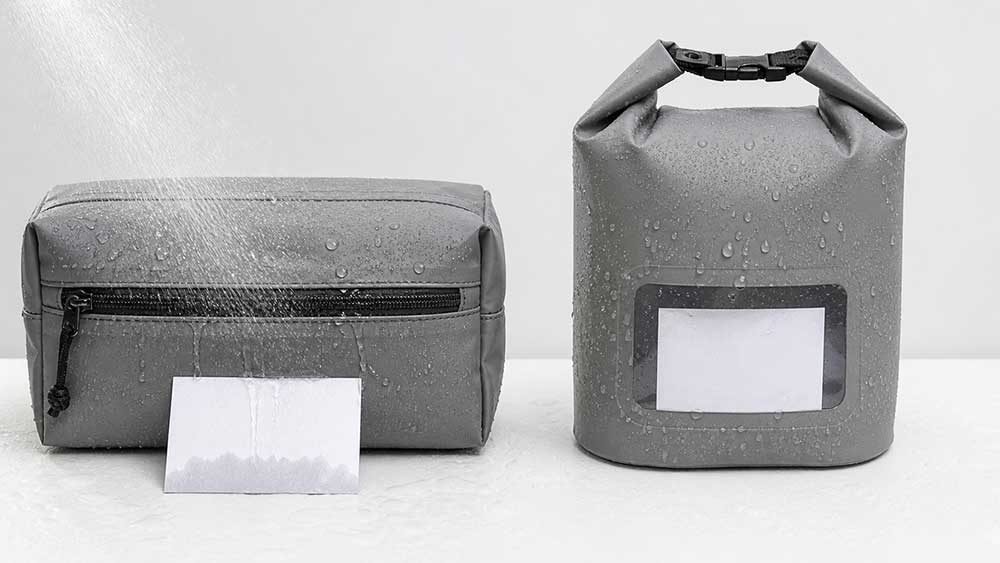
A continuous TPU layer can prevent water from passing through the material. This makes TPU suitable for waterproof duffels, dry bags, cycling bags, motorcycle luggage, rescue equipment, and protective compartments.
The material barrier is only one part of the finished product. Seams, zipper types, valves, openings, closures, and construction methods determine whether the complete bag is water-resistant, waterproof, or suitable for temporary immersion.
saldabilità
Some TPU-coated or TPU-laminated textiles can be joined using high-frequency welding, hot-air welding, or other heat-sealing processes. Welding can create a more continuous barrier than conventional needle stitching.
The factory must match the TPU formulation and material construction to the selected welding process. A fabric that performs well with one welding method may not produce the same result under different equipment or settings.
Appearance and surface options
TPU can be transparent, translucent, colored, matte, glossy, smooth, or textured. It can support technical, outdoor, industrial, or modern consumer-product designs.
Where Is TPU Used in Bag Manufacturing?
Le applicazioni comuni includono:
Borsoni impermeabili
Borse asciutte arrotolabili
Zaini impermeabili
Bicycle panniers
Motorcycle luggage
Kayaking and rafting bags
Transparent phone pouches
Medical and rescue bags
Cooler bag liners
Waterproof internal pockets
Pannelli di base rinforzati
Molded logos and decorative patches
TPU is especially useful when the design requires both flexibility and a continuous protective barrier. It is less important for an ordinary sewn backpack that only needs a basic water-repellent finish.
For products requiring welded seams and more demanding protection, the material should be evaluated together with the complete waterproof bag construction, not as an isolated fabric choice.
What Are the Limitations of TPU?
TPU has strong performance potential, but it is not automatically the best material for every bag.
Maggiori costi di materiale e lavorazione
TPU is generally more expensive than basic PVC coatings and some conventional PU-coated fabrics. The final cost also depends on the base textile, TPU thickness, order quantity, color, surface finish, welding requirements, and material-supplier minimums.
Grade-dependent hydrolysis resistance
Moisture, heat, chemicals, and storage conditions can affect different TPU grades in different ways. A material suitable for a lightweight urban pouch may not be appropriate for a river duffel used repeatedly in hot and humid conditions.
UV exposure and yellowing
Some TPU grades may discolor after extended exposure to sunlight. Transparent or light-colored products require particular attention to UV and yellowing resistance.
Bonding and delamination risks
If the TPU layer is poorly bonded to the textile, repeated folding, heat, humidity, abrasion, or chemical exposure can cause bubbles, lifting, or delamination.
Material approval should therefore include adhesion and aging performance rather than appearance alone.
Sensibilità di elaborazione
Welding temperature, pressure, speed, cooling time, and joint design all affect seam performance. Using an appropriate TPU fabric does not compensate for poor welding control.
TPU vs PU vs PVC for Bags
TPU, conventional PU coatings, and PVC can all be used in bag materials, but they serve different product requirements.
Fattore
TPU
Conventional PU Coating
PVC
Flessibilità
Di solito molto buono
Buone
Varia in base alla formulazione
Resistenza all'abrasione
Spesso alto
Da moderato a buono
Da moderato a buono
Prestazioni a bassa temperatura
Often good with the right grade
Varie
Some formulations may become stiff
saldabilità
Good with compatible constructions
Dipende dal sistema di rivestimento
Commonly weldable
Trasparenza
Disponibile
Less common in textile coatings
Ampiamente disponibile
Posizione di costo tipica
Di solito più alto
Spesso moderato
Spesso più basso
Peso
Can be relatively light
Often light
Spesso più pesante
Resistenza all'idrolisi
Dipendente dal grado
Dipendente dal grado
Not affected in the same way as polyurethane
UV and yellowing resistance
Dipendente dal grado
Dipendente dal grado
Dipendente dalla formulazione
Potenziale di riciclaggio
Thermoplastic, but recyclability depends on the complete construction
Often difficult in coated textiles
Depends on construction and local recycling system
TPU is not always better than PU or PVC. The correct choice depends on the intended use, required lifetime, target cost, market regulations, weight, appearance, processing method, and performance standard.
Does TPU Make a Bag Waterproof?
Non da solo.
A continuous TPU film or coating can make the tessuto waterproof, but the finished bag may still leak through:
Fori da ago
Cuciture non sigillate
Cerniere convenzionali
Roll-top closures that are not folded correctly
Openings around valves or fittings
Poorly welded joints
Damaged or abraded material
A sewn backpack made from TPU-coated fabric may provide excellent protection against rain but may not withstand immersion. A fully welded dry bag with a secure roll-top closure can provide much stronger protection.
Buyers should define the actual use condition:
Pioggia leggera
Forti piogge
Splashing
Short-term exposure on wet surfaces
Immersione temporanea
Repeated marine or river use
Any IPX claim should be based on an applicable test of the finished product under defined conditions. The presence of TPU alone does not establish an IPX rating.
What Should Bag Buyers Specify?
A professional TPU material specification should cover more than the polymer name.
Elemento da confermare
Perché è importante
End product and intended use
Defines the required material and seam performance
Tessuto di base
Influences weight, tear strength, structure, and appearance
TPU chemistry or grade
Affects water, oil, weather, yellowing, and aging resistance
Coated or laminated construction
Influences bonding, surface, flexibility, and processing
One-sided or two-sided TPU
Affects appearance, cleaning, sealing, and weight
Film or coating thickness
Influences durability, flexibility, and cost
Peso del tessuto finito
Helps control product weight and material consistency
Specifica del colore
Clarifies whether the final color comes from the base fabric, coating, film, or a combination of layers
Finitura superficiale
Controls appearance, texture, friction, and cleanability
Metodo di saldatura
Must be compatible with the selected TPU construction
forza di distacco o di adesione
Helps evaluate delamination risk
Hydrolysis and aging requirements
Defines the expected service conditions
Abrasion and tear requirements
Supports durability evaluation
Requisiti normativi
Depends on the target market and product application
Finished-product waterproof test
Verifies the complete bag rather than only the fabric
Before approving bulk production, buyers should request a physical material swatch and a complete bag sample made using the intended production process. A loose fabric test cannot reveal every problem related to folds, seams, reinforcements, zippers, laminated edges, or welded joints.
Confronto tra marchi opzioni di tessuto personalizzate per le borse should also confirm whether the approved sample and bulk fabric will come from the same material specification and color standard.
Is TPU an Eco-Friendly Material?
TPU should not automatically be described as “eco-friendly.”
Because it is thermoplastic, some TPU can be reprocessed or recycled under suitable conditions. Recycled-content TPU and bio-attributed options may also be available from certain material suppliers.
However, actual recyclability depends on:
TPU formulation
Additivi e pigmenti
Adesivi
Tessuto di base
Costruzione multistrato
Contaminazione del prodotto
Collection and recycling infrastructure
Local recycling capability
A nylon fabric permanently bonded to TPU may be more difficult to recycle than a single-material TPU component. “Recyclable in theory” does not necessarily mean that the finished bag will be collected and recycled in practice.
Environmental claims should be supported by documentation. Buyers may need:
Composizione del materiale
Recycled-content evidence
Dichiarazioni del fornitore
Rapporti di prova pertinenti
Restricted-substance compliance
Documenti di tracciabilità
Market-specific labeling information
The same caution applies to claims such as “non-toxic,” “food-contact safe,” “BPA-free,” “PFAS-free,” and “biodegradable.” These statements should refer to the actual material and intended use, not to TPU as a general category.
Considerazioni finali
TPU is a versatile thermoplastic elastomer used in films, coatings, laminated textiles, molded components, and waterproof bag materials. Its main advantages can include flexibility, abrasion resistance, weldability, and the ability to form a continuous protective barrier.
TPU coating offers flexible combinations of dyed base fabrics and pigmented coatings, while TPU lamination generally provides a more clearly defined and consistent film layer. Neither process is automatically superior. The best choice depends on color requirements, MOQ, hand feel, transparency, weight, welding method, waterproof performance, and budget.
The practical purchasing lesson is simple: do not approve a material based only on the word “TPU.” Confirm the base textile, TPU type, coating or lamination method, color specification, thickness, weight, surface finish, bonding performance, welding compatibility, and finished-product testing requirements.
Vancharli all'aperto develops custom bags using TPU-coated fabrics, TPU-laminated textiles, conventional coated materials, and other project-specific constructions. Material recommendations are evaluated together with the bag structure, intended use, target cost, production method, color requirement, and testing standard rather than from the material name alone.
FAQ
Is TPU safe for bags?
TPU can be suitable for many consumer, outdoor, medical, and industrial bag applications. Safety and compliance depend on the specific grade, additives, manufacturing process, intended use, and target market. Buyers should request documentation for the actual material rather than relying on a general TPU claim.
Can TPU-coated fabric be sewn?
Yes. Many TPU-coated textiles can be sewn, but needle holes may reduce waterproof performance. Seam tape, internal sealing, welding, or a combination of methods may be required depending on the intended level of protection.
Can TPU-coated fabric be custom-colored?
Yes. The base textile can be dyed, and pigments may be added to the TPU coating. The available colors and MOQ depend on the base fabric, coating supplier, color standard, coating quantity, and production process.
Will a TPU layer peel or crack?
A properly selected and bonded TPU layer can provide good flex and abrasion performance. Peeling, cracking, or bubbling may still occur if adhesion is poor, the wrong grade is used, processing conditions are unsuitable, or the product is exposed to conditions beyond its specification.
Does TPU automatically mean PFAS-free?
No. TPU and PFAS refer to different material and chemical categories. A TPU construction should not be described as PFAS-free unless the relevant material system, finishes, inks, adhesives, and components have been reviewed or tested as required.
When should a buyer choose TPU instead of PVC?
TPU may be appropriate when lower weight, flexibility, abrasion resistance, low-temperature performance, or a particular surface appearance is important. PVC may still be suitable when cost, stiffness, availability, or an established welding process is the priority. The decision should be based on the complete product requirement.







I commenti sono chiusi